My father dropped his fork.
It hit the edge of his plate and bounced, then landed sideways across his mashed potatoes. A streak of gravy ran across the white tablecloth where it had skipped.
My father is the kind of man who will stop in the middle of a story to wipe up a spot like that. He keeps a napkin folded on his knee at every meal for exactly that purpose. In thirty-one years, I’d never seen him leave a stain on a tablecloth for more than three seconds.
He didn’t even look down.
He was staring at my husband’s hand.
“Simon,” he said. “I need to speak with you. Alone. Now.”
But I’m getting ahead of myself.
Three minutes earlier, everything had been fine.
It was the second Sunday in November. We were at my parents’ house in Ottawa Hills, the leafy part of Toledo, Ohio, where the houses have names on little brass plaques and the lawns get raked by people who don’t live in them.
My parents’ house is a white colonial with black shutters. My father bought it in 2004, the year he made managing director at the bank. There’s a dining room with a chandelier and a long mahogany table that seats ten, and a kitchen behind a swinging door that bumps the wall every time somebody comes through it.
My mother made pot roast. She always makes pot roast on the second Sunday of the month. Carrots, potatoes, onions, and the gravy her mother taught her, with a splash of red wine.
We’d been having these dinners for six years. Ever since Simon and I got married.
They had never once been easy.
My name is Leah. I’m thirty-one. I teach fourth grade at Westfield Elementary in Sylvania.
My husband, Simon Marsh, owns a garage on Dorr Street. Marsh Automotive. It was his grandfather’s before it was his. A two-bay cinderblock building with a hand-painted sign and a waiting room that has one vinyl chair, a coffee maker, and a stack of Car and Driver magazines from 1997.
Simon is thirty-four. He’s quiet. He has big, careful hands and a laugh that sneaks up on you. He can tell what’s wrong with a car by listening to it idle for ten seconds.
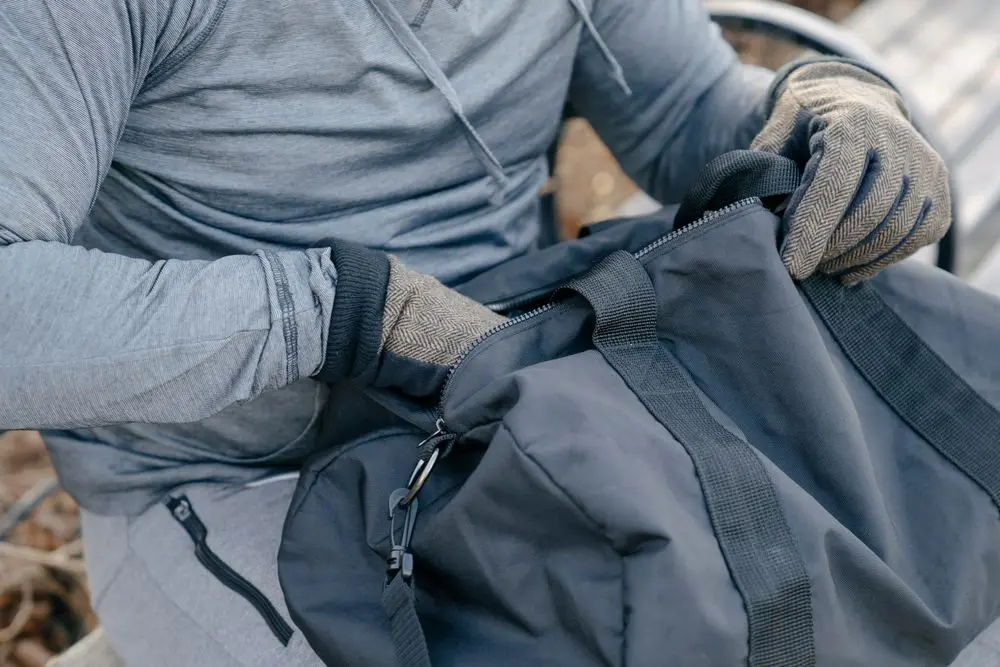
And he wears gloves.
They’re thin. Dark gray. Leather, worn soft at the fingertips. The kind he wore on our first dates, which I didn’t think much of then. I thought he was just a guy who got cold.
It took me about a month to understand.
Three minutes before the fork, my father had asked Simon how things were going at the garage.
He asked it the way he always asked. Polite and a little bored, the way you’d ask a stranger on a plane what they do for a living.
“Busy,” Simon said. “We’ve got a guy bringing in a car he bought new in 1989. A Buick LeSabre. He wants to give it to his granddaughter when she gets her license.”
“A 1989 Buick,” Dad said. He smiled into his wine glass. “What’s he paying you to do, talk him out of it?”
Simon cut a piece of pot roast.
“Make sure she’s got something she can drive,” he said.
Dad smiled into his glass again.
He spent forty years in finance, first at a regional bank and then at a bigger one. He retired two years ago as a senior vice president. He has opinions about money the way some people have opinions about the weather. Constant, and not really invited.
In the six years Simon and I had been married, I’d heard Dad tell him what he should charge for brake jobs, what he should do with the building, how he should structure his business, and what he should do when he finally decided to have “an actual career.”
“You’ve got a good head on your shoulders, Simon,” he said once, at Easter. “You could do a lot better than fixing other people’s cars.”
Simon had smiled and said, “I like fixing other people’s cars.”
Dad had looked at me like I’d married a puppy.
“He wants to be the one to hand her the keys,” Simon said now. “The granddaughter. He wants to sit in the passenger seat the first time she drives it. I get that.”
Mom asked if the granddaughter knew she was getting a car.
“He’s tried to keep it a surprise,” Simon said. “But he’s been in the shop four times this month. He’s not a quiet man. I think she’s probably figured it out.”
We all laughed.
Even Dad.
For a second, it felt like a normal family dinner. The kind other people have.
Then Mom noticed that Simon still had his gloves on.
He’d taken them off at our dinners for as long as I’d known him.
That was a big deal. More than my parents understood.
The first year we were married, he kept them on. Every Sunday. Through the soup and the roast and the pie. My father had raised his eyebrows at it every single time, and my mother had pretended not to notice, the way she pretends not to notice most things.
The second year, at Thanksgiving, Simon took them off.
He didn’t say anything about it. He just pulled them off in the front hallway, folded them together, and put them in his coat pocket. Then he walked into the dining room and sat down with his hands on the table.
My mother looked at his hands. Then she looked away and asked him if he wanted white meat or dark.
My father looked at his hands for a long time. Then he said, “Rough line of work, I guess,” and went back to carving the turkey.
That was all.
Simon told me later in the car that he’d been working up to it for a year.
“Your mom didn’t flinch,” he said. “That’s all I needed.”
He’d taken them off at every dinner since.
Until that Sunday.
I didn’t know why he’d kept them on. I’d noticed in the car. He’d been quiet the whole drive over. When we got out in the driveway, he’d stood there for a second looking at his hands, then pulled the gloves out of his pocket and put them on.
“You okay?” I said.
“Yeah,” he said. “Just cold.”
It was fifty-one degrees.
I didn’t push.
“Simon, honey,” Mom said, very gently. “Would you like to take those off for dinner this time?”
“I’d rather keep them on, if that’s all right,” Simon said.
“Of course,” Mom said. She didn’t even pause. “I’ll put the coffee on.”
She stood up and went into the kitchen. I heard the swinging door bump the wall on its way back.
The second it closed, my father put down his wine glass.
“You’re seriously going to eat dinner wearing those things?” he said.
Simon picked up his knife and fork.
He didn’t answer.
“Good grief,” Dad said. “That’s rude, Simon. That’s rude and ridiculous. What are you afraid of? Getting your hands dirty?”
He laughed a little when he said it. Like it was a joke.
It wasn’t a joke.
“Dad,” I said. “That’s enough.”
“Oh, come on, Leah.” He waved his hand. “He can turn up to Sunday dinner looking like he’s here to fix the dishwasher, and I’m the one who’s rude?”
I set down my fork.
My face was hot. My hands were shaking under the table.
I’d been sitting at this table for thirty-one years. I knew exactly how it went. Dad says something sharp. Somebody laughs it off. Somebody changes the subject. Mom comes back with the coffee. Nobody mentions it again.
Usually that somebody was me.
Lately, more and more, it had been Simon.
Simon looked at me first.
Then he looked at my father.
“All right,” he said quietly. “If you really want to know.”
He caught the cuff of his left glove between two fingers and eased it down. Slowly. Over his wrist. Over his palm. Over his knuckles.
When it came free, he laid his hand flat on the white tablecloth beside his plate.
I’d seen the scars on Simon’s hands a thousand times.
I’d held those hands in movie theaters and hospital waiting rooms. I’d watched them rebuild a carburetor on our kitchen table. I’d watched them hold our niece the day she was born.
I knew how frightening they looked to people who hadn’t seen them before.
The skin across the back of his left hand is pulled tight and shiny, pink and white in patches. Like melted wax. It runs up over his knuckles and down two of his fingers. His ring finger and his pinky don’t fully straighten. On the right hand it’s worse. It goes up past his wrist almost to the elbow.
He was eleven when it happened.
His grandfather had a can of solvent on the workbench. A rag caught a spark from a grinder. The whole bench went up. His grandfather was under a car on the lift with his back to it.
Simon grabbed the burning can with both hands and ran it out the back door and threw it into the gravel lot.
He was in the burn unit at St. Vincent’s for five weeks. Three skin grafts.
His grandfather never once said “thank you” out loud. Simon said he didn’t have to.
I sat there and waited for my father to ask what happened.
That’s what people do when they see Simon’s hands for the first time. They ask what happened. Or they don’t ask, and they look at the ceiling, and they say something about how cold it is outside.
My father had seen them before. At Thanksgiving. Years ago.
But I knew what this moment meant to Simon. Taking the glove off on purpose. In front of my father. After being called rude and ridiculous. I knew what it cost him.
I was a nervous wreck waiting for Dad’s reaction.
Dad dropped his fork.
“How is this possible?” he said.
For a second I didn’t understand.
My first thought was that he’d forgotten. That he’d never really looked at Simon’s hands that Thanksgiving. That he was seeing the scars for the first time and they’d shocked him.
Then he leaned sideways in his chair. Close. Squinting at one of Simon’s fingers.
Not at the scars.
At the ring.
“Where did you get that?” he said.
Simon wears a ring on the ring finger of his left hand. Not his wedding band. He wears that on his right hand, because his left ring finger won’t hold it. The wedding band slides right off over the scarred knuckle.
On his left hand, he wears his grandfather’s ring.
It’s gold. Heavy. A wide, plain band with a flat oval face that’s been worn almost smooth. You can just barely make out a letter engraved in the center. An H, maybe, or an M. It’s hard to tell anymore.
And on one side of the band, there’s a crooked seam where the gold was broken once and soldered back together. Badly. It sticks up a little.
I’d offered once, early on, to take it to a jeweler and have it fixed.
Simon had run his thumb over the seam.
“I like it like that,” he said. “I can tell which way the ring’s facing before I even look.”
Simon looked down at the ring.
Then he looked up at my father.
He didn’t say anything.
He picked up his glove from the tablecloth and pulled it back on. Slowly. Over the scars. Over the ring.
That’s when Dad stood up.
“Simon,” he said. “I need to speak with you. Alone. Now.”
He was already walking out into the hall by the time Simon pushed his chair back.
I followed them both.
Nobody had asked me to. I didn’t care.
From the kitchen, Mom called out.
“Does anybody want decaf? I’ve got both!”
Dad stopped in the hallway outside the dining room. Next to the coat closet, under the framed photograph of my grandfather in his World War II uniform. He stood very still with his back to the kitchen door.
He was listening.
I heard a cupboard close in the kitchen. The rattle of the coffee filter. The tap running.
Dad let out his breath.
He turned to Simon.
“Your mother can’t see that ring,” he said. He said it to Simon, but he meant my mother. He’d always called her “your mother,” even when he was talking to someone who wasn’t her child.
“Why?” I said.
Dad turned around. He looked surprised that I was there. Like he hadn’t heard me follow them.
“Leah. Go back to the table.”
“Why can’t she see it?”
Dad looked at the kitchen door.
“Because she’ll know whose it is,” he said.
For a few seconds I tried to think of people my mother knew who might have bought a ring like Simon’s. A cousin. A friend from church. Somebody from the old neighborhood on the east side.
Then I remembered something.
A little velvet box.
Dark blue. The size of an egg. With a brass hinge that squeaked when you opened it.
My mother kept it in the top drawer of her dresser when I was growing up. Under her slips. Next to a bundle of letters tied with a ribbon and a pressed corsage from some dance in 1978.
I found it when I was about eight. I was snooping, looking for Christmas presents.
I opened it.
It was empty.
There was a little slot in the white satin inside where a ring would go. Worn into the fabric, like a ring had sat there for a long time.
I’d asked her about it.
She was folding laundry on the bed. She took the box out of my hands, very gently, and closed it.
“It’s all I have left,” she said, “of something that belonged to my father.”
“What was it?”
“His ring.”
“What happened to it?”
She put the box back in the drawer.
“It’s gone,” she said.
And she went back to folding the towels.
I looked at my father in the hallway.
“Is that Grandpa’s ring?” I said.
Dad didn’t answer me.
He looked past me at the kitchen door.
Then he looked at Simon.
“Simon,” he said. “How much would you take for it?”
Simon didn’t answer right away.
“It was my grandfather’s,” he said.
“I know what you said. I’m asking you to name a price.”
“No,” Simon said. Quietly. “This ring means a lot to me.”
He slipped his left hand into his pants pocket.
He does that when someone asks about his gloves and he can’t step away from the conversation. When a customer at the shop stares too long. When a kid in a grocery store points.
He puts his hand in his pocket and keeps it there until it’s over.
After the fire, the kids at school used to grab his wrist.
He told me about it once, on our fourth date. We were sitting in his truck in the parking lot of a Dairy Queen on Monroe Street. He’d just taken his gloves off to eat a Blizzard, and he saw me looking, and he decided to just tell me all of it.
“They’d grab my wrist,” he said. “In the hallway. Pull my sleeve up to see how far the scars went. Like a game. Like a dare. ‘How far up does it go, Marsh? Let me see.’”
He stirred his Blizzard.
“So I started wearing gloves,” he said. “In sixth grade. Even in June. Even when it was ninety degrees.”
He stayed away from the shop for months after the fire.
He couldn’t go back. He said the smell made him sick. Burnt rubber and solvent and grease.
His grandfather never pushed. He kept Simon’s stool by the workbench. A little wooden stool he’d built for him when he was five, so he could reach. Through the whole fall and winter, his grandfather kept that stool right where it always was.
Simon’s mother told him later that his grandfather wouldn’t let anybody move it. Not even to sweep.
When Simon finally went back, it was the following spring. He was twelve. He walked into the shop on a Saturday morning in his gloves and stood in the doorway for a long time.
His grandfather was at the bench. He didn’t look up. He didn’t say anything about the fire, or the hospital, or the gloves.
He just slid a little metal tray across the workbench toward the empty stool.
It was full of loose bolts. Hundreds of them. All different sizes.
“See if you can find me two that match,” his grandfather said.
Simon told me he sat on that stool for four hours, sorting bolts.
He didn’t talk. His grandfather didn’t talk.
When he was done, his grandfather looked at the little piles of matched bolts and said, “Good. Come back Tuesday.”
“I don’t remember much about that day,” Simon told me in the Dairy Queen parking lot. “But I remember his hand.”
“His hand?”
“When he pushed the tray over,” Simon said. “He had this gold ring. On his left hand. Big and heavy, with a crooked seam on one side. I remember it catching the light from the window.”
Years later, when his grandfather got too sick to work, he called Simon into the shop on a Sunday afternoon.
Simon was twenty-four.
His grandfather put two things on the workbench in front of him.
The keys to the shop.
And the gold ring.
“This place is yours now,” his grandfather said. “And so is this.”
“Grandpa,” Simon said. “I can’t take your ring.”
His grandfather looked at him for a long time.
“It’s not mine,” he said. “It never was. I’ve just been holding it.”
Simon didn’t know what he meant. His grandfather didn’t explain.
He died eight months later.
“What do you want it for?” I asked my father.
Dad looked at the kitchen door again.
“I want to give it to your mother,” he said.
For a second, I thought I understood.
I thought Dad wanted Simon’s help explaining. I thought he was going to walk into the kitchen with Simon and say, “Marion, you won’t believe this. Look what Simon has.”
Then he checked the kitchen door again.
And I realized he was waiting for me to lower my voice.
“You just said she couldn’t see it,” I said.
“She can’t see it on him,” Dad said. Very quiet. Very fast. “If I give it to her, I can tell her I found it. In that old desk. The roll-top. The one we moved upstairs to the guest room. She’s been after me to clean that thing out for years.”
He looked at Simon.
“I’ll pay you whatever you want,” he said. “And I’ll tell her I found it in the back of a drawer. She’ll never have to know where it’s been.”
I could picture it.
My mother opening that little velvet box. Finally having something to put in the slot that had been empty for twenty-two years.
I knew exactly which drawer she kept it in. Top left. Under the slips.
She’d carried that empty box from house to house her whole married life. From the little apartment on Secor Road where I was born. To the duplex on Sylvania Avenue. To the first house on Kenwood. To this one.
Even when her bedroom was barely big enough for the dresser, that box came with her.
And then I thought about Uncle Ray.
Uncle Ray is my mother’s younger brother. Four years younger. When I was a kid, he was the fun one. The uncle who taught me to whistle with two fingers and let me drive his truck around the Meijer parking lot when I was nine.
He had a hard time in his twenties and thirties. Drinking. A divorce. He lost a job at the Jeep plant. He borrowed money from my parents more than once, and he didn’t always pay it back.
The summer I was nine, he was staying with us.
He’d been sleeping on the pull-out couch in the den for about three weeks. Between apartments. Between jobs. His green canvas duffel bag sat by the back door the whole time, like he was always halfway out.
He made me grilled cheese sandwiches for lunch and cut them into triangles. He let me stay up late to watch Indians games. He fixed the chain on my bike.
My mother made him banana bread. Every Sunday. Because he liked the ends.
And then one evening in August, my mother came downstairs holding the little velvet box.
Open.
Empty.
I was sitting on the stairs. She didn’t see me there.
She went into the den, where Ray was watching TV, and she held the box out to him.
“Where is it, Ray?”
He looked up. “Where’s what?”
“Daddy’s ring.”
He stood up.
“Marion. I didn’t touch it.”
“It was in my dresser this morning. You’re the only one who’s been in this house.”
“I didn’t take it.”
“You’ve been here three weeks. You’ve been asking Gordon for money twice a week. And now Daddy’s ring is gone.”
Ray looked at her for a long time.
“Do you really think,” he said slowly, “that I’d take something Dad left you?”
My mother saw me on the stairs then.
“Leah,” she said. “Go to your room.”
I went upstairs.
I sat on my bed with the door open a crack and listened.
I couldn’t hear the words. Just my mother’s voice getting louder and Ray’s voice getting quieter. And then the back door. And then Ray’s truck starting in the driveway.
The next afternoon, I waited by the kitchen window for him to come back.
It was Sunday. My mother had made banana bread that morning. It was cooling on the counter. The ends were right there, the way he liked them.
He didn’t come.
On Monday morning, my mother cut up the banana bread and put it in my lunch box.
Every day that week. Until it was gone.
Ends and all.
My mother didn’t speak to her brother for nineteen years.
She didn’t go to his second wedding. She didn’t call when his house flooded in 2013. She didn’t go see him in the hospital when he had his heart attack in 2018.
She’d say his name sometimes, at Christmas. Very quietly. Like it hurt her mouth.
“I wonder what Ray’s doing.”
And then she’d change the subject.
I didn’t start talking to Ray again until I was in college.
He found me on Facebook. Sent me a message. Just: Hey kiddo. It’s Uncle Ray. I hope you’re doing okay. I think about you.
I wrote back.
We’ve been in touch ever since. Quietly. He lives in Port Clinton now, on Lake Erie, in a little house with a big porch. He’s been sober for sixteen years. He’s married to a nice woman named Bev who volunteers at the library. He feeds birds. Dozens of them. Cardinals, chickadees, blue jays, nuthatches. He sends me pictures.
The week before that Sunday dinner, I’d sent him a picture of a red-bellied woodpecker at our feeder in the backyard.
He’d sent three photos back. Of the birds at his feeder. Twenty of them, all crowded onto the perches.
Mine always wait till I’ve just washed the windows, he wrote. Then they come right up and smack into the glass. Every single time. I think they do it on purpose.
I hadn’t told my mother about any of it.
Not the messages. Not the birds. Not the time Simon and I drove out to Port Clinton for a weekend and had dinner with Ray and Bev at a lakeside fish fry.
Somewhere along the way, I’d gotten used to keeping little pieces of my uncle’s life to myself.
It embarrassed me now, standing in that hallway, how easy that had been.
“What do we tell him?” I said to my father.
Dad blinked. “Tell who?”
“You know who,” I said. “Uncle Ray.”
“There’s no reason to drag him into this.”
I looked at my father.
My father, who’d stood in the den that night in August twenty-two years ago, with his arms crossed. Next to my mother. While she held out an empty box to her little brother.
My father, who’d known.
“You let her think he took it,” I said.
“Keep your voice down,” Dad hissed.
Simon took his hand out of his pocket.
He looked at my father for a long moment.
“My grandfather told me,” Simon said slowly, “that somebody left this ring with him. To cover a repair bill.”
He paused.
“Was that you?” he said.
Dad shifted his weight so he could see past us into the dining room. Toward the kitchen door.
“Keep your voice down,” he said again.
We’d only gone a few steps down the hall. I could still see the dining table from where I stood. Simon’s plate, with half a potato and a carrot left on it. Dad’s fork lying sideways in the gravy.
“I left it there,” Dad said finally.
He said it very quietly. To the floor.
“I was going to get it back.”
I stared at him.
“What did you tell Mom,” I said, “when she asked where it was?”
“I didn’t think she’d notice it was gone,” Dad said. “She never wore it. It was just sitting in that box in the drawer.”
He rubbed his forehead.
“I had a bill to pay,” he said. “The transmission went out on the Lincoln. I’d just been passed over at the bank. Again. We were behind on the mortgage. Your mother didn’t know how bad it was.”
He looked at the kitchen door.
“I took the car to that garage on Dorr because it was the cheapest in town,” he said. “When I went to pick it up, I couldn’t pay. Eleven hundred dollars. I didn’t have it.”
He swallowed.
“So I gave the man the ring,” he said. “And he said he’d hold it for me. Until I came back with the money. I thought I’d have it back in a few days.”
“You’ve had a lot of days since then,” Simon said.
Dad’s eyes went to Simon’s gloved hand again.
“I’m offering you money for it now,” he said. “Right now. More than the repair ever cost. Whatever you want. Five thousand. Ten.”
Simon shook his head.
Dad opened his mouth to say something else.
That’s when the kitchen door swung open.
“I found the decaf,” Mom said. “Why is everybody out here?”
She was standing in the doorway with the coffee pot in one hand and a stack of saucers in the other. Wearing her blue cardigan. Her reading glasses were pushed up on her head.
She looked at the three of us crowded in the hallway.
Dad stepped back to give her room.
By the time she came through with the coffee, he was smiling.
The same smile he wore at bank Christmas parties. At my wedding. At Grandpa’s funeral.
“Simon has something for you,” he said.
Mom set the coffee pot on the table.
She looked at Simon.
Dad had said it the way he used to announce a gift he’d had me wrap. When I was little, he’d buy Mom something for her birthday, a scarf or a bottle of perfume, and give it to me to wrap. Then at dinner he’d say, very cheerfully, “Leah has something for you, Marion.” And I’d hand it over. And Mom would say thank you to me. And Dad would smile.
I could almost hear Mom saying thank you before she’d even seen what it was.
“What is it?” she said.
Simon had stopped by his chair.
He turned and looked at me.
And I understood what my father was counting on.
He was counting on Simon to do what Simon always did when a family dinner turned sour.
Smooth it over. Make it easy. Give everybody a way to get through the evening.
Simon had done it for me more times than I liked to think about. At Easter, when Dad made the crack about doing better than fixing cars. At my cousin’s wedding, when Dad introduced him to his old boss as “Leah’s husband, the mechanic.” At Christmas, when Dad gave him a book called Rich Dad, Poor Dad, and everybody went quiet, and Simon laughed and said, “Thanks, Gordon. I’ll read it on my lunch break.”
He always gave my father a way out.
And Dad always took it.
Simon was looking at me.
Waiting for me to tell him what to do.
I’d filled every silence at that table for thirty-one years.
I’d changed the subject. I’d laughed it off. I’d cleared the plates and asked about dessert and pretended I hadn’t heard.
I wasn’t going to do it this time.
“Would you show her the ring?” I said.
Simon looked at me for a long moment.
Then he nodded.
He sat down at the table.
He pulled off his left glove. Slowly.
He laid his scarred hand on the white tablecloth.
And he turned it so my mother could see the side of the gold band.
There was the crooked seam. Where the gold had been broken and soldered back together.
Mom put two fingers on the edge of the table.
She bent down over Simon’s hand.
Very slowly. Like she was afraid it might disappear if she moved too fast.
Her mouth dropped open a little.
Then she smiled.
“Daddy caught it on a nail in the basement,” she said.
Her voice was very soft.
“In 1971. I was twelve. He was putting up shelves for Mama’s canning jars and he caught his hand on a nail sticking out of a beam. The ring bent right in half. He took it to a man on Lagrange Street to fix it, and the man did a terrible job.”
She laughed. A small, breathless laugh.
“See where they joined it?” she said. “Right there. It sticks up. Daddy complained about it for years. Said it caught on his gloves every winter. Said that jeweler should have his license taken away.”
Simon turned his hand a little more so she could see the face of the ring.
The flat gold oval. Worn smooth.
“There’s an H on it,” Mom said. “You can barely see it now. For Harold. Daddy’s name was Harold.”
She reached toward it.
Then she stopped.
Her hand hovered over Simon’s for a second. Then she pulled it back and put it down flat on the table.
“How did you get it?” she said.
“Ray must have taken it to the garage,” Dad said.
I looked at him.
He was standing in the narrow space between the table and the kitchen door. He said it casually. Easily. Like he was explaining a bank statement.
I think I expected the rest of the sentence to explain the first half.
It didn’t.
Mom straightened up.
“What garage?” she said.
“Simon’s grandfather’s,” Dad said. “The garage on Dorr Street. Ray must have sold it to him. Pawned it, or something. Back then. How else would Simon end up with it?”
Simon kept his hand where it was. On the tablecloth. Not moving.
I watched his jaw tighten.
My father had counted on Simon swallowing the insult. On keeping dinner civil.
Now he was asking Simon to sit there with his scarred hand on the table, wearing the ring my father had handed over himself, and say nothing while my father blamed Ray.
Again.
For the second time in twenty-two years.
And for one second, I was going to let him.
That’s the truth. For one second, sitting at that table, I felt the old reflex. Keep it smooth. Don’t make a scene. Don’t upset Mom. Let it go. Change the subject.
I’d been doing it my whole life.
Then I looked at Simon’s hand on the tablecloth.
The scars. The crooked seam. The gold.
The hand of a boy who’d grabbed a burning can of solvent and carried it out the door, because his grandfather was in danger and there wasn’t anybody else.
“You just told us,” I said to my father, “that you left it there yourself.”
Dad frowned at me.
“That’s what you thought I meant?” he said.
“Yes,” I said. “I heard you.”
He looked at my mother.
“Marion,” he said. “Can you come into the kitchen a second? I’ll explain what happened. Just you and me.”
Mom moved her hand toward the coffee pot. Out of habit more than anything, I think. Something to do with her hands. Something to make it normal.
I reached over and took the handle before she could pick it up.
“Mom,” I said. “Would you sit down first?”
She looked at me.
“Simon knows how his grandfather got the ring,” I said. “You asked him. Let him tell you.”
She looked at Simon again.
Then she pulled out her chair and sat down.
I set the coffee pot down beside her.
Dad could have sat down too. His chair was right there.
He didn’t.
He stayed where he was, in that narrow space between the table and the kitchen door, with one hand on the back of a chair.
Simon cleared his throat.
He looked at my mother. Only at my mother.
“My grandfather was Leon Marsh,” he said. “He ran the garage on Dorr Street for fifty-one years. He told me about the ring when he gave it to me. With the keys to the shop.”
He looked down at his hand on the table.
“He said a customer brought his car in,” Simon said. “A Lincoln. Transmission. And when he came to pick it up, he couldn’t cover the bill. He was very upset. He said he’d just had a bad month. And he took this ring off and put it on the counter and asked my grandfather to keep it until he came back with the money.”
“What did the man say his name was?” Mom said.
“My grandfather never told me his name,” Simon said. “I don’t think he wanted me to know. He said the man told him to keep the ring if he couldn’t come up with the money.”
Mom frowned.
“My grandfather put it aside for him anyway,” Simon said. “In a little envelope. In the cash drawer. He called the phone number on the work order a few times. Nobody called him back.”
“How many times?” Mom said.
“He said every Friday,” Simon said. “For about a year.”
“How long did he wait?” Dad said.
Simon looked at him.
“He thought the man would come back for it,” Simon said. “The man had said Friday. He’d be back Friday with the money. So my grandfather—”
“I said I’d try to come back Friday,” Dad said.
The dining room went silent.
Mom turned her head.
She looked at my father.
He sat down then.
All at once. Like his legs gave out.
He pulled his chair in. He picked up the fork he’d dropped. He held it in his hand and looked down at his plate.
There wasn’t anything left on it he could do much with. Half a potato. Some gravy. A piece of carrot.
He sat there holding the fork.
My mother didn’t say anything for a long time.
The kitchen clock ticked. I could hear it through the swinging door. That little click it makes every time the minute hand moves.
“When I called my brother a thief,” Mom said finally, “did you already know where it was?”
Dad didn’t look up from his plate.
“I thought I’d have it back,” he said, “before you ever missed it.”
“I understand that part,” Mom said. Her voice was very calm. Very quiet. “I’m asking you something different. When I stood in the den and held out that empty box and accused my brother of stealing from our dead father, did you know where the ring was?”
Dad looked at me.
And I knew exactly what he wanted.
I’d filled more silences for him at that table than I could count. He was waiting for me to say something. Anything. Mom, it was a long time ago. Mom, he was under a lot of stress. Mom, let’s all just calm down.
He was waiting for me to rescue him.
I didn’t.
I sat there and looked back at him.
He could let this one sit as long as he needed to.
“Yes,” Dad said.
My mother tucked her hands into her lap.
She sat very still.
“He came back two days later,” she said. “Ray. Do you remember? On the Tuesday. He came to the back door. He was holding that green sweater I’d given him for Christmas. The one he’d left on the couch.”
“I remember,” Dad said.
“He held it out to me,” Mom said. “And he said, ‘Do you want to go through the pockets, Marion?’”
Her voice cracked.
“And I said, ‘You’ve had plenty of time to empty them.’”
Dad shifted in his chair.
“I never told you to say that to him,” he said.
“No,” Mom said. “You didn’t.”
She looked at him.
“You stood beside me while I said it,” she said.
She looked at him for a long time.
I don’t know what she was seeing. Forty years of marriage, maybe. The little apartment on Secor Road. The duplex. The first house on Kenwood. The day he made managing director. Every second Sunday of every month. Every pot roast.
Every Christmas she’d said, “I wonder what Ray’s doing,” and changed the subject.
Then she turned to me.
“Do you have a number for Ray?” she said.
I didn’t answer right away.
I thought about the red-bellied woodpecker. The twenty birds crowded onto his feeder. Mine always wait till I’ve just washed the windows.
All the messages. All the pictures. All the years of keeping my uncle in a little box of my own, the way my mother kept an empty one in her dresser.
“Yes,” I said. “I’ve got it.”
Dad rubbed his thumb across a wet spot on the tablecloth.
“Maybe give it till tomorrow,” he said. “Marion. You’ll want to think about what you’re going to say to him.”
Mom looked at him.
“I’ve had twenty-two years,” she said, “to think about what I said.”
I found Ray’s number in my phone.
I handed it to her.
She looked at the screen for a long moment. RAY. With a little picture of a cardinal I’d set as his contact photo.
She pressed the button herself.
For a few seconds, all I heard was the kitchen clock.
Click.
Click.
Then a voice. Faint. Through the phone.
“Leah? Hey, kiddo. Everything okay?”
“Ray?” Mom said.
There was a long silence on the other end of the line.
Mom waited.
Her free hand went flat on the table. Close to mine. Close enough that I could have covered it with my own.
I didn’t. Not yet.
“Marion?” Ray said finally. Very quietly. Like he didn’t believe it.
“I found Daddy’s ring,” Mom said.
Her voice shook.
“I owe you an apology,” she said.
She stood up.
She took the phone and walked out into the hallway. Past the coat closet. Past the photograph of her father in his World War II uniform.
This time, Dad stayed where he was.
I could hear Mom’s voice through the wall. Not the words. Just the sound of it. Rising and falling. Breaking sometimes.
And long, long stretches of silence where she let Ray talk.
Dad sat at the table and stared at his plate.
He didn’t say anything.
Neither did I.
Simon looked down at his own plate. Then at mine.
“We’re probably going to have to call this dinner,” I said quietly.
“I had two potatoes,” Simon said. “I’m counting it.”
I almost laughed.
It came out as a little breath through my nose.
Simon turned his bare left hand over under the table. Palm up. On his knee.
I put mine in it.
When Mom came back, almost twenty minutes later, she set my phone down next to my coffee cup.
Her eyes were wet.
She touched the back of her chair but didn’t sit down.
“He asked,” she said, “if he could call me again in the morning.”
She stood there with her hand on the chair.
“I said yes,” she said.
Dad opened his mouth.
Then he closed it.
Simon let go of my hand under the table.
He brought his left hand up onto the tablecloth. He took hold of the gold ring with his right hand, the scarred one, and he worked it slowly off his finger. Over the scarred knuckle. It took a few seconds. It didn’t want to come.
Then it came free.
He held it out to my mother. In his open palm.
“I’d like you to have it,” he said.
Mom looked at the ring in Simon’s hand for a long moment.
Then she reached out and took it between her thumb and forefinger.
She held it up to the chandelier light.
She turned it slowly. Around and around. Until she found the crooked seam.
She rubbed it once with her thumb.
I watched her face.
I’d seen my mother cry maybe five times in my life. At her mother’s funeral. At her father’s. At my wedding.
She didn’t cry now.
She just held the ring and looked at it, the way you’d look at a photograph of someone you haven’t seen in a very long time.
Then she reached over.
She put the ring back in Simon’s palm.
And she closed his scarred fingers over it with her own hand.
“Daddy would have liked you,” she said.
Simon didn’t say anything.
He just held his closed hand very still on the tablecloth.
“Do you still take your coffee black?” Mom asked him.
“Yes, please.”
She picked up the coffee pot.
And Simon left his glove lying by his plate while she poured.
Ray called my mother the next morning at eight o’clock.
They talked for two hours. She told me later that she sat at the kitchen table in her bathrobe the whole time and never once got up for more coffee.
He called again on Wednesday.
And on Friday.
On Saturday, my mother drove to Port Clinton by herself.
It’s an hour from Toledo. Straight east on Route 2, along the lake. She hadn’t been on that road since she was a teenager, when her father used to take the family out to the lake for perch dinners on summer Sundays.
She told me she had to pull over twice.
Once at a gas station in Oregon, Ohio, because her hands were shaking too much to hold the wheel.
Once at the bridge over the Portage River, because she’d seen a cardinal sitting on the railing.
Ray was waiting on his front porch.
She told me she got out of the car and stood at the bottom of his porch steps for a long time, and neither of them said anything.
Then Ray went inside.
He came back out holding a plate.
Banana bread. With the ends cut off and set to one side.
“Bev made it,” he said. “I told her you’d want the middle.”
My mother sat down on his porch steps and cried.
Ray sat down next to her.
He put his arm around his big sister for the first time in twenty-two years.
And they sat there together on his porch steps and watched the birds come to the feeder.
My father didn’t go.
He wasn’t invited.
Things were quiet in my parents’ house for a long time after that Sunday.
My mother didn’t leave. She told me she thought about it. She said she sat on the edge of the bed in the guest room one night in December and thought about it very seriously.
“Forty years is a long time to throw away over a ring,” she said.
“It’s not about the ring, Mom.”
“I know it isn’t.”
She looked down at her hands.
“It’s about the twenty-two years,” she said. “And the fact that he let me become someone I’m ashamed of.”
She made him go to counseling with her. Every Thursday. A woman in Perrysburg with an office full of plants.
He went.
He didn’t want to. But he went.
In January, my father wrote a letter.
To Ray.
By hand. On the good stationery from the bank. Three pages.
My mother didn’t read it. She said it wasn’t hers to read.
She drove it to Port Clinton herself and handed it to Ray on his porch and drove back home without waiting for him to open it.
Ray called my father in February.
It was a short call. My mother told me it lasted about four minutes.
She said when my father hung up, he sat at the kitchen table for an hour without moving.
Then he went out to the garage and didn’t come back in until it was dark.
I don’t know what Ray said.
My father never told me.
But a week later, he called the garage.
Simon was under a Ford Escape when the phone rang. He came home that night and told me about it.
“Your dad called the shop,” he said.
I stared at him. “What did he want?”
Simon sat down at the kitchen table. He was still wearing his work clothes. Grease on his forearms.
“He asked how much my grandfather charged for that transmission,” he said. “In 2004. On the Lincoln.”
“What did you tell him?”
“I told him I didn’t know. I told him Grandpa didn’t keep records that far back.”
He reached into the pocket of his coveralls.
He took out an envelope.
It was a check. From my father’s personal account. Made out to Marsh Automotive.
Eleven hundred dollars.
And in the memo line, in my father’s neat handwriting:
Lincoln. Transmission. Friday.
Simon looked at it for a long time.
“I don’t know if I should cash it,” he said.
I thought about it.
“Cash it,” I said. “Then give it to Ray. For his birds.”
Simon laughed.
He did. The next Saturday, we drove out to Port Clinton, and Simon handed Ray an envelope with eleven hundred dollars in it and said, “This is from Gordon. For birdseed.”
Ray stared at the envelope.
Then he laughed so hard he had to sit down on the porch swing.
“That’s a lot of birdseed,” he said.
“You’ve got a lot of birds,” Simon said.
Ray built a new feeder with it. A big one. Cedar. With a little copper roof. It stands in the middle of his backyard now, and on cold mornings there are thirty birds on it at once.
He named it the Gordon.
My mother thinks it’s the funniest thing she’s ever heard.
My father doesn’t know yet.
On the second Sunday in March, my mother made pot roast.
Like always. Carrots, potatoes, onions, and the gravy her mother taught her, with a splash of red wine.
But this time, there were six places set at the long mahogany table.
Ray and Bev came at four o’clock.
Ray stood in the front hallway for a long time, holding a plate of banana bread wrapped in aluminum foil. Looking at the photograph of his father in the World War II uniform.
My mother stood next to him.
Neither of them said anything.
Then my mother took the plate from his hands and carried it into the kitchen.
My father came down the stairs.
He stopped on the bottom step.
He looked at Ray.
Ray looked at him.
It was the first time they’d been in the same room since the night in the den.
Twenty-two years.
My father came down the last step.
He held out his hand.
Ray looked at it for a long moment.
Then he shook it.
Neither of them said a word.
But neither of them let go right away either.
Simon and I came in last.
We’d stopped at the store on the way for a bottle of wine. When we pulled into the driveway, I watched Simon sit in the truck for a second, looking down at his hands.
Then he reached into his coat pocket.
He took out his gloves.
He looked at them.
And he put them back in his pocket.
“You sure?” I said.
“I’m sure,” he said.
He walked into the dining room with his bare hands.
The scars. The shiny pulled skin. The two fingers that don’t straighten all the way.
And on his left ring finger, the gold ring with the crooked seam, catching the light from the chandelier.
He pulled out his chair.
He sat down.
He laid his hands flat on the white tablecloth.
Nobody flinched.
Ray looked at the ring on Simon’s finger for a long time.
Then he looked at my mother.
“Is that…?”
“That’s Daddy’s,” Mom said.
“On him?”
“I gave it back to him,” Mom said. “He’s been taking better care of it than any of us.”
Ray looked at Simon’s hands. The scars. The ring.
He reached across the table.
And he put his own hand on top of Simon’s. Just for a second. Over the gold ring with the crooked seam.
“Dad would have liked you,” Ray said.
Simon smiled.
“That’s what she said,” he said.
My father passed the potatoes.
My mother poured the coffee.
And somewhere around the second helping of pot roast, Ray told the story of the time their father caught his ring on a nail in the basement in 1971 and yelled a word so loud the neighbors heard it.
Everybody laughed.
Even my father.
At one point, he looked up from his plate and caught me watching him.
He held my eyes for a long moment.
He didn’t say anything.
He didn’t need to.
When the gravy dripped off his fork onto the tablecloth, he didn’t even reach for his napkin.
He just let it sit there.
Ray asked for the ends of the banana bread.
My mother had already cut them off and set them on a plate beside him.
And at the end of the table, my husband sat with his bare hands resting on either side of his coffee cup. His gloves stayed folded in his coat pocket in the front hall, where they belonged.
My mother leaned over and filled his cup again without asking.
Black.