At 5 AM on My Garbage Route, I Found My Mother’s Whole Life Sitting at the Curb
Wednesday is trash day on Elm Street. I know that the way I know my own phone number, because I have driven the city’s side-loader for sixteen years and Elm is the 41st street on my Wednesday route. It’s a one-person truck. I sit on the right side of the cab with a joystick, and a steel arm reaches out, grabs the cart, tips it into the hopper and sets it back down. On a good morning I never leave the seat.
Mom lived on Elm for 44 years. She and Dad bought the house in 1982 for $31,500, with a mortgage from the savings and loan at an interest rate Dad complained about until the day he paid it off. My brother Garrett and I grew up there. Dad died in the spring of 2021, and Mom stayed on by herself, mowing her own yard until she was 81 and arguing with anybody who offered to help.
Then in September she fell in her kitchen. She broke her hip and lay on the linoleum for about five hours, until Lorene Boettcher across the street noticed the newspaper was still on the porch at noon and came over to look in the window. There was surgery, and after that a rehab bed at the care center out by the highway. Medicare paid for the first twenty days. After that it was a couple hundred dollars a day out of pocket, and Mom watched that number the way she watches a gas pump. On day thirty-one she told me to come get her.
She couldn’t go back to Elm. The only bathtub in that house is at the top of fourteen stairs. So in October she moved into my spare room, six blocks away, with a walker and two suitcases, and a few weeks later she agreed to sell the house. That was hard enough. A local agent named Marcy Dunkel walked through the place and said to list it at $118,000. Mom signed the listing agreement herself at my kitchen table. She pressed so hard on the pen that it went through to the placemat.
My sister-in-law Trina sells houses in Omaha, four hours east of here. She was the one who found Marcy, and she was the one who knew what a house needed before it went on the market. On Sunday she told us over the phone that she would come that weekend and sort Mom’s things, so Mom could pick what she wanted to keep. Mom started a list on the back of a utility envelope. She had the Singer written at the top and “Len’s flag” underneath it, underlined twice.
Trina came Tuesday night instead, and she came alone. Nobody told Mom. Nobody told me.
I turned onto Elm at 5:02 Wednesday morning. It was still black dark, and there was frost on every lawn on the block. My headlights swung across Mom’s yard the way they have a thousand times, and they caught the realtor’s sign standing in the frost with Marcy’s face on it. Then they caught the pile.
I put the truck in park. The amber lights on the roof kept turning, sliding across the grass and the front of the house. I sat there with my hand on the joystick for a few seconds. I had to look at it piece by piece.
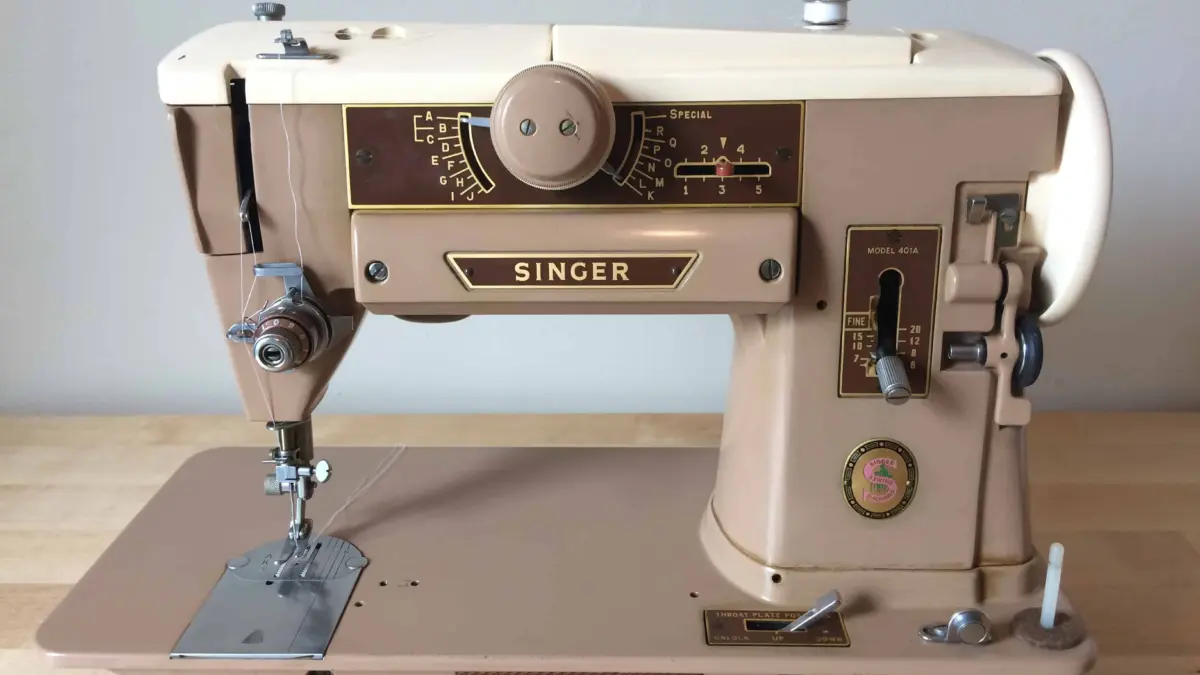
Her 1962 Singer was out there in its wooden cabinet, sitting crooked with one leg in the gutter. Next to it was a black trash bag, split down the side, with two quilts spilling out onto the concrete. My grandmother made those quilts for Mom’s wedding. Mom’s recipe tin sat on top of a cardboard box, the green one with the dented lid that has lived on her counter beside the flour canister my whole life. There were a dozen boxes, more or less, some taped and some just folded shut. And leaning against the cart, as if somebody had at least hesitated over it, was Dad’s flag in its wooden case, folded the way the honor guard handed it to her at the cemetery.
There is a rule about the curb. Once a thing is set out on trash day, it belongs to the city. Residents can’t come pick through a neighbor’s pile, and drivers are not allowed to salvage. It’s in the handbook, and I have signed the page that says I read it. Everything on that curb was city property headed for the landfill. The only person on earth in a position to stop it was the driver, and the driver was me.
Trina had a reason. I want to be fair about that, because I have had a few weeks to think it over. The listing photos were scheduled for Friday, and Marcy wanted the house empty. Trina had worked a full day of showings and driven four hours and was looking at forty-four years of somebody else’s belongings at ten o’clock at night. I think she told herself Mom would never miss an old sewing machine and some linens. Garrett was back in Omaha, at work behind the parts counter at the implement dealer, trusting his wife to do what she said.
I pulled my gloves tight and climbed down.
Across the street, a porch light was on. Lorene Boettcher stood under it in her bathrobe with her arms folded. She is 74. She taught me to ride a bike on that sidewalk the summer I was seven, running along behind me with one hand on the seat. She didn’t wave and she didn’t say a word. She just watched me.
A Singer in that cabinet runs about seventy pounds. I got my arms around it and walked it to the cab step, then slid it onto the floor on the passenger side. My right shoulder has sixteen years of joystick in it, and it let me know. The quilts went on top of the machine. The recipe tin went on the dash where I could see it. The boxes went wherever they would fit, behind the seat and on the seat and under my feet.
Then they didn’t fit. I had six boxes still on the curb and no room for a lunch pail. So I keyed the radio.
“Dwight, I need twenty minutes.”
Dwight has been dispatching for the city longer than I’ve been driving. He has heard me ask for a tow, for a mechanic, once for an ambulance when a man collapsed in his driveway on Cedar. He had never heard me ask for time.
He didn’t ask why. “Take it, Wendy.”
My house is six blocks over. I made two trips with a 33,000-pound garbage truck down a street where it had no business being, and I parked it in front of my own mailbox with the hazards on. I carried every box in with my boots off. Mom sleeps with her hearing aids on the nightstand, and without them a freight train could come through the hallway. Her door was open a few inches. I pushed it the rest of the way with my hip.
I stacked her life around her bed in the dark. The Singer wouldn’t go through the bedroom door without taking the door off, so I left it in the hall where she would see it first thing. The quilts I laid over the foot of the bed. Boxes went along the wall under the window. Her recipe tin went right by her slippers. She was on her side with her mouth a little open and one hand tucked under the pillow, and she never stirred.
Then I was back on my route. Everything went in the house but one thing. Dad’s flag rode on the seat beside me. I had it in my hands at Mom’s bedroom door and I couldn’t make myself let go of it yet, so I carried it back out to the truck and set it on the passenger seat.
I finished Elm. I dumped Mom’s cart with nothing in it but two bags of kitchen trash, and I dumped Lorene’s, and when I looked up at her porch the light was off and she had gone inside.
I thought about a lot of things over the next eight hours. A side-loader gives you time for that. I thought about Dad coming home from the grain elevator with dust in his eyebrows, thirty-eight years of it, and Mom making him strip off his shirt on the back step. I thought about her at that Singer hemming my band uniform the night before the homecoming parade. Mostly I thought about what I was going to say to her, and I didn’t come up with anything good.
At 9:30 I took my break in the lot behind the Casey’s and called the house. It rang nine times. Mom doesn’t always hear the phone even with her aids in, and I knew that, and it didn’t help. I tried again at eleven from the top of the hill by the water tower and got nothing. I pictured her waking up in a room full of boxes she had last seen in her own attic, with nobody there to explain it. I ran the rest of that route faster than I should have.
The flag sat there for 900 carts. It rode past the school, past the Lutheran church where Dad’s funeral was, past the elevator with its long shadow lying across the tracks. Every time I took a corner I put my hand out to keep it from sliding. At the transfer station I held it on my lap while I tipped the load. I parked the truck in the city yard, signed my sheet, and carried the case to my pickup like a sack of eggs.
At 1:40 I pulled into my own driveway. The house was quiet. The Singer was still in the hall where I had left it, but the lid of the cabinet was open now and the machine was folded up out of its well. Mom’s door was shut.
I tucked Dad’s flag under my arm. From inside, I heard her say my name.
I turned the knob.
She was sitting on the edge of the bed in her housecoat with the walker parked in front of her. She had her hearing aids in and her glasses on. The recipe tin was open on her lap, and she had three or four boxes open on the floor with the flaps standing up. She had spent the morning taking inventory.
“Wendy,” she said again. “Why is my sewing machine in your hallway?”
I sat down on the cedar stool by the dresser. I still had my work jacket on and I smelled like the truck. “It was at the curb, Mom. All of this was. I found it on my route this morning.”
She looked at me for a while. Her eyes went to the quilts and to the boxes under the window, and then to the case under my arm. I held it out. She took it in both hands and set it on her knees on top of the tin, and she ran her thumb along the glass where a little frost had melted and dried.
“Trina came last night,” I said. “She was supposed to come Saturday. She came early and cleared the house for the photographs.”
“By herself.”
“Yes.”
Mom nodded slowly. I had braced for crying. I have seen my mother cry maybe four times, and I was sure this would be the fifth. She only looked tired, and smaller than she had looked the day before.
“I told her on the phone I didn’t need any of that old stuff,” she said. “Two weeks ago. She asked what I wanted to do about the furniture and I said I don’t need any of it, do what’s easiest.”
“You made a list, Mom.”
“I made the list after.” She closed the lid of the tin. “I said that so nobody would have to haul it. You with your shoulder, and Garrett four hours off. I didn’t want to be a job for people.” She was quiet a minute. “I didn’t think she’d take me at my word.”
I didn’t have an answer. I got up and made us each a grilled cheese sandwich, because it was two in the afternoon and neither of us had eaten, and we sat at the kitchen table with the flag between us next to the napkin holder.
While she ate, Mom went through what was there and what wasn’t. She had it nearly all in her head. The Christmas ornaments were missing, four boxes of them. Dad’s green Stanley thermos was gone, and the photograph albums, and a gallon pickle jar full of buttons that had belonged to her mother. So was a gray metal lockbox that she called “the desk box.”
“What’s in the desk box?”
“Papers,” she said. “The deed. Your dad’s discharge. The death certificates I had left over. Marcy said the title company would want one, on account of your father’s name still being on the house.”
I put my sandwich down. I called Trina from the back step with the storm door shut behind me.
She answered on the second ring, and I could hear a turn signal clicking. She was already halfway back to Omaha. I told her what I’d found at 5 AM and where it was now. There was a long pause.
“Wendy, she told me she didn’t want it,” Trina said. “She said those exact words to me. I have photos Friday and Marcy was very clear that it needs to be empty. I worked until midnight in that house. I did the bathrooms. I did the basement, and you haven’t seen that basement.”
“You put Dad’s flag out with the trash.”
“I leaned it against the cart so it wouldn’t get wet.” Her voice cracked a little on that, and she covered it. “I didn’t know what else to do with it. I thought somebody might see it and take it. I don’t know what I thought. It was one in the morning.”
I asked about the ornaments and the albums and the lockbox. She said she had taken one carload to the donation drop behind the thrift store in Holbrook, eleven miles east, because it was on her way to the motel. She remembered ornaments, and kitchen things. She didn’t remember any lockbox or any albums. I believed her about the albums. She said she’d call Garrett, and I said I already had a message in to him, and we hung up without either of us saying goodbye.
I drove to Holbrook that afternoon with Mom’s walker folded in the truck bed and Mom in the passenger seat, because she wouldn’t stay home. The thrift store is run by church volunteers, and the woman at the back door let me look through what had come in overnight. I found three of the four ornament boxes, still taped, with “XMAS” on them in Mom’s handwriting. I found her bread pans. Dad’s thermos was nowhere. The woman said a man had come through that morning buying tools and camping things for a flea market booth, and that it might have gone with him. She wrote my number on a sticky note. Nobody ever called.
Mom held one of the ornament boxes on her lap the whole way back. She didn’t mention the thermos, and I knew better than to.
When we turned onto my street there was somebody sitting on my front steps. It was Lorene, in a quilted coat, with a cardboard flat beside her of the kind canned goods come in. I helped Mom out and got the walker under her, and Lorene stood up.
“Ruth,” she said. “I’ve got some of your things.”
In the flat were three photograph albums, the gallon jar of buttons, and the gray lockbox. Lorene told it standing right there on the walk. She had seen Trina’s SUV in the driveway around eight Tuesday night and seen her start carrying things to the curb about ten. She had gone over in her slippers and asked what was going on. Trina told her Ruth had okayed it, which was true as far as it went.
“I didn’t feel right arguing with family,” Lorene said. “But I didn’t feel right going to bed either. So after she left I went over with a flashlight and took what I could carry. I figured if I was wrong I’d just put it back out next week.” She looked at me. “Then I remembered who drives Wednesdays. I thought I’d better stay up and see what you did.”
Mom reached out from the walker and took hold of Lorene’s coat sleeve and held on to it. That was the fifth time I have seen my mother cry. Lorene stayed for supper. We opened the lockbox on the kitchen table, and everything was in there, down to the deed with the county recorder’s stamp from June of 1982 and four certified copies of Dad’s death certificate in a manila envelope.
Thursday morning my supervisor called me into the office before I had even clocked in. Roy Stahl is a decent man who used to drive the rear-loader before his knees went. He had a printout on his desk from the GPS unit in my truck. It showed the truck stopped at my home address at 5:19 for nine minutes and again at 5:36 for eleven.
“Dwight logged it as a hydraulic check,” Roy said. “Dwight’s a good friend to have. You want to tell me what a hydraulic check was doing in your driveway?”
I told him. I didn’t dress it up. I said I had taken property off a curb on a collection day, in a city vehicle, on city time, and carried it into my house.
Roy leaned back and looked at the ceiling. “Policy says nothing leaves the curb except into the hopper.”
“I know what it says. Write me up.”
He picked up a pen and clicked it a few times. Then he asked whose house it was, and I told him that too, and he asked if it was Len Halvorsen’s flag. Dad had sold Roy’s father seed corn for years. Roy put the pen down. He said he was giving me a verbal warning and that I should consider myself warned, and he slid the printout into his desk drawer. I never found out whether he filed anything. I didn’t ask. I went out and did my Thursday route, which is the north side and has more alleys than I care for.
Garrett and Trina drove out Saturday morning. I watched them come up my walk through the front window. Garrett had on his good jacket, which he wears when he expects to be yelled at. Trina carried a bakery box and looked like she had not been sleeping.
Mom was at the kitchen table with the tin and the lockbox and her envelope with the list on it. She let them both sit down. I poured coffee.
“I’m sorry, Ruth,” Trina said straight off. “I should have called. I thought I was saving you from having to go through it all. I see houses every week where the kids can’t let go of anything and the place sits for six months. I didn’t want that for you.” She twisted her wedding ring. “I should have called.”
“You should have,” Mom said. She said it mildly. She did not tell Trina it was all right, and Trina noticed she hadn’t.
Garrett cleared his throat. He had a folder with him. Back in September, in the hospital, Mom had signed a power of attorney naming him, with a woman from the business office there to notarize it. It was meant for emergencies, in case the surgery went badly. He had been carrying it around ever since like a hall pass.
“We’ve been thinking about after the sale,” he said. He took a brochure out of the folder and laid it on the table. It was for an assisted living place in west Omaha, twelve minutes from their house. There was a photograph of a dining room with cloth napkins. “You’d have your own apartment. Trina could stop by every day. It runs about $4,800 a month, and with the house money and your Social Security and Dad’s pension from the co-op, we figured it out to nearly three years before we’d even have to think about anything else.”
“Three years,” Mom said. “And then what, at 87?”
“Mom, that’s not what I meant.”
“I know what you meant. You meant well.” She turned the brochure around and studied the dining room. “I’ve lived in this town since I was nineteen. My husband is buried at the edge of it. I have a room here and a daughter who puts up with me.” She pushed the brochure back across the table with one finger. “I am not signing my house over to a place with cloth napkins. And I’d like that paper from the hospital torn up, Garrett. I’m not in the hospital.”
Garrett looked at me as if I had put her up to it. I hadn’t. I had not said one word to her about where she ought to live. I did say then that the money from the house was hers and should go in her own savings account at Farmers State, in her name, and that whatever she wanted to do with it was nobody’s business at that table. Garrett’s ears went red. He said nobody had suggested otherwise. Trina put her hand on his arm.
It stayed stiff after that. They ate the coffee cake she’d brought, and Garrett carried the Singer into Mom’s room for her after he and I took the door off its hinges, and that was the nearest we came to making up. He did not tear up the power of attorney that day. He said he’d talk to the lawyer who drew it up. As far as I know it’s still in his folder.
After they left, Mom sat a while longer at the table. Then she opened the recipe tin and took out the cards a section at a time, soups and breads and casseroles, and laid them in rows. Behind the last divider, the one marked “Pies,” there was a long brown envelope gone soft at the corners.
“Your dad signed up for these at the elevator,” she said. “They took it out of his check. Fifty dollars here and there. He quit when you kids needed braces.”
They were savings bonds, the paper kind, Series EE, with dates running from 1984 to 1993. There were twenty-three of them. Mom had kept them behind the pie recipes for forty years because Dad said a burglar would never look in a recipe box. Trina had set that tin at the curb on top of a carton of dish towels.
I took Monday afternoon off and drove Mom to Farmers State Bank. The manager, Curtis Vandeberg, has known her since he was a teller. He brought us into his office and went through the bonds one at a time, typing the serial numbers into his computer with two fingers. He told her every one of them had stopped earning interest years ago, the last of them in 2023, and she said she figured as much and looked put out about it anyway.
“Well, Ruth,” he said when he was done, and turned the screen toward her. It came to a little over nine thousand dollars. She had him deposit it in her savings account. In the parking lot she said, “Len always did say he was better with money than I gave him credit for,” and then she asked if we could stop at the fabric store, since we were out anyway.
Marcy took her photographs a week late. I had hauled the last of the furniture to the consignment place in the meantime, and Mom came with me and chose what stayed and what went, sitting in a lawn chair in the middle of her own empty living room and pointing. She kept the kitchen table and let the hutch go. She stood for a long time in the doorway of the bedroom she had shared with Dad, holding on to her walker, and then said she was ready.
The house was on the market nineteen days. A young couple offered $112,000. He works for the railroad and she is a dental assistant, and they had a letter from the credit union saying they were approved for the loan. Marcy thought we could counter. Mom said she remembered what it was to be 24 and scared of a mortgage, and to take it.
Thanksgiving fell in the middle of all that. Garrett and Trina came, and I was not sure until I saw their car that they would. Trina brought a store pie and apologized for it at the door. Mom had made two of her own that morning, sitting on a stool at my counter with the tin open at her elbow. She let Trina carry the plates in and said very little to her through the meal. Afterward, when I started running the dishwater, Mom handed Trina a towel.
“You can dry,” she said.
Trina dried every dish in my kitchen, including several that were clean to begin with. They were not friends by the end of it. They were talking about whether the new people on Elm would keep Mom’s peonies along the fence.
The closing was December 18th at the title company on Main Street, in a room with a fake ficus and a long table. The closer, Janelle, slid papers to Mom one at a time and showed her where to sign. One of Dad’s death certificates went into the file so the title would be clear. Mom signed the deed last. She read all of it first, and nobody in the room hurried her. After Marcy’s commission and the closing costs and the last of the property taxes, the check came to a hair over $104,000. Janelle asked whether she wanted it wired, and Mom said she would carry it over to the bank herself, thank you, it was only two blocks.
She tried to pay me rent out of it. I told her no. We went around on that for most of a week, and where we ended up is that she buys the groceries and I don’t argue about the brand of coffee. She also made an appointment for me with the orthopedic clinic about my shoulder, without asking, and told me she would be riding along to make sure I went in.
Dad’s flag is on the dresser in the spare room now, beside her hearing aid case. The quilts are on her bed. The door is back on its hinges, and the Singer sits under the window where the light is good. I still drive Elm every Wednesday. The railroad man sets his cart out the night before, square to the curb, and I dump it and go on to the 42nd street.
Last night I came in from work and hung my jacket on the hook by the back door. The left cuff has been torn since October, when it caught on the cab step. Mom looked at it from the kitchen table over her glasses.
“Bring that here,” she said.
I went to bed at seven, the way I do on work nights. I could hear the machine running through the wall, starting and stopping, and I fell asleep to it.