“I made your daughter a promise. Now it’s time you knew the truth.”
The woman standing next to Teagan’s headstone held a sealed envelope out to me.
My name was written on the front. Mom. In handwriting I hadn’t seen in ten years.
My daughter’s handwriting.
For a moment, I couldn’t breathe.
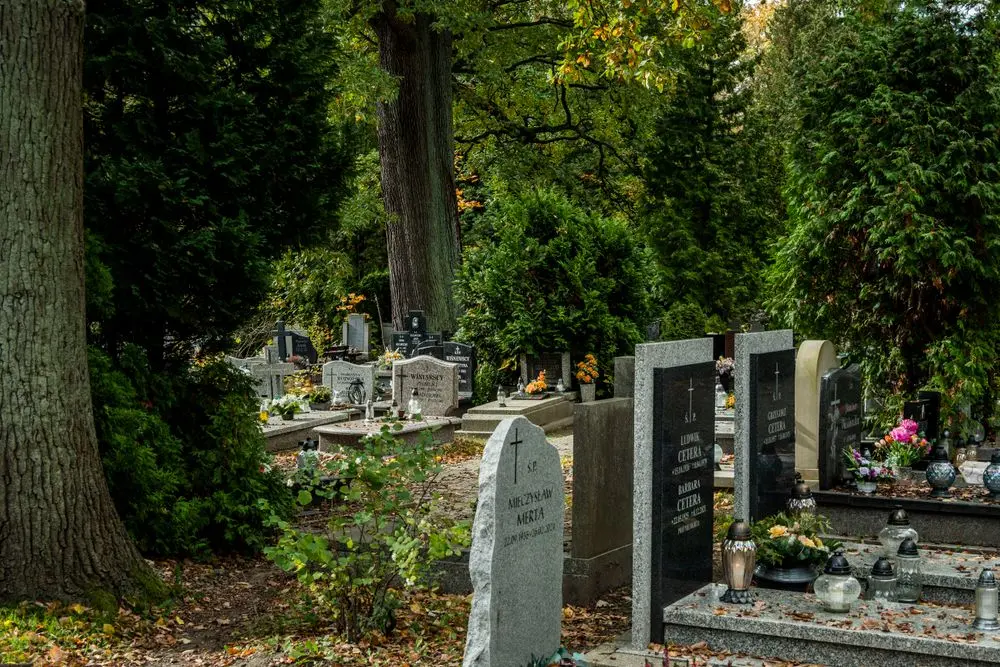
It was a Saturday in early April, a bright, windy day. The kind of spring day where the sun is warm but the air still has teeth in it. Oak Grove Cemetery sits on a hill on the north side of Springfield, Missouri, and the wind comes up over that hill and pushes at you like it’s trying to get somewhere.
I was holding a bunch of yellow tulips from the Hy-Vee. Teagan’s favorite. Every year on her birthday, I bring yellow tulips.
She would have been twenty-nine.
I hadn’t noticed the woman at first. Lucas and I had parked down at the bottom of the hill, by the old stone chapel, and he’d stopped to dig through the back seat because he couldn’t find the card he’d made. I walked up ahead.
When I got to the top, she was standing there.
Sixties, maybe. Short gray hair. A navy raincoat. Sensible shoes. She was standing at the foot of Teagan’s grave with her hands folded in front of her, looking down at the stone.
TEAGAN MARIE DAWSON. APRIL 6, 1997 – APRIL 2, 2016. BELOVED DAUGHTER. MOTHER.
I’d paid extra for that last word. The man at the monument company asked if I was sure. She’d only been a mother for forty minutes.
I said I was sure.
The woman looked up when she heard me on the gravel.
She didn’t smile. She looked at me for a long time. Then she reached into the pocket of her raincoat and took out the envelope.
“Where did you get that?” I said.
“She gave it to me.”
“When?”
“The day her baby was born.”
I held the tulips tighter. The plastic wrap crackled in my fist.
I couldn’t make sense of what she was saying.
“You’ve had a letter from my daughter,” I said slowly, “for ten years?”
The woman looked down at the grass.
“Yes,” she said.
Before I could say anything else, Lucas yelled from the bottom of the hill.
“Grandma! I found it!”
My grandson came running up the gravel path toward us. Ten years old. Skinny legs. Grass-stained jeans. His Cardinals cap on backward. Waving the birthday card over his head like a flag.
He’d made it himself at the kitchen table the night before. Purple construction paper folded in half. HAPPY BIRTHDAY MOM in green marker on the front, with a drawing of a baseball diamond and a stick figure with long brown hair standing in the outfield. He’d spent forty-five minutes on it. He wouldn’t let me see the inside.
The woman glanced toward him.
Her face changed. Something soft and sad moved across it.
Then she turned back to me.
“Don’t open this in front of him,” she said quietly.
“Who are you?” I said.
“My name is Trudy.”
“That tells me nothing.”
She looked at me for a long moment.
“I knew Teagan at the hospital,” she said. “I was her nurse.”
A sick feeling settled in my stomach.
The hospital.
Mercy Hospital. The fourth floor. Labor and delivery. The waiting room with the blue chairs and the TV bolted to the wall that was playing a home improvement show with the sound off.
The doctor in green scrubs who came and sat down next to me.
Lucas was halfway up the hill now. Still waving the card.
Trudy pressed the envelope into my hand. Firmly. She folded my fingers over it.
“My number’s on the back,” she said.
And she turned and walked away. Down the other side of the hill. Toward the far gate. Without another word.
I stood there holding the envelope and the tulips.
My hands were shaking.
“Grandma?” Lucas was out of breath. “Who was that?”
I put the envelope inside my coat.
“Nobody, sweetheart,” I said. “Just someone visiting.”
He looked at me. Then at the woman walking away. Then back at me.
He didn’t believe me.
He never does. He’s too much like his mother.
Teagan was eighteen when she told me she was pregnant.
It was August of 2015. A Tuesday night. I was at the kitchen sink washing dishes after dinner. She was sitting at the table behind me with her chemistry textbook open, supposedly studying for a summer school class at Ozarks Technical Community College.
“Mom,” she said. “I need to tell you something.”
“Mm-hmm.”
“I’m pregnant.”
I dropped a plate.
It didn’t break. It just clattered in the sink. I stood there with my hands in the soapy water and didn’t turn around.
“How far?” I said.
“Fourteen weeks.”
Fourteen weeks.
She’d known for two months. Maybe more. And she’d been sitting across from me at that table every night, eating my meatloaf, asking me to pass the salt.
I turned around.
She was sitting very straight in her chair with her hands flat on the textbook. Her face was pale. Her eyes were red. She’d been crying before she came downstairs. She’d tried to hide it.
She looked so young.
She looked about twelve.
“Who’s the father?” I said.
That was the first thing I asked.
Not “Are you okay?” Not “Are you scared?” Not “How are you feeling?”
Who’s the father.
I’ve thought about that a lot since.
Throughout her pregnancy, I asked her about the baby’s father over and over.
At breakfast. In the car. At her doctor appointments. In the grocery store.
“Does he know?”
“Mom, please.”
“What’s his name?”
“I can handle this myself.”
“You shouldn’t have to do this alone.”
“Please stop making this harder.”
Every conversation turned into another argument.
She’d go up to her room and close the door. I’d stand in the hallway outside it. Sometimes I’d knock. Sometimes I’d just stand there.
Eventually neither of us knew how to talk about it without hurting each other.
So we stopped talking about it.
Mostly.
I want to explain why I asked so much.
Not to excuse it. Just to explain.
Teagan’s father left when she was two.
His name was Gary Dawson. We’d been married four years. He was a long-haul trucker. One day in March of 1999 he left on a run to Dallas and never came back. He called me from a pay phone in Texarkana three days later and said he’d met someone. He said he was sorry. He said he’d send money.
He sent money twice.
Then nothing.
I raised Teagan by myself.
I worked as a medical receptionist at a family practice on Battlefield Road for twenty-two years. I worked Saturdays at a craft store for extra money. I bought her school clothes at Goodwill and told her they were vintage. I learned how to fix a toilet and change a tire and kill a wasp nest with a can of hairspray and a lighter.
I did it all alone.
And I never wanted that for her.
So when she said she was pregnant, all I could think was: Not her. Not my girl. She is not going to do this alone. I’m going to find that boy and make him step up if it’s the last thing I do.
I thought I was protecting her.
I thought that was what love looked like.
There was a boy who came to the house twice that fall.
I barely remember him. Tall. Skinny. Dark hair that fell in his eyes. A letterman jacket from Glendale High School, which wasn’t Teagan’s school.
The first time was in September. He sat at our kitchen table with a can of Sprite and turned it around and around in his hands while Teagan finished getting ready. He said “Yes, ma’am” and “No, ma’am” and not much else. Then they went out. To the movies, Teagan said.
The second time was in October. He came to the front door. Teagan met him on the porch. They talked out there for half an hour in the cold. I watched them through the living room curtain. At one point, he put his hand on her stomach.
Then he left.
When she came back inside, I said, “Is that him?”
“Who?”
“Don’t play games with me, Teagan. Is that the father?”
She looked at me for a long time.
“He’s a friend,” she said.
And she went upstairs.
I never saw him again.
I never asked his name.
I didn’t think he mattered. I thought he was just some boy.
She went into labor on April 2nd, 2016. Four days before her nineteenth birthday.
It was early in the morning. Five-thirty. She came into my room and woke me up and said, “Mom. I think it’s time.”
I drove her to Mercy. She held my hand the whole way and squeezed so hard during the contractions that I had bruises on my knuckles for a week.
She was scared. I could see it. Her face was gray.
But she kept making jokes.
“If I die,” she said, at a red light on Glenstone, “you can’t give my room to the cat.”
“You’re not going to die.”
“Promise you won’t give my room to the cat.”
“Tee. We don’t have a cat.”
“You’ll get one,” she said. “I know you. You’ll get lonely and get a cat and give it my room.”
I laughed.
I laughed.
They took her back to labor and delivery. A nurse with a clipboard asked me to wait in the family waiting room while they got her settled. “Just for a few minutes,” she said. “We’ll come get you.”
I sat in the waiting room for three hours.
They came and got me twice. Once at eight. Once at ten. I sat with Teagan and held her hand and fed her ice chips. She was in a lot of pain. They gave her an epidural. She fell asleep for a little while.
At eleven-thirty, a nurse asked me to step out again. They were going to check her. Things were progressing. It was almost time.
I kissed Teagan’s forehead.
“I’ll be right outside,” I said.
“I know,” she said.
That was the last thing she ever said to me.
I know.
At one-fifteen in the afternoon, a doctor came into the waiting room and sat down next to me.
He was young. Thirties. Green scrubs. A surgical cap with little cartoon bears on it. He had a mask hanging around his neck.
He sat down in the blue chair next to mine. He didn’t say anything at first.
I knew.
I knew before he opened his mouth.
“I’m so sorry,” he said. “We did everything we could.”
I couldn’t understand what he was saying.
The words just floated there. They didn’t make sense. Like he was speaking another language.
He said a lot of things after that. Amniotic fluid embolism. Very rare. Sudden. Her heart. They tried for forty minutes. Nothing anyone could have predicted. Nothing anyone could have done.
I don’t remember most of it.
I remember asking one question.
“The baby?”
“He’s alive,” the doctor said. “He’s healthy. Seven pounds, one ounce.”
He put his hand on my arm.
“He’s going to need you,” he said.
Teagan never came home from that hospital.
Her son came home with me instead.
I named him Lucas. Teagan had picked it. She’d written it on a sticky note on the refrigerator in February. LUCAS JAMES? With a question mark. And then, underneath, in a different color pen, she’d crossed out the question mark.
So it was Lucas James.
James was my father’s name.
There was no father listed on the birth certificate.
The hospital asked me. I said I didn’t know.
That was the truth.
For the next ten years, Lucas and I were our own little family.
I won’t pretend it was easy.
I was forty-five years old with a newborn. A colicky one. He screamed every night from nine to midnight for three months straight. I walked him up and down the hallway until my feet ached. I sang him every song I knew. Most of them were Patsy Cline.
I took six weeks off work. Then I went back. My friend Carol from church watched him during the day for almost nothing.
I was so tired I fell asleep at red lights.
I was so sad I cried in the shower every morning so he wouldn’t hear me.
But he grew.
He grew into a thoughtful, curious kid. The kind who asks questions nobody can answer. “Grandma, where does the wind start?” “Grandma, do fish get thirsty?” “Grandma, if you dig a hole all the way through the Earth, do you fall out the other side or get stuck in the middle?”
He loved baseball more than anything. He’d play catch with the side of the garage for hours. Thunk. Thunk. Thunk. Until the neighbors complained.
He loved my Sunday pancakes. Every Sunday morning since he was two. Buttermilk pancakes with real maple syrup. He’d eat four of them. He’d eat five if I let him.
He had Teagan’s eyebrows. Dark and straight and very serious. And her nose, which turned up a little at the end.
When he concentrated, he stuck his tongue out the corner of his mouth.
Teagan used to do that too.
But there was one question he kept asking that I could never answer.
The first time, he was four. We were at the park. Another little boy’s father was pushing him on the swings. Lucas watched them for a long time.
Then he looked up at me.
“Grandma,” he said. “Who’s my dad?”
“I don’t know, sweetheart.”
He asked again at six. At seven. At eight. At nine. On Father’s Day, every year, when the other kids at school made cards. At his first Little League game, when the coach asked all the dads to come out for a picture.
“Grandma, who was my dad?”
“I don’t know.”
It was the truth.
But after a while, it started to feel like a lie.
Now, with Teagan’s envelope tucked inside my coat, I was afraid that knowing the truth might hurt more than not knowing.
Lucas set his card against the headstone. He made me promise not to look inside. Then he talked to his mom for a while, the way he always does. He told her about baseball tryouts. About the spelling test. About how Grandma made the pancakes too thick again last Sunday.
I stood a few steps back and let him.
I could feel the envelope against my ribs the whole time.
When we got home, I hid the letter in a kitchen drawer.
The junk drawer. Under the takeout menus and the rubber bands and the batteries that might be dead.
Lucas dropped his backpack by the dining table.
“Who was that lady?” he said.
“Someone who knew your mom.”
His face lit up right away.
“Really? What did she say?”
“Not much.”
“Did she know my dad?”
I pushed the drawer shut. Maybe a little too hard. The rubber bands rattled.
“I don’t know,” I said.
Lucas looked at my face.
“You always say that,” he said.
“Because it’s something I just don’t know, my love.”
He went quiet.
He looked down at the floor. His jaw got tight.
That look reminded me so painfully of Teagan. The way she’d go still and quiet when a conversation got hard. The way she’d pull inside herself and close a door you couldn’t see.
“Okay,” he said.
And he went to the living room and turned on the TV.
After Lucas went upstairs to bed, I took the envelope out of the drawer.
I stood at the kitchen counter with it in my hands for a long time.
The kitchen was quiet. The refrigerator hummed. The clock over the stove ticked. It was almost ten-thirty.
On the front, in blue ballpoint pen: Mom.
On the back, in a different handwriting, small and neat: Trudy Pell. And a phone number.
I turned it over and over.
I was afraid.
I’d waited ten years to know. I’d prayed to know. And now that it was in my hands, I didn’t want to open it.
What if it said something I couldn’t live with?
What if she hated me?
Finally, I broke the seal.
A photograph fell out onto the countertop.
It was a small one. A four-by-six print from a drugstore, the kind you used to get at Walgreens. The colors were a little faded.
Teagan was standing in a park. Phelps Grove Park, I think. By the duck pond. Wearing her old gray Missouri State hoodie and jeans. Laughing at something.
Next to her was a teenage boy.
Tall. Skinny. Dark hair falling into his eyes.
I knew him.
The boy from the kitchen table. With the can of Sprite.
There was an old baseball glove tucked under his arm.
Brown leather. Worn and cracked. The laces frayed.
My hands were shaking.
I picked up the letter.
It was one page. Notebook paper. Folded in thirds. Torn along the edge where it had come out of a spiral.
I unfolded it.
Mom,
I know you think I won’t tell you because I don’t trust you.
That isn’t why.
He knows about the baby.
I stopped.
My fingers were trembling so hard the paper rattled.
He wanted to stay. But wanting something and being ready for it aren’t the same thing.
His family keeps telling him this will ruin everything he planned. College. Baseball. All of it. I told him not to come back because he’s scared of disappointing them. If he comes back, I need it to be because he chooses us himself. Not because I made him. Not because you made him. Because he chose.
I know you’d make him. I know you’d find him and drag him here by his ear. I know you would because you love me.
But I don’t want a boy who was dragged here.
I want someone who walks in the door on his own.
Then I reached the sentence that broke everything I thought I understood about those last months.
You kept asking me who he was. But you never asked why I was scared.
I set the paper down on the counter.
I put both hands flat on the counter on either side of it and leaned on them, because my legs weren’t holding me up very well.
And a moment I’d completely forgotten came back to me.
All at once. Like a door blowing open.
It was January. 2016. Three months before.
A Thursday night. I was sitting at the kitchen table doing the bills. The electric bill. The water bill. The hospital pre-registration forms. I had a calculator and a stack of envelopes and a cup of tea that had gone cold.
Teagan came into the kitchen. Seven months pregnant. In her pajamas. Her hair in a messy bun.
She stood by the refrigerator.
“Mom,” she said. “Can I ask you something?”
I didn’t even look up.
I was adding up a column of numbers. I was tired. I’d worked a ten-hour day. My back hurt.
“If this is about dodging the father question again,” I said, “I can’t do this tonight, Tee.”
She stood there.
She didn’t move.
For several seconds, she didn’t say anything.
Then she said, very quietly, “Never mind.”
And she went back upstairs.
I’d forgotten it.
Completely. For ten years. It had just slid away, like a thousand other little moments.
For ten years, I’d told myself that my daughter refused to confide in me. That she’d shut me out. That she’d been too proud, or too stubborn, or too ashamed.
Now I wondered whether I was the one who closed the door.
I called the number on the back of the envelope right then.
It was ten-forty at night. I didn’t care.
Trudy picked up after four rings.
“Hello?”
Her voice was groggy. I’d woken her up.
“You had this for ten years,” I said.
There was a pause.
“Elizabeth,” she said.
“You had my daughter’s letter for ten years.”
“I know.”
“Don’t say that to me like it’s perfectly fine.”
She didn’t answer.
I could hear her breathing on the line.
“Meet me,” I said.
“Elizabeth, I—”
“Tomorrow. You owe me that.”
There was a long pause.
“Lindberg’s Diner,” she said. “On Commercial Street. Two o’clock.”
The next day, Trudy was waiting in a booth near the back of the diner.
Lindberg’s is an old place. Red vinyl booths. A pie case by the register. A waitress named Pam who’s been there since the 1980s and calls everybody honey.
Trudy was sitting with a cup of coffee in front of her that she hadn’t touched. She was wearing the same navy raincoat. She stood up when she saw me. Then she sat back down.
I didn’t sit down right away.
I took the photograph out of my purse. The one of Teagan and the boy by the duck pond.
I laid it on the table between us.
Then I sat down.
“You took care of Teagan?” I said.
“For part of that day.”
“Then why did she give you the letter? Why not me?”
Trudy looked at the photograph for a long time.
“She was scared,” Trudy said. “She didn’t think she was going to die, Elizabeth. She was eighteen and about to have a baby.”
That hit me hard.
I’d always imagined that letter as some kind of goodbye. A last message from my daughter. Like she knew.
But she didn’t know.
She didn’t know any more than I did.
She was just a scared young girl, about to become a mother, and she wanted to make sure that if something went wrong, someone would know the truth.
“She wrote it early that morning,” Trudy said. “Around seven. Before her epidural. You’d gone down to the cafeteria to get coffee. She asked me for a piece of paper. I tore one out of my notebook.”
She swallowed.
“She told me that if something went wrong and he didn’t come, I should give the letter to you. She was very clear about it. If something goes wrong and he doesn’t come.”
I pointed at the boy in the photograph.
“Is this him?”
“I don’t know his name,” Trudy said. “She never told me.”
“Then what do you know?”
Trudy hesitated.
She looked down at her coffee.
Then she said something I didn’t expect.
“He came,” she said.
My whole body went stiff.
“What?”
“That afternoon,” Trudy said. “After Teagan died. About an hour after. I was at the nurses’ station. And a young man came off the elevator. Very tall. Very thin. He was wearing a baseball jacket. He was holding flowers. Carnations. The kind you get at a gas station.”
My hand went to my mouth.
“He went to the desk,” Trudy said. “He asked for Teagan Dawson. He said, ‘I’m here to see Teagan Dawson. I’m… I’m the father.’”
“You talked to him?”
“No,” Trudy said. “The unit clerk did. I was across the hall. I didn’t realize who he was at first. Not until I looked at him properly. And then I thought, oh. Oh, God. He’s the one she described. She told me about him. Tall. Dark hair. Always fiddling with something in his hands.”
My heart was pounding.
“What happened?”
“The clerk didn’t know what to say,” Trudy said. “She went to get the charge nurse. And while she was gone, he turned around. And he saw you.”
“Saw me doing what?”
Trudy looked at me.
“Leaving with Lucas,” she said.
I remembered.
Not him. I didn’t see him. But I remembered that hallway.
They’d let me hold Lucas in the nursery for a while. Then a social worker came and talked to me about paperwork. Then they let me take him down the hallway to a family room so I could sit with him in private.
I was carrying him in a hospital blanket. A little striped one. Blue and pink and white. I was crying so hard I couldn’t see where I was going. A nurse had her hand on my back, guiding me.
“And?” I whispered.
“He just stood there,” Trudy said. “By the elevators. Holding his carnations. Watching you walk down the hall with that baby.”
She shook her head.
“And then he left,” she said. “He got back on the elevator. The doors closed. And he was gone.”
“You watched him walk away?”
“Yes.”
“And then you kept my daughter’s letter?”
Trudy’s eyes filled with tears.
“I told myself you had enough grief,” she said.
“You decided that for me.”
“Yes.”
“You decided it for my grandson.”
“Yes.”
My anger went strangely calm.
I’d expected to scream at her. I’d practiced it in the car. But sitting across from her in that red vinyl booth, watching her cry into a paper napkin, I just felt very, very tired.
“So why now?” I said.
Trudy looked down.
“I retired in December,” she said. “Thirty-four years in labor and delivery. And for thirty-four years, I told myself I kept that letter because I was protecting a patient. Keeping her wishes. She said if he doesn’t come. And he came. So I told myself the conditions weren’t met. That I shouldn’t give it to you.”
She wiped her eyes.
“But once I stopped being a nurse,” she said, “I couldn’t hide behind that anymore. I had to admit I was protecting myself. I was afraid of this. Of sitting across from you. Of you asking me why.”
I stood up.
I picked up the photograph and put it back in my purse.
“Ten years,” I said, “is a long time to hide behind one bad decision.”
I walked out before she could answer.
Pam the waitress said, “Bye, honey,” as I went past the register.
I didn’t answer her either.
The next afternoon, I took Teagan’s storage box out of my bedroom closet.
A big plastic bin. Blue lid. On the top shelf, behind my winter sweaters.
It had been years since I’d opened it.
I sat on the floor of my bedroom and took the lid off.
It smelled like her.
That’s the strange thing. Ten years. And it still smelled like her. Like the vanilla body spray she bought at Bath & Body Works. Like her shampoo.
Inside were photographs. Her school pictures from kindergarten through twelfth grade, in a little album with a sunflower on the front. Programs from her choir concerts. Her high school diploma, which she got in May of 2015, three months before she told me.
The cheap silver bracelet she wore every single day. A chain with a little charm shaped like a star. She bought it at Claire’s at the Battlefield Mall when she was fourteen with her own babysitting money. She never took it off. Not even in the shower. The nurse gave it to me in a plastic bag at the hospital, with her clothes.
I held it in my hand for a long time.
Then, near the bottom, I found another photograph.
The same boy.
Standing in what looked like a backyard. Holding a baseball bat over his shoulder. Grinning. The same old baseball glove hanging off his belt loop by its strap.
On the back, in Teagan’s handwriting: J. Summer ‘15.
J.
Under the photograph was a torn sheet of notebook paper.
A list. In Teagan’s handwriting.
Buy diapers.
Finish thank-you cards.
Ask Mom about night classes.
Tell Mom.
Tell Mom.
The last two lines were written in different pens. One blue. One black.
Like she’d written it once. And then come back later. And written it again.
That’s what broke me.
Tell Mom. Tell Mom.
She was going to tell me everything.
She just thought she had more time.
“Grandma?”
Lucas was standing in my bedroom doorway.
He’d come home from school. I hadn’t heard the front door. He had his backpack on one shoulder and a juice box in his hand.
He saw the open bin. The photographs spread across the floor.
He came over and sat down next to me. Cross-legged on the carpet.
“Is that Mom’s stuff?”
“Yes.”
I handed him one of her school pictures. Seventh grade. Braces and a side ponytail and a purple sweater. Smiling so big her eyes were almost closed.
His whole face lit up.
“I look like her,” he said.
“You have her eyebrows,” I said. “And her nose.”
He touched the photograph. Right on her nose.
“She looks happy,” he said.
“She was.”
Then he saw the photograph of the boy.
The one by the duck pond. I’d left it on top.
He picked it up.
“Who’s that?”
“Nobody,” I said.
It came out before I could think about it.
Ten years of habit. Ten years of saying I don’t know.
Lucas looked at me suspiciously.
He looked at the photograph. Then back at me.
“Then why did Mom keep his picture?”
I didn’t answer.
“That lady told you something,” he said. “Didn’t she? At the cemetery.”
“Yes.”
“About my dad?”
I took a breath.
“I’m trying to understand it first,” I said. “When I do, I’ll tell you.”
He looked at me for a long time.
And then he said something that caught me completely off guard.
“You always tell me not to hide stuff because I’m scared.”
I stared at him.
He was right. I did. Every time he broke something and hid the pieces. Every time he got a bad grade and stuffed the paper in the bottom of his backpack. Every time he didn’t tell me about the boy at school who was mean to him.
Don’t hide things because you’re scared, Lucas. Scared things get bigger in the dark.
“I do,” I said.
“So are you hiding stuff?”
I could have lied.
I could have said no. Said it was grown-up business. Said I’d tell him when he was older.
I thought about Teagan standing by the refrigerator in her pajamas.
Never mind.
“Yes,” I said.
He looked back down at the photograph.
He was quiet for a long time.
“I need a little time,” I said. “But I won’t leave you wondering forever. I promise. Okay?”
He nodded. Reluctantly.
I could tell he wasn’t happy about it. But he accepted my promise.
He put the photograph back on top of the pile. Very carefully. Face up.
Then he went downstairs.
I sat there on the floor for a long time.
I knew I couldn’t put this off anymore.
I went through every single thing in that box.
Every program. Every photograph. Every scrap of paper.
And in an old program from a district baseball tournament, from the spring of 2014, I found him.
It was folded inside a Glendale High School yearbook supplement. A photo of the varsity baseball team. Twenty boys in two rows. Navy and gold uniforms. Arms crossed.
Second row. Third from the left.
That face.
And underneath, a list of names.
J. Harlan.
Jesse Harlan.
It took me two hours to find him online.
There were a lot of Jesse Harlans. One in Texas. One in Ohio. One in Australia. I’m sixty-one years old. I’m not good at computers. Lucas usually helps me with this kind of thing.
But I wasn’t going to ask Lucas for help with this.
I found him on Facebook.
Jesse Harlan. Joplin, Missouri. Works at Mercy Hospital Joplin. Physical Therapy Department.
His profile picture was a dog. A big yellow lab with a tennis ball in its mouth.
There were only a few other pictures. A fishing trip. A Royals game. A Christmas tree.
No wife. No kids. No girlfriend that I could see.
In one picture, he was standing on a dock holding up a fish. He was older. Twenty-eight. Broader in the shoulders. A short beard.
But it was him.
The boy from the kitchen table.
I wrote him a message.
I rewrote it eleven times.
In the end, it was very short.
My name is Elizabeth. I’m Teagan’s mother. I need to speak with you.
I sent it at 9:14 p.m.
Then I sat at the kitchen table and stared at my phone.
Two hours went by.
Nothing.
At 11:17 p.m., my phone buzzed.
One word.
Lucas?
Just one word.
But it told me he already knew my grandson’s name.
We arranged to meet the next morning.
A coffee shop in Mount Vernon. Halfway between Springfield and Joplin. A little place called The Grind on the town square, across from the courthouse.
I told Lucas I had a doctor’s appointment. I asked Carol from church to pick him up from school.
I’m not proud of that lie.
But I needed to see this man’s face before I let him anywhere near my grandson.
When I walked in, he was already there.
Sitting at a table by the window. With a cup of coffee.
Turning it around and around in his hands.
I stopped in the doorway.
I’d seen him do exactly that. A decade earlier. At my kitchen table. With a can of Sprite.
He looked up.
He saw me.
He stood up so fast he almost knocked the chair over.
“Mrs. Dawson,” he said.
“Elizabeth.”
“Elizabeth. Hi. I…” He stopped. He didn’t know what to do with his hands. “Do you want coffee? I can get you coffee.”
“No.”
“Okay.”
I sat down across from him.
He sat back down.
For a long moment, neither of us said anything.
He was still turning the cup.
“You knew his name,” I said.
“Teagan told me,” Jesse said. “In March. Before. She texted me. She said, ‘If it’s a boy, his name is Lucas James.’ She said she wanted me to know.”
“Then you knew about him.”
“Yes.”
“Why didn’t you come?”
He looked at me.
“I did,” he said.
I stared at him.
“I came to the hospital,” he said.
Trudy’s words came back to me.
He just stood there. Holding his carnations.
“You were there,” I said.
He nodded.
“Start at the beginning,” I said. “All of it. Please.”
He took a breath.
“I met Teagan in the summer of 2014,” he said. “At a party. At a friend’s lake house on Table Rock. She was standing on the dock by herself, throwing bread to the fish. I asked her what she was doing. She said, ‘Making friends.’”
He almost smiled.
“I’d never met anyone like her,” he said.
“We dated for a year,” he said. “Mostly in secret.”
“Why in secret?”
He looked down at the table.
“My parents,” he said. “They had a plan for me. My whole life. My dad played baseball at Missouri State. He wanted me to play D1. I had a scholarship offer from Wichita State. Full ride. My mom wanted me to be a doctor. They had it all mapped out.”
He turned the cup.
“And Teagan didn’t fit in the plan,” he said. “She went to Central. Her mom was a single mom. A receptionist. No offense.”
“None taken.”
“My mom said…” He stopped. His face went red. “It doesn’t matter what my mom said.”
“It matters to me.”
He was quiet for a moment.
“My mom said she was the kind of girl who gets pregnant to trap a boy,” he said quietly. “She said it before Teagan ever got pregnant. Just from meeting her once. At a baseball game.”
I felt my jaw tighten.
“And then she got pregnant,” Jesse said.
“My parents wanted me to stay away,” he said. “When I told them. They thought a baby would ruin everything I’d planned. My dad said if I went near her, he’d stop paying for anything. College. My truck. My phone. Everything.”
He swallowed.
“My mom cried for three days,” he said. “She said I was throwing my life away. She said Teagan would ruin me. She said she’d never forgive me.”
“And what did you think?” I said.
Jesse looked at me for a long time.
“I was scared,” he said. “I loved Teagan. I did. I loved her so much. But I was eighteen. And I let everybody else tell me what my life was supposed to be.”
“That explains eighteen,” I said. “That doesn’t explain ten years.”
He dropped his eyes.
“In October,” he said, “I came to your house. The second time. Remember? On the porch?”
“I remember.”
“I told her I’d stay. I told her I’d marry her. I’d turn down the scholarship. I’d get a job. Whatever she wanted.”
He wiped his eyes with the back of his hand.
“And she said no,” he said.
“No?”
“She said, ‘You’re only saying that because you feel guilty. You’re scared of your parents and you’re scared of my mom and you’re scared of me. And I don’t want you here because you’re scared. I want you here because you want to be.’”
He looked up at me.
“She said, ‘Don’t come back until you can choose for yourself. Not your mom. Not your dad. You.’”
“So you didn’t come back.”
“I went to Wichita State,” Jesse said. “In January. I played baseball for one semester. I hated it. I hated every second. I sat in my dorm room every night and looked at my phone and wanted to call her.”
“Did you?”
“Sometimes. She’d text me pictures. Ultrasounds. Her belly. The crib your church friends gave her.”
He swallowed.
“And on April 1st,” he said, “I finally decided. I packed up my truck. I told my parents I was quitting school. My dad said if I left, I wasn’t his son anymore. I left anyway.”
“I drove all night,” Jesse said. “From Wichita. Five hours. I was going to show up at your house on April 2nd and knock on the door and tell her I chose. Me. On my own. I was going to ask you for permission to marry her.”
I put my hand over my mouth.
“I got to Springfield around eleven in the morning,” Jesse said. “I went to your house. Nobody was home. I sat in my truck in your driveway for two hours. Then I texted her. She didn’t answer.”
He closed his eyes.
“I called the hospital,” he said. “Just a guess. I said, ‘Is Teagan Dawson there?’ And the woman said she couldn’t give out patient information, but she said it in a way that… I knew. I knew she was there.”
“I stopped at a gas station,” he said. “I bought carnations. Pink ones. They were the only flowers they had.”
His voice broke.
“I drove to Mercy,” he said. “I went up to the fourth floor. I asked for her.”
“I didn’t know she was dead,” he said. “When I left Wichita. When I bought those flowers. When I got on that elevator. I didn’t know.”
“But you found out at the hospital?”
“Yes.”
“How?”
He was crying now. Quietly. Right there in the coffee shop. A woman at the next table glanced over and then looked away.
“The clerk went to get somebody,” he said. “And there was a nurse at the station. Older. Short gray hair. She was crying. She looked at me. And I heard another nurse say, ‘That poor girl. Eighteen.’”
“And then you saw me,” I said. “Carrying Lucas.”
He wiped his eyes.
“I saw you,” he said. “Coming down the hall. Carrying this tiny baby in a striped blanket. And you were crying so hard. And a nurse was holding you up.”
He shook his head.
“And I knew,” he said. “I knew she was gone. And I knew that was him. My son.”
“And?” I said.
“I panicked,” he said.
“I couldn’t breathe,” he said. “I couldn’t move. I just stood there holding those stupid gas station carnations. And I thought, she’s dead and it’s my fault. If I’d come sooner. If I’d been there. If I’d chosen in October instead of April. She’d… I don’t know. I thought she’d be alive. I know that’s not how it works. But that’s what I thought.”
He looked at me.
“And I thought, her mother is going to hate me,” he said. “She’s going to look at me and know I left her alone. And she’d be right.”
“So you got back on the elevator.”
“I got back on the elevator.”
“What about the next day?” I said.
He didn’t answer.
“The next week?”
He couldn’t look at me.
“The next year?”
He stared down at the table.
“You weren’t eighteen for ten years, Jesse,” I said.
“I kept telling myself I’d waited too long,” he said.
His voice was barely a whisper.
“After the first week,” he said, “I thought, it’s been a week. She’s already started raising him. If I show up now, I’ll just make it worse. After the first month, I thought, it’s been a month. After the first year, I thought, he doesn’t even know I exist. Why would I come now?”
He looked up.
“Every year it was easier to say it was too late,” he said.
“And every year made that excuse easier,” I said.
“Yes,” he said.
I sat there for a long time.
I believed him.
That was the hard part. I believed every word. I could see it in his face. The fear. The guilt. The ten years of carrying it around like a stone in his pocket.
But understanding why he was weak didn’t erase what his weakness had done.
My grandson grew up for ten years asking a question nobody could answer. Ten Father’s Days. Ten years of making cards for nobody.
“Did you ever go back to your parents?” I asked.
He shook his head.
“I went back to Wichita for a while,” he said. “Then I dropped out. Got a job at a warehouse. Then I went to community college. Got my PT assistant license. I’ve been at Mercy in Joplin for five years.”
He almost smiled.
“I work with kids,” he said. “Pediatric physical therapy. Kids with injuries. Kids learning to walk again.”
“Your parents?”
“My dad died three years ago,” Jesse said. “Heart attack. We hadn’t spoken since 2016. My mom calls me on Christmas. That’s about it.”
“Did you ever marry?”
“No.”
“Kids?”
He looked at me.
“I have one,” he said.
“Does Lucas know about me?” he asked.
“He knows he has a father,” I said. “Somewhere. He’s asked me every year since he was four. I’ve always told him I don’t know.”
Jesse flinched.
“Can I see him?” he said.
“No,” I said.
He looked up right away.
“I’m his father.”
“You’re the man who fathered him,” I said. “What happens next depends on what you do now.”
He swallowed hard.
He didn’t argue.
That counted for something.
“What do you want me to do?” he said.
“Write him a letter,” I said.
“A letter?”
“Tell him who you are. Tell him why you weren’t there. Tell him why you’re here now. Don’t make it pretty. Don’t make excuses. Just tell him the truth.”
He nodded slowly.
“And don’t blame Teagan,” I said.
“I won’t.”
“I mean it, Jesse. She told you not to come back. I know she did. But she said come back when you choose. She didn’t say stay away for ten years. Don’t you dare put that on her.”
He looked at me.
“I won’t,” he said. “I’d never.”
I stood up.
I wanted him to understand exactly what this chance meant.
“You don’t get credit for showing up ten years late,” I said. “But you do get a chance to decide what kind of man you’re going to be now.”
He sat there with his coffee cup.
He’d stopped turning it.
“Yes, ma’am,” he said.
On the drive home, I had to pull over.
At a rest stop on I-44 near Halltown. I sat in my car between two semis and put my head down on the steering wheel.
I didn’t cry. That surprised me.
I just sat there.
I thought about Gary. Calling me from a pay phone in Texarkana. Saying he’d send money.
I thought about how I’d spent twenty-seven years making sure no man would ever do that to my daughter again. How I’d asked and asked and asked. Who’s the father. What’s his name. Does he know.
And how I never once asked her the question that mattered.
Why are you scared, baby?
She was scared of the same thing I was.
Of being with someone who didn’t choose her.
Two days later, I found an envelope on the front porch.
Plain white. No stamp. Tucked into the screen door.
Written on the front, in neat block letters: LUCAS.
I didn’t like the idea of reading his private mail.
But he was ten. Protecting him was still my job.
I sat at the kitchen table and opened it.
It was three pages long. Handwritten. Blue ink. On lined paper.
I read the whole thing twice.
One sentence stood out.
I was scared when I was eighteen, but being scared doesn’t explain ten years.
There were no demands for forgiveness. No excuses. No blaming anybody else.
He wrote about Teagan. About the dock at Table Rock Lake. About the bread and the fish. About how she laughed so loud people turned around in restaurants.
He wrote about baseball. About the glove. His grandfather’s glove, from 1962. The one he was holding in the photograph.
He wrote about April 2nd. About the carnations. About the elevator.
He wrote, I’m not asking you to call me Dad. I haven’t earned that. I’m not asking you to like me. I’m not asking you for anything. I just want you to know that you were never something I didn’t want. You were something I was too scared to deserve.
He signed it Jesse.
Not Dad. Just Jesse.
I folded the letter back up.
I put it in the drawer. Under the takeout menus.
Not to hide it.
I just wasn’t ready yet.
Before I showed it to Lucas, I called Trudy again.
“Can you meet me?” I said.
She sounded surprised.
“I thought you’d never want to see me again.”
“I didn’t say I forgave you.”
“I understand.”
“There’s something else I need.”
We met the next afternoon. Back at Lindberg’s. The same booth.
Pam brought us coffee and two pieces of coconut cream pie without being asked. “You both look like you need it, honey,” she said.
This conversation wasn’t about Lucas’s father.
It was about the daughter I’d lost.
“Was she scared?” I asked.
Trudy’s face softened.
“Yes,” she said.
“Was she alone?”
“No,” Trudy said. “People were with her the whole time. Me. Another nurse. The doctor. An anesthesiologist. She was never alone. Not for one second.”
Relief and sorrow hit me at the same time.
I put my hand over my mouth.
“Did she ask for me?”
Trudy nodded.
“Yes.”
My throat tightened.
“Did she think I’d left?”
“No,” Trudy said. “She knew you were right outside. She said, ‘My mom’s in the waiting room. She’s probably reorganizing the magazines.’”
I laughed. I couldn’t help it.
That was true. I had been.
“What else did she say?” I asked.
Trudy thought about it.
She looked out the diner window. At the traffic on Commercial Street.
“She worried she hadn’t bought enough diapers,” Trudy said.
I laughed again. Through my tears.
“That sounds like her,” I said.
“She said, ‘I only got one pack of newborn size. What if he’s big? What if he skips newborn? Then I’ll have all these diapers and no baby to put them on. Or a baby and no diapers.’”
“Then she talked about you,” Trudy said.
I looked up right away.
“What about me?”
Trudy smiled. A small sad smile.
“She said you make pancakes too thick,” Trudy said. “And you refuse to admit it.”
Another laugh came out of me. Bigger this time. Pam looked over from the counter.
Even after ten years, my daughter could still find a way to tease me.
“She used to say that every Sunday,” I said. “‘Mom, these are basically biscuits.’ And I’d say, ‘They’re fluffy, Tee. That’s how they’re supposed to be.’”
“She said you’d say that,” Trudy said.
“She wasn’t angry with you,” Trudy said quietly.
“She should’ve been,” I said. “I spent more time asking about Lucas’s father than I did asking my own daughter what she was afraid of.”
“Maybe,” Trudy said. “But that isn’t what she gave me.”
I sat there with my coffee.
Then I finally asked the question that had haunted me for ten years.
“Did she know I loved her?”
Trudy didn’t hesitate.
Not for one second.
“Yes,” she said.
For the first time since I’d met that woman at the cemetery, her words brought me comfort instead of another painful surprise.
“How do you know?” I whispered.
Trudy looked at me.
“Because right before it happened,” she said, “right before… she said, ‘If anything happens, tell my mom I’m sorry I didn’t tell her. And tell her I know she’d have been there anyway.’”
I couldn’t speak.
“I should have told you that ten years ago,” Trudy said. “That part especially. I’m sorry, Elizabeth. I’m so sorry.”
I looked at her.
I still wasn’t ready to forgive her.
But I reached across the table and put my hand on top of hers.
“Thank you for telling me now,” I said.
That evening, Lucas found the photograph on the kitchen table.
I’d left it there. On purpose. I think.
I was at the sink washing dishes. He came into the kitchen for a glass of milk.
He stopped.
He picked up the photograph of Teagan and Jesse by the duck pond.
He looked at it for a long time.
“That’s him,” he said. “Isn’t it?”
My first instinct was to hide it.
To take it out of his hand. To say nobody. To say I’ll tell you when you’re older.
Instead, I turned off the faucet.
I dried my hands on the dish towel.
I sat down next to him.
“Yes, my boy,” I said.
He sat down in the chair across from me.
He set the photograph on the table between us.
“Did he know about me?” he asked.
“Yes.”
“Then why wasn’t he here?”
I took a breath.
“He was scared when he was young,” I said. “He listened to his parents instead of making his own choice.”
Lucas listened. Very still. Very serious. With Teagan’s eyebrows.
“But later,” I said, “he had choices of his own. And he still stayed away.”
“Did Mom want him to stay?”
“She wanted him to choose you,” I said. “On his own. Not because anybody made him.”
“Did he?”
I didn’t hide the truth.
“Not when he should have,” I said.
Lucas looked down at the photograph.
He was quiet for a long time.
“Do you hate him?” he said.
“I did,” I said. “Before I knew who he was.”
“And now?”
I thought about it.
I thought about Jesse turning his coffee cup around in his hands. Crying in a coffee shop in Mount Vernon. Writing I was scared when I was eighteen, but being scared doesn’t explain ten years.
“I understand him better now,” I said. “That isn’t the same as forgiving him.”
Lucas thought about that.
“He wrote you a letter,” I said.
His head came up.
“He did?”
“It’s in the drawer. You can read it. If you want. Tonight. Or tomorrow. Or never. It’s up to you.”
He looked at the drawer.
He didn’t get up.
“Do I have to meet him, Grandma?”
“No,” I said.
He looked at me.
“But can I?”
Everything in me wanted to say not yet.
Wait. Let me be sure. Let me check him out. Let me make sure he won’t leave again.
For ten years, it had been just the two of us. Our little house on Grand Street. Pancakes on Sundays. Baseball in the backyard. Patsy Cline on the radio.
We’d built a good life. A safe one.
What if this man came in and broke it? What if he showed up for three months and then disappeared? What if Lucas got his heart broken?
And then I heard my daughter.
You never asked why I was scared.
I couldn’t let my own fear decide my grandson’s future.
Not again.
Not twice.
“Yes,” I said.
Lucas read the letter that night.
In his room. With the door closed.
I stood in the hallway outside. I didn’t knock.
After a long time, I heard him crying.
I almost went in.
I didn’t.
After a while, the crying stopped. The light under the door went out.
The next morning, at breakfast, he put the letter on the table next to his cereal bowl.
“He has a glove,” Lucas said.
“I know.”
“His grandpa’s. From 1962.”
“I know.”
Lucas poked his cereal with his spoon.
“I want to meet him at a baseball field,” he said. “Not a restaurant. Not our house. A baseball field.”
“Okay.”
“And I want you to be there.”
“I’ll be there.”
“But not too close.”
I almost laughed.
“Not too close,” I said. “Got it.”
Lucas picked the baseball field at Cooper Park.
The one by the Sports Complex. Where he plays Little League. Field Four. The one with the green dugouts.
It was a Sunday afternoon at the end of April. Sunny. Warm. The dogwoods were blooming.
Jesse got there first.
I saw his truck in the parking lot when we pulled in. A gray Tacoma. He was standing by the backstop with his hands in his pockets.
He was holding an old leather glove.
Lucas saw it right away.
He stopped walking.
“That’s the one from the picture,” he said.
We walked over.
Jesse turned around. He saw us.
His face did something I’ll never forget. Like he was looking at something he’d been afraid of and waiting for at the same time. For ten years.
He looked at Lucas.
Lucas looked at him.
Jesse glanced down at the glove.
“Yeah,” he said.
“You kept it all this time?” Lucas said.
“I kept more things than I had a right to,” Jesse said.
Lucas walked over to him. Slowly. Carefully.
He stopped a few feet away.
“I’m Lucas,” he said.
“I know,” Jesse said. His voice cracked. “Hi, Lucas. I’m Jesse.”
Then Lucas pointed at the baseball field.
“Are you any good?”
Jesse almost laughed.
“Not really,” he said.
“You had a glove.”
“Owning one and being good are different things.”
Lucas smiled.
Just a little. Just at one corner of his mouth.
The way Teagan used to.
They started tossing the ball back and forth.
Lucas in his own glove. A Rawlings I bought him at Dick’s for his ninth birthday. Jesse in his grandfather’s old one.
At first, it was awkward.
Neither of them knew how hard to throw. Lucas threw too soft and the ball bounced in the dirt. Jesse threw too careful and it floated.
Then one throw went way too high.
Lucas jumped. He missed it. The ball sailed over his head and rolled toward the outfield fence.
He scuffed the dirt with his shoe. His face went red.
“Sorry,” Jesse said. “That one was mine.”
“I should’ve caught it,” Lucas said.
“No,” Jesse said. “I threw it badly.”
Lucas looked at him.
I could see him thinking about that.
Then he ran after the ball.
I stood several yards away. By the bleachers. With my purse in my lap.
Not too close.
They kept throwing.
After a while, the throws got better. Smoother. Lucas started throwing harder. Jesse started backing up.
Nobody talked much.
Just the sound. Thwack. Thwack. Thwack. Ball into leather.
Eventually, Lucas stopped throwing.
He walked over to Jesse.
He asked him something.
I couldn’t hear what.
Jesse crouched down next to him. Down on one knee in the dirt. So they were eye to eye.
Without thinking, I started to stand up.
Ready to go over. Ready to step in. Ready to protect him.
But I caught myself.
I sat back down.
Lucas listened while the man answered his question.
He listened for a long time.
Then he nodded.
And they went back to throwing.
I stayed exactly where I was.
In the car on the way home, I asked him.
“What did you ask him? When he knelt down?”
Lucas looked out the window.
“I asked him if he loved Mom,” he said.
I gripped the steering wheel.
“What did he say?”
Lucas was quiet for a moment.
“He said yes,” Lucas said. “He said she was the bravest person he ever knew. And that he wasn’t brave enough for her. And that he’s been trying to get braver ever since.”
He looked over at me.
“I said I’m not very brave either,” he said. “And he said, ‘You came to meet me. That’s braver than I was for ten years.’”
I didn’t say anything.
I couldn’t.
That first afternoon didn’t automatically make him a permanent part of our lives.
I want to be clear about that.
The first week, he called once.
The second week, he called twice.
He always called me first. Always asked if it was a good time. Always asked permission before he asked to talk to Lucas.
He never pushed. He never pressured Lucas to call him anything in particular.
One evening, Lucas didn’t want to talk to him.
He’d had a bad day at school. A fight with his friend Mateo. He was in his room. He just said, “Tell him not tonight.”
I told Jesse.
There was a pause on the line.
“Okay,” Jesse said. “Tell him I hope tomorrow’s better. I’ll try again Thursday.”
And he did.
He called on Thursday.
Lucas talked to him for forty-five minutes. About the fight with Mateo. About Jesse’s dog, who’s named Beau and is afraid of the vacuum cleaner. About whether the Cardinals would make the playoffs.
I watched all of these small things carefully.
I watched how he handled being told no. How he handled being late once, stuck at work, and called ahead to apologize. How he handled it when Lucas asked him something hard. Why didn’t your mom want me? Jesse said, “I think my mom was scared too. I think a lot of people were scared. That’s not your fault.”
My caution wasn’t cruelty.
Ten years of absence couldn’t be erased by one afternoon at a baseball field or a few phone calls.
If he wanted our trust, he’d have to earn it. Week after week. Month after month. Consistently.
And I’d have to learn how to give him the chance.
That part was harder.
I called Trudy once more.
In May. On a Sunday evening.
“I wanted you to know,” I said. “He met Lucas. They’re getting to know each other. Slowly.”
She was quiet on the line for a long time.
“Thank you for telling me,” she said.
“I’m not doing it for you.”
“I know.”
I hesitated.
“Trudy,” I said. “When Teagan gave you that letter. That morning. What did she say? Exactly?”
Trudy thought about it.
“She folded it up,” Trudy said. “She wrote ‘Mom’ on the front. She handed it to me. And she said, ‘Just in case. You probably won’t need it. I’m going to tell her myself.’”
I closed my eyes.
Tell Mom. Tell Mom.
“She was going to tell me,” I said.
“She was going to tell you,” Trudy said. “She had it all planned. She was going to tell you after the baby came. She said, ‘Once she’s holding him, she won’t be able to stay mad at me.’”
I laughed. A wet, broken laugh.
“She was right,” I said. “I’d never have been able to stay mad at her.”
“I know,” Trudy said. “I watched you hold him.”
Three weeks after the first meeting, Lucas was sitting at our kitchen table eating his usual Sunday pancakes.
As usual, I’d made them far too thick.
“He wants to come to my game Saturday,” he said.
His mouth was full.
I put down the syrup bottle.
“Do you want him there?”
Lucas nodded.
“Yeah.”
“Then he should come.”
Lucas looked at my face.
He was checking. Making sure. The way he always does. The way Teagan always did.
“You won’t be mad?”
“No.”
He poked at his pancake.
“He’s still not my dad-dad,” he said.
“You don’t have to decide what to call him,” I said. “Not now. Not ever, if you don’t want to.”
He seemed satisfied with that.
He went back to his breakfast.
Pancake number four.
Without thinking, I reached over to straighten his napkin. Something I’ve done a thousand times. A habit from all our years together.
Then I noticed everything else.
The crumbs scattered across the table. The syrup bottle with a sticky ring underneath it. His plate sitting crooked on the placemat. His glass of milk too close to the edge. His elbow in the butter.
For once, I stopped myself from rearranging everything.
I just let it all stay exactly where it was.
Jesse came to the game on Saturday.
He sat in the bleachers. Not next to me. Two rows behind. He brought a Gatorade for Lucas and a cup of coffee for me.
He didn’t yell. He didn’t coach from the stands. He didn’t wave at Lucas every five minutes.
He just watched.
In the fourth inning, Lucas got a hit. A line drive into left field. His first real hit of the season.
He stood on first base and looked up into the bleachers.
He looked at me first.
Then he looked two rows behind me.
And he grinned.
I heard Jesse make a sound behind me.
I didn’t turn around.
I gave him a minute.
It seemed like the least I could do.
On the drive home, Lucas sat in the back seat with his glove in his lap. His face was still red from the sun.
“Grandma,” he said. “Can I ask you something?”
“Of course.”
“Were you scared? When you found out about Jesse?”
I looked at him in the rearview mirror.
Ten years old. Dirt on his cheek. Teagan’s eyebrows.
“Yes,” I said. “I was very scared.”
“Of what?”
I thought about it.
I could have said nothing. I could have said grown-up stuff.
Instead, I told him the truth.
“I was scared you’d love him more than me,” I said. “And I was scared he’d leave. And I was scared I’d made a mistake. With your mom. That I didn’t listen to her when she needed me to.”
Lucas was quiet for a while.
“I don’t love him more than you,” he said.
“I know, baby.”
“I don’t even know if I love him at all yet.”
“That’s okay.”
“But I like him,” Lucas said. “Kind of.”
“That’s okay too.”
He looked out the window.
“What are you scared of now?” he said.
That stopped me.
Nobody had asked me that in a very long time.
“I’m scared of getting old,” I said. “Before you’re grown up. I’m scared of not being here for everything.”
Lucas thought about that.
“You make really thick pancakes,” he said. “Mom said so. In the hospital. That lady told you.”
“She did.”
“So you have to keep being here,” Lucas said. “Or who’s going to make them wrong?”
I laughed so hard I had to pull over.
The next April, on Teagan’s birthday, we went to Oak Grove Cemetery.
Lucas and me.
And Jesse.
He asked first. He called me in March. He said, “I’d like to come. If that’s okay. If it’s not, I understand.”
I asked Lucas.
Lucas said yes.
It was windy again. The wind coming up over the hill.
I brought yellow tulips.
Lucas brought a card. Purple construction paper. He wouldn’t let either of us see the inside.
Jesse brought pink carnations. From a gas station.
He stood back a little ways while Lucas talked to his mom. While Lucas told her about baseball. About fifth grade. About Beau the dog, who is afraid of the vacuum cleaner.
About Jesse.
When Lucas was done, Jesse walked up to the headstone.
He knelt down.
He laid the carnations next to my tulips.
He didn’t say anything for a long time.
Then he said, very quietly, “I chose, Tee. I’m sorry it took so long.”
I looked away.
I gave him a minute.
Before we left, Lucas sat down on the grass next to his mother’s stone. He pulled his knees up to his chest.
He looked out over the hill. At the city. At the trees just starting to leaf out.
He was quiet in that way he has. The way his mother had. Pulling into himself. Closing a door you can’t see.
A year ago, I would have asked him what he was thinking.
I would have pushed. I would have asked about grades or baseball or whether he’d finished his homework.
Instead, I sat down next to him on the grass.
It’s not easy at sixty-two. My knees complained.
I put my arm around him.
And I asked him the question I should have asked his mother.
“Are you scared of something, sweetheart?”
He looked at me for a long time.
Then he leaned his head against my shoulder.
And he told me.
I’m not going to tell you what he said.
It’s his.
But I’ll tell you this.
I listened to every single word.
And this time, I didn’t look away.