When I crossed the sawmill yard, Dad was sitting in the cab of my truck.
He was holding a check in both hands, the way you’d hold a hymnal. The amount printed on it was six hundred dollars.
He didn’t look up when I opened the driver’s door. He just kept looking at it.
“Dad?”
“Six hundred,” he said quietly. Like he was trying the number out loud to see if it sounded any better.
It didn’t.
My cousin Lyle runs that sawmill. Caudill Hardwoods, on Route 6 outside Coudersport, Pennsylvania. His father, my Uncle Roy, started it in 1971 with a secondhand circle saw and a bank loan. Uncle Roy died nine years ago. Lyle’s had it ever since.
An hour earlier, Lyle’s yard man, a heavyset kid named Travis, had rolled all twenty-two of Dad’s logs onto the grading deck with the loader. Black cherry. Twelve to sixteen feet long. Some of them as big around as a kitchen table.
Lyle came out of the office in his Carhartt jacket with a yellow lumber crayon in his hand.
He walked from one end of the deck to the other.
He didn’t take out a tape. He didn’t kneel down to look at the ends. He didn’t roll a single log over to check the bottom side.
He just walked along and marked them.
A big yellow P on the end of each one.
“Pallet,” he said. “Pallet. Pallet. Pallet.”
Twenty-two times. The same word for every log.
There was no sense arguing with him.
You can’t prove the quality of timber with a shouting match. Standing in a mill yard yelling “That’s veneer!” at a man who’s already decided it’s pallet stock gets you nowhere except embarrassed.
You need somebody willing to cut it open and let you see the wood.
So I kept quiet.
But I’ll be honest. Keeping quiet was the hardest thing I’d done in a long time.
Because I knew what those logs were.
And Lyle knew too.
Back in August, Lyle had driven out to Dad’s farm on Logue Hollow Road.
He walked up the hillside behind the barn with Dad. I was there. I’d come over to help Mom can tomatoes. I watched them from the kitchen window, two figures moving slowly up through the hay field toward the tree line.
Dad was in front. Lyle behind him.
They were up there almost an hour.
When they came back down, Lyle stopped at the kitchen door. He had sweat stains under his arms and burrs on his jeans.
“Aunt Opal,” he said to Mom. “Jo. Hey.”
“You want some iced tea, honey?” Mom said.
“Can’t stay.” He looked at Dad. “Four thousand, Uncle Emmett. Standing. I’ll send a crew out in September. You won’t have to lift a finger.”
Four thousand dollars.
For twenty-two black cherry trees.
Dad thought about it for a while. He took off his seed cap and turned it around in his hands.
“I appreciate it, Lyle,” he said. “But I think I’ll cut ’em myself.”
Lyle laughed.
“Uncle Emmett. You’re eighty.”
“I’m aware.”
“That’s a steep hill. Those are big trees.”
“I’m aware of that too.”
Lyle looked at Mom. Then at me. Like he wanted one of us to talk some sense into him.
Nobody did.
He shrugged.
“Offer stands,” he said. “If you change your mind.”
He drove off in his white Ford. Gravel spitting.
After he left, I asked Dad why.
We were sitting on the back porch. The sun was going down behind the hill. You could see the cherries up at the edge of the woods. Tall and straight. Their bark dark and flaky, like burnt potato chips.
“Four thousand’s a lot of money, Dad,” I said.
He didn’t answer right away.
“My daddy let those trees grow,” he said. “When I was a boy, this was all pasture up to the woods. And those cherries were just little whips. Volunteers. Birds dropped the seeds. Daddy could’ve mowed ’em down. He didn’t. He said, ‘Emmett, leave those be. Someday somebody’s gonna need ’em.’”
He looked up at the hill.
“Roy and I used to climb ’em,” he said. “When we were kids. Your Uncle Roy fell out of that big one on the end and broke his arm in 1953. He was seven. He cried all the way down the hill and Mama had to drive him to the hospital in Coudersport in the milk truck.”
He almost smiled.
“Lyle’s daddy,” he said. “Broke his arm on that tree.”
“So you don’t want to sell them?”
“I want to sell ’em,” Dad said. “I need to sell ’em. Your mother needs her teeth fixed. And I want something left over for the grandkids. But I want to do it myself.”
He looked at me.
“I want to be the one that takes ’em down,” he said. “Not some crew of boys who don’t know what they’re cutting. I want to take ’em down one at a time. The way they came up. One at a time.”
Mom’s teeth had been bothering her for two years.
She’d lost two molars on the bottom left. A crown on top had cracked. Her dentist in Wellsville, Dr. Haskell, said she needed implants. Three of them. Or a partial denture, which she said she’d rather die than wear.
The implants were going to cost eleven thousand dollars.
Medicare doesn’t cover dental. Their supplemental insurance covered a little. Not much.
Mom kept saying she’d wait. That it wasn’t that bad. That she could chew on the other side.
But I’d watched her at Sunday dinner. Cutting her pot roast into tiny pieces. Leaving the corn on the cob on her plate. Wincing when she drank anything cold.
She’s seventy-eight.
She’d stopped smiling with her mouth open.
So all through October, Dad cut cherry.
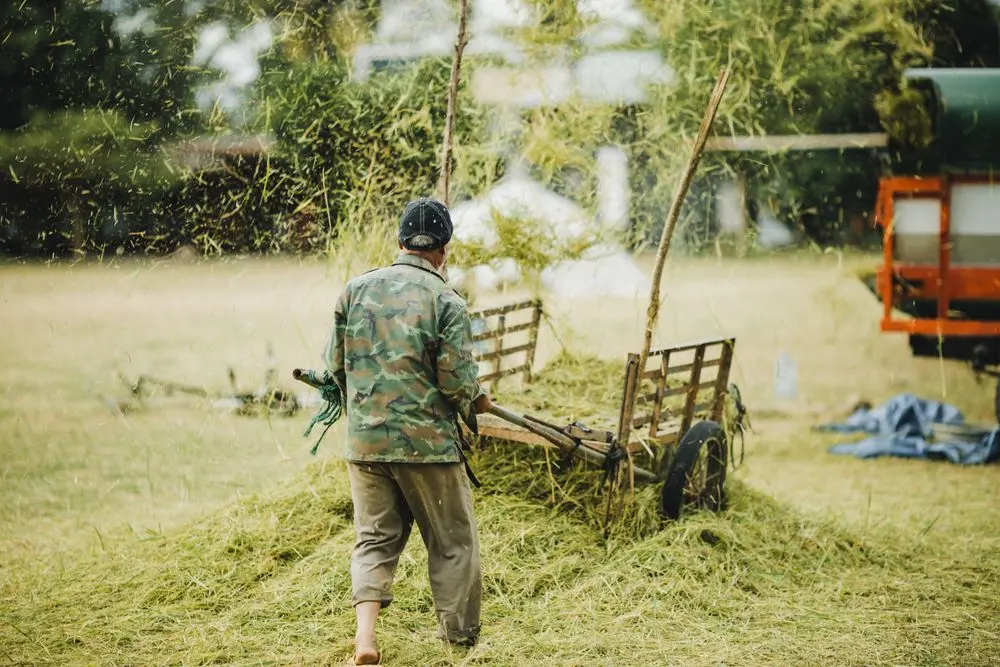
He climbed that hillside every morning at seven-thirty. In his green-and-black plaid wool coat and his faded green seed cap from Agway. With his Stihl chainsaw, the old one, a 1980s model he’d rebuilt three times. With a can of gas and a jug of bar oil and a pair of plastic felling wedges in his coat pockets.
One tree a day.
Sometimes two, if the weather was good and his knees were cooperating.
I came out to help on the weekends. So did Mason.
My son. Nineteen. Six foot three and still growing, somehow. He works for a logging outfit out of Galeton during the week, running the forwarder and the knuckle-boom loader. He’s been around heavy equipment since he was big enough to reach the pedals. My husband, Tom, drives a road grader for PennDOT, and Mason used to ride along with him in the summers when he was little, sitting on his dad’s lap, steering.
He’s good with machines.
He’s good with Dad, too.
The first Saturday, Mason tried to take the saw out of Dad’s hands.
“Pap. Let me do it. You tell me where to cut.”
Dad looked at him.
“You want to do it?”
“I can do it faster.”
“I know you can,” Dad said. “That’s not the point.”
He took the saw back.
“You can limb,” he said. “And you can skid. And you can buck ’em to length. But I’m taking the trees down.”
Mason looked at me.
I shrugged.
So that’s how they did it.
Dad would walk around each tree for a while first. Looking up. Studying the lean. Checking the wind. He’d put his hand on the bark sometimes. Just rest it there.
Then he’d cut his notch. Slow and careful. A clean open face notch, the kind he learned from his father in the 1950s, before anybody called it that.
He’d put in his back cut. Leave his hinge. Tap in a wedge.
And the tree would go over.
Slow at first. Then all at once. With a long crack and a whoosh and a thump you could feel through your boots.
Then Mason would come in with his saw and limb it. Cut off all the branches. Then they’d measure it with Dad’s old logger’s tape and buck it into logs. Twelve feet. Fourteen. Sixteen, if it was straight enough.
Then Mason would skid them down the hill with Dad’s old Ford tractor and a chain. Down to the landing by the barn. Where they stacked them.
By the end of October, there were twenty-two logs stacked by the barn.
Black cherry. The bark dark and scaly. The ends a deep reddish pink where they’d been cut. That color you only get with good cherry. Like the inside of a ripe plum.
You could smell them. Sweet. Almost like almonds.
On the last day, October 31st, Dad cut the big one on the end.
The one Uncle Roy fell out of in 1953.
He walked around it for a long time. Longer than any of the others.
Then he put his hand on the bark.
“Sorry, Roy,” he said quietly.
And he cut it down.
I knew Lyle’s mill had fallen behind on payments that spring.
Everybody did. It’s a small county. Potter County, Pennsylvania. Seventeen thousand people and more deer than all of them put together. Word gets around.
Lyle had borrowed money to buy a new band saw in 2022. A big one. Wood-Mizer industrial. Two hundred and forty thousand dollars. Then lumber prices dropped. Then two of his biggest pallet buyers went out of business. Then his wife, Sherry, left him and took half of what was left.
In April, the bank sent a letter. The Coudersport paper printed the notice in July. A sheriff’s sale had been scheduled and then postponed.
I understood that business could be hard.
I really did.
But that didn’t give him the right to shortchange his own uncle.
I walked over to him.
He was standing on the grading deck with his crayon in his hand. Travis was behind him on the loader with the engine idling.
“We won’t sell them for that,” I said.
Lyle gave a careless shrug.
He didn’t even look at me. He looked at the logs.
“Fine with me,” he said. “Nobody’s buying cherry right now anyway.”
“Lyle,” I said. “You offered four thousand in August. For the same trees.”
“Standing,” Lyle said. “That was standing. That’s different. These have been cut a month. Some of ’em have end checks. Some of ’em have gum. Some of ’em have mineral. I can’t sell this for veneer, Jo. I got to saw it for pallet and hope I break even.”
“You didn’t even look at them.”
He turned around.
“I’ve been grading logs for thirty-one years,” he said. “I don’t need to look at ’em.”
I looked at the big log on the end. The Uncle Roy tree. Twenty-six inches across. Sixteen feet long. Dead straight. Not a branch scar on it for the first twelve feet.
There was a big yellow P on the end.
“Okay,” I said.
That’s all I said.
I turned around and walked away.
Mason was already climbing into the loader.
I didn’t tell him to. He just did it.
He walked over to Travis and said something quietly. I didn’t hear what. Travis looked at Lyle. Lyle didn’t say anything. Travis climbed down out of the cab.
Mason climbed up.
He started lifting our logs back onto the trailer.
The knuckle-boom crane on Lyle’s loader is an older Prentice. Mason’s run one just like it a hundred times. He moved it smooth and easy. The grapple opening and closing like a big steel hand. Picking up each log. Swinging it over. Setting it down on our trailer. Gentle. Like he was laying a baby in a crib.
One after another.
Lyle stood on the grading deck with his arms crossed and watched.
Travis stood nearby with his hands shoved in his pockets.
Nobody tried to stop us.
It took Mason twenty minutes.
All twenty-two logs. Back on the trailer. Chained down.
He climbed down out of the loader cab. He walked over to Travis and handed him the keys.
“Thanks, man,” he said.
Travis nodded.
“Sorry,” Travis said. Very quietly. So Lyle couldn’t hear.
Then Mason walked over to my truck and climbed in the back seat.
He didn’t say a word.
That’s when I found Dad in the cab.
Holding that check.
Lyle had written it before he graded the logs. I found that out later. Travis told Mason. The check was already written and sitting on Lyle’s desk before the logs even came off the trailer.
Six hundred dollars.
Dad had gone into the office while I was arguing with Lyle. Lyle’s secretary, a nice woman named Darlene who’s been there since Uncle Roy’s days, handed it to him. She didn’t know. She thought it was a done deal.
Dad folded the check in half.
Then in half again.
He put it inside his plaid coat. In the inside pocket. Right over his heart.
He never deposited it.
“You okay, Dad?” I said.
He looked out the windshield at the mill. At the big new band saw shed Lyle had built with the bank’s money. At the stacks of pallet lumber. At Lyle, still standing on the grading deck with his crayon.
“I taught that boy how to fell a tree,” Dad said.
That’s all he said.
We drove home in silence.
Twenty minutes down Route 6. Then up Route 44. Then the long gravel road up Logue Hollow.
Mom was standing on the front porch when we pulled in. She saw the logs still on the trailer.
She didn’t say anything either.
She just went inside and put the coffee on.
That afternoon, I called Levi Yoder.
I’d met Levi four years earlier. Tom and I had needed lumber to rebuild our barn after a windstorm took the roof off. A man at church told us about an Amish sawmill down in Clearfield County. He said the man was honest. He said he’d saw anything you brought him. He said he’d tell you the truth about it, too, whether you wanted to hear it or not.
Levi ran a sawmill on his family’s farm. Sixty miles south of us. Down through the hills. Off a dirt road outside a little town called Penfield.
His property had no electric lines. No telephone in the house. Just a little wooden phone shanty out at the end of the lane, like a phone booth, with a phone on the wall and a bench inside. You call and leave a message on the machine. He checks it twice a day.
A diesel engine runs his saw.
I left a message.
“Levi, this is Jo Shaffer. From up in Potter County. You cut our barn lumber in 2021. I’ve got twenty-two black cherry logs from my father’s farm. I need somebody to saw them honest. Please call me back.”
He called back at five-fifteen.
“Jo Shaffer,” he said. His voice was slow. Calm. “The barn with the green roof.”
“That’s us.”
“Cherry, you said.”
“Twenty-two logs. My dad cut them himself. He’s eighty.”
There was a pause on the line.
“Eighty,” Levi said.
“Yes.”
“And somebody already looked at them?”
I hesitated.
“My cousin,” I said. “He runs a mill up here. He graded them all pallet.”
Another pause. Longer.
“All of them?”
“All twenty-two.”
Levi didn’t say anything for a while.
I could hear a cow lowing in the background. And a horse stamping.
“Saturday at first light will be fine,” he said. “And bring your father.”
We left early Saturday morning.
Four-thirty a.m. Pitch dark. Cold. The stars still out. Frost on the windshield.
Mason drove. My truck. A 2014 F-350 with the trailer hitched on the back. All twenty-two logs chained down. He’d checked the chains three times before we left.
I sat by the passenger window.
Dad sat in the middle seat.
Mom came out on the porch in her bathrobe to see us off.
She handed Dad a thermos of coffee and a paper bag with three ham sandwiches in it. She kissed his cheek.
“Don’t you let anybody cheat you again, Emmett Caudill,” she said.
“Nobody cheated me, Opal. I didn’t take the money.”
“You know what I mean.”
As we drove, Dad hummed.
It was the old hymn Mom loved on Sunday mornings. “In the Garden.” She’d sung it at the Methodist church in Roulette every Easter since 1965. Dad doesn’t sing. He says he can’t carry a tune in a bucket. But he hums.
He hummed it all the way down Route 44 in the dark.
Through Germania. Through Cross Fork. Down along Kettle Creek.
When the sun came up over the ridge near Renovo, he stopped humming.
He looked out the window at the bare trees on the hillsides. Oak. Maple. Beech. Cherry, here and there, its bark dark and scaly.
“Lot of cherry in these hills,” he said.
“There is,” I said.
“Most folks don’t know what it is till they see it opened up,” Dad said. “On the outside it don’t look like much. Just looks like any old tree. Rough. Ugly bark.”
He turned his coffee cup around in his hands.
“You got to cut it open,” he said. “Then you see.”
Levi Yoder’s farm was at the end of a long dirt lane.
A white farmhouse with green shutters. A big bank barn. A windmill. Laundry already hanging on the line, even at seven a.m. A row of black buggies parked by the shed.
Two little boys in straw hats and black coats were feeding chickens by the barn. They stopped and stared at our truck.
Levi’s operation was simple.
An open-sided wooden shed covered the saw. Rough-sawn hemlock posts. A tin roof. No walls. Just the saw carriage on its long steel track, and the big diesel engine at one end under its own little roof, and a conveyor belt for the slabs.
Sawdust lay thick across the ground. A foot deep in some places. Sweet-smelling. Like a pine forest after rain.
Bare wooded hills surrounded the property on three sides.
The sky was clear. The air was cold. Our breath came out in clouds.
Snow hadn’t arrived yet.
Levi was waiting for us by the shed.
He’s about sixty. Tall and thin. A long gray beard with no mustache. A black felt hat. A dark blue shirt with suspenders. Big hands, cracked and scarred, with a piece of the last finger missing on his left one.
He shook my hand.
Then he shook Mason’s.
Then he turned to Dad.
He looked at him for a long moment. At his plaid coat. His seed cap. His hands.
“You’re the one who cut them,” Levi said.
“I am,” Dad said.
“All twenty-two?”
“All twenty-two.”
Levi nodded slowly.
“With a saw?”
“With my old Stihl. Rebuilt it three times.”
Levi almost smiled.
“Good saw,” he said.
Levi inspected the trailer carefully.
He walked the whole length of it. Slowly. Studying every black cherry log.
He looked at the ends. He ran his thumb along the growth rings. He leaned down and looked closely at the bark. He tapped one log with his knuckles and listened. He pulled a small pocket knife out of his pants and shaved a little bit of bark off the side of another one and looked at the wood underneath.
He looked at the yellow P on the end of each one.
He didn’t say anything about it.
He didn’t say anything at all.
It took him almost half an hour.
Dad stood by the truck and watched him. Not moving. Hands in his coat pockets.
Mason stood next to Dad.
I stood next to Mason.
Then Levi walked back over.
“Bring the boy,” he said to me. “We’ll unload.”
Levi had an old John Deere tractor with a front-end loader and a set of forks. Mason drove it. Levi didn’t seem to mind. He just pointed where he wanted the logs, and Mason put them there.
Levi rolled the first log onto the saw carriage with a cant hook. An old wooden-handled one with a steel hook on the end. He did it himself. He didn’t ask anybody to help.
He clamped it down.
He walked over to the diesel engine and pulled a lever.
The engine coughed. Then roared. Then settled into a deep steady rumble that you could feel in your chest.
The big circle saw started to spin.
Then Levi started cutting.
The carriage moved forward on its track. The log rolled into the saw.
The sound changed. A high, singing whine. Like a huge bee.
The first cut took off the bark slab. It fell away onto the conveyor. Rough and curved. Bark on one side, pale sapwood on the other.
Levi ran the carriage back. Turned the log. Cut again. Another slab.
Then again.
Then again.
Until the log was square.
Then the first board came off the saw.
I’ll never forget it.
It slid off the blade and onto the rollers. One inch thick. Twelve inches wide. Fourteen feet long.
Beautiful, rich, red-brown wood.
Not the pale pinkish cherry you see in furniture stores. Deep. Warm. The color of a good violin. With a fine, smooth, almost satiny grain, and little dark flecks here and there like freckles.
Straight. Clean.
Not one knot in it. Not one. The whole fourteen feet.
Levi picked up the board.
He looked at it for a moment.
He didn’t say anything.
He carried it over to a set of sawhorses at the edge of the shed and laid it down flat.
Dad walked over.
In his green-and-black plaid coat.
He stood next to the sawhorses for a long time.
Then he reached out and put his hand flat against the board.
Right in the middle. His whole palm.
His big, scarred, eighty-year-old hand. With the fingernail that never grew back right after he slammed it in a truck door in 1977. With the knuckles swollen from arthritis.
For several moments, he just looked at it.
He didn’t say anything.
He didn’t move.
He just stood there with his hand on that board. On the inside of the tree his father told him to leave be. On the inside of the tree his little brother climbed.
I saw his shoulders move.
Just once.
Mason started carrying the finished boards.
In his leather work gloves. One at a time. From the saw over to the sawhorses. Then, when the sawhorses were full, over to a flat spot under the edge of the roof where Levi showed him to start a stack. With little wooden stickers between each layer, so the air could get through.
I stood behind Dad.
Watching quietly.
Levi kept the saw running all morning.
Log after log.
Around ten o’clock, his wife came out of the house. A small woman in a dark green dress and a white prayer cap and a black shawl. She was carrying a tray with a pot of coffee and four mugs and a plate of something wrapped in a cloth.
She set it down on an overturned crate by the shed.
“I’m Miriam,” she said. She smiled at me. “You’ll want to eat.”
Under the cloth were cinnamon rolls. Still warm. As big as my fist.
Dad didn’t eat.
He couldn’t take his eyes off the saw.
Some of the logs had a little gum in them.
Little dark streaks in the wood, almost black. Levi showed me. He held up a board and pointed.
“Gum pocket,” he said. “From an injury, maybe. A bird. A storm. The tree heals itself. Leaves a mark.”
“Is that bad?”
“Some buyers don’t like it,” Levi said. “For veneer, it’s a defect.”
He ran his thumb along the dark streak.
“For furniture, some people pay more for it,” he said. “They call it character.”
One log near the end had some mineral streak. Gray-green lines running through the red. Levi said that brought the price down a little.
One log had a hollow spot near the butt end. About eight inches deep. A little rot. Levi cut it off and threw it on the slab pile.
“Every tree has something,” he said. “Nothing is perfect.”
He looked at Dad.
“But most of it,” he said, “is very good wood.”
The last log was the big one.
The Uncle Roy tree. Twenty-six inches across. Sixteen feet long. With a big yellow P on the end.
Mason lifted it onto the carriage with the tractor.
Levi clamped it down.
He started cutting.
The slabs fell away.
The first board came off.
It was the most beautiful piece of wood I have ever seen.
Wide. Eighteen inches. Sixteen feet long. Deep, glowing red. With a wavy, rippling pattern running through the grain from one end to the other. Like water moving. Like light under a creek.
When the sun hit it, it almost looked three-dimensional. Like you could put your hand down into it.
Levi stopped the saw.
The diesel engine kept rumbling, but the blade wound down. The whine faded. The shed went quiet.
Levi walked over to the board.
He looked at it for a long time.
He ran his hand along it. Slowly. Down the whole sixteen feet.
“Figured,” he said quietly.
“What does that mean?” I said.
He didn’t look up from the board.
“Curly cherry,” he said. “The grain moves. It’s rare. Maybe one tree in a hundred. Maybe less.”
He looked at Dad.
“In my whole life,” he said, “I’ve seen maybe four logs like this.”
Dad walked over.
He stood next to Levi.
He looked down at the board.
“That’s Roy’s tree,” he said.
Levi looked at him.
“Roy?”
“My brother,” Dad said. “He fell out of it when he was seven. Broke his arm.”
His voice cracked.
“He’s been gone nine years,” he said.
Levi didn’t say anything.
He reached out and put his hand on Dad’s shoulder. Just for a moment.
Then he went back to the saw.
When the final log was finished, Levi shut down the diesel engine.
The silence afterward was enormous.
You could hear the chickens by the barn. A crow somewhere up on the ridge. The wind moving through the bare branches.
Levi reached into his shirt pocket.
He took out a small notebook and a pencil stub.
He walked along the stacks of boards. Slowly. Counting each one. Measuring with his eyes. Writing things down. His lips moving softly.
He walked down one stack. Then up the next. Then down the next.
He stopped at each board. Some he picked up and turned over. Some he just looked at.
He wrote, and wrote, and wrote.
Dad took off his faded green seed cap.
He held it close to his chest. With both hands.
The way he holds it during the national anthem. Or the way he held it at Uncle Roy’s funeral, standing by the grave.
Mason stood next to me. His gloves still on. Sawdust in his hair.
He reached over and took my hand.
He hasn’t held my hand since he was about eleven.
I didn’t say anything. I just held on.
Levi wrote down the last number.
Then he closed his notebook.
And he walked toward us.
He stopped in front of Dad.
He opened the notebook again. He looked at it. Then he looked up.
“Three thousand, four hundred and twelve board feet,” Levi said.
Dad nodded slowly. Like he understood exactly what that meant.
I didn’t.
“Is that a lot?” I said.
Levi looked at me.
“For twenty-two logs,” he said, “it is very good. These were good logs. Long. Straight. Big.”
He looked back at his notebook.
“I graded every board,” he said. “Like the hardwood association says. FAS is the best. Then Select. Then Number One Common. Then Number Two.”
He turned the notebook so Dad could see it.
“Two thousand, two hundred board feet FAS,” Levi said. “Seven hundred Select. Four hundred Number One. A little over a hundred Number Two.”
He tapped the page.
“And these,” he said. “The figured boards. From the big log. Two hundred and eighty board feet. I wrote them separate.”
Dad looked at the numbers for a long time.
“There’s no pallet in there,” he said quietly.
Levi shook his head.
“No,” he said. “There is no pallet in there.”
“What’s it worth?” I asked.
My voice came out smaller than I meant it to.
Levi closed the notebook.
He was quiet for a moment.
“I will tell you what I can pay,” he said. “And I will tell you what it is worth. They are not the same number. You should know both.”
He looked at Dad.
“If you sell it to me today,” he said, “green. Like this. Not dried. I pay three dollars and twenty-five cents a board foot for the FAS and Select. Two dollars for the Number One. One dollar for the Number Two.”
He did the math in the notebook with his pencil. Quickly. His lips moving.
“Nine thousand, eight hundred and seventy-five dollars,” he said.
I couldn’t speak.
Dad didn’t move.
“But,” Levi said. “The figured boards I will not buy at that price. It would not be honest.”
He looked at the stack. At the wide, rippling red boards from Uncle Roy’s tree.
“My cousin Amos makes furniture,” he said. “In Lancaster County. Tables. Cabinets. For English people. Rich people from Philadelphia and New York. He will pay twelve dollars a board foot for figured cherry. Maybe fifteen. Once it is dried.”
He did the math again.
“Three thousand, three hundred dollars,” he said. “At least. Maybe more.”
“Thirteen thousand,” I whispered.
“Almost,” Levi said. “If you let it dry first, it is worth more. Maybe a lot more. But that takes a year. Maybe more. Air dry. Then you sell to a shop.”
He looked at Dad.
“I am telling you because you should know,” he said. “You can sell to me today, or you can wait. It is your wood. Your choice.”
Dad looked down at the seed cap in his hands.
He didn’t say anything for a long time.
Then he said, “My nephew offered me six hundred.”
Levi’s face didn’t change.
But something in his eyes went still.
“For all of it?” he said.
“For all twenty-two logs,” Dad said. “Pallet grade. He wrote it on every log with a crayon.”
He reached into his coat. He took out the folded check. He held it up.
Levi looked at it.
He didn’t take it.
He just looked at it for a long time.
“Your nephew,” he said slowly, “knows wood?”
“Thirty-one years,” Dad said. “His daddy ran that mill before him. I taught him how to fell a tree when he was twelve.”
Levi nodded.
He was quiet.
Then he said something I’ve thought about every day since.
“A man who doesn’t know wood,” he said, “can make a mistake.”
He looked at the check in Dad’s hand.
“A man who knows wood,” he said, “has made a choice.”
Dad didn’t sell all of it to Levi that day.
He sold most of it.
He kept the figured boards. All two hundred and eighty board feet from Uncle Roy’s tree. And he kept a few of the best FAS boards from two of the others. About three hundred board feet total.
Levi wrote him a check for eight thousand, two hundred dollars for the rest.
Then he did something I didn’t expect.
“The figured boards,” he said. “You can leave them here. I have a drying shed. I will sticker them and stack them. No charge. When they are dry, next fall, you come back. I will call Amos for you. Or you can keep them. Whatever you want.”
Dad looked at him.
“Why would you do that?” he said. “No charge?”
Levi looked out at the hills for a moment.
“My father was eighty-one when he died,” he said. “He cut his last tree when he was seventy-nine. I helped him. He was very slow. I was very impatient. I said, ‘Dat, let me do it.’ He said no.”
Levi looked back at Dad.
“I understand now why he said no,” he said.
Dad reached out his hand.
Levi shook it.
They stood there in the sawdust like that for a long time. Two old men. One in a plaid coat and a seed cap. One in a black hat and suspenders.
Neither of them said anything.
On the drive home, Dad didn’t hum.
He sat in the middle seat with Levi’s check in his coat pocket. Next to Lyle’s.
Two checks. One for six hundred. One for eight thousand two hundred.
He kept one hand pressed flat over the pocket the whole way home.
Somewhere around Renovo, he said, “Opal can get her teeth now.”
“She can,” I said.
“All three.”
“All three.”
He nodded slowly.
“And there’s some left,” he said. “For the grandkids.”
He looked over at Mason, driving.
“For your welding school,” he said. “That program up in Mansfield. You told me about it in the summer. You thought I wasn’t listening.”
Mason didn’t take his eyes off the road.
But his jaw got very tight.
“Pap,” he said. “You don’t have to.”
“I know I don’t,” Dad said. “I’m going to anyway.”
Mom was standing on the porch when we pulled into the driveway.
Same as that morning. In her bathrobe. Like she hadn’t moved all day.
She saw the empty trailer.
Her hand went to her mouth.
Dad climbed out of the truck. Slowly. His knees were bad from standing all day.
He walked up the porch steps.
He reached into his coat. He took out Levi’s check. He unfolded it.
He held it out to her.
Mom looked at it.
She looked at it for a long time.
Then she looked up at Dad.
And she smiled.
With her mouth open. With the missing teeth and the cracked crown and all of it.
The first time I’d seen her smile like that in two years.
“Emmett,” she said.
That’s all she said.
He put his arms around her.
And they stood there on the porch in the cold, in the last light, holding onto each other.
Mason and I stayed in the truck.
We gave them a minute.
It seemed like the least we could do.
Word got around.
It’s a small county.
By Tuesday, half of Potter County knew. Darlene at Lyle’s mill told her sister. Her sister told the woman who runs the Dollar General in Coudersport. The woman at the Dollar General told everybody who came in.
Lyle Caudill graded Emmett’s cherry as pallet. Six hundred dollars. And an Amish fella down in Clearfield County cut it open and paid eight thousand.
I didn’t tell anybody.
Neither did Dad.
But I didn’t have to.
Lyle came to the farm on the Sunday before Thanksgiving.
I was there. We were all there. Mom had made pot roast. Mason was home. Tom was there. My younger sister, Darla, had driven up from Harrisburg with her husband and their two girls.
We were sitting down to dinner at two o’clock when we heard a truck in the driveway.
The white Ford.
The whole table went quiet.
Darla looked at me.
Tom put his fork down.
Mason started to get up. I put my hand on his arm.
Dad didn’t move.
He finished saying grace. All the way to the end. Then he put down his napkin and stood up and went to the door.
Lyle was standing on the porch.
He looked terrible. He’d lost weight. His face was gray. He had a three-day beard. He was wearing the same Carhartt jacket he’d worn at the mill.
He was holding his hat in his hands.
“Uncle Emmett,” he said.
“Lyle.”
“Can I talk to you?”
Dad looked at him for a long moment.
“Come in,” he said. “We’re eating. There’s plenty.”
Lyle came in.
He stood in the doorway of the dining room. Everybody was staring at him. Darla’s girls. Tom. Mason. Mom.
Me.
He didn’t sit down.
“I’m sorry,” Lyle said.
He was looking at Dad. Only at Dad.
“I’m sorry, Uncle Emmett,” he said again. “I’m so sorry. I don’t know what I was thinking. I was… I’m not… I wasn’t thinking.”
Dad didn’t say anything.
He just waited.
Lyle swallowed.
“The mill’s going under,” he said. “You probably heard. Everybody’s heard. The bank’s giving me till January. And I had a guy. A veneer buyer. From a company in Ohio. He buys for a German outfit. He came through in September and I took him up on the hill behind your barn. While you weren’t home.”
Mom’s hand went to her mouth.
“He looked at your trees,” Lyle said. “And he said if I could get him those logs, he’d pay fourteen thousand. For the whole lot. Cash. He said he’d never seen a stand of cherry that clean in Pennsylvania.”
He wiped his eyes with the back of his hand.
“Fourteen thousand would’ve made my payments through spring,” he said. “It would’ve bought me time. And I thought… I thought, Uncle Emmett doesn’t need it. He’s got the farm paid off. He’s eighty. What’s he need fourteen thousand dollars for?”
“Your Aunt Opal’s teeth,” Dad said quietly.
Lyle stopped.
He looked at Mom.
Mom didn’t say anything. She just sat there.
“I didn’t know,” Lyle whispered.
“You didn’t ask,” Dad said.
The dining room was very quiet.
Darla’s youngest, who’s six, said, “Mommy, why is that man crying?”
Darla shushed her.
“I graded ’em pallet,” Lyle said, “because I figured you’d take whatever I gave you. You always have. You never once argued with Dad about anything. Not once. My whole life. You just… you always went along.”
He looked at the floor.
“I figured you’d take the six hundred and go home,” he said. “And I’d saw them myself and sell them to the Ohio guy and nobody would ever know.”
Dad was quiet for a long time.
Then he reached into the inside pocket of his flannel shirt.
He took out a folded piece of paper.
The check. Lyle’s check. Six hundred dollars.
He’d been carrying it around for three weeks.
He unfolded it.
He held it out to Lyle.
Lyle stared at it.
“I don’t want it back,” Lyle said.
“It’s yours,” Dad said. “I never cashed it.”
“Uncle Emmett—”
“Take it, son.”
Lyle took it.
His hands were shaking.
Then Dad did something else.
He walked out of the dining room. Through the kitchen. Out the back door.
We all sat there. Nobody knew what to do. Lyle stood in the doorway holding his own check.
A minute later, Dad came back.
He was carrying a board.
It was one of the figured boards. From Uncle Roy’s tree. He’d brought one home from Levi’s. Just one. He’d been keeping it in the barn.
Eighteen inches wide. Six feet long. He’d cut a piece off one of the sixteen-footers.
Deep, glowing red. With that rippling grain running through it like water.
He held it out to Lyle.
Lyle stared at it.
He didn’t take it.
“What’s this?” he said.
“Look at it,” Dad said.
Lyle looked at it.
I watched his face change.
He knew wood. Thirty-one years. He knew exactly what he was looking at.
“That’s curly,” he said quietly.
“It is.”
“Which tree?”
“The big one on the end,” Dad said. “The one your daddy fell out of in 1953 and broke his arm.”
Lyle made a sound.
I’d never heard a grown man make a sound like that. Something between a sob and a laugh and a word.
“You marked that one pallet,” Dad said. “With a big yellow P. On the end. Without even looking at it.”
He held the board out.
“I want you to have this piece,” Dad said. “Not to sell. To keep. Put it somewhere you’ll see it every day. In your office. Over your desk.”
His voice was very steady.
“So every time you pick up that crayon,” Dad said, “you remember what’s inside a tree before you tell somebody what it’s worth.”
Lyle took the board.
He held it against his chest.
He stood in the doorway of my mother’s dining room and cried like a little boy.
Dad walked over to him.
He put his hand on the back of Lyle’s neck. Like he used to when Lyle was a kid. When he was teaching him to run a chainsaw, out behind the barn, in 1988.
“Sit down and eat, son,” Dad said. “Your aunt made pot roast.”
Lyle sat down.
Mom got up without a word and got another plate.
Nobody talked much. Darla’s girls stared at him the whole time. Mason didn’t look at him once.
But he stayed.
He ate two helpings.
When he left, he hugged Mom at the door for a long time.
“I’m sorry, Aunt Opal,” he said into her shoulder. “About your teeth. I’m so sorry.”
“They’re getting fixed, honey,” Mom said. “Thursday. Dr. Haskell.”
I asked Dad that night, after everyone left, why he did it.
We were sitting on the back porch. Bundled up in coats. It was cold. You could see the stumps up on the hillside in the moonlight. Twenty-two of them. Gray and pale.
“Why’d you give him the board?” I said. “After what he did?”
Dad didn’t answer right away.
He was looking up at the hill.
“When Roy was dying,” he said finally, “in the hospital in Coudersport. He asked me to look out for Lyle. He said, ‘Lyle’s not as strong as he thinks he is, Emmett. He’s gonna need somebody.’”
Dad turned his coffee cup around.
“I told him I would,” he said.
“But Dad. He tried to cheat you.”
“He did,” Dad said. “He made a choice. Like that Amish fella said. A bad one.”
He looked at me.
“But if I hold onto that, Jo,” he said, “then I’m the one walking around with a yellow P on me. For the rest of my life. And I’m eighty. I don’t have time to carry that.”
Mom got her teeth.
Three implants. It took four months. Two surgeries. A lot of soup.
The first time she bit into an apple, in March, she cried.
The second time, she laughed.
She smiles with her mouth open now.
All the time.
Mason started welding school in Mansfield in January.
He drives an hour each way, four days a week. He comes home smelling like hot metal and burnt flux. He’s at the top of his class.
He calls Dad every Sunday.
Lyle’s mill closed in February.
The bank took it at a sheriff’s sale. A company out of St. Marys bought it. Everything. The new band saw. The loader. The grading deck.
They kept Darlene. They kept Travis.
And they hired Lyle.
He grades logs for them now. Not the owner. Just the grader. He makes thirty-eight thousand a year and drives forty minutes to work.
He told Dad in April, standing in the driveway, that he hung the cherry board above his desk in the grading shed.
“Everybody asks about it,” he said. “The new guys. They want to know what it is.”
“What do you tell ’em?” Dad said.
Lyle looked at the ground.
“I tell ’em it’s the best piece of wood I ever marked pallet,” he said.
He also told Dad that he grades honest now.
Every log. He takes out the tape. He kneels down and looks at the ends. He rolls every one over to check the bottom.
“Takes me twice as long,” he said.
“Good,” Dad said.
The figured boards from Uncle Roy’s tree came out of Levi’s drying shed in October.
One year exactly.
Dad didn’t sell them.
He called Levi on the phone shanty and said he’d like to come pick them up. Levi said Saturday at first light would be fine.
So we drove down again. Dad and Mason and me. Four-thirty in the morning. Dad in the middle seat, humming.
Levi had them stacked and waiting. Two hundred and eighty board feet. Dried and gleaming. Darker now. Richer. The way cherry gets with time.
“It goes darker every year,” Levi said. Running his hand along a board. “With light. With air. In ten years, it will be almost brown. In fifty, almost black.”
“It’ll last fifty?” Mason asked.
Levi looked at him.
“It will last three hundred,” he said. “If you take care of it.”
Mason built a table that winter.
In Dad’s barn. With Dad watching from a folding chair next to the wood stove. In his green-and-black plaid coat and his faded seed cap.
A dining table. Eight feet long. Forty-two inches wide. From the figured boards of Uncle Roy’s tree.
Mason had never built a piece of furniture in his life.
He watched videos on his phone. He borrowed a planer from a guy in Galeton. He bought chisels and clamps and a sander. He called Levi on the phone shanty four times with questions. Levi called back every time.
It took him three months.
Dad didn’t touch a single tool.
He just watched. Every Saturday. Every Sunday. Sometimes on weeknights, when Mason came home from welding school.
He’d sit in that folding chair by the stove and tell stories while Mason worked.
About Uncle Roy. About his father. About what the farm looked like in 1950, when the hill was all pasture and the cherries were just little whips the birds had planted.
About the day Roy fell out of the tree.
“Screamed like a stuck pig,” Dad said. “All the way down the hill. Mama put him in the milk truck. He was so mad. Not because his arm was broke. Because he didn’t get to the top.”
Mason laughed.
“Did he ever get to the top?”
Dad thought about it.
“No,” he said. “He never did. Never tried again.”
He looked at the table taking shape on the sawhorses.
“I guess he’s getting there now,” he said.
Mason finished the table the week before Easter.
He carried it into the farmhouse with Tom and two of his welding school friends. They set it down in the dining room where Mom’s old table used to be. The one from Sears, from 1972, with the wobbly leg.
He’d finished it with Danish oil. Four coats. Hand-rubbed.
When the afternoon light came through the dining room window and hit it, the grain moved.
Rippling. Glowing. Deep red. Like light under a creek.
Mom stood in the doorway and looked at it.
She put her hand over her mouth.
Then she walked over and put her hand flat on the top.
Right in the middle.
The same way Dad did at Levi’s mill. With his whole palm.
“That’s Roy’s tree,” she said.
“That’s Roy’s tree,” Dad said.
We ate Easter dinner at that table.
Dad and Mom. Me and Tom and Mason. Darla and her husband and the girls.
And Lyle.
Dad invited him.
He came in a pressed shirt and khakis. He brought a store-bought pie. He stood in the doorway of the dining room for a long time and looked at the table.
He didn’t say anything.
He walked over and ran his hand along the edge. Slowly. All the way down the eight feet.
Then he sat down.
Before we ate, Dad stood up at the head of the table.
He took off his seed cap. He held it against his chest.
He didn’t make a speech. He’s not a speech man.
He just said grace. The same one he’s said my whole life.
And then, at the end, he added one thing.
“And thank you, Lord,” Dad said, “for Daddy. Who let the little trees grow. And for Roy. Who climbed ’em. And for whoever’s going to need ’em next.”
“Amen,” said Mom.
“Amen,” said everybody.
In April, Dad and Mason planted seedlings.
Black cherry. Two hundred of them. Little bare-root whips, about a foot tall, from the state nursery in Spring Mills. Dad ordered them in January.
They planted them on the hillside behind the barn. In between the twenty-two stumps. In the space where the old trees used to be.
It took them three Saturdays.
I came up the hill on the last day with a thermos of coffee.
Dad was on his knees in the dirt. In his plaid coat. With a planting bar in one hand and a seedling in the other.
He’s eighty-one now.
He tucked the little tree into the ground. He pressed the soil down around it with his hands. Gently. Like tucking a child into bed.
Then he sat back on his heels and looked at it.
“Pap,” Mason said. He was standing next to him with a bucket of seedlings. “You know you’re not going to see these get big. Right?”
Dad looked up at him.
“I know,” he said.
“It takes like sixty years for a cherry to get big enough to cut.”
“Seventy, on this hill,” Dad said. “Soil’s thin.”
“So why plant ’em?”
Dad didn’t answer right away.
He looked down the hill. At the barn. At the farmhouse. At Mom, standing on the back porch in her apron, waving up at us. Smiling with her mouth open.
Then he looked at the little seedling in the dirt.
“My daddy didn’t plant those first ones,” he said. “The birds did. He just didn’t mow ’em down.”
He reached out and touched the seedling’s single leaf. Very gently. With one scarred finger.
“Somebody’s going to need these, Mason,” he said. “Someday. Somebody’s going to come up this hill with a saw, and they’re going to be scared, and they’re going to need it.”
He looked up at his grandson.
“And somebody’s going to look at these trees,” he said, “and tell ’em they’re not worth anything.”
Mason didn’t say anything.
“So you remember,” Dad said. “When that day comes. You don’t argue. You don’t shout. You load ’em up. And you find somebody honest.”
He picked up the next seedling.
“And you let the wood speak for itself.”