Heart Surgery
Part 1: The Call
My phone rang at 6:14 on a Tuesday morning in October. I was standing in my kitchen in Spokane in my bathrobe, waiting for the coffee to finish.
It was Emily.
My daughter never calls before ten. She’s twenty-one, a senior at the University of Washington in Seattle, and she sleeps like a teenager. So the second I saw her name on the screen, my stomach dropped.
“Em? Honey?”
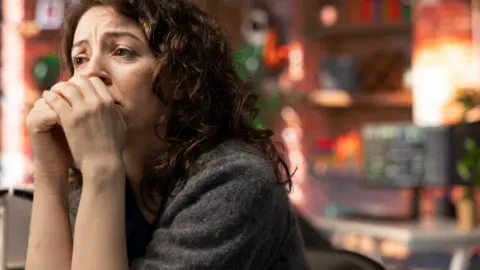
She was sobbing. I mean really sobbing. The kind where you can’t catch your breath.
“Mom,” she said. “Mom, there’s something wrong with my heart.”
I sat down on the kitchen floor. I don’t remember deciding to. My legs just stopped working.
“What do you mean? What’s wrong with your heart?”
“I don’t know,” Emily cried. “I’ve been feeling sick for weeks. Dizzy. My chest hurts. And I finally went to a doctor, and they did all these tests, and they said—” She broke off, gasping. “They said I need surgery. Right away. Like, tomorrow.”
“Tomorrow?”
“It’s a valve thing. I don’t understand all of it. They said if they don’t fix it soon, it could get really bad.” Her voice cracked. “Mom, I’m scared. I’m so scared.”
My name is Teresa Lund. I’m forty-nine years old, and I own a little hair salon on North Monroe Street called Teresa’s Chair. I’ve been cutting hair for twenty-eight years. I’m good at it. I’m good at making women feel pretty.
I raised Emily mostly on my own. Her father, Rick, left when she was ten. Drank too much, yelled too much, and one day just didn’t come home. We’ve barely heard from him since.
It’s been Emily and me for eleven years. Just the two of us. She’s the best thing I’ve ever done.
“Where are you?” I asked. “Which hospital?”
“It’s a private clinic,” Emily said. “In Bellevue. Near campus. They’re really good, Mom. The best. They can do it tomorrow morning.”
“Okay. Okay. I’m coming. I’ll leave right now.”
“Mom, wait.” She took a shaky breath. “There’s something else. My insurance doesn’t cover it. Because it’s private. And because it’s so fast.”
“How much?”
She was quiet for a second.
“Twenty-four thousand dollars,” she whispered.
I closed my eyes.
Twenty-four thousand dollars. That was almost everything I had in savings. Money I’d been putting away for eight years, a little at a time, out of tips and haircuts. Money for a new roof. Money for retirement. Money for emergencies.
This was an emergency.
“Don’t worry about the money,” I said. “I’ll take care of it. You just focus on getting better.”
“I’m sorry, Mom,” Emily said. “I’m so sorry.”
“Don’t you dare apologize. It’s your heart. I’ll be there by noon.”
Part 2: Four Hours
I called my assistant, Jolene, and told her to cancel all my appointments for the week. I threw some clothes into a bag. I didn’t even brush my hair, which, for a hairdresser, tells you everything.
Then I drove.
Spokane to Seattle is about four and a half hours on I-90, if you don’t stop. I didn’t stop. I drove through the wheat fields of eastern Washington with the sun coming up behind me. Through Ritzville and Moses Lake. Across the Columbia River at Vantage. Up over Snoqualmie Pass, where it started to rain.
I called Emily three times on the way. The first time, she answered and said she was okay, just tired. The second and third times, it went to voicemail.
I told myself she was sleeping. Resting before surgery.
All the way across the state, I kept thinking about her heart.
Emily had always been healthy. She played soccer in high school. She ran a half-marathon her sophomore year of college. She’d never had a single problem with her heart. Not one.
But I’d read about this kind of thing. Young people who seemed perfectly healthy, and then one day something went wrong. A hidden defect. A bad valve. Something nobody ever noticed until it was almost too late.
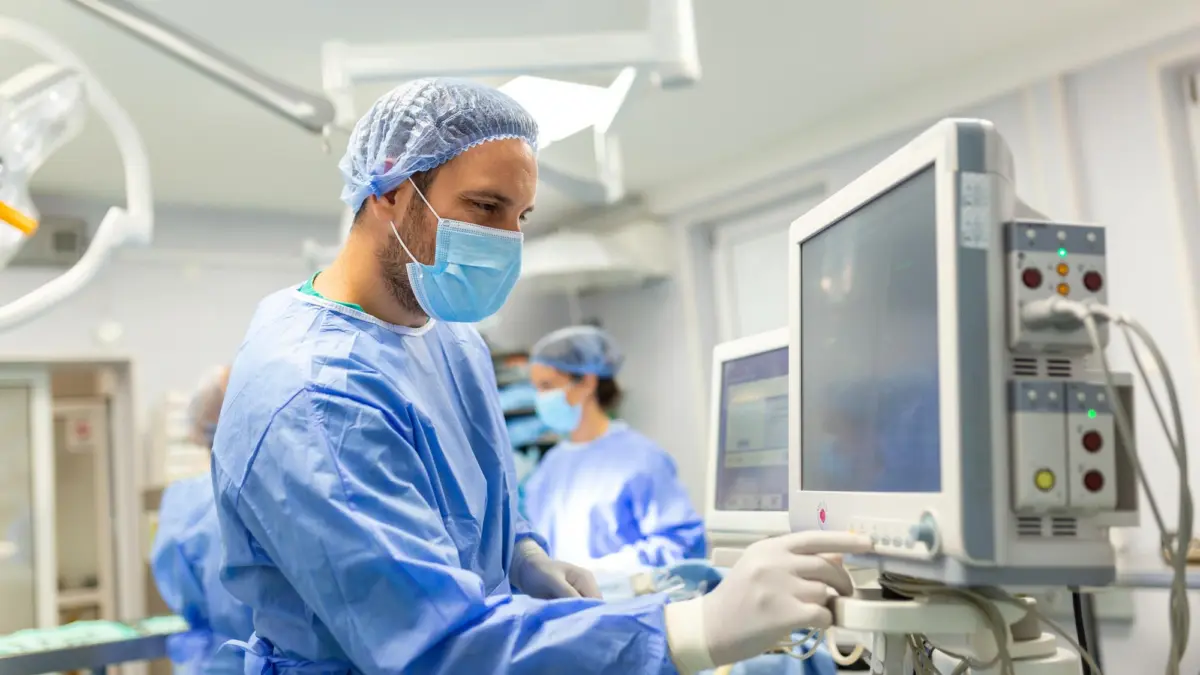
I kept picturing her on an operating table. I kept picturing doctors in masks. I kept picturing a flat line on a monitor.
I drove faster.
The last time I’d seen Emily in person was in August, before she went back for her senior year.
She’d been quiet that summer. Quieter than usual. She’d spent a lot of time in her room. When I asked if she was okay, she said she was just stressed about school.
One afternoon, I’d found her standing in front of the bathroom mirror. Just standing there. Staring at her own face.
“You okay, sweetie?” I’d asked.
She’d jumped, like I’d caught her doing something wrong.
“Fine,” she said. “Just looking.”
I didn’t think anything of it. I wish I had.
Part 3: The Clinic
The clinic wasn’t what I expected.
I’d pictured a hospital. Something big and white, with an emergency entrance and ambulances parked outside.
Instead, it was a sleek two-story building in an office park in Bellevue, all glass and gray stone, with a fountain out front. A discreet silver sign said LUMIÈRE SURGICAL CENTER. The lobby had white leather couches, an orchid on every table, and soft piano music playing from hidden speakers.
It looked more like a spa than a hospital.
“I’m here for Emily Lund,” I told the young woman at the front desk. She had perfect skin and perfect teeth and eyelashes like little fans. “I’m her mother.”
The young woman smiled. “Of course. She’s in recovery, room four. Second floor. She’s been expecting you.”
Recovery? I stopped.
“She already had the surgery? I thought it was tomorrow.”
The woman’s smile flickered.
“Oh, I think the doctor was able to move her up,” she said. “First thing this morning. Room four.”
I went up the stairs two at a time.
Room four was at the end of a quiet hallway with gray carpet. The door was open a crack. I pushed it open.
Emily was lying in a hospital bed with the back raised up. She was wearing a pale blue gown. An IV ran into the back of her left hand.
And her face was covered in bandages.
Thick white gauze, wrapped around her head and across her nose and over her cheeks and chin. Only her eyes and her mouth showed through. Her eyes were swollen almost shut. Purple and black bruises spread out from under the bandages, across her eyelids and down onto her neck.
I stood frozen in the doorway.
“Oh my God,” I said. “Honey. What happened to your face?”
Part 4: The Bandages
Emily opened her eyes. Barely. They were so swollen I could only see a sliver of brown.
“Mom,” she said. Her voice was thick and slurred. “You came.”
“Of course I came.” I crossed the room and took her hand, the one without the IV. It was cold. “Emily, what happened? Why is your face bandaged? I thought this was heart surgery.”
“It was,” she whispered. “It was heart surgery. Mom, please. I’m in so much pain.”
“But your face—”
“The doctors said my skin reacted badly to something,” Emily said. “During the surgery. Something they put on me. I had an allergic reaction. That’s why they had to bandage it. So it doesn’t get infected.”
I looked at her face for a long time.
I’ve been a hairdresser for twenty-eight years. I’ve seen a lot of faces up close. I’ve seen women come into my salon a week after facelifts, with their hair hiding the scars behind their ears. I’ve seen bruises from eyelid surgery. I’ve seen noses still swollen from rhinoplasty, taped up with little white strips.
I know what a face looks like after surgery.
And I knew, standing there in room four, that this was not an allergic reaction.
But I didn’t say anything. Not yet. She was in pain. She was my baby. And I didn’t want to believe what I was starting to believe.
“Are you sure you’re okay?” I asked. “What about your heart? Did they fix it?”
“The operation went fine, Mom,” Emily said. She closed her eyes. “Please. I just want to sleep.”
“Okay,” I said. “Okay, baby. Sleep.”
I sat down in the chair next to her bed. I held her hand. She didn’t open her eyes again.
After a minute, she said quietly, without looking at me, “Mom? Can you go downstairs and pay for the surgery? They said everything needs to be settled today.”
“Today?”
“Before they discharge me. They said it’s policy.”
I sat there holding her cold hand for a long moment.
Then I stood up. I kissed her forehead, the one little spot above her eyebrows that wasn’t covered in bandages.
“I’ll be right back,” I said.
She didn’t answer. She was already asleep. Or pretending to be.
I went down to the first floor. There was a little office near the lobby with a sign on the door that said PATIENT ACCOUNTS. A woman in a gray suit sat behind a desk with a computer.
“I’m Emily Lund’s mother,” I said. “I’m here to pay for her surgery.”
“Wonderful,” the woman said. She clicked a few keys. “The remaining balance is twenty-four thousand dollars. We take all major cards, or a cashier’s check, or a wire transfer.”
“Before I pay,” I said, “I’d like to speak with her surgeon. Please.”
The woman hesitated. Just for a second.
“Of course,” she said. “Let me see if Dr. Pierce is available.”
Part 5: Dr. Pierce
Dr. Alan Pierce came down five minutes later.
He was in his late fifties, tall and tan, with silver hair and very white teeth. He was wearing navy blue scrubs with LUMIÈRE embroidered over the pocket. He walked into the patient accounts office with his hand already out.
“Oh, you’re Emily’s mother!” he said. He shook my hand warmly. “I’m so glad you’re here. She was worried you might not make it in time.”
“I drove from Spokane.”
“Well, you made it. That’s what matters.” He smiled. “And I have to say, Mrs. Lund, it was very brave of your family to agree to this.”
I frowned.
“Agree to what, Doctor?”
He looked at me for a moment.
It was a short moment. Maybe two seconds. But I saw something happen in his eyes. A little flicker. Like a man who’s just realized he’s stepped onto ice that’s thinner than he thought.
“The procedures,” he said carefully. “The full facial reconstruction.”
The room went very quiet.
“Facial reconstruction,” I repeated.
“Yes.” He was watching me closely now. “Rhinoplasty. A chin reduction. Brow bone contouring. Some fat grafting to the cheeks.” He paused. “Emily told us her family was fully supportive. She said you’d discussed it at length.”
“Doctor,” I said. My voice sounded strange to me. Very calm and very far away. “My daughter told me she needed emergency heart surgery. For a valve. She said if she didn’t have it, she might die.”
Dr. Pierce’s tan face went a few shades paler.
“Heart surgery,” he said.
“That’s why I drove four and a half hours this morning. That’s why I’m about to give you my entire life savings.” I took a breath. “Is there anything wrong with my daughter’s heart, Dr. Pierce?”
He didn’t answer right away. He looked at the woman in the gray suit. She looked at her computer screen.
“Mrs. Lund,” Dr. Pierce said finally. “Your daughter’s heart is perfectly healthy. We did a full pre-operative workup. EKG, bloodwork, everything. There’s nothing wrong with her heart at all.”
I sat down in the chair in front of the desk. I didn’t decide to. My knees just gave out.
“Then what did you do to her?”
“What she asked us to do,” Dr. Pierce said. He sat down across from me. He’d stopped smiling. “Your daughter came in for a consultation six weeks ago. She brought photographs. She wanted significant changes to her facial structure. Her nose. Her chin. Her brow.” He hesitated. “She said she wanted to look less like her father.”
I stared at him.
“Her father,” I said.
“She was very specific,” Dr. Pierce said quietly. “She said she’d inherited his features. That every time she looked in the mirror, she saw him. She said it was unbearable.” He looked down at his hands. “She told us her father had been abusive. That your family understood. That you’d all agreed this was the best thing for her healing.”
He looked back up at me.
“That’s what I meant,” he said. “When I said it was brave. I thought you’d all decided together.”
Part 6: Rick
Rick Lund was the most handsome man I ever met.
That was the problem. I was twenty-six, working at a salon in downtown Spokane, and he walked in for a haircut on a Saturday morning in June. Tall, dark hair, a strong nose, a square jaw, a heavy brow that made his eyes look serious even when he was laughing.
He was charming. He was funny. He tipped me twenty dollars on a fifteen-dollar haircut and asked me out for a drink.
I married him eight months later. Emily was born the following year.
She looked exactly like him from the day she was born. Everybody said so. The nurses at Deaconess Hospital said so. My mother said so. Rick’s mother cried when she held her because, she said, “it’s like holding Ricky all over again.”
Rick drank. I didn’t know how much at first. I found out slowly, the way you do. Bottles hidden in the garage. Beer cans under the seat of his truck. Nights when he didn’t come home until two in the morning.
When he drank, he got mean.
He never hit me. I want to be clear about that. But he said things. Terrible things. To me, and later, to Emily.
When she was eight, she came home crying from school because a boy had called her nose big. Rick was sitting on the couch with a beer.
“Well, he’s right,” Rick said, laughing. “You got my nose, kiddo. Sorry. You’re never gonna be a pretty girl. You got my whole face.”
I yelled at him that night. He said he was joking.
Emily didn’t think it was a joke. She was eight years old. She believed him.
He left when she was ten. Just packed up his truck one morning and drove to Montana. He sent child support for about two years, sporadically, and then nothing.
We heard from him maybe once a year after that. A birthday card, sometimes. A drunk phone call on Christmas Eve.
I thought he was gone. I thought it was over. I thought Emily had moved on.
I didn’t know he was still standing in front of every mirror she looked into.
Part 7: The Room
I went back upstairs.
I didn’t pay. I told the woman in the gray suit I needed to talk to my daughter first. Dr. Pierce didn’t argue. He just nodded and looked at the floor.
When I walked into room four, Emily was awake.
She was lying in the bed, staring at the ceiling through her swollen eyes. When she heard the door open, she turned her head toward me very slowly.
She saw my face. And she knew.
“Mom,” she said.
I closed the door behind me. I sat down in the chair next to her bed.
I didn’t say anything for a long time. I just looked at her. At the bandages. At the bruises spreading out from under them, purple and black and green. At her swollen eyes.
Somewhere under all of that gauze was my daughter’s face. The face I’d kissed goodnight every single night of her life. The face I’d washed and wiped and put sunscreen on and taken a thousand pictures of.
And it was gone. Or changed. I didn’t know which.
“There’s nothing wrong with your heart,” I said finally.
Emily started to cry. Tears leaked out from under the bandages and ran down into her ears.
“No,” she whispered.
“You lied to me.”
“Yes.”
“You told me you were dying. You called me at six in the morning and told me you might die. I drove across the state thinking I was going to lose you.”
“I know,” Emily said. “I’m sorry. I’m so sorry, Mom.”
“Why?” I asked. My voice cracked. “Why didn’t you just tell me?”
Emily turned her head away from me. She stared at the wall.
“Because you would’ve said no,” she said.
“You don’t know that.”
“Yes, I do.” She turned back to me. “You’d have said I was beautiful. You’d have said I didn’t need it. You’d have said it was vanity and it was dangerous and it was expensive. And then you’d have said no, and I’d have had to keep looking at him every day for the rest of my life.”
She was crying harder now.
“I couldn’t do it anymore, Mom. I couldn’t look at him anymore.”
Part 8: What Happened in September
It took her a long time to tell me. She kept stopping. Crying. Saying it hurt to talk.
But she told me.
Rick had shown up on campus in September. The first week of her senior year. She was walking out of the library on a Thursday night, and he was just sitting there on a bench outside. Drunk. She could smell it from ten feet away.
She hadn’t seen him in four years.
“He found my Instagram,” Emily said. “And he figured out where I went to school. And he drove from Missoula. Seven hours. Just to see me.”
“What did he want?”
“Money,” she said. “He said he’d lost his job. He said his truck broke down. He wanted me to give him five hundred dollars.”
She told him no. She told him to leave her alone.
And Rick, drunk on a bench outside the Suzzallo Library at ten o’clock at night, stood up and got right in her face.
“You know what’s funny?” he’d said. “Every time I look at you, I see myself. Same nose. Same chin. Same everything. You’re me, Emmy. You can run off to your fancy college and pretend you’re better than me. But you’ve got my face. You’ll always have my face. Every time you look in a mirror, you’re gonna see me.”
Then he laughed. That same laugh from when she was eight.
“You’ll never get rid of me, kiddo,” he said.
And then he walked away.
“I went back to my apartment,” Emily said. “And I stood in front of the bathroom mirror. And he was right, Mom. He was right. It was his face. His nose. His chin. His eyebrows. Even the way my eyes look when I’m angry. It was him.”
She was shaking now.
“I stood there for two hours,” she said. “Just staring. I couldn’t stop. And the next morning, I looked up plastic surgeons.”
I sat there holding her hand. I didn’t know what to say.
“You know what the worst part is?” Emily said quietly.
“What, baby?”
“You used to say it too.”
I stopped breathing.
“Not mean, like him,” Emily said quickly. “Never mean. But you’d look at me sometimes. When I was little. After he left. And you’d get this look on your face. Sad. And you’d say, ‘You look so much like your father.’ And then you’d get quiet.”
She looked at me through her swollen eyes.
“I thought it hurt you to look at me,” she said. “My whole life. I thought every time you looked at my face, you saw him. And it made you sad.”
Part 9: What I Said
I didn’t know what to say. I just sat there.
Because she was right.
I remembered. All those times. She’d come down to breakfast with her hair messy, squinting at the sunlight, and for a second, she’d look exactly like Rick did on our good mornings, back at the beginning. And my heart would twist.
“You look so much like your father,” I’d say.
And then I’d go quiet. Because I was remembering. The good mornings. The bad nights. The bottles in the garage. The truck pulling away.
I never meant it the way she heard it. I never once thought her face was ugly. I never once wished she looked different.
But she was eight, and ten, and twelve, and fifteen. And every time I said it, she heard: you remind me of the man who hurt us.
“Emily,” I said. My voice was shaking. “I never, ever meant that I didn’t love your face.”
“I know.”
“No. You don’t know. Listen to me.” I leaned forward and held her hand tighter. “When I said you looked like him, I was sad. That’s true. But I wasn’t sad because of you. I was sad because he had the chance to look at you every day, and he threw it away. He had the most beautiful daughter in the world, and he chose a bottle instead.”
Emily was crying again.
“Your face never hurt me,” I said. “Not once. Not one single time in twenty-one years. Your face is the best thing I’ve ever seen.”
We sat there for a long time. Neither of us said anything.
Then Emily whispered, “Is it still my face?”
I looked at her. At the bandages and the bruises.
“I don’t know, baby,” I said honestly. “I don’t know what’s under there yet.”
“Me neither,” she said. And then she started to sob. “Mom, what if I made a mistake? What if I hate it? What if I look in the mirror and I don’t know who I am anymore?”
I put my arms around her as carefully as I could, trying not to touch the bandages.
“Then we’ll figure it out,” I said. “Together. Like always.”
Part 10: The Fever
I didn’t pay that day.
I told the woman in the gray suit that I needed time to think. That I wanted to see all of the paperwork. The consent forms Emily had signed. The pre-op evaluation. Everything.
The woman in the gray suit was not happy. She said it was “highly irregular.” She said the clinic’s policy required payment in full before discharge.
“Then I guess she’s not being discharged today,” I said.
I stayed in room four all night. I slept in the chair next to Emily’s bed with my coat over me.
Around three in the morning, Emily started moaning.
I woke up. She was thrashing in the bed, sweating. Her face, what I could see of it, was bright red. When I touched her forehead, she was burning up.
I pushed the call button. Nobody came.
I pushed it again. Nobody came.
I went out into the hallway. It was empty. Dark. The nurses’ station at the end of the hall had one lamp on and nobody sitting there.
I found a nurse finally, in a break room on the first floor, eating a yogurt and scrolling on her phone. She was young, maybe twenty-five. She looked surprised to see me.
“My daughter has a fever,” I said. “A bad one. She’s burning up.”
The nurse came upstairs. She took Emily’s temperature. It was 102.8.
She looked at the number for a long moment. Then she looked at me.
“I need to call Dr. Pierce,” she said.
Dr. Pierce didn’t come in. He called back twenty minutes later and told the nurse to give Emily Tylenol and an antibiotic and to “keep an eye on her.”
By six in the morning, her temperature was 103.4. The left side of her face had swelled up so badly that the bandage was cutting into her skin. She was confused. She kept calling me Grandma.
I didn’t ask anybody’s permission. I called 911.
Part 11: The Real Hospital
The ambulance took Emily to UW Medical Center in Seattle. A real hospital, with a real emergency room and real doctors.
The plastic surgeon on call that morning was a woman named Dr. Adaeze Nkemelu. She was in her forties, short and calm, with braids pulled back under a surgical cap. She took one look at Emily’s face and ordered her straight into surgery.
“There’s a hematoma,” she told me in the hallway. “Blood collecting under the skin, on the left side of her face. And it’s infected. We need to drain it right now, before it spreads.”
“Is she going to be okay?”
Dr. Nkemelu looked at me steadily.
“I think so,” she said. “But I need to go in now. Every hour matters.”
Emily was in surgery for two hours.
I sat in the waiting room with my hands folded in my lap. I didn’t call anybody. I didn’t text anybody. I just sat there, staring at the double doors, waiting for them to open.
It occurred to me, sitting there, that this was exactly what I’d pictured on the drive across the state. Emily on an operating table. Doctors in masks. Me in a waiting room, praying.
I’d been right. Just not about why.
Dr. Nkemelu came out at ten-fifteen. She sat down next to me in the waiting room.
“She’s okay,” she said. “We drained the hematoma and cleaned out the infection. She’s on IV antibiotics. She’ll be here for a few days.”
I put my face in my hands and cried.
Dr. Nkemelu waited until I was done. Then she said something I’ll never forget.
“Mrs. Lund,” she said quietly. “I’ve been doing facial plastic surgery for fifteen years. I want to tell you some things about what was done to your daughter. Not to scare you. But because you should know.”
I looked up.
“What they did,” she said, “was four major procedures in one session. Rhinoplasty. Genioplasty, which is the chin. Brow bone reduction. And fat grafting. In a twenty-one-year-old woman who’d had a consultation six weeks ago.” She shook her head. “Most surgeons I know wouldn’t do all four at once on anyone. It’s too much trauma at one time. Too much risk of exactly what happened.”
“Why would they do it, then?”
“Money,” Dr. Nkemelu said simply. “Four procedures, one operating room fee, one anesthesia fee. It’s very profitable.”
She hesitated.
“There’s something else,” she said. “In her chart from Lumière, which they sent over this morning, there’s a note from her consultation. She told them about her father. About wanting to look less like him. About not being able to look in the mirror.” She paused. “That’s a red flag, Mrs. Lund. A big one. Any responsible surgeon would have referred her to a psychologist before operating. To screen her for body dysmorphic disorder. Or trauma. Or depression.”
“They didn’t?”
“There’s no record of it,” Dr. Nkemelu said. “They took her deposit and booked her surgery.”
Part 12: Emily’s Face
They took the bandages off for the first time eight days later.
Emily was still at UW Medical Center. The infection had cleared. The swelling had gone down a lot. Dr. Nkemelu said it was time to look.
Emily was terrified. She sat on the edge of the hospital bed in a pair of my old sweatpants, holding my hand so tight it hurt.
“What if I hate it?” she whispered.
“Then you hate it,” I said. “And we’ll deal with it.”
“What if I don’t recognize myself?”
“Then I’ll recognize you,” I said. “I’ll always recognize you.”
Dr. Nkemelu unwrapped the gauze slowly. Layer by layer. Emily kept her eyes closed the whole time.
When the last piece came off, I looked at my daughter’s face.
It was still swollen. Still bruised, purple and yellow along her cheekbones and under her eyes. There were stitches under her chin and small taped strips across the bridge of her nose.
But under all of that, I could see it.
Her nose was smaller. Straighter. The bump Rick gave her was gone. Her chin was narrower. Softer. Her brow was lower, less heavy, so her eyes looked bigger.
She looked different. She did. Anybody would have seen it.
But she also looked like Emily.
“Can I open my eyes?” Emily whispered.
“Whenever you’re ready,” Dr. Nkemelu said.
Emily didn’t open her eyes. She sat there with them squeezed shut, holding my hand.
“Mom,” she said. “Do I look like him?”
I looked at her face for a long, long time.
“No,” I said. “You don’t look like him.”
She started to cry.
“Do I look like me?” she asked.
I didn’t answer right away. I wanted to be honest. I’d been lied to enough. I didn’t want to lie to her.
“You look like you,” I said finally. “You always did. You just didn’t know it.”
Dr. Nkemelu handed her a small mirror. Emily held it in her lap for a long time with her eyes still closed.
Then she opened them.
She looked down at the mirror. At her new face, swollen and bruised and stitched.
She didn’t say anything. She just stared.
Then she started to shake. Her shoulders. Her hands. The mirror trembled in her lap.
“I don’t know who that is,” she whispered.
Part 13: The Counselor
Dr. Nkemelu referred Emily to a psychologist at the university hospital. A woman named Dr. Ruth Feldstein, who specialized in trauma and body image.
Emily didn’t want to go at first. She said she wasn’t crazy. She said she just had an ugly face and fixed it.
“You’re not crazy,” Dr. Nkemelu told her gently. “But you stood in front of a mirror for two hours seeing someone who hurt you. That’s not about your nose, Emily. That’s about him. And a scalpel can’t take him out of your head.”
Emily went.
She went every week for the rest of her senior year. She took a medical leave from school for the fall quarter and came home to Spokane. She stayed in her old bedroom, with the purple walls she’d painted in eighth grade and the photos of her soccer team still pinned to the corkboard.
The swelling went down slowly. The bruises faded. The stitches came out. Her new face settled into itself, week by week.
But she didn’t look in mirrors. Not for a long time. She covered the one in her bedroom with a towel. She brushed her teeth in the dark.
“She has to come to terms with two things,” Dr. Feldstein told me, on one of the days I drove Emily to her appointment and waited in the lobby. “First, that she made a big, permanent decision out of pain. And second, that the pain is still there. The surgery didn’t take it away.”
“What do I do?” I asked.
“You keep loving her face,” Dr. Feldstein said. “Both of them. The old one and the new one. Out loud. As often as you can.”
Part 14: The Clinic
I never paid Lumière Surgical Center the twenty-four thousand dollars.
Emily had put an eight-thousand-dollar deposit on a credit card she’d opened in September. That was already gone. The clinic sent bill after bill for the rest. Then they sent a collections letter.
I sent them a letter back. Written by a lawyer.
Her name was Janet Okoye. Dr. Nkemelu recommended her. She’d handled a lot of cases involving cosmetic surgery clinics in the Seattle area.
Janet read everything. The consent forms. The consultation notes. The pre-op evaluation, which showed a perfectly healthy heart. Dr. Pierce’s operative report. The UW Medical Center records showing the hematoma and the infection. The note about Emily’s father that nobody had acted on.
“They didn’t screen her,” Janet said, sitting at my kitchen table in Spokane. “They knew she had trauma. She told them. She said, in so many words, that she couldn’t look at herself. And they did four procedures at once on a twenty-one-year-old in emotional crisis. Without a psych referral. Without a waiting period.”
She tapped the paperwork.
“And then,” she said, “when she developed a fever at three in the morning, the surgeon didn’t come in. He prescribed Tylenol over the phone. You had to call 911.”
Janet filed a complaint with the Washington Medical Commission. The state board that licenses doctors.
The clinic dropped the collection on the remaining balance within a month. Their lawyer sent a letter saying it was “a gesture of goodwill.” Janet said it was because they didn’t want the case to get any bigger.
The Medical Commission investigation took almost a year. In the end, they found that Dr. Pierce had failed to meet the standard of care. He was required to complete additional training, his practice was placed under supervision, and Lumière was ordered to change its screening policies for patients disclosing trauma or body image concerns.
It wasn’t enough. It never is. But it was something.
Part 15: The Letter to Rick
In February, Emily wrote a letter to her father.
Dr. Feldstein suggested it. She said Emily didn’t have to send it. She just had to write it.
Emily sat at my kitchen table for three hours one Sunday afternoon, writing on a yellow legal pad. She crossed out more than she kept. She cried twice. When she was done, she folded it up and put it in an envelope.
She didn’t let me read it. I didn’t ask.
But a week later, she mailed it.
She found his address in Missoula through an online search. She put a stamp on the envelope and walked it to the blue mailbox on the corner of our street, in the snow, by herself.
When she came back inside, her cheeks were pink from the cold.
“Did you send it?” I asked.
“I sent it.”
“How do you feel?”
She thought about it.
“Lighter,” she said. “Not light. But lighter.”
Rick never wrote back. I don’t know if he ever read it.
Months later, Emily told me what she’d written. One line, anyway. The last one.
“You said I’d never get rid of you. You were wrong. I got rid of you. Not with surgery. With this letter. My face is mine now. It always was.”
Part 16: The Chair
In April, Emily asked me to cut her hair.
She’d been growing it out for months. It was long and uneven, past her shoulders, with split ends she said she was too embarrassed to let anybody see.
“Come to the salon,” I said. “After closing. Nobody else will be there.”
So on a Thursday night in April, after Jolene and the other girls went home, Emily came to Teresa’s Chair on North Monroe Street. I locked the front door and flipped the sign to CLOSED.
She sat down in my chair. The same chair she used to sit in when she was little, spinning around and around while I swept up hair.
And there, in front of her, was the mirror.
My salon has a big one. Wide, wall-to-wall, with lights all around the edges. There’s no towel to cover it. There’s no way to brush your teeth in the dark.
Emily stared down at her lap. She didn’t look up.
“I can’t,” she whispered.
“You don’t have to,” I said. “I’ll do it with you looking down.”
I put the cape around her shoulders. I wet her hair with the spray bottle. I combed it out, the long uneven strands, and picked up my scissors.
I cut for a long time. Slowly. Carefully. Shaping her hair into a soft shoulder-length bob with long layers around her face. It’s the cut I would’ve given her when she was sixteen, if she’d ever let me.
When I was done, I put down the scissors. I took off the cape. I brushed the little hairs off the back of her neck.
“Emily,” I said. “Look up.”
She didn’t move.
“Baby,” I said. “Look up. Please.”
She lifted her head slowly.
She looked into the big mirror. At the woman sitting in my chair, with soft brown hair framing her face. A small straight nose. A narrow chin. Big brown eyes.
She looked for a long, long time.
“Who do you see?” I asked her.
She was quiet. Her eyes filled up with tears.
“I don’t see him,” she said finally.
“Good,” I said.
“But I don’t see a stranger either.” She leaned closer to the mirror. She touched her cheek. Then her nose. Then her chin. “I see— I don’t know. I see somebody who’s trying.”
I came around the chair and knelt down next to her, so our faces were side by side in the mirror. Mine, forty-nine years old, with laugh lines and crow’s feet and gray coming in at the roots I hadn’t touched up in a month. Hers, twenty-two, with her new nose and her new chin and her eyes, the same brown eyes she’d always had.
“You know what I see?” I said.
“What?”
“My daughter,” I said. “That’s it. That’s all I’ve ever seen. Before the surgery. After the surgery. When you were eight and crying about a boy at school. When you were twenty-one and lying in a hospital bed in bandages.” I looked at her in the mirror. “It’s always just been you, Em.”
Emily stared at our two faces in the mirror. Then she turned around in the chair and put her arms around me.
“I’m sorry I lied,” she said into my shoulder. “About my heart. I’m so sorry.”
“I know.”
“I should’ve just told you.”
“You should have,” I said. “But I should’ve told you, a long time ago, that your face never hurt me. I let you believe it. For years. That’s on me too.”
We stayed like that for a long time in the empty salon, with the lights all around the mirror and her freshly cut hair scattered on the floor.
Part 17: The Heart
Emily went back to the University of Washington that fall. She finished her degree in June.
She majored in psychology. She’d switched from biology during her leave. She said she wanted to understand what happened to her. She said she wanted to help other people who stood in front of mirrors for two hours and didn’t recognize what they saw.
She’s in graduate school now, in Seattle, training to be a counselor. She still sees Dr. Feldstein once a month. She says she probably always will.
She still has days when she looks in the mirror and doesn’t like what she sees. Dr. Feldstein says that’s normal. That’s human. Everybody has those days.
But she doesn’t cover the mirrors with towels anymore. She doesn’t brush her teeth in the dark.
And she doesn’t see Rick.
At her graduation, in June, she walked across the stage at Husky Stadium in a purple gown. I sat in the stands with my phone held up, filming, crying like a fool.
When she found me after the ceremony, she threw her arms around my neck. Then she pulled back and looked at me.
“Mom,” she said. “Remember when I called you that morning? And said there was something wrong with my heart?”
“I’ll never forget it.”
“I was lying,” she said. “About the valve. About the surgery. All of it.”
“I know, baby.”
“But I wasn’t really lying,” she said. “Not about the heart part. There was something wrong with it. It was broken. I just didn’t know how to say that.”
I looked at my daughter, standing in her purple graduation gown with her diploma in her hand. The sun was in her eyes. Her hair was blowing in the wind off Lake Washington.
She looked beautiful. She looked like herself.
“And now?” I asked.
She thought about it for a moment. Then she smiled. A real smile. The one I’d been waiting years to see.
“Now it’s healing,” she said. “Slowly. But it’s healing.”
People ask me sometimes how I could forgive her. For the lie. For scaring me half to death. For the twenty-four thousand dollars she almost took from me under false pretenses.
I tell them the truth.
My daughter called me at six in the morning and told me she needed heart surgery. She was right. She did.
The doctors in Bellevue just operated on the wrong thing.
It took a hematoma, and an ambulance, and a real surgeon, and a counselor, and a lawyer, and a letter to Missoula, and a haircut in an empty salon to fix the right one.
And it took me finally saying out loud what I should have said every single day since she was eight years old.
Your face never hurt me.
Your face is the best thing I’ve ever seen.
Your face is yours.
THE END