The first time I offered to help Mr. Harris with the refrigerator in his pickup, he looked at me like I’d caught him doing something he wasn’t supposed to be doing.
Then he smiled and called me honey. The way he always did when he thought I was making too much of something.
By then, I’d already watched him drive it to the post office twice.
And I’d already started to worry.
I live across the street from Walt Harris.
I’ve known him long enough to remember when he could back that old blue Ford pickup into his driveway in one smooth try, one arm hooked over the seat, not even looking at the mirrors. At seventy-eight, it sometimes took him three. Forward, back, forward, back, the engine grumbling, until the truck was lined up just the way he wanted.
He always gave me a little wave afterward if he saw me on my porch. Like a man taking a bow.
His wife, Helen, had died two years earlier. Her heart. She went to lie down after lunch one Sunday and didn’t wake up.
I’d expected Walt to get quieter after that. Some men do. They shrink down to the size of their recliner.
Walt didn’t.
He still said hello to everybody on Maple Court. He still asked if I needed anything done around the house whenever we ran into each other at the mailboxes. He still carried strawberry candies in his shirt pocket. The hard kind, in the red cellophane twists.
They were for my granddaughter, Hope.
Hope is six. She’ll tell you she’s six and three quarters. She stays with me three afternoons a week while her mother, Laurel, works the evening shift at the hospital.
Walt figured out early that you don’t hand a child candy without checking with her grandmother first. So when he came over and Hope was there, he’d look at me and wait. Just stand there with his hand resting on his shirt pocket, eyebrows up.
Hope figured this out too. She’s not a dumb kid.
Now, the second she saw him coming across the street, she’d start nodding at me. Hard. Before he’d even reached the curb.
“Grandma, I ate my whole sandwich.”
“I was there, Hope.”
“Just reminding you.”
The refrigerator showed up one morning in late April while I was out bringing my trash cans in.
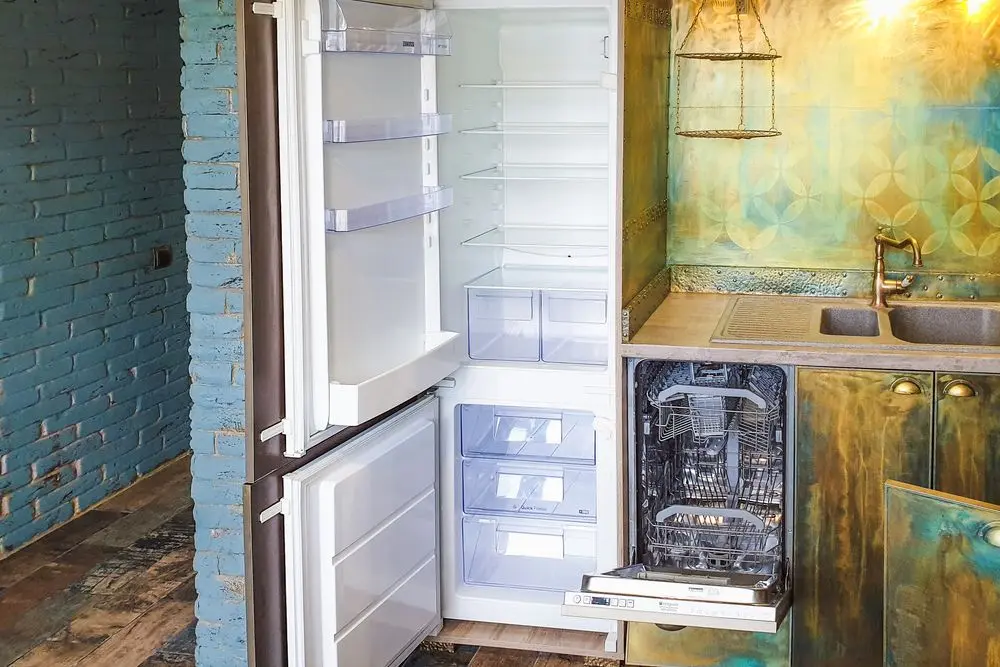
It was standing upright in the bed of Walt’s truck. A white two-door model, tall enough that it stuck up well above the cab. Two heavy yellow straps held it in place, cranked tight to the tie-downs.
And there was a padlock across the doors.
A brass one, the kind you’d put on a shed. Hooked through both handles so neither door could open.
I figured he’d bought a new fridge and the one in the truck was on its way to the dump. That made sense. That’s what you do with an old fridge.
A week later, it was still there.
He took it everywhere.
To the grocery store. To the pharmacy. To the post office. To church on Sunday morning. I’d see the truck pull out of his driveway with the fridge sticking up out of the back like a tombstone, and I’d see it come home again an hour later, fridge and all.
I started wondering if I’d gotten it backward. Maybe it wasn’t his old one. Maybe he’d bought it secondhand from somebody and was waiting for someone strong enough to help get it into the house.
That would’ve made sense too. I’d seen him make six trips from his truck with his groceries so he could carry them one bag at a time. His back’s not good. His knees are worse.
So one afternoon, I went over while he was getting his mail.
“Mr. Harris,” I said. “Want me to get a couple of the guys from the street to help you get that fridge out of your truck and into the house?”
His hand stopped halfway into the mailbox.
For a second, he just stood there with his arm out. Like somebody had pressed pause on him.
Then he pulled out a grocery flyer and turned around and smiled.
“Oh, honey, don’t worry about it! That’s my old fridge. It broke, and I just haven’t gotten around to taking it to the dump.”
“Padlock and all?” I said. Joking.
He laughed.
“Can’t be too careful these days! Keeps the doors from swinging open on the road.”
I’d been in his kitchen plenty of times. For coffee. For Helen’s funeral luncheon. To help him program the new microwave his son sent him for Christmas.
His kitchen fridge was cream-colored. It had a dent in the freezer door, low on the left, where Helen had once hit it with a cast-iron skillet. She claimed it was an accident. Walt claimed it was a message.
The white one in the truck barely had a scratch on it.
I almost asked him when he’d replaced the cream one. The question was right there.
Then I pictured someone marching across the street to quiz me about the things I meant to throw out, and I didn’t like how that felt.
So I just said, “Well, let me know,” and went home.
Helen used to be the person I’d call about something like this.
She lived across the street for the four years I’d been on Maple Court before she died. We got close fast, the way you sometimes do with a person at the end of your life instead of the beginning.
We could get half an hour out of a neighbor putting up a fence. We could get a whole afternoon out of somebody painting their front door purple.
She could also tell when I was talking about a fence because I was trying to work up to something else.
She’d just sit there and wait.
Helen was the best waiter I’ve ever known. Not the restaurant kind. The other kind.
I want to tell you about the night she came over.
It was my second night in this house.
I’d lived thirty-one years in a little white bungalow on Sycamore Street, on the other side of town. I raised my daughter there. Laurel was five when we moved in. She was a teenager there. She left for college from that front porch, with her whole life stuffed into the back of my Corolla.
Her father left when she was ten. After that it was just the two of us in that house. We painted every room ourselves. We fixed the leaky kitchen faucet with a YouTube video and a lot of swearing. We put in a garden that never once grew a decent tomato.
When I turned sixty-two, I sold it.
The stairs were getting hard on my hip. The roof needed replacing. The taxes kept going up. And Laurel had just had Hope and was working nights, and she lived two miles from Maple Court. I thought if I moved closer, I could help.
I thought it was the right thing to do.
I didn’t tell Laurel until the For Sale sign was already in the yard.
I didn’t mean it that way. I meant to tell her. I kept putting it off. I knew she’d be upset. I told myself I’d wait until the right moment.
Then the realtor said we had to list by Friday to catch the spring market, and Friday came, and Laurel drove past the house on her way to work and saw the sign.
She called me from the hospital parking lot.
“Mom. Were you going to tell me?”
“Honey, I was going to—”
“You were going to tell me after. After it was done. Like you always do.”
“That’s not fair.”
“It’s my house too, Mom. I grew up there. Did you even think about that?”
I didn’t know what to say. So I said the wrong thing.
“You haven’t lived there in fifteen years, Laurel.”
She hung up on me.
She didn’t help with the move.
She said she couldn’t get off work. Maybe that was true. She came by once, the day before the closing, and walked through the empty rooms with Hope on her hip and didn’t say much. She stood in the hallway for a long time.
Then she said, “I’ve got to get going,” and left.
We were fine after that, mostly. We’re always fine. That’s the problem with Laurel and me. We’re always fine, and underneath fine there’s a whole basement full of things we don’t say.
So that was my second night on Maple Court.
I was sitting at my new kitchen table in a kitchen I didn’t know yet, eating saltines out of the sleeve, because I hadn’t found the box with the plates. Boxes everywhere. A bare bulb over the sink because I hadn’t bought a shade yet.
Someone knocked on the back door.
It was a small woman with short white hair and reading glasses on a beaded chain. She was holding a casserole dish with foil on top.
“I’m Helen,” she said. “From across the street. This is chicken and rice. It’s not very good, but it’s hot.”
She found the forks before I did.
She sat down across from me. She didn’t eat any casserole. She just sat there and watched me eat.
“I keep thinking of things I left there,” I said, after a while. I don’t know why I said it. I’d known her for ten minutes.
“Things you need?”
“No. Just little things. Stuff I made when my daughter was growing up.”
Helen reached over and slid the sleeve of crackers across the table toward herself. She took one. She nibbled the corner of it.
And she waited for me to tell her which things.
I told her about the sunflowers.
In the hallway of the Sycamore house, there was a long piece of door trim between the hall and Laurel’s bedroom. The wood was old. Pine, I think. I’d painted all the trim in the house a bright buttercup yellow, the summer we moved in, because Laurel was five and yellow was her favorite color.
Then she asked for flowers.
So I painted sunflowers down the front of that one doorframe. A whole row of them, top to bottom. Except Laurel wanted them black.
“Night sunflowers,” she said. “For when they go to sleep.”
So I painted them black. Black heads, black petals, little black stems. All the heads tipping different directions, like they were looking around for the sun.
The top one had one petal sticking way out on the left. There was a raised knot in the wood right there, and I couldn’t get the paint smooth over it, so I painted around it. It made the flower look like it was waving.
Laurel loved that one best. She called it the Hello Flower.
And on the inside edge of that same doorframe, the narrow side you only see when you’re standing in the doorway, I measured her.
Every birthday. Every first day of school. Sometimes just because.
She’d stand there barefoot with her heels against the wood, and I’d balance a paperback flat on top of her head, and I’d make a pencil mark under it. Then I’d write the date next to it.
The first mark was from the week we moved in. September. She’d just learned to read the months that summer, so I spelled the whole word out for her. SEPTEMBER. In big letters. She was so proud she could read it.
Thirty-one years of pencil marks. Laurel at five. At seven. At twelve, standing on her tiptoes when she thought I wasn’t looking. At sixteen, rolling her eyes but still letting me do it.
The last mark was from the week before she left for college.
“I used to touch them when I walked by,” I told Helen. “Without thinking about it. Just running my hand down the wood on my way to the bathroom. Every day. For thirty-one years.”
Helen chewed her cracker.
“Why didn’t you take them with you?” she asked.
I’d been asking myself that for a week.
“I didn’t think of it,” I said. “Not until the papers were signed. Then I was standing in the hallway the last day, with the movers waiting, and I looked at that doorframe, and I thought, Oh. Oh, no. But it was already somebody else’s by then. It came with the house.”
Helen didn’t say anything.
“It’s silly,” I said. “It’s just wood.”
“No,” Helen said. “It isn’t.”
That was all she said. But it was the right thing.
I told her more that night than I’d told my own daughter through the whole move.
About Laurel’s father leaving. About the sign in the yard. About the phone call from the hospital parking lot. About how Laurel and I were always fine.
Helen listened until almost eleven o’clock. Then she took her empty casserole dish and went home across the street.
She never brought it up again.
I never thought about it again either. Not really.
Not until two o’clock in the morning, four years later, standing at my bedroom window.
But I’m getting ahead of myself.
As the weeks went by that spring, practically every neighbor on Maple Court offered to help Walt with the fridge.
He thanked each one. Then he found something else to talk about.
Ray Kowalczyk from two doors down got all the way to proposing a specific Saturday morning. Nine a.m. He’d bring his son-in-law and his hand truck.
Walt said, “That’s mighty kind, Ray. Say, how are those tomatoes of yours coming along? Did you ever get the blossom rot sorted out?”
They talked about tomatoes for twenty minutes. I watched from my porch. By the end of it, Ray was explaining the importance of calcium in the soil with both hands.
The truck went out again on Saturday morning with the fridge still in it.
I asked a couple more times myself.
Each time, Walt smiled and told me he’d get it to the dump soon. Each time, he called me honey.
And somewhere in there, I started to worry.
Not about the fridge.
About Walt.
My mother had dementia at the end. It started small. She put her car keys in the refrigerator. She wrote checks to the electric company twice. She kept a broken toaster on her kitchen counter for six months and got angry when I tried to throw it out. She said it was waiting for someone.
I lay awake one night in May thinking about that toaster.
I thought about Walt driving all over town with a broken refrigerator padlocked in the back of his truck. Telling everyone he was taking it to the dump. Never taking it to the dump.
I thought, This is how it starts.
The next week, I almost called his son.
Mark lives in Phoenix. He comes out once a year, at Thanksgiving, and calls every Sunday. I had his number because Helen gave it to me after her first heart scare. “Just in case,” she said. “Walt won’t call him. He’ll say he doesn’t want to bother him.”
I had my phone in my hand. I had Mark’s name pulled up.
I pictured calling a man in Phoenix to tell him his father might be losing his mind because of a refrigerator.
I pictured Walt finding out.
I put the phone down.
But I started watching him more closely after that. The way you watch somebody you’re afraid for.
He seemed fine. He seemed exactly like himself. He remembered everybody’s name. He remembered which of Ray’s tomatoes had blossom rot. He remembered that Hope was allergic to peanuts and only gave her the strawberry candies, never the caramels.
He just wouldn’t explain the fridge.
One afternoon in June, Hope and I were out front drawing on my sidewalk with chalk when Walt pulled in.
Hope dropped her chalk and ran as far as the curb. She knows not to go any farther. She stood there bouncing on her toes, waiting for him.
He took three tries to park. He got out. He came across the street slowly, one hand on his lower back.
He reached into his shirt pocket and looked at me.
I nodded.
He gave Hope a strawberry candy.
And instead of unwrapping it right there, the way she always does, she put it in the pocket of her shorts.
“Can I come over later?” she asked him.
“After you ask your grandma.”
She spun around. “Can I?”
She’d helped him in his garage before. A couple of times, back in the winter. He had a whole coffee can full of loose screws and nuts and bolts, decades’ worth, all mixed together, and he’d been meaning to sort them out for twenty years.
So Hope sorted them. Into baby food jars. He let her write the labels on masking tape with a black marker. SMALL. BIG. LONG. SHORT. FLAT TOPS.
The last jar said WEIRD ONES.
She’d taken enormous satisfaction in that jar. She’d told her mother about it at dinner three nights in a row.
“After lunch,” I told her.
When I walked her over after lunch, Walt was waiting at his garage door with a pencil tucked behind his ear.
The garage door was only open about halfway. I could see his workbench and his old radio and the shelf of baby food jars. The fridge was still out in the truck in the driveway, padlocked.
“We’ve got some measuring to do,” Walt said to Hope.
“Measuring what?” I asked.
Walt looked at Hope. Hope looked at Walt.
“Screws,” Hope said.
“Screws,” Walt agreed.
I looked at both of them. Neither one of them could look me in the eye.
“Okay,” I said. “Have fun measuring screws.”
I went home to put a load of laundry in.
When I came back to get her an hour later, she was sitting on an overturned bucket in his garage eating her strawberry candy with an expression on her face like she’d just swallowed a canary.
“What?” I said.
“Nothing,” she said.
“Nothing,” Walt said.
That night, Laurel came to pick Hope up after her shift. It was after eleven. Hope was asleep on my couch under the afghan.
Laurel stood in my kitchen in her scrubs, drinking a glass of water, looking out my window at Walt’s truck. You could see the top of the fridge in the streetlight.
“Is he ever going to take that thing to the dump?” she said.
“I’m starting to wonder.”
“You should call his son.”
“I almost did.”
“Mom.” Laurel put down the glass. “If you’re worried, call him. Don’t just sit on it. You always do this.”
“Do what?”
“Wait until it’s too late. And then say you were going to.”
She didn’t mean the fridge. We both knew she didn’t mean the fridge.
She meant the sign in the yard on Sycamore Street.
I opened my mouth to say something. To finally say something about it.
“I’m sorry,” I said. “About the house. About not telling you.”
Laurel looked at me for a long moment.
“It’s fine, Mom,” she said.
She picked up her sleeping daughter and carried her out to the car.
It wasn’t fine. It had never been fine.
But I didn’t know how to fix it. I’d spent four years not knowing how to fix it.
By the end of the third month, I’d stopped asking about the fridge.
We all had, more or less.
It had become part of the street. Like the Okafors’ wind chimes, or the crack in the sidewalk in front of the Lindqvists’ that everybody stepped over without thinking.
Dennis from the corner house saw Walt pulling out early one Tuesday morning and called across the street to me.
“That fridge has logged so many miles,” he said, “it’s about due for its own oil change.”
I laughed.
Then I went inside and stood in my kitchen and worried about Walt some more.
Then last night, a metallic clang woke me up at two in the morning.
I was out of bed before I even knew which direction it had come from.
It was windy. A storm was moving through, the kind of summer wind that doesn’t bring any rain. Just pushes everything around. I could hear the branch of the maple scraping against my siding. Something was rattling down the street. A trash can lid, maybe.
Then the clang again. Sharp. Metal on metal.
I went to my bedroom window.
Across the street, Walt’s garage door was open.
A little yellow light was spilling down his driveway from the bare bulb inside.
He’d parked the pickup at an angle near the opening. Not straight in, the way he usually leaves it. Crooked. With the tailgate pointing toward the garage.
From upstairs, I could see the back corner of the truck. The edge of the fridge. The yellow straps.
The clanging was coming from the truck. Something on the side of the truck bed was swinging in the wind, banging against the metal.
Then Walt came out of the garage.
In his slippers. In a pair of plaid pajama pants and an old Navy sweatshirt. His white hair sticking up on one side.
My heart sank.
Two in the morning. In his slippers. Out at his truck in the wind.
I thought about my mother. I thought about my mother at three in the morning, standing in her kitchen in her nightgown, trying to make coffee with the toaster.
I put my hand on the windowsill.
He went to the back of the truck.
He put one hand on the bed rail to steady himself. With the other hand, he reached into the pocket of his pajama pants.
A second later, I saw the key catch the light.
He unlocked the padlock on the refrigerator.
He glanced up and down the street. At my house. At the Kowalczyks’. At the dark windows all along Maple Court.
And then he slowly opened one of the doors.
I leaned closer to the glass.
At first, his body blocked the opening. All I could see was his back. The faded gray Navy sweatshirt. His hand on the fridge door.
Then he stepped to one side.
And the light from the garage shone inside.
There was a piece of wood standing up in the refrigerator.
Long and narrow. Painted yellow. Buttercup yellow.
Down the front of it ran a row of black sunflowers.
Their heads were all tipping in different directions. Like they were looking around for the sun.
The top one had a petal sticking way out on the left.
Where I’d painted around a raised knot in the wood.
I had painted those flowers.
Thirty-six years ago. In the hallway of the house on Sycamore Street. With a four-dollar brush from the hardware store and a little jar of black acrylic and my five-year-old daughter sitting on the floor beside me, telling me which way each flower ought to look.
The Hello Flower.
I grabbed the windowsill to keep from falling down.
“What the hell is that?!” I whispered.
It came out louder than I meant. Much louder. I clapped my hand over my mouth.
Across the street, Walt didn’t look up. The wind was too loud.
He bent down to look at the bottom of the wood. He put one hand flat on it and gave it a gentle little push. Like he was settling it into place.
I could still see that top flower over his shoulder. Waving.
I shoved my feet into my slippers and went downstairs.
I don’t remember the stairs. I don’t remember opening the front door. I remember the wind hitting me in the face, warm and wild, and the maple branches thrashing overhead, and the cold pavement through the soles of my slippers.
By the time I got to the end of his driveway, he’d pushed the fridge door shut and hung the open padlock on its catch.
He was standing at the side of the truck bed, holding a little metal latch on the side panel. The thing that had been clanging. He was holding it still with both hands so it wouldn’t swing.
He turned around and saw me.
“Natalie,” he said. “I was hoping I hadn’t woken you.”
“You did,” I said.
I looked past him at the fridge.
“Where did you get that?”
He followed my eyes. Then looked back at me. He seemed surprised.
“You could see it from up there?”
“I could see the flowers.”
He put the latch down gently. He let out a long breath.
“Well,” he said. “There goes my plan for the morning.”
I stood there in the wind in my nightgown and my slippers and waited for him to explain.
I waited for him to say he’d found it somewhere. At a junk shop. At the dump, maybe, ironically. Or that it wasn’t the same wood at all, that somebody else had painted black sunflowers on some other piece of trim, by some crazy coincidence.
Because the truth is, I’d thought about that doorframe a lot in four years.
For months after the sale, I’d imagined the new owners painting over my flowers. Standing in that hallway with a roller full of eggshell white. Sanding off Laurel’s pencil marks without even knowing what they were.
Then, for years after that, I’d told myself they had every right to. It was their house. Their hallway. Their trim.
Once, about a year after I moved, I had to go back to the Sycamore house to pick up a package that had been delivered to my old address by mistake. A young woman answered the door with a baby on her hip. She was very nice. She handed me the package.
I stood on that porch, my old porch, and wished I had the nerve to ask if the yellow trim was still there.
I didn’t ask.
I took my package and said thank you and drove home and sat in my car in my driveway for twenty minutes.
“It was Helen’s idea,” Walt said.
I’d crossed the street at two in the morning to ask him about a piece of wood.
And the first thing he told me about was his wife.
I thought about that night. My second night. The kitchen table. The bare bulb. The sleeve of saltines.
Helen sliding the crackers toward herself and waiting.
I’d told her about the sunflowers. About the pencil marks on the inside edge of the trim. About Laurel standing there barefoot while I balanced a paperback on her head.
I’d said I missed touching them when I walked down the hall.
And Helen had asked why I hadn’t taken them with me.
And I’d said it was too late. It already belonged to somebody else.
“She went over there,” Walt said. “To your old house. A couple of weeks after you moved in. She knocked on the door and told the new folks who she was.”
“The Parks,” I said. “Ji-woo and Daniel.”
“That’s them. Nice young people. Helen told them there was a lady who’d lived in that house thirty-one years, and that the trim in the hallway with the flowers on it meant the world to her. And she asked them to please call us if they ever decided to redo that doorway. Before they threw it out.”
I didn’t say anything.
“They wrote our number down,” Walt said. “On a sticky note. Stuck it on the inside of a kitchen cabinet, I guess. Helen came home and told me about it that night. She was pretty pleased with herself.”
He shook his head.
“Then she died,” he said. “And I figured, well, that’s that. But about six months after the funeral, I was driving past your old house, and I just— I don’t know. I pulled over and knocked on the door. Told them I was Helen’s husband, and that she’d passed, and that the offer still stood.”
“And they called you?”
“Three months ago,” Walt said. “In April. They were redoing the whole hallway. New floors, new drywall, the works. Ji-woo called me on a Tuesday morning and said, ‘Mr. Harris, we’ve got your wood.’”
He opened the fridge door again.
Without my bedroom window between us, I could see inside clearly now.
He’d taken all the shelves out of the tall compartment. The door bins were empty. Somebody had wedged two blocks of foam padding into the bottom and the top, and the strip of trim stood upright between them, about four feet long, held perfectly still.
Beside it was a folded blanket. An old wool one, gray with a red stripe. I’d seen it on the back of Walt’s couch for years.
“They’d pulled it off in one piece,” Walt said. “Mostly. But it split in a couple of places. Around the old nails. You know how old pine gets.”
I knew how old pine gets.
“Their refrigerator gave out right in the middle of the remodel,” he said. “They asked if I could haul it off for them while I was there, since I had the truck. Their crew helped me load it. I meant to take it straight to the dump that afternoon.”
He scratched the back of his neck.
“But I was standing there in their driveway, trying to figure out how to carry a four-foot piece of split wood without it getting banged up in the truck bed, and there it was. Big padded box with doors on it. Just standing there.”
I stared at him.
“You drove that thing around for three months,” I said, “to carry one piece of wood?”
He looked down at his slippers.
I could see him trying to keep a straight face. The corners of his mouth were twitching.
“Well,” he said. “Not just to carry it.”
“Then what?”
“My friend Earl has a workbench long enough to lay it out flat. Down in his basement, out on Route 12. I’d take it out there on Saturdays. We spent a few weeks gluing the splits back together. Very carefully. Earl did restoration work for the county historical society before he retired. He knows what he’s doing. I mostly held the clamps.”
He looked over at the fridge.
“I didn’t want to leave it at Earl’s. He’s got grandkids running in and out, and a dog that chews everything. And I didn’t want to bring it in the house and have you see it through my front window before it was ready. So I just—” He shrugged. “I just left it where it was. In the fridge. With the lock on it.”
“So nobody would see.”
“So nobody would see,” he agreed.
“Then I brought it home last week,” he said, “to show Hope. Since she’d been helping me with my screws all winter, I figured she’d earned a look.”
“Hope knew?”
“Hope knew,” Walt said. “And then she had a request.”
“What request?”
He smiled. A real smile this time.
“I’ll show you in a minute,” he said. “Anyway. By the time we were all done, it just seemed easier to leave the fridge strapped in. The straps were holding fine. It was that little latch on the side of the truck that made the racket tonight. Wind got it loose. I came out to fix it before it woke the whole street.”
He looked at me.
“Guess I was too late for one of you.”
I reached into the fridge.
I laid my fingers flat against one of the flowers. The second one down. The one Laurel said looked like it was sneezing.
The paint was old and a little rough. Crackled in places. Under my fingertips, I could feel the bump of the knot in the wood near the top. Right where I remembered it.
Thirty-six years.
I’d run my hand down this wood every single day for thirty-one of them.
“You could have told me,” I said. My voice wasn’t steady. “When I offered to get the guys. That first day. You could have just told me.”
“Could have,” Walt said.
“Why didn’t you?”
He thought about it for a second. Like he was choosing his words.
“If I’d told you then, honey,” he said, “you’d have had the whole block over here carrying things before I got a chance to give you anything.”
I opened my mouth to argue.
Then I closed it again.
Because I’d already picked out the two men I was going to text that first afternoon. Ray and his son-in-law. I’d had their numbers pulled up on my phone before I even crossed the street to ask him.
He knew me about as well as Helen had.
“Besides,” Walt said, “I really am taking it to the dump. The fridge, I mean. The fridge really is broke. The compressor’s shot. I’ll probably have to do it before breakfast, or somebody’ll come along and offer me a cup of coffee so they can see whether I actually go.”
I laughed. I couldn’t help it. It came out of me in a burst, half laugh and half something else, and I had to put my hand over my mouth again.
“Dennis,” I said. “Dennis would do that.”
“Dennis would absolutely do that,” Walt said.
He climbed up onto the little step on the truck’s rear bumper. Carefully. One hand on the tailgate.
Then he reached in and lifted the trim out of the padded blocks.
It was heavier than it looked. I could see his arms shake.
I took the bottom end while he stepped down. Together, we carried it the six feet into his garage. Under the bare bulb.
We set it upright, leaning against his workbench.
And then he turned it. Just a little. So the narrow inside edge was facing the light.
There was my handwriting.
Pencil, gone soft and gray over the years. But there. Every mark.
At the bottom, the first one. A short line, and next to it, in big careful capital letters:
SEPTEMBER 1990.
Spelled out. Every letter. Because Laurel had just learned to read the months, and she’d made me write the whole word so she could read it back to me.
“Sep-tem-ber,” she’d said, pointing at each letter. “That’s me.”
Then the ones above it. A little higher. A little higher. The dates going up like a ladder.
There were two marks almost on top of each other, from one summer when she was seven. She’d come running into the kitchen right after breakfast and insisted she’d grown since we measured her at bedtime the night before.
“I can feel it, Mom. My legs are longer.”
So I’d humored her. I’d measured her again.
The second pencil line came out lower than the first. About a quarter of an inch lower. She was so offended she cried. I had to promise we’d try again the next day, and the next, until she grew back up past it.
I’d forgotten about that. I hadn’t thought about it in thirty years.
But there it was. Two little lines, almost touching. And between them, in my handwriting, a tiny note I didn’t remember writing at all:
“Shrank. Will try again tomorrow.”
I read every mark. All the way up.
Eight years old. Ten. The year her father left, when she grew three inches in one summer and I didn’t notice until she stood against the frame and I had to reach up.
Twelve. On her tiptoes. I’d written “TIPTOES” next to that one, and she’d been furious.
Sixteen. Rolling her eyes the whole time.
Eighteen. The week before college. She’d let me do it one last time without complaining. She’d stood there very still with the paperback on her head, and when I made the mark, she’d turned around and hugged me hard, in the doorway, without saying anything.
That was the last mark.
Then, below all of them, I saw a mark I didn’t remember making.
Low. Down near the bottom of the board. Not far above the very first one.
A neat pencil line.
And under it, in careful block letters, a little crooked, a little too big:
HOPE.
The date beside it was from the week before.
She’d squeezed the last number in so close to the edge of the wood that it nearly disappeared around the corner.
“She asked if she could go on there with her mom,” Walt said quietly behind me. “When I showed it to her. She asked me if there was room.”
I couldn’t speak.
“So I held the board up against my garage doorframe,” he said. “At the right height. Earl and I measured it from your old floor. Ji-woo let me come in and measure where the bottom of the trim was before they tore it out. I wanted to get it exact.”
He pointed at the doorway of his garage. There were two little pencil ticks on the frame at about knee height.
“She stood against it in her socks,” he said. “I put a book on her head. She wanted a paperback. She said it had to be a paperback, because that’s what you used.”
“How did she know that?”
“She asked her mom.”
I turned around and stared at him.
“Laurel knows?”
“Laurel doesn’t know about the wood,” Walt said. “Hope just asked her, real casual, at dinner one night, what Grandma used to measure her with when she was little. Laurel told her. A paperback. Hope said she remembered every word so she could tell me.”
He shook his head.
“She’s a heck of a spy, that kid.”
“And then she wanted to write her own name,” he said. “She was very firm about that. She said it had to be her handwriting, not mine. Took her four tries to get the E right.”
I looked down at the letters. HOPE. The E had an extra line in it, like she’d gone back to fix it.
I thought of her sitting on my sidewalk, slipping that strawberry candy into the pocket of her shorts instead of eating it.
Measuring screws, she’d said.
“She kept it a secret?” I said. “This whole time? Hope?”
Hope can’t keep a secret for ten minutes. She told her mother about her own surprise birthday party two days before it happened.
“Like a vault,” Walt said. “Though she did ask me three times yesterday if midnight counted as morning.”
“Morning?”
“I told her we’d bring it over to you in the morning. Today. After breakfast. She was going to ring your doorbell and make you close your eyes.” He smiled. “She wanted to know if she could come over at midnight, since that’s technically the next day.”
I laughed.
And then I had to put my hand flat on the wood again.
Because I could picture it so clearly. Hope standing against Walt’s garage doorframe in her socks, holding still for maybe five whole seconds, while an old man with bad knees tried to get a paperback balanced on top of her wiggly head.
And I could picture her mother, a lifetime ago, in the same spot on the same wood, trying to steal an extra quarter inch by slowly rising up onto her toes when she thought I wasn’t watching.
Walt stood beside me while I read the dates.
He didn’t say anything. He didn’t hurry me.
Helen was the best waiter I’d ever known.
I think he learned it from her.
After a while, he pointed to a faint gray smudge near the middle of the board. Around the year Laurel was nine. Like somebody had rubbed it with a dirty thumb.
“I can clean that up for you before we hang it,” he said. “If you want. Earl’s got some stuff that’ll take it right off without hurting the pencil.”
I looked at the smudge.
I knew exactly what it was. It was Laurel’s thumb. She’d had a cast on her right arm that whole summer, from falling off the monkey bars, and she couldn’t stand up straight against the frame without bracing her left hand on the wood. She’d had a grape popsicle right before.
“Leave it,” I said. “Leave every bit of it.”
I asked him to help me carry it over right then.
At two-thirty in the morning. In the wind.
He didn’t argue.
He went out and shut the fridge and snapped the padlock closed, out of habit. Then he came back and took the top end of the wood, and I took the bottom.
We crossed Maple Court in our slippers. Neither of us had put on a coat. The wind was whipping my nightgown around my legs. Halfway across, I had to stop in the middle of the street to get a better grip, and we stood there for a second, two old people holding a four-foot piece of yellow trim in the dark, under the streetlight, with the maple trees thrashing.
“We look ridiculous,” I said.
“Helen would’ve loved this,” Walt said.
We leaned it against the wall just inside my front door.
Walt straightened up slowly, one hand on his back.
“Well,” he said. “I’ll let you get some sleep.”
“Walt,” I said.
He stopped at the door.
I didn’t know what to say. There was too much. Thank you was too small. Everything else was too big.
“She asked them to save it,” I said finally. “Helen. She asked them. And she never told me.”
Walt nodded.
“She didn’t want to get your hopes up,” he said. “In case it didn’t work out. In case they painted over it, or tore it out and threw it away before anybody called. She said you’d already lost that house once. She didn’t want you to lose it twice.”
He looked at the trim against my wall.
“She figured it’d be a nice surprise,” he said. “Someday. If it ever came.”
His voice cracked a little on the last word.
“I just wish she’d gotten to see your face,” he said.
He went home.
I watched him cross the street. Slowly. One hand on his back. He went into his garage and pulled the door down, and the light went out.
I put the kettle on.
I knew there was no chance I’d sleep.
While I waited for the water to boil, I turned on the hall light.
I went back to the trim and knelt down beside it on the floor, and I looked at the bottom of the board.
At HOPE.
And then at the first mark. SEPTEMBER 1990.
I put my hand flat on the wood between them.
They were less than the width of my hand apart.
My granddaughter, at six and three quarters. And her mother, at five, the week we moved into that house on Sycamore Street.
Less than the width of my hand.
I sat on the floor of my hallway until the kettle started screaming.
Hope came over at 8:15 that morning.
Laurel dropped her off at the curb on her way to run errands. I watched through the front window. Hope came up the walk with her backpack bouncing and her face screwed up like she was trying very hard not to look like anything.
I’d been watching for her since six.
I let her ring the bell anyway.
I opened the door.
She looked up at me. Then past me. Into the hall. At the yellow trim leaning against the wall with the black sunflowers on it.
Her whole face cracked open.
She grinned so hard she had to look down at her shoes.
“Grandma,” she said. “Grandma. Did you see what I did?”
“I did,” I said.
“Mr. Harris was supposed to bring it! In the MORNING! He promised!”
“He did bring it,” I said. “It just turned out to be a very early morning.”
She looked at me suspiciously.
“Was it midnight?”
“It was after midnight.”
She thought about that.
“So midnight does count as morning,” she said, triumphant.
She ran inside and knelt down in front of the trim and found her name right away. She put her finger on it.
“I did the E four times,” she said.
“I can tell.”
“Mr. Harris said it was the best E he ever saw.”
“It’s a very good E.”
She traced her finger up from her own mark, slowly, past SEPTEMBER 1990, past the two little lines that almost touched.
“What does that say?”
“‘Shrank. Will try again tomorrow.’”
She looked at me.
“Mommy shrank?”
“She thought she did. She was very upset about it.”
Hope considered this very seriously.
“I’m not going to shrink,” she said.
“Good.”
“I’m going to get taller than Mommy.”
“You might.”
“I’m going to get taller than everybody.”
“Where do you think we should put it?” I asked her.
She went all around my house checking doorways.
She was very thorough about it. She stood in every single one. The front door. The coat closet. The bathroom. My bedroom. The little door to the laundry room. She looked up at each frame with her hands on her hips, like an inspector.
She wanted one we both walked past a lot.
“So we can say hi to it,” she said.
She chose the doorway into the kitchen.
“Because you’re always in the kitchen,” she said. “And I’m always in the kitchen asking for snacks.”
Laurel came back at eleven.
I’d thought a lot, in the hours since two in the morning, about how to tell her.
I’d thought about calling her at work. About texting her a picture. About waiting until it was hung up on the wall, and just letting her walk into the kitchen and see it.
I almost did that. I almost waited.
Then I thought about her standing in the hospital parking lot four years ago, looking at a For Sale sign she wasn’t supposed to see yet.
You always wait until it’s too late. And then you say you were going to.
So when she came to the door, I didn’t let her in.
I stepped out onto the porch and closed the door behind me.
“Mom? What’s wrong?”
“Nothing’s wrong,” I said. “I need to tell you something before you come in. I don’t want you to just see it. I want to tell you first.”
She stared at me.
“Mom, you’re scaring me.”
“Mr. Harris,” I said. “Across the street. The fridge.”
“What about it?”
And I told her.
All of it. Helen at my kitchen table on my second night. Helen going over to the Sycamore house to talk to the Parks. Walt knocking on their door after the funeral. The phone call in April. The fridge. Earl’s basement. The splits. The glue. The padlock. The latch banging at two in the morning. Walt in his slippers.
The sunflowers.
The Hello Flower.
The pencil marks.
Laurel didn’t say anything while I talked. She just stood there on my porch steps with her car keys in her hand.
When I finished, she still didn’t say anything.
She was looking past me. At my front door.
“It’s in there?” she said finally. Her voice was very small.
“It’s in there.”
“The hallway trim. From my room. From Sycamore.”
“Yes.”
“With the night sunflowers.”
“Yes.”
“And my—”
She stopped.
“And your marks,” I said. “All of them. From five to eighteen.”
She put her hand over her mouth.
She stood there on my porch with her hand over her mouth and her car keys still hanging from her fingers, and she started to cry. Not the way she cried when she was little. Not the way she cried when her father left. Quietly. Like something had broken loose that had been stuck for a long, long time.
“I went back there,” she said through her fingers. “Did you know that? After you sold it. Three or four times. I’d drive past on my way home from work. Just to look at it.”
I didn’t know that.
“I almost knocked on the door once,” she said. “To ask them if the flowers were still there. I sat in my car for half an hour and then I drove away.”
I stared at her.
“I did the same thing,” I said. “I went back for a package. I stood right on the porch. I wanted to ask so badly. I didn’t.”
Laurel laughed. A wet, broken laugh.
“Of course you didn’t,” she said. “Of course I didn’t. We’re the same. We never ask. We just sit in the car.”
“I’m sorry,” I said. “About the house. I’m sorry I didn’t tell you. I should have told you before I ever called the realtor. I should have asked you how you felt. It was your house too.”
“Mom.”
“I mean it, Laurel. I’ve been saying ‘it’s fine’ for four years. It’s not fine. I made a decision about your childhood without you. And I’ve been sorry every day since.”
Laurel wiped her face with the back of her hand.
“I was so angry,” she said. “Not about selling it. I knew you had to sell it. The roof, the stairs. I knew. I was angry because I found out from a sign. Because you didn’t think I needed to be asked.”
“I know.”
“Because you never ask me anything,” she said. “You just handle it. You handled everything. Dad leaving. The money. All of it. You never once told me when things were hard. You just handled it, and I found out later, and I always felt like a kid who wasn’t allowed in the room.”
I sat down on the porch step.
Laurel sat down next to me.
We sat there for a while. The wind had stopped. The street was quiet. Across the way, Walt’s truck sat in his driveway with the fridge still standing in the back, padlocked.
“Helen asked,” I said. “That’s the thing. She didn’t just handle it. She went over there and asked. She asked a stranger for something. And then she told Walt. And Walt asked again. And Hope asked if she could be on it. Everybody asked.”
I looked at my daughter.
“Except us,” I said.
Laurel leaned her head on my shoulder. She hasn’t done that since she was a teenager.
“Can I see it?” she said.
I took her hand.
“Yes,” I said. “Come in.”
She knelt down on my hallway floor in front of the trim exactly the way her daughter had three hours earlier.
She found SEPTEMBER 1990 right away. She put her finger on it.
“Sep-tem-ber,” she said, very softly. “That’s me.”
Then she found the two little lines that almost touched.
“Shrank,” she read. “Will try again tomorrow.”
She started laughing and crying at the same time.
“I was so mad,” she said. “I was so mad at you. I thought you did it on purpose.”
“I know. You didn’t speak to me until lunch.”
Then she found TIPTOES.
“Oh, come on,” she said.
Then she found the grape popsicle smudge, and she put her thumb right on top of it, and it fit.
Then she found HOPE.
She sat back on her heels. She didn’t say anything for a long time.
Hope had come out of the kitchen and was standing in the doorway, very still, watching her mother.
“Did you do that, baby?” Laurel said.
Hope nodded.
“Mr. Harris helped. But I wrote it myself.”
“I can tell,” Laurel said. “That’s a very good E.”
“I did it four times.”
Laurel held out her arms. Hope came and climbed into her lap, right there on my hallway floor, in front of the sunflowers. And Laurel held her and looked at the two marks, hers and her daughter’s, less than the width of my hand apart.
Walt came over with his drill after lunch.
He’d been to the dump that morning. He told me so at the door, very proudly.
“Six-forty a.m.,” he said. “Beat Dennis by twenty minutes. He came out with a cup of coffee and the truck was already empty.”
“Did he say anything?”
“He said, ‘Well, I’ll be damned.’ And then he drank the coffee himself.”
Laurel was still there. She’d called in to switch her shift.
She met Walt in the front hall. He stopped when he saw her. She stood there in front of him for a moment.
Then she stepped forward and hugged him.
He stood very still, with his drill in one hand. Then he patted her back with the other hand, carefully, like he wasn’t sure he was allowed.
“Thank you,” Laurel said into his shoulder. “And thank Helen. Wherever she is.”
“I do,” Walt said. “Every night.”
He’d brought a level and a box of finishing nails and a little can of wood filler. He’d thought of everything.
“How high do you want it?” he asked me.
I thought about that.
The trim had been a doorframe once. On Sycamore Street, the bottom of it had touched the floor. But my kitchen doorway was a slightly different size. Walt would have to trim a little off the top to make it fit, or set it a little higher off the floor.
If we set it wrong, every mark would be wrong. Laurel’s whole childhood would be off by an inch.
I took a paperback off my kitchen counter. An old Agatha Christie, with the cover held on by Scotch tape.
“Hope,” I said. “Come stand right here a second. Let’s make sure your line is where it ought to be.”
She kicked off her sneakers. She put her heels against the wall next to the kitchen doorway. Her back very straight.
I rested my hand on top of her head for just a second.
Just long enough to feel her trying to rise up onto her toes.
“Feet flat, Hope.”
She dropped back down, laughing.
Laurel laughed too, behind me. A real laugh.
“She gets that from you,” I told her.
“She does not.”
“TIPTOES,” I said.
Laurel threw a dish towel at me.
Walt held the board up against the wall, beside the doorway. He moved it up a little. Down a little.
Hope stood very still. Her eyes were squeezed shut with concentration.
I lowered the paperback slowly onto the top of her head.
The edge of the book landed right on her pencil line.
“There,” Walt said softly. “That’s where it goes.”
He drew a light pencil mark on my wall where the bottom of the board should sit. Then he started drilling.
Hope opened her eyes.
“Did I get it right?”
“You got it exactly right,” I said.
It took Walt an hour to hang it. Laurel held the level. Hope handed him nails one at a time, very solemnly, and told him which ones were the weird ones.
When it was done, the four of us stood in my kitchen and looked at it.
Buttercup yellow against my white wall. Black sunflowers running down the front, all of them looking around for the sun. The Hello Flower at the top, with its one petal sticking out to the left, waving at the kitchen.
On the inside edge, where you could only see it if you stood in the doorway, thirty-one years of pencil.
And one new mark at the bottom, from last week.
Then Hope said, “Mr. Harris has to go on it too.”
Walt laughed.
“Oh, no, honey. That’s for your family.”
“You’re family,” Hope said. Like it was obvious. Like he was being silly.
Walt stopped laughing.
He looked at me.
I held out the Agatha Christie.
He had to take his slippers off. He was wearing his slippers again. He’d walked across the street in them.
He stood against my kitchen doorframe with his heels against the wood, and his back as straight as it would go, which wasn’t very straight anymore. Hope stood on a kitchen chair so she could reach. Laurel held the chair.
Hope put the paperback on his head.
“Feet flat, Mr. Harris.”
“They are flat.”
“No tiptoes.”
“I can’t do tiptoes anymore, honey. My knees won’t let me.”
She made the mark. Then she climbed down, and Walt bent over, slowly, and wrote his name next to it in pencil. In small, neat, old-fashioned handwriting.
WALT.
And the date.
He stood there looking at it.
Then he picked up the pencil again.
He made one more mark. A little lower than his own. Right about at my eye level.
He didn’t measure it. He didn’t need to.
He wrote next to it, very carefully:
HELEN. 5’2″. ALWAYS.
Nobody said anything for a while.
Laurel had her hand over her mouth again.
Hope leaned against Walt’s leg and looked up at the mark.
“Was Mrs. Harris that tall?”
“That’s exactly how tall she was,” Walt said. “I’d know. I had to look down at the top of her head for fifty-one years. She had a cowlick right in the middle. She hated it.”
That was in July.
It’s November now. Thanksgiving was last week. I hosted. Laurel came, and Hope, and Walt, and Walt’s son Mark flew in from Phoenix this year instead of Walt flying out there.
Mark stood in my kitchen doorway for a long time before dinner, looking at the trim. At his father’s mark. At his mother’s.
“Dad never told me about this,” he said to me quietly, while Walt was in the living room losing a game of Go Fish to Hope.
“I know,” I said. “He likes surprises.”
“No,” Mark said. “My mother liked surprises. Dad liked watching her give them.”
He looked at the HELEN mark for a long moment.
“I guess he’s learned,” he said.
Laurel and I talk differently now.
Not all the time. We’re still who we are. We still say “it’s fine” more than we should.
But last month, when Laurel’s car needed a new transmission, she called me. Before she’d decided anything. She called me and said, “Mom, I don’t know what to do. Can I tell you about it?”
And I didn’t handle it. I didn’t take out my checkbook. I sat at my kitchen table with the phone and listened while she told me about it. All of it. And I asked her what she wanted to do.
That’s all. I just asked.
It took us an hour. By the end of it, she’d figured it out herself.
“Thanks, Mom,” she said.
“For what? I didn’t do anything.”
“Exactly,” she said.
Hope measures herself every single time she comes over.
Every time. Three afternoons a week. She walks in the door and kicks off her shoes and goes straight to the kitchen doorway and stands there with her heels against the wall.
“Grandma! Paperback!”
I’ve told her she won’t grow every day. She doesn’t believe me.
Most days, the book lands right on her line from July. Some days it lands a hair above, and she shrieks and dances around the kitchen.
Once, it landed a hair below.
She looked at me in horror.
“I shrank,” she whispered.
“Will try again tomorrow,” I said.
And she grinned, because she knew exactly what I meant.
Walt comes over most evenings now.
For coffee. For the news. For gin rummy, which he cheats at and denies.
He always stops in the kitchen doorway on his way in. Every time. Just for a second. He reaches out and touches the wood. Not his mark. Hers.
HELEN. 5’2″. ALWAYS.
I don’t think he knows he does it.
I recognize it. I used to do it too. Every day, for thirty-one years, on my way down the hall.
Last night, after he went home, I stood in my kitchen doorway with the light off.
I put my hand on the wood. On the Hello Flower. On the bump of the knot under the old black paint.
And I thought about Helen.
About a small woman with short white hair and reading glasses on a beaded chain, sitting at my kitchen table on my second night, eating saltines. Asking me which things.
And then walking across town to a stranger’s house and knocking on the door and asking for something that wasn’t even hers to ask for. And telling nobody but her husband. And never getting to see how it turned out.
She’d known I wouldn’t ask. She’d known I’d just sit in the car.
So she went and asked for me.
And then she waited.
Helen was the best waiter I’ve ever known.
I’m trying to learn.