“Ma’am, the food pantry is next door. This is a bank.”
The young man said it loud enough for every person in the lobby to hear. There were maybe eight of us in there, on the Friday after Thanksgiving, waiting in line before the bank closed at noon. A rancher I knew from church. Two women from the beauty shop. A high school boy cashing his paycheck from the grain elevator. They all turned around and looked at me.
I looked down at myself. I suppose I could see what he saw. I’m seventy-eight years old. I had on my late husband’s old brown canvas barn coat, the one with the corduroy collar worn through at the back, because it’s warmer than anything I own. I had on my muck boots, and they had mud on them, and a little bit of something that wasn’t mud, because I’d been out feeding cattle at five-thirty that morning in a wet snow and hadn’t taken the time to change. My hair was under a knit cap that said HOLLISTER CO-OP on the front.
I’d come to town in a hurry. I had a reason. And I’d tracked a little mud across that nice new gray carpet getting to the teller window.
“Young man,” I said. “I’m here to make a withdrawal.”
He was standing behind the counter next to the teller. He had on a blue suit that fit him very well, and a name tag that said BROCK ELLISON — BRANCH MANAGER, and a haircut that probably cost more than my cap. He was maybe thirty. I’d never seen him before. That was strange in itself. I’ve been banking at that bank for fifty-six years, and I knew every manager it ever had.
“A withdrawal,” he said. “Of how much?”
“Nine thousand, two hundred dollars. In cash. Hundreds and fifties, please.”
He laughed. Not a big laugh. Just a little puff of air through his nose, like I’d said something cute.
“Nine thousand dollars,” he said. “In cash.”
“Nine thousand, two hundred.”
“Ma’am, do you have an account here?”
The teller beside him, a young woman named Jordyn Fritz, opened her mouth. Jordyn’s twenty-two. I bought her 4-H steer at the county fair when she was eleven and paid twice what it was worth because she’d raised it from a bottle calf and cried when she led it into the ring. She looked at me. Then she looked at her new boss. She closed her mouth.
“I have an account,” I said. “Mavis Underwood. Checking and savings. You can look it up.”
He typed something into the computer in front of Jordyn without asking her to move. He looked at the screen for a long time. His eyebrows went up.
“Okay,” he said slowly. “There’s a balance here that would cover it. But I’m going to need to see some identification.”
I took out my wallet and gave him my driver’s license. He looked at it, and then at me, and then at it again, like he was trying to make the woman in the picture match the woman in the barn coat.
“This is you?”
“It’s me. I had my hair done for that picture.”
One of the women from the beauty shop laughed. Brock Ellison didn’t.
“Mrs. Underwood,” he said. “I’m going to be honest with you. We see a lot of this. Especially around the holidays. Elderly customers come in and want to take out large amounts of cash, and it almost always turns out somebody’s pressuring them. A phone scam. A grandson in jail in Mexico who needs bail money. Somebody who says they’re from the IRS.” He leaned on the counter and lowered his voice, but not very much. “Is somebody making you take out this money?”
“No.”
“Are you sure?”
“I’m sure.”
He looked past me, out the front window of the bank. There was a white Ford pickup parked at the curb with the engine running, and a man sitting in the driver’s seat. Brock looked at that man for a long moment.
“Who’s that out in the truck?” he asked.
“That’s Lupe,” I said. “He works for me.”
“Lupe.” Brock straightened up. “Ma’am, I’m going to flag this as possible elder financial exploitation. That’s my legal obligation. I’m not going to release nine thousand dollars in cash to a seventy-eight-year-old woman who walked in here off a farm with a man waiting outside in a running truck.” He looked at me. “I’m sorry. It’s for your own protection.”
“Lupe Contreras has worked for my family for thirty-one years,” I said. “He was a pallbearer at my husband’s funeral. He’s waiting in the truck because his knees are bad and I told him to stay warm.”
“I’m sure he’s very nice,” Brock said. He turned to Jordyn. “Jordyn, would you call Deputy Nelson and ask him to stop by? Just to talk to the gentleman in the truck.”
Jordyn didn’t move. “Mr. Ellison,” she said quietly. “Mrs. Underwood is—”
“Jordyn. Please.”
That’s when I said, “Young man, I’d like to speak to you in your office.”
“I don’t think that’s necessary.”
“I think it is.”
“Ma’am,” he said, and now he wasn’t keeping his voice down at all. “I’ve been very patient. I’ve got a line of customers. I’ve got a bank to run. I’m not going to stand here and argue with you about it. If you need help, there are resources. The senior center’s on Main Street. The food pantry is next door. This is a bank.” He glanced down at my boots. “And I’d appreciate it if you’d wipe your feet next time. We just had this carpet put in.”
I’m going to tell you who I am now, because you’ll need to know it.
I was born Mavis Kohler in 1948 on a wheat farm in Morris County, Kansas. I married Lyle Underwood in 1967 when I was nineteen. The Underwoods had been ranching in the Flint Hills since the 1880s. They had about eleven thousand acres of grass, and a cow-calf operation that ran about nine hundred mother cows in a good year. They also had a bank.
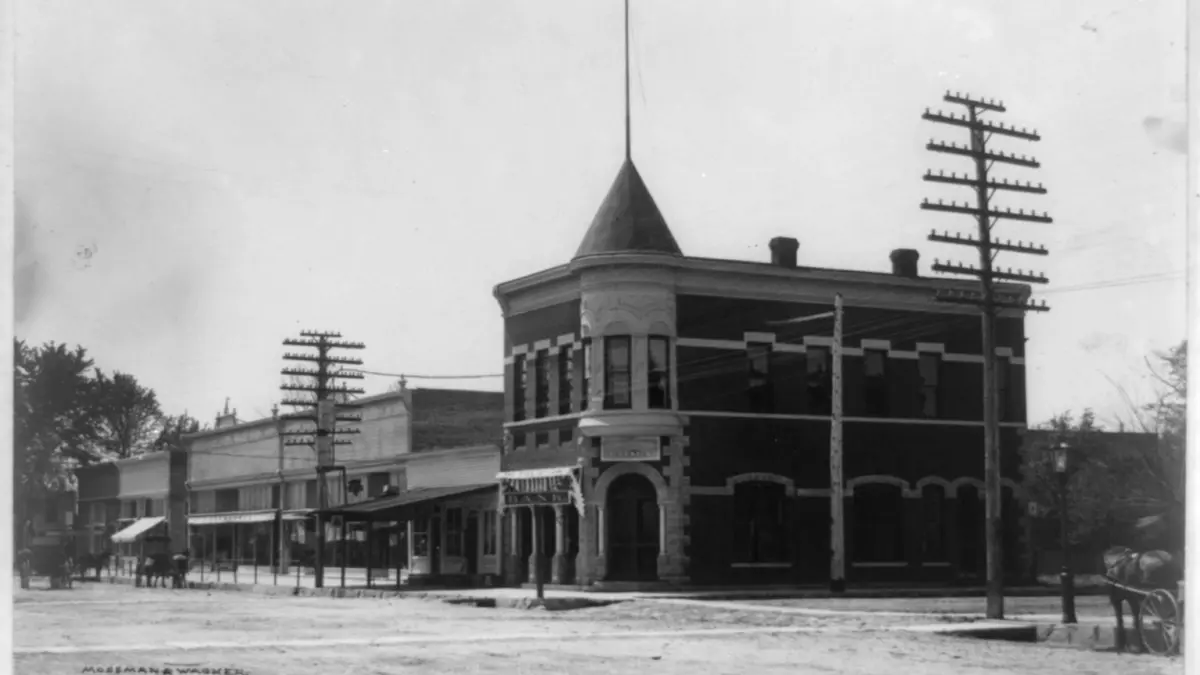
Lyle’s great-grandfather, Josiah Underwood, founded the Cottonwood Valley State Bank in Hollister in 1911, in a two-story limestone building on Main Street that he built with stone cut from his own quarry. He started it because the nearest bank was forty miles away, and he was tired of watching his neighbors lose their land to bankers from Kansas City who’d never seen a cow. That was the whole idea of the bank. Ranchers lending to ranchers. People who understood that a bad year was just a bad year.
By the time I married into the family, Lyle’s father was chairman of the board. When he died in 1979, Lyle was supposed to take his place on the board. But Lyle hated sitting indoors. Lyle hated paperwork. Lyle said he’d rather castrate a hundred bull calves than sit through one board meeting. So the family voted, and they put me on the board instead.
I was thirty-one years old. I had a high school diploma and two years of bookkeeping at Emporia State. The other board members were all men in their sixties. The first meeting I went to, one of them asked me if I’d brought the coffee.
I stayed on that board for thirty-four years. I was chairman for twenty-two of them.
I was chairman in 1985, when the farm crisis hit. If you lived in farm country then, you remember. Interest rates had gone through the roof. Land values fell in half. Banks all over Kansas and Nebraska and Iowa were failing, and the ones that weren’t failing were calling in loans and foreclosing on families that had been on their land for a hundred years.
The examiners from the FDIC came in the summer of 1985 and went through our loan portfolio with a fine-toothed comb. They said we had sixty-two agricultural loans that were “substandard.” They said we needed to call them in. Foreclose. Sell the land. Get the bad paper off our books before it took the whole bank down.
Sixty-two loans. That was sixty-two families. I knew every one of them by name.
I sat at my kitchen table every night for three months with a calculator and a legal pad and a pot of coffee. I went through every one of those loans. I drove out to every one of those ranches. I sat at their kitchen tables and looked at their books. And I wrote a restructuring plan for each one. Longer terms. Lower payments. Some interest forgiven. Some cattle sold to cover arrears. Some land leased back. I took it to the board, and the board fought me on it, and I didn’t back down. I put up my own shares in the bank as collateral with the FDIC to buy us time.
We lost four families. Four out of sixty-two. Every other bank in a hundred miles lost half or more. Fifty-eight families in Morris County and Chase County kept their land because of that plan. Some of their grandchildren are still on it.
I didn’t do it alone. But I did most of it.
When I stepped down as chairman in 2007, they had a dinner for me at the Hollister Community Hall, and the ranchers came, and some of them cried, and they gave me a plaque and a framed photograph of the bank building. Lyle stood up at that dinner and said, “I married the smartest woman in Kansas, and I’ve spent forty years trying to keep her from finding out.” Everybody laughed.
I stayed on the board as a director until 2013, when Lyle got sick. He died in 2016. I stayed on the ranch. I run it now, with Lupe and his son Mateo. Three hundred mother cows. We downsized after Lyle died.
Two years ago, the board voted to sell the Cottonwood Valley State Bank to a holding company out of Wichita called Prairie Heritage Bancorp. Small family banks can’t survive on their own anymore. The regulations are too much, the technology is too expensive. It was the right decision. I voted for it.
But the Underwood family shares didn’t go away. We traded them for shares in Prairie Heritage. And because the Underwoods had owned so much of the old bank, we ended up owning a fair piece of the new company.
Thirty-one percent, to be exact. The largest single shareholder.
That’s me. I’m the Underwoods now. Lyle and I never had children.
So when the merger went through, the shareholders voted to put me on the Prairie Heritage board of directors. I go to Wichita four times a year in my good navy suit and sit at a long table in a glass building on Douglas Avenue, and I listen to men in good suits talk about core deposits and net interest margins, and every so often I ask a question that makes them all go quiet.
The chief executive officer of Prairie Heritage Bancorp is a man named Raymond Ochs. He’s sixty-three. He started his banking career in 1979 as a teller at the Cottonwood Valley State Bank in Hollister. I hired him. He was nineteen and had a stutter and a cowlick, and the other directors didn’t want him because he’d dropped out of K-State after his dad died. I said he could count money faster than anybody I’d ever seen and he had honest hands. I was right about both.
I didn’t know who Brock Ellison was. That’s the strange part. I’d never heard of him. The old branch manager, Darlene Vogt, had retired in October after twenty-six years, and I’d been so busy with calving and the fall sale that I hadn’t paid attention to who they sent to replace her. Somebody from Wichita, I’d heard. Some young hotshot from the corporate office.
Now I knew.
As for why I wanted nine thousand two hundred dollars in cash on the Friday after Thanksgiving, that’s simple, and it’s the same reason I’ve wanted it every year since 1993.
Every year, the day after Thanksgiving, I pay my crew their Christmas bonus. In cash, in envelopes, at my kitchen table, with a piece of pie. Lyle started it. His daddy did it before him. It’s a ranch tradition in the Flint Hills, or it used to be. Lupe gets the biggest envelope. Mateo gets the next. Then there’s the two high school boys who help us with haying and branding, and the woman who keeps our books, and the vet’s assistant who comes out at two in the morning when a heifer’s having trouble calving and never once complains. Nine envelopes. Nine thousand, two hundred dollars.
Lupe always drives me in to get it. He always waits in the truck. He always says the bank makes him nervous because it’s too quiet.
That’s who was in the truck.
So I stood there at the teller window in my barn coat and my muck boots, with mud on the new gray carpet and every person in the lobby looking at me, and I listened to that young man tell me where the food pantry was.
I thought about a lot of things. I thought about sixty-two kitchen tables in 1985. I thought about Josiah Underwood, cutting limestone from his own quarry to build this building, so that ranchers wouldn’t have to beg bankers from Kansas City who’d never seen a cow.
And I thought about the young man in front of me, who’d never seen a cow either, and who was looking at my boots like they were something he’d scrape off his shoe.
Out the window, Lupe was sitting in the truck with the engine running. He’d seen something was wrong. He was watching us through the glass.
I didn’t raise my voice. I don’t, as a rule. Lyle used to say that when I got quiet, that’s when the bulls started looking for the gate.
“Mr. Ellison,” I said. “I understand you’re being careful. That’s good. Careful is good in a banker. So I’m going to help you be careful.”
“Ma’am—”
“You’re right that you shouldn’t hand nine thousand dollars to just anybody who walks in. You should check. So I’d like you to make a phone call, and check.”
He looked at me suspiciously. “A phone call to who?”
“To your boss.”
“My boss is the regional vice president. He’s in Wichita. It’s the Friday after Thanksgiving. He’s not in the office.”
“Not him,” I said. “His boss. And his boss’s boss.”
I reached into the inside pocket of Lyle’s barn coat. I took out my phone. It’s an old one, a flip phone, because I don’t like the other kind. I opened it up and scrolled down to a number, and I held it out over the counter so he could see the screen.
RAYMOND – CELL.
“That’s his personal phone,” I said. “He keeps it on him on holidays. Call it. Tell him you have a woman at the Hollister branch named Mavis Underwood who wants to make a withdrawal, and you think she’s being taken advantage of. And then do whatever he tells you to do.”
Brock Ellison looked at the phone. He looked at the name. I watched him think about it. I watched him decide that I was a confused old ranch woman who had some fellow named Raymond in her phone, probably her nephew or her pastor, and that calling him would be a quick way to prove a point and get me out of his lobby.
He smiled.
“Sure,” he said. “Let’s call Raymond.”
He took the phone out of my hand. And then, because I think he wanted everybody in that lobby to hear him put the confused old woman in her place, he pressed the button to put it on speaker, and he set it down on the counter between us, and he folded his arms.
The rancher from church had stopped pretending not to listen. So had the two women from the beauty shop. The high school boy had his own phone out and was recording. Jordyn was standing at her teller window with both hands over her mouth.
Outside, Lupe had turned off the truck. He was getting out. Slowly, because of his knees.
The phone on the counter rang once.
Brock Ellison stood there with his arms folded and his good haircut and his very nice suit, looking at me with that little smile.
It rang twice.
On the second ring, somebody picked up.
“Mavis?” said Raymond Ochs. His voice came out of that little speaker loud and clear and a little worried, the way it always sounds when I call him, because I never call him unless something’s wrong. “Mavis, is everything all right? Are you at the ranch?”
Brock’s smile didn’t move. He didn’t know the voice. Why would he? He’d been at Prairie Heritage for maybe a year. He’d probably seen the CEO twice, at a distance, at a company picnic.
“This is Brock Ellison, branch manager at Hollister,” Brock said into the phone, very crisp and professional. “Who am I speaking with, please?”
There was a pause on the line.
“This is Raymond Ochs,” the voice said. “I’m the chief executive officer of Prairie Heritage Bancorp. Why do you have Mrs. Underwood’s phone?”
I watched it happen. I’ve watched a lot of things happen in my life, but I’ll never forget this one. The smile on that young man’s face didn’t fall off all at once. It went slowly, starting at the corners, like ice going out on a stock pond in March. His arms came unfolded. His face went from pink to white to a sort of pale gray.
“Mr. Ochs,” he said. His voice had gone up about an octave. “Sir. I— I didn’t—”
“Brock,” said Raymond. “Is Mrs. Underwood standing there?”
“Yes, sir.”
“Is she all right?”
“Yes, sir. She’s— she wanted to make a cash withdrawal. A large one. And I thought, given her age and the circumstances, there might be some exploitation concern, and I was following procedure—”
“Brock,” said Raymond again. Very quietly. “What did you say to her?”
Brock didn’t answer. He looked at me. He looked around the lobby. At the rancher from church, and the beauty shop women, and the high school boy with his phone out recording every second of it. At Jordyn, with her hands over her mouth.
At the front door, which had just opened. Lupe Contreras was standing in it, in his feed-store jacket and his straw hat, taking off the hat, the way he always does when he comes indoors.
“Brock,” said Raymond for the third time. “I asked you what you said to her.”
“He told me where the food pantry was,” I said, leaning toward the phone. “And he asked me to wipe my feet.”
There was a long, long silence on that line.
“Mavis,” Raymond said finally. “Are you wearing Lyle’s barn coat?”
“I am.”
“The one with the collar worn through?”
“That’s the one.”
“And your muck boots.”
“I’d just fed.”
I heard him let out a breath on the other end. It sounded like a man who’d just seen the bull come through the fence.
“Brock,” he said. “I want you to listen to me very carefully. I want you to give Mrs. Underwood whatever she asks for, in whatever denominations she asks for it, and I want you to count it out yourself, and I want you to do it right now. Then I want you to walk Mrs. Underwood and Mr. Contreras to their truck. Then I want you to go into your office and close the door and wait for me.”
“Wait for you, sir?”
“I’m driving out,” Raymond said. “I’ll be there in two hours.”
“Sir, it’s the day after Thanksgiving. You don’t have to—”
“Brock,” said Raymond. “Do you know whose name is on the building you’re standing in?”
Brock looked up. He couldn’t see it from inside, of course. It’s carved in the limestone over the front door, outside. He walked under it every morning.
UNDERWOOD BLOCK — 1911.
“No, sir,” he said.
“You will,” said Raymond. “Mavis, I’m sorry. I’m so sorry. I’ll make this right.”
“It’s all right, Raymond,” I said. “He’s young. Drive careful. The roads are slick past Council Grove.”
I closed my phone and put it back in the pocket of Lyle’s barn coat.
Brock Ellison counted out nine thousand, two hundred dollars in hundreds and fifties. His hands were shaking so badly he had to count it three times. Jordyn put it in a bank envelope for me. When she handed it over the counter, she squeezed my fingers.
“I’m sorry, Mrs. Underwood,” she whispered. “I should’ve said something.”
“You tried, honey,” I said. “I saw you try.”
Brock walked us out to the truck like Raymond said. He didn’t say a word the whole way. At the truck, Lupe opened my door for me and helped me up, the way he does, and then he turned around and looked at Brock Ellison standing on the sidewalk in his good suit with the wet snow falling on his good haircut.
Lupe doesn’t say much. He’s never been a talker. He looked at that young man for a long moment.
Then he said, “You never been out to a ranch, have you, son?”
Brock shook his head.
“Huh,” Lupe said, and got in the truck.
We drove home on the county road with the wipers going. The snow had turned to sleet. Lupe drives slow on sleet. He drove slow that day and didn’t say anything for about six miles.
Then he said, “He wanted to call the sheriff on me.”
“He did.”
“Because I was sitting in the truck.”
“Because you were sitting in the truck.”
Lupe nodded slowly. He’s been in this country since 1989. He’s been a citizen since 2001. He has a picture of himself on his living room wall holding the certificate, with Lyle standing next to him in a suit and tie, grinning like a fool. Lyle drove him to Kansas City for the ceremony.
“Thirty-one years,” Lupe said. “I bank there thirty-one years. My house loan. My truck loan. Mateo’s college. Every paycheck.” He shook his head. “First time anybody there looks at me like that.”
“I’m sorry, Lupe.”
“Not your fault.” He drove on for a while. The windshield wipers thumped. “You going to get that boy fired?”
I looked out the window at the pastures going by, white and gray, with the cattle standing with their backs to the wind.
“I don’t know yet,” I said. “What do you think?”
Lupe thought about it for a whole mile.
“I think he never been out to a ranch,” he said finally. “I think maybe somebody should show him one.”
Raymond got to Hollister at two-fifteen. I wasn’t there. I was at my kitchen table, handing out envelopes and pie, like I’ve done every year since 1993. Mateo got his. The two high school boys got theirs. The bookkeeper cried, the way she does every year. Lupe put his envelope in his shirt pocket without opening it, the way he does every year, and said, “Gracias, Mavis,” and ate two pieces of pecan pie.
Raymond called me that night. He said he’d sat in Brock’s office for an hour and a half. He said he’d shown him the board minutes from 1985, and the restructuring plans, and the list of fifty-eight families. He said he’d made him look up how many Prairie Heritage shares the Underwood estate held, and how many votes that came to.
“He threw up,” Raymond said. “In the staff bathroom. When he found out.”
“Poor thing.”
“Mavis, I’m going to let him go. You know that. I can’t have a branch manager who talks to customers like that. Any customer. Let alone you.”
I sat there at my kitchen table with the empty pie plate in front of me. Outside the window, I could see the cattle bunched up along the windbreak, steaming in the cold.
“Raymond,” I said. “What’s he doing in Hollister?”
He was quiet.
“You sent a young hotshot from corporate to run a little branch in a town of nine hundred people,” I said. “Darlene retired in October. You could’ve promoted Jordyn. She’s been there four years. She knows everybody in the county. Instead you sent a boy from Wichita who’s never seen a cow.” I waited. “Why?”
He was quiet a long time.
“We’re closing the Hollister branch,” he said finally. “In March. It’s on the list. It doesn’t make money. He was sent out there to wind it down.”
I’d suspected. I’d heard rumors at the last board meeting. Little things. A line item in a budget. A look between two vice presidents.
“Raymond,” I said. “Who hired you?”
“You did.”
“And why did I hire you?”
He sighed. “Because I could count money fast and I had honest hands.”
“And why did Josiah Underwood build that bank?”
“So ranchers wouldn’t have to beg bankers from Kansas City who’d never seen a cow,” Raymond said. He’d heard me say it a hundred times.
“Well,” I said. “Now you’ve got a boy from Wichita who’s never seen a cow, closing the bank in the town it was built for. And I’ve got thirty-one percent of the votes on your board.”
He didn’t say anything for a while. Then he laughed. A tired, defeated, fond sort of laugh.
“What do you want, Mavis?”
“Don’t fire him,” I said. “Send him to me. Tomorrow morning. Five-thirty. Tell him to wear boots he doesn’t mind ruining.”
Brock Ellison pulled into my yard at five twenty-two Saturday morning in a little gray Audi that had no business on a gravel road in the Flint Hills in November. He had on brand-new Carhartt overalls with the tags still on them and a pair of rubber boots from the farm store that he’d clearly bought on the way out of town.
Lupe looked at him and shook his head. Then he handed him a pitchfork.
He fed cattle with us. He broke ice on the stock tanks with an axe. He helped Mateo pull a calf out of a frozen mudhole by the creek, and he fell in up to his waist, and came out shaking and blue and covered in mud, and Lupe laughed so hard he had to sit down on the tailgate. Then Lupe took off his own coat and put it around the boy’s shoulders.
At nine o’clock, we came in for breakfast. Biscuits and gravy and eggs and coffee. Brock sat at my kitchen table in a pair of Lyle’s old sweatpants while his overalls tumbled in the dryer.
He didn’t say anything for a long time. He just ate. Then he put his fork down.
“Mrs. Underwood,” he said. “I’m sorry.”
“I know you are.”
“Mr. Ochs showed me the files. From 1985. The fifty-eight families.” He looked at his plate. “My grandparents had a farm. In Harper County. They lost it in ’86. To a bank in Wichita.” His voice was thick. “I never knew them on the farm. They lived in an apartment in Wichita my whole life. My grandpa worked at the Boeing plant. He never talked about it.”
I didn’t say anything.
“I didn’t think about that,” Brock said. “In the lobby. I didn’t think about what that bank was. I just thought about the numbers. I thought it was a branch that loses money. I thought you were—” He stopped.
“A confused old woman in muddy boots,” I said.
He nodded. He couldn’t look at me.
“Mr. Ochs says the Hollister branch isn’t closing,” he said. “He called me last night. He said the board’s going to vote on it in January, and he already knows how the vote is going to go.”
“He’s a smart man,” I said. “I hired him.”
“He said I can stay. If I want to. If you’ll have me.” He looked up at me finally. “He said it’s up to you.”
I looked at that boy for a long time. Sitting at my kitchen table in my dead husband’s sweatpants, with mud still in his hair, eating my biscuits. He looked about sixteen.
“Can you count money fast?” I asked him.
“Yes, ma’am.”
“Hold out your hands.”
He looked confused. He held them out. They were scraped up from the pitchfork and the ice axe, and there was mud under the nails, and one knuckle was bleeding a little.
I looked at them for a while.
“All right,” I said. “You can stay. But Jordyn’s going to be your assistant manager, and when she tells you something about somebody in this county, you’re going to listen. And you’re going to come out here and feed cattle one Saturday a month, so you remember what’s paying your salary.”
“Yes, ma’am.”
“And Brock,” I said. “Get rid of that gray carpet.”
He’s still there. It’s been a year now. Jordyn’s the assistant manager. The gray carpet is gone. They put in old-fashioned linoleum, the kind you can mop, with a big rubber mat by the door that says WIPE YOUR BOOTS — OR DON’T, WE’RE A RANCH BANK. Brock had it made himself. People in town think it’s the funniest thing they’ve ever seen.
He comes out to the ranch the first Saturday of every month. He’s gotten pretty good with a pitchfork. Lupe still won’t let him drive the truck.
Last week, the day after Thanksgiving, I came in to get the cash for the Christmas envelopes. Nine thousand, eight hundred this year; I gave everybody a raise. I wore Lyle’s barn coat and my muck boots, because I’d just fed.
When I walked in, Brock looked up from his desk and saw me, and got up and came out to the counter himself.
“Mrs. Underwood,” he said. “The usual?”
“Hundreds and fifties.”
He counted it out himself. Once. Fast. With honest hands.
And when I turned to go, he said, “Ma’am? You tracked a little mud on the floor.”
I looked down. I had.
“Don’t worry about it,” he said. “We’ve got a mop.”