“She’s got tanks, Donna. She’ll be fine. Maybe sitting in the dark a few hours will teach her something about how she talks to people.”
That’s what my brother said to me on the phone at 6:52 on the Saturday night after Thanksgiving, with fourteen inches of snow on the ground and the wind blowing so hard my kitchen window was rattling in its frame.
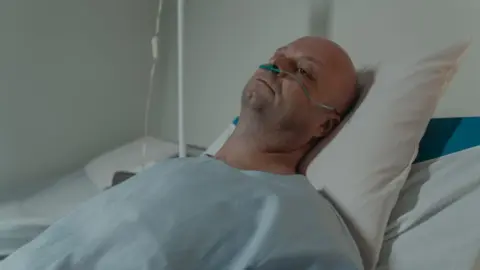
Our mother is eighty-four years old. She’s been on home oxygen for three years, since her lungs got bad. She has a machine in her living room called a concentrator, about the size of a nightstand, that hums all day and all night and pulls the oxygen out of the air and sends it down a long clear tube to the little prongs in her nose. It runs on electricity.
At 6:15 that night, the electricity went out at her farmhouse on County Road K outside Merrill, Wisconsin. It went out at mine too, twenty-two miles away in town. It went out for about thirty thousand people across three counties, because the wind had brought down a line of poles along Highway 64 like dominoes.
But it didn’t go out at my brother Gary’s house. Gary’s house is one mile down County Road K from Mom’s. And Gary has a whole-house standby generator, a big gray Generac that sits on a concrete pad by his garage and kicks on all by itself four seconds after the power fails. It cost twelve thousand four hundred dollars installed. He’s told everybody that number. He’s told the guys at the Legion, and his in-laws, and the man who plowed his driveway. He’s told it to me at least six times.
“Gary,” I said. “Her concentrator is off. She’s on the backup tank. You’re one mile away. You have power. Go get her.”
“I’m not going anywhere in this.”
“Then I’ll call Hank to plow you out and you can—”
“Donna.” He said my name the way he’s said it since we were kids, like it tastes bad. “After what she said to me on Thursday? In front of my kids? In front of Tammy’s folks? No. She wants to treat me like a deadbeat over three thousand dollars, she can call her favorite. That’s you. Congratulations.”
And then he said the thing about the tanks. And then he hung up.
I stood in my dark kitchen with the phone in my hand.
My granddaughter Lily was staying with me that weekend. She’s seven. Her mom, my daughter Jess, is a nurse at the hospital in Wausau and was working a double because half the night shift couldn’t get in through the snow. Lily was sitting at my kitchen table in her pajamas with a flashlight, coloring a turkey by the light of it, and she’d heard every word of my side of the phone call.
She looked up at me with that flashlight under her chin.
“Grandma,” she said. “Is Great-Grandma going to run out of air?”
I want to tell you I said something brave to her. I didn’t say anything for a second. I couldn’t.
I’ll go back, so you understand.
My mother is Irene Mazur. She’s lived in that white farmhouse on County Road K since 1961, when she married my father, Walt. They milked forty Holsteins until 1994, when Dad’s back gave out and they sold the herd. Dad died in 2016. Mom stayed on the farm by herself, eighty acres, half of it rented out to the neighbor for corn and beans, and she kept the house the way it always was: the big oak table, the crocheted afghan on the back of the couch, the Blessed Virgin on the wall by the door, the African violets in the kitchen window that she’d kept alive since before I was born.
There are two of us kids. I’m sixty-one. I drove school bus for the Merrill Area School District for thirty-one years. Route 14. Out County Road K, up Pine Ridge Road, down the Prairie River Road and back, twice a day, five days a week, every school year from 1993 to 2024. I retired last June. I know every curve and culvert and mailbox in that end of Lincoln County like I know the inside of my own pocket. My husband Ron died four years ago of a heart attack shoveling the driveway. I live in a little ranch house on the west side of Merrill, by myself, mostly, except for weekends with Lily.
Gary is four years younger than me. He’s a foreman at a window factory in Wausau. He married Tammy in 2007. They have two kids, Tyler, who’s sixteen, and Kaylee, who’s nine. They built a big new house a mile down the road from Mom’s in 2019 on two acres Mom gave them off the corner of the farm.
Gave. She didn’t sell it to them. She gave it to them. She signed the deed over at the lawyer’s office in Merrill and paid the lawyer’s fee herself.
I’m not saying that to complain. I’m saying it so you understand what came next.
Three years ago, when Mom went on oxygen, the man from the oxygen company sat down with her and Gary and me at the kitchen table and went over everything. How the concentrator works. How to change the filter. How the backup tanks work, the green metal cylinders in the cart by the couch. He told us that at Mom’s setting, each tank would last about five hours. He said, “The thing you need to worry about is power outages. Out here in the country, in the winter. You need a plan.”
Gary said, right then and there, “I’ve been thinking about getting a generator anyway. A whole-house one. If the power goes out, Ma, you just come down to my place.”
Mom said, “Those cost a fortune, honey.”
Gary said, “I’ll figure it out.”
He figured it out by letting Mom pay for it.
I didn’t know that at the time. I found out that night, in the blizzard. But I’ll get to that.
What I knew was this: in March of this year, Gary came to Mom and asked to borrow three thousand dollars. He said the transmission went out in his truck and he needed it to get to work. Mom wrote him a check out of her savings at Prairie River Savings Bank. He said he’d pay her back by the fall.
He did not pay her back by the fall. He did, in August, buy a new outboard motor for his fishing boat. I know because he posted a picture of it on Facebook. Mom doesn’t have Facebook, but I do.
Mom’s property taxes are due at the end of January. The first installment on the farm is a little over two thousand dollars. She’s on Social Security and Dad’s small pension from the cheese plant where he worked winters, and she rents the cropland for about seven thousand a year. She does all right. But she doesn’t have a lot of slack. And she’d been counting on that three thousand.
So on Thanksgiving, at her own table, after the pie, Mom said to Gary, very quietly, “Gary, honey, I’m going to need that three thousand back by January. For the taxes.”
That’s all she said. I was sitting right there. She didn’t raise her voice. She didn’t say it in front of the whole room. She leaned over to him while Tammy’s parents were in the living room watching the Lions game and the kids were outside throwing a football in the snow.
But Gary stood up so fast his chair went over.
“You want to do this at Thanksgiving? Really?”
Mom looked startled. “I’m just asking, honey.”
“I said I’d pay you back.”
“You said by the fall.”
“I’ve had expenses.”
“You had a boat motor,” I said. I shouldn’t have. But I did.
Gary turned and looked at me with his face all red.
“Oh, here we go. Here she goes. Saint Donna. You two sit around talking about me, don’t you? What a deadbeat Gary is.”
“Nobody said deadbeat,” Mom said.
“You didn’t have to.” He was shouting now, and Tammy’s parents had come in from the living room, and Tammy was standing in the doorway with her arms crossed. “Thirty years I’ve lived a mile down the road. I plow your driveway. I fixed your furnace. And you want to shake me down over three grand like I’m some bum.”
Tammy said, from the doorway, “She’s always favored Donna. Everybody knows it.”
“Tammy, that’s not true,” Mom said. Her voice was shaking. When Mom gets upset, she has trouble getting her breath, and she started to pull at the air through her nose prongs. I went and stood behind her chair and put my hand on her shoulder.
“Come on,” Gary said to Tammy. “Get the kids. We’re leaving.”
They left. Tammy took the pumpkin pie she’d brought, half eaten, right off the table. Kaylee was crying in the back seat of their Tahoe as they pulled out. I could see her face in the window.
Mom sat at that big oak table for a long time after, with the plates still on it.
“I shouldn’t have said anything,” she said finally.
“Ma, it’s your money.”
“I know whose money it is.” She looked at the African violets in the window. “He’s my son, Donna. I just wanted him to be the man his father was.”
That was Thursday. On Saturday the snow came.
The weather people had been saying for days that it would be bad. A big storm coming across from Minnesota, with heavy snow and wind gusts up to fifty miles an hour. I’d called Mom Friday and asked if she wanted to come stay with me for the weekend. She said no. She said she had her tanks, and Gary was a mile away with his generator, and she didn’t want to leave her violets.
I said, “Ma. Gary isn’t talking to you.”
She said, “He’ll come if it matters. He’s my son.”
I believed her. God help me, I believed her too.
The snow started about seven in the morning on Saturday. By noon there were eight inches. By four in the afternoon there were twelve, and the wind was blowing it sideways, and you couldn’t see the house across my street. The county pulled the plows off the back roads at three because the drivers couldn’t see the ditches. The sheriff went on the radio and said to stay home, said Highway 51 was closed between Merrill and Wausau because of a pileup with nine cars and a semi.
At 6:15, my lights went out.
At 6:21, Mom called me on the landline. She still has a landline, the old kind that works when the power’s out. I have a cell phone and Lily had my flashlight.
“Donna,” she said. “The machine stopped.”
I could hear the difference right away. Usually when I talk to her on the phone, there’s that hum behind her, that steady machine sound, like a refrigerator. It wasn’t there. It was dead quiet in her house.
“Are you on the tank?”
“I’m on the tank.” Her voice was calm. She’s always calm. She was calm when Dad died. “I hooked it up myself. I did it right.”
“How full is it?”
There was a pause. I heard her putting on her glasses.
“The little needle is in the green,” she said. “But only just.”
“What about the other one?”
“The other one’s the one I used when I went to Doctor Feld’s on Tuesday. It’s about half.”
I did the math in my head. One tank, a little less than full. Five hours, maybe four. Another, half. Maybe two and a half more. Call it six hours, if she sat still and didn’t get upset. Seven, if we were lucky.
It was 6:22. That meant she had until about one in the morning. Maybe two.
“Ma,” I said. “I’m going to call Gary. He’ll come get you.”
“All right, honey.”
“Are you warm?”
“I’ve got my coat on. And the afghan. I’m sitting in Dad’s chair.”
“Don’t move. Don’t get up and walk around. Just sit.”
“I know, Donna. I know how to breathe.”
I called Gary’s cell phone. It rang five times and went to voicemail. I called again. Voicemail. I called his house phone. Tammy answered.
“Tammy. It’s Donna. Mom’s power is out. Her oxygen machine is off. Put Gary on.”
There was a long pause. Then I heard her say, away from the phone, “It’s your sister.” Then I heard Gary in the background say something I couldn’t make out. And then Gary came on.
That was the call. That was 6:52. You already know how it went.
“She’s got tanks, Donna. She’ll be fine. Maybe sitting in the dark a few hours will teach her something about how she talks to people.”
After he hung up, I stood in my kitchen, and Lily asked me if Great-Grandma was going to run out of air.
I knelt down next to her chair. I took the flashlight from her and turned it so it wasn’t in my eyes.
“No, baby,” I said. “She’s not.”
Then I called 911.
The dispatcher was a woman I knew a little, Barb Schultz, who used to be a lunch lady at the middle school. She sounded exhausted.
“Donna, honey, I’ve got eleven calls holding. Every ambulance in the county is on 51 at that pileup or stuck in a ditch somewhere. The plows are off the county roads. If your mom is stable, I’m going to put her on the list, but I’m being honest with you, it could be three, four hours before anybody gets out to K. Maybe longer. Is she in distress right now?”
“Not right now.”
“Then she’s on the list. Call me back if anything changes. I’m sorry, honey. It’s a mess out there.”
I hung up. I called Gary one more time. He didn’t answer.
I didn’t leave a message. I just hung up and stood there and looked at the phone. And then I called him one last time, because I needed to know, and this time he picked up.
“What.”
“Gary. I’m asking you one more time. Go get her. It’s one mile.”
“I told you no.”
“She’ll run out in six hours.”
“Then you go get her. You’re the one who’s always taking her side.”
I didn’t argue. I was done arguing.
“Understood,” I said.
And I hung up, and I went out to the garage with the flashlight.
Ron’s truck was still in there. A 2004 Ford F-250, three-quarter ton, four-wheel drive, dark green with a dent in the tailgate where he backed into the mailbox in 2011. I hadn’t been able to sell it after he died. I started it once a week to keep the battery up, and I had it serviced every fall at Kowalski’s on Main Street, and I’d never once driven it farther than the Kwik Trip.
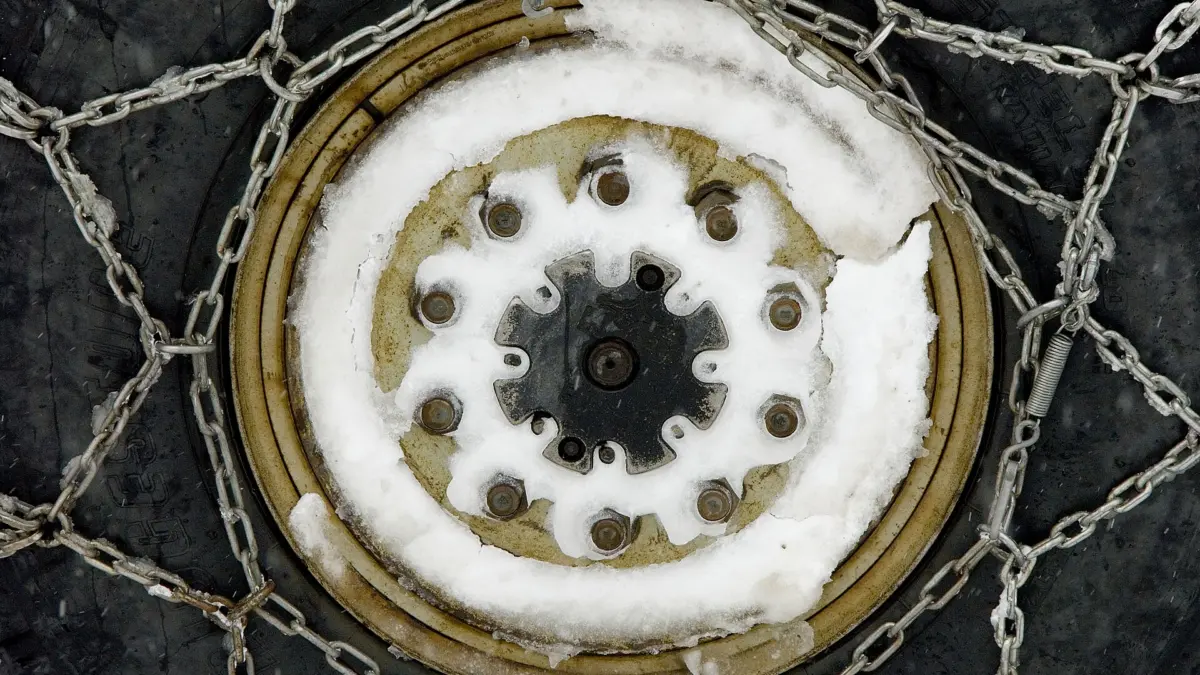
On the wall of the garage, on a big nail Ron put in, there were tire chains. Real chains, heavy steel, for the back tires. Ron used to put them on to go ice fishing up on Lake Alexander.
I had put chains on a school bus probably a hundred times in thirty-one years. I could do it in the dark. That night I did.
It took me eighteen minutes. Lily held the flashlight. She held it steady the whole time and didn’t complain once about the cold, in her pajamas and her snow boots and her mother’s old parka that I’d dug out of the closet for her. When I finished, my fingers were so numb I couldn’t feel the hooks.
I threw two bags of kitty litter in the bed of the truck for weight. A shovel. A tow strap. The emergency blanket from the hall closet. A thermos of coffee I’d made before the power went out, still warm. Ron’s old CB radio was still mounted under the dash. I hadn’t turned it on in four years.
Then I looked at Lily.
I couldn’t leave her alone. Jess was stuck at the hospital. My neighbor, Mrs. Ostrowski, was eighty-seven herself.
“Lily,” I said. “We’re going to go get Great-Grandma. You’re going to sit in the back seat with your seatbelt on, and you’re not going to talk unless I talk to you, because Grandma needs to concentrate. Can you do that?”
“Yes, Grandma.”
I buckled her in. I backed the truck out of the garage into the snow. My driveway was a solid white wall up to the bumper. I put it in four-wheel low and I just drove through it.
I want to tell you about that drive. But I’m not sure I can tell it right.
Merrill was dark. Every house, every streetlight, every stoplight on Main Street. Dark. The only lights were my headlights and the snow coming at them sideways like a million white bees. I drove down the middle of Main Street at about fifteen miles an hour. There wasn’t another car anywhere.
I took Highway K out of town. That’s the county road that goes out to Mom’s. Twenty-two miles. I’ve driven it ten thousand times. I’ve driven it in fog so thick you couldn’t see the stop sign until you were under it. I’ve driven it with forty-four kids on the bus and black ice under the snow. I’ve driven it in a blizzard before, in 1996, when they let school out early and the snow came in faster than anybody said it would.
That night was worse than 1996.
Out past the edge of town, there’s no trees on either side of K for about four miles, just open fields. The wind came across those fields with nothing to stop it. You couldn’t see the road. You couldn’t see the ditches. You couldn’t see anything but white. I drove by the mailboxes. I knew where every mailbox was. The Hintz farm, mile marker 3. The Brueggers, the big red one. The Lutheran church, where the road bends left. When I saw a mailbox flash by in my headlights, I knew where I was.
About eight miles out, I couldn’t see the mailboxes anymore.
I stopped the truck in the middle of the road. I couldn’t tell if I was on the road at all. I sat there with the wipers going and my heart going faster than the wipers.
In the back seat, Lily said, very quietly, “Grandma?”
“I’m okay, baby.”
I turned on Ron’s CB radio. It crackled. I didn’t even know if it worked. I picked up the microphone.
“This is Donna Pruitt,” I said. “I’m on County K about eight miles east of Merrill. Is anybody out here?”
Static. Nothing.
I tried again. “This is Donna Pruitt, I used to drive Route 14. I’m on K. Anybody.”
And then the radio crackled and a man’s voice came on.
“Donna? This is Hank. Hank Zastrow. What in the hell are you doing out on K?”
I almost cried. Hank Zastrow has driven a county plow for twenty-six years. He used to wave at my bus every morning at the corner of K and Pine Ridge. His grandkids rode my bus.
“Hank. My mom’s oxygen machine is out. She’s on her backup tanks. Out at the farm. I’m going to get her.”
There was a pause.
“Where are you exactly?”
“I don’t know. I think I’m by Brueggers’. Maybe past.”
“Stay where you are. Turn your flashers on. I’m on Pine Ridge. I’ll come to you.”
It took him twenty-five minutes to get to me. I sat in the truck with the engine running and the flashers going and Lily in the back seat holding her flashlight. I called Mom on my cell phone twice. The second time it took her six rings to answer.
“I’m here, Donna,” she said. “I was resting my eyes.”
“Ma, don’t rest your eyes. Talk to me.”
“What should I talk about?”
“Anything. Tell me about the violets.”
She told me about the violets. She told me she got the first one from her own mother in 1958, as a wedding present, a little purple one in a clay pot, and every violet in her kitchen window was a cutting from that one. She told me which ones were blooming. She told me she was worried they’d get cold without the furnace.
And then the orange lights came up behind me in the snow, spinning, and Hank’s big county plow truck pulled around me.
“Follow me, Donna,” he said on the radio. “Stay right on my tail. Close as you dare. Don’t you dare stop.”
I followed him. Fourteen miles. I could see nothing but his orange lights and the back of his truck and the snow spraying off the side of his blade. He took me all the way to Mom’s driveway. He plowed her driveway in two passes. Then he got out and walked up to my window with his face red from the wind.
“I got another call on Pine Ridge,” he said. “Somebody in the ditch. You got her from here?”
“I got her.”
“Where you taking her?”
I looked down the road. One mile east, through the snow, there was a light. The only light for miles. Gary’s house, lit up like Christmas.
“Down the road,” I said.
Hank followed my eyes. He knew Gary. Everybody knows Gary.
“Huh,” he said. He didn’t say anything else. Then he went back to his plow, and he went off into the snow, and his orange lights disappeared.
It was 8:48 when I walked into my mother’s house.
It was freezing inside. I could see my breath in the flashlight beam. Mom was sitting in Dad’s old brown recliner in the living room with her winter coat buttoned up to her chin and her church hat on, the gray felt one, and Grandma’s afghan over her lap. The oxygen tank was standing next to the chair in its little cart, hissing softly. She had her rosary in her hands.
“Donna,” she said. “You came.”
“Of course I came.”
I knelt down and looked at the tank gauge with my flashlight. The needle was out of the green and into the red.
“I switched to the half one,” Mom said. “About twenty minutes ago. The first one ran out faster than he said.”
So the half tank was what she had left. Two hours. Maybe two and a half.
“Okay. We’re going. Right now.”
I got the half tank into its carrier bag. I got her up out of the recliner. She weighed about as much as Lily. Lily held the flashlight and the door. When I got Mom to the front door, she stopped.
“Wait,” she said. “My desk.”
“Ma, we don’t have time.”
“Donna. Go in the dining room. In my desk. Top drawer. There’s a big brown envelope with Gary’s name on it. Bring it.”
“What’s in it?”
“Just bring it.”
I didn’t argue. I went in the dining room and I opened the top drawer of her old rolltop desk with the flashlight in my teeth. There it was, under her checkbook and her rosary box and the funeral cards. A big brown manila envelope. On the front, in her careful Catholic-school handwriting, it said GARY.
I gave it to her. She put it inside her coat.
I carried her to the truck. I put her in the front seat and turned the heat all the way up and buckled her in. Lily climbed in the back and reached forward and took hold of Mom’s hand over the seat, and Mom held on to her.
“Where are we going?” Mom said.
“Gary’s,” I said. “It’s a mile. My house is twenty-two. The tank won’t make twenty-two in this.”
She looked out the windshield down the road at that one light in all the darkness.
“Yes,” she said. “Gary’s.”
I drove that mile at about ten miles an hour. Gary’s driveway hadn’t been plowed. His house was lit up in every window. I could see their big TV through the front window, with the football game on. I could hear the generator humming on its concrete pad from the road, a big steady sound like a giant cat purring. It was the only sound in the whole world besides the wind.
I drove straight up his driveway through the snow. I left the truck running with the heat on. I went and opened Mom’s door.
“I’ll go,” I said. “You stay here with Lily.”
“No,” Mom said. “I’ll go.”
“Ma—”
“Donna. Help me down.”
I helped her down. Lily got out too. I carried the oxygen bag. Mom held onto my arm with one hand and onto Lily with the other, and we went up the steps to my brother’s front door, through snow up to my knees, with the wind blowing so hard it took Mom’s church hat right off her head. I let it go. I never did find that hat.
I rang the doorbell. Inside I heard it chime. I heard the TV get turned down.
The door opened about six inches. Gary was standing there in a Packers sweatshirt and his sock feet with a beer in his hand. Behind him I could see Tammy coming down the hallway, and Kaylee peeking around the corner of the kitchen, and the warm yellow light, and I could feel the heat coming out of that door.
Gary looked at me. Then he looked down at Mom.
I don’t think he expected to see her. I think he thought I’d take her to town. I think he thought he’d never have to look at her.
“I told you on the phone,” he said.
“Gary,” Mom said. “Let me in, honey. I’m cold.”
He didn’t open the door any farther. He looked over his shoulder at Tammy. Tammy was shaking her head at him, just a little.
“Ma,” he said. “Donna’s got a truck. Donna can take you to town.”
“The tank won’t make it to town,” I said. “There’s about two hours left in it. You know how long it took me to get out here? Two and a half.”
“So call an ambulance.”
“I called. There aren’t any. Every one in the county is on 51.”
Gary looked at the oxygen bag in my hand. Then he looked at the beer in his. He didn’t say anything.
Mom reached inside her coat and took out the brown envelope with his name on it.
“Then read this, honey,” she said. “Before you close the door.”
He took it. He looked at the front of it, at his name in her handwriting. He opened the flap.
Inside, there was a single piece of paper, folded in half. He unfolded it. It was a photocopy. I saw it over his shoulder in the porch light.
It was a check. A canceled check from Mom’s account at Prairie River Savings Bank. Dated October 2, 2023. Pay to the order of Gary Mazur. Twelve thousand four hundred dollars and no cents.
And on the memo line, in her handwriting: Generator. So I have somewhere to go.
I looked at that check, and I looked at my brother.
“You told everybody you paid for that with your overtime,” I said.
Gary didn’t say anything. His face had gone the color of the snow.
Behind him, Tammy said, “Gary? What is that?”
And from around the corner of the kitchen, Kaylee came out in her socks. Nine years old, in pajama pants with penguins on them. She looked at her grandmother on the porch, in the snow, with the tube in her nose and her white hair blowing around because she didn’t have her hat anymore.
“Daddy,” Kaylee said. “Why didn’t you go get Grandma?”
Nobody said anything.
“You said Aunt Donna would do it,” Kaylee said. Her voice was getting high. “You said Grandma had to learn a lesson. Daddy, she’s outside. It’s snowing on her.”
Gary looked down at his daughter.
And I saw something happen to his face. I don’t know how else to say it. Something gave way. Something that had been holding up for a long time, years maybe, just gave way like a barn roof under too much snow.
He dropped the beer. It foamed out all over the hall rug. He didn’t even look at it.
He opened the door all the way, and he stepped out onto the porch in his sock feet, in the snow, and he picked up our mother in his arms like she was a little girl, and he carried her inside.
“Gary, the rug,” Tammy said.
“Tammy, shut up about the rug,” he said. It’s the only time I ever heard him talk to her like that.
He carried Mom into the living room and put her down on the couch, right in front of that big TV with the football game still going with no sound. He pulled the blanket off the back of the couch and put it over her. He pushed her hair out of her face with his big hand.
“Ma,” he said. “Ma, I’m sorry.”
“I know, honey,” Mom said.
“Where’s the— where does it plug in? The machine?”
“The machine’s at the farm,” I said. “It’s too big to carry in the snow. She needs it plugged in.”
Gary looked at me. Then he went to the front closet and started pulling on his boots and his Carhartt coat.
“Give me your keys,” he said.
“What?”
“Your truck has chains. My Tahoe doesn’t. Give me the keys. I’ll go get it.”
I gave him the keys. Tyler, his sixteen-year-old, came down the stairs and said, “Dad, I’ll come,” and Gary said, “Get your boots on,” and they were out the door in about two minutes. I watched Ron’s green truck go back down the driveway into the snow with my brother driving it.
They were back in twenty-five minutes with the concentrator, the cart, the long tube, and a laundry basket full of every one of Mom’s African violets, wrapped up in dish towels. Tyler carried the violets in himself, one by one, and lined them up on the windowsill in Gary’s kitchen. That was his idea, Tyler’s. He said Grandma would worry about them.
Gary plugged the concentrator into the wall in his living room. It hummed to life. That sound. I sat down on the floor next to the couch when I heard it, because my legs just quit.
Mom switched her prongs from the tank to the machine herself. She took a long, deep breath. Then another.
“There,” she said. “That’s better.”
The half tank, when I looked at the gauge later, had about forty minutes left in it.
I’ll tell you the rest of that night plain, because there isn’t much to it. Tammy went upstairs and didn’t come back down. Kaylee curled up at the end of the couch under Mom’s feet and fell asleep. Lily curled up on the other end. Tyler sat in the kitchen on his phone, getting up every half hour to check the violets. Gary sat in his recliner across from Mom and didn’t sleep at all. Every time Mom shifted on the couch, he leaned forward to look at her.
About two in the morning, I woke up in the armchair and saw him still sitting there in the light from the kitchen, with the photocopy of that check in his hands, looking at it.
“I forgot,” he said, when he saw I was awake. Very quietly. “I swear to God, Donna. I forgot she paid for it. I’ve been saying I paid for it for so long, I started believing it.”
I didn’t say anything.
“The three thousand,” he said. “The truck didn’t need a transmission. I wanted the motor.”
“I know, Gary.”
“How’d you know?”
“It’s on Facebook.”
He laughed. It wasn’t much of a laugh. He put his face in his hands.
The power came back to Mom’s farmhouse at 3:40 on Sunday afternoon. Gary drove her home himself, in my truck, and set up her concentrator, and put every violet back in the kitchen window. Most of them made it. Two of them didn’t. Mom said that was all right, she had cuttings.
That isn’t the end of it, though. I want to be honest about that.
On the Monday after, Mom asked me to drive her into Merrill to see her lawyer. Ruth Pagel. Ruth’s office is in an old brick building on Main Street over the bakery, and you have to go up a long flight of stairs, and Mom made me carry her portable tank so she could do it herself.
Ruth has been Mom’s lawyer since Dad died. She did the deed for Gary’s two acres. She did Mom’s will in 2017, the one that split the farm and everything else down the middle, half to Gary and half to me.
Mom sat down in the leather chair across from Ruth’s desk and put her purse on her lap and said, “Ruth, I want to change some things.”
I tried to wait in the hallway. Mom told me to sit down.
Mom didn’t cut Gary out. I want you to know that. She said she’d never do that to Walt’s son. But she had Ruth write it down, in the new will, that the twelve thousand four hundred for the generator and the three thousand from March were advances on Gary’s share. Fifteen thousand four hundred dollars. If Gary paid it back, the advance would go away. If he didn’t, it would come out of his half when the time came.
Ruth also drew up a power of attorney, for money and for health care both, naming me. And she had Mom sign a paper saying that the farm had to stay in the family for at least ten years after Mom was gone, unless both of us agreed to sell. Mom said she didn’t want anybody selling the violets’ window to some developer from Minneapolis.
When it was all signed, Ruth’s paralegal notarized it, and Ruth looked at Mom over her glasses and said, “Irene, do you want me to send Gary a copy?”
“No,” Mom said. “I’ll tell him myself. At Christmas. He’s my son. He should hear it from me.”
She did tell him. At Christmas, at her own table, after the pie. I wasn’t sure how he’d take it.
He didn’t stand up so fast his chair went over. He sat there for a minute. Then he took an envelope out of his coat pocket and slid it across the table to her. Inside was a check for five hundred dollars and a note that said FIRST PAYMENT in his handwriting, which is terrible.
“I’ll get the rest to you, Ma,” he said. “It’ll take a while.”
“I know it will, honey.”
Tammy didn’t come to Christmas. She took Kaylee to her folks’ in Stevens Point. Tyler came with Gary. He brought Mom a new violet from the Walmart in Wausau, a white one with purple edges. It’s in the window now with the others.
Gary’s paid back eleven hundred dollars so far. That’s where it’s at. I don’t know if he’ll ever pay the rest. I don’t know if he and Tammy will make it. That’s their business.
I’ll tell you what I did, though. The week after the blizzard, I went to Fleet Farm in Wausau and bought a portable generator for Mom’s house. A little red one. It cost eleven hundred and forty-nine dollars, plus tax. I paid for it out of my own savings, and I had Kowalski’s install a transfer switch on her concentrator circuit for another four hundred. I didn’t put anything on the memo line.
And I left the chains on Ron’s truck. They’re still on there. I don’t care what the tires say about it.
Lily asked me, a couple weeks after, while we were coloring at my kitchen table with the lights on, if I’d been scared that night.
“Yes,” I said. “Very scared.”
“I wasn’t,” she said. “You drive buses.”
I’ve thought about that a lot. I think she’s got it about right.