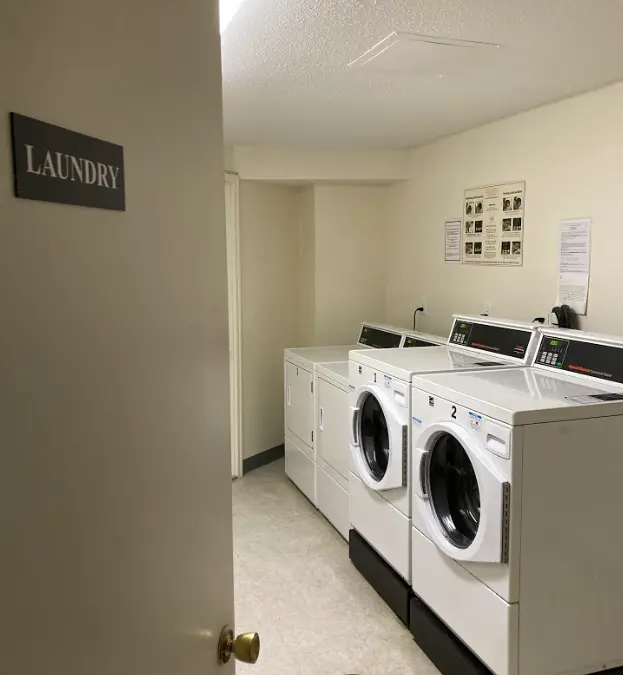
“Norma Jean, you’re single. You don’t need a whole bedroom. You can sleep on the cot in the laundry room. Honestly, you should be grateful we’ve let you stay here this long for free.”
My sister-in-law said it on the front porch of the house I grew up in, at three o’clock on the Wednesday before Thanksgiving, while her sister’s husband carried my suitcase past me and set it down next to the washing machine.
My suitcase. Out of my bedroom. The bedroom I had slept in every night for eight years, ever since I moved home to take care of Mama.
Rhonda stood there in her quilted vest with a clipboard. An actual clipboard. She had a seating chart for Thanksgiving dinner on it, and a bedroom chart, and a schedule for who was cooking what. She’d printed it out in Little Rock and brought it with her, and she’d been taping copies to doors since she got there at noon.
“Your room’s going to Debbie and Carl,” she said, tapping the clipboard. “They’re driving all the way from Texarkana. Wayne and I are in your mother’s room. The grandkids are in the sewing room on air mattresses. And there’s a cot in the laundry room. It’s perfectly comfortable. I slept on it myself once.”
She never had. I’d lived in that house eight years. Rhonda had stayed overnight exactly twice, and both times she’d slept in the good guest room with the private bath, and complained about the water pressure.
“Rhonda,” I said. “That’s my room.”
“Well, technically, it’s Wayne’s and yours,” she said. “Fifty-fifty. Until it sells. And it’s going to sell, Norma Jean, so you might as well start getting used to not having a room in it.” She smiled. “We’re all family here. Let’s just have a nice Thanksgiving.”
My brother Wayne was in the driveway unloading a cooler from the back of his truck. He heard every word. He kept unloading the cooler.
My name is Norma Jean Akers. I’m sixty-six years old. I taught fourth grade at Searcy Elementary in White County, Arkansas, for thirty-one years. I never married. People used to ask me why, at church, at the beauty shop, at the Kroger. The truth is I was engaged once, in 1983, to a boy named Danny Pruitt who went off to work on an oil rig in the Gulf and didn’t come back. And after that, I had a classroom full of children every year, and that seemed like plenty.
This is the house my daddy built in 1961, on forty acres of rice ground and pasture west of Searcy. A white farmhouse with green shutters and a wraparound porch and a pecan tree in the front yard that my brother and I used to climb. Daddy died in 1998. Mama lived in it alone after that, until she couldn’t anymore.
In 2017, Mama fell in the bathroom and lay on the floor for nine hours before the mailman heard her calling. She was eighty-six. After the hospital, the doctor said she couldn’t live alone. Wayne said she should go to a nursing home in Little Rock near him. He’d already picked one. Mama said she’d rather die on her own kitchen floor than in a place that smelled like canned peas.
So I retired a year early, and took the smaller pension that came with it, and sold my little house in town, and moved home.
For eight years, I took care of my mother. I gave her baths and cut her toenails and drove her to the cardiologist in Little Rock every three months. I learned to give her insulin shots. I slept with the baby monitor on my nightstand so I’d hear her if she got up in the night. I cooked every meal she ate. When she got confused near the end and thought I was her sister Ruby, I answered to Ruby. When she cried for Daddy, I held her hand until she fell asleep.
Wayne visited twice a year. Easter and Thanksgiving. He’d stay one night, and he’d tell Mama she looked good, and he’d fix whatever was broken that I’d been waiting six months for him to fix, and then he’d go home. He called on Sundays, mostly. Rhonda came about half the time. She’d walk through the house and tell me what needed updating.
Mama died in May. She was ninety-four. She died in her own bed, in her own room, with the window open and the pecan tree outside and me holding her hand. Just like she wanted.
At the funeral, Wayne put his arm around me. He said, “You did good, Sis.” It’s the nicest thing he’s ever said to me. I held onto it for a long time.
Two weeks after the funeral, he called and said we needed to talk about the house.
“It’s half yours and half mine,” he said. “That’s how the will reads. I looked it up. Daddy’s will left everything to Mama, and Mama never made a new one, so it all goes to us fifty-fifty. Land, house, everything. Rhonda’s got a friend who’s a realtor in Searcy. She thinks with the forty acres, we could get four-fifty, maybe four-seventy-five. We’ll split it. You’ll have a nice nest egg.”
“Wayne,” I said. “Where would I live?”
“You’ll have two hundred thousand dollars, Norma Jean. You can live anywhere you want. Get a nice condo in town. Closer to church.”
I didn’t say anything. He took that as a yes. People usually do.
Over the summer and fall, he called about it every couple of weeks. The realtor was ready. The market was good. Rhonda had found an estate sale company to clear out the house. They’d list it after the holidays. “We’ll do one last Thanksgiving at the homeplace,” Wayne said. “For Mama. Then we’ll sell it.”
And now here I was, on the Wednesday before that last Thanksgiving, watching my suitcase get carried into the laundry room.
There were fourteen people in that house by suppertime Wednesday. Wayne and Rhonda. Their son Travis and his wife and their two kids. Rhonda’s sister Debbie and her husband Carl from Texarkana. Rhonda’s mother, who’s ninety and deaf and very sweet. Rhonda’s nephew and his girlfriend, who nobody seemed to know very well. And me.
Rhonda had planned the whole meal. She’d printed it out. Turkey, ham, green bean casserole, mashed potatoes, sweet potato soufflé, rolls from a bag. She’d assigned me the dressing, because, she said, I was “good at the old-fashioned stuff.”
I’d been making Mama’s cornbread dressing for every Thanksgiving for eight years, from the recipe card in Mama’s handwriting. Sage from the garden. Celery. Onions. A whole skillet of cornbread made the day before so it could dry out.
I went to the laundry room that night at ten o’clock. There was a folding cot set up between the washer and the deep freeze. Somebody had put one thin pillow on it with no pillowcase, and an old army blanket. My suitcase was on top of the dryer. The washer was running. Rhonda’s nephew’s girlfriend had put in a load of her clothes.
I sat down on that cot. It sagged in the middle. The washer went into its spin cycle and the whole room shook.
I want to tell you I cried. I didn’t. I’d done all my crying in May. I just sat there, with the washer thumping, and looked up at the little window over the utility sink, where you could see a sliver of the moon through the pecan branches.
Then I opened my suitcase and took out the manila envelope I’d packed at the very bottom, under my nightgowns.
It was a big envelope. Nine by twelve. It had the seal of the White County Circuit Clerk stamped in the top corner, and a recording number, and a date: March 2, 2021.
I didn’t open it. I didn’t need to. I knew what was in it.
I’d been carrying it around for four years.
I remember the day Mama signed it like it was yesterday. It was the last week of February in 2021, and there’d been an ice storm, and the roads into Searcy were still slick in the shady spots. Mama made me drive her anyway. She’d had me call Mr. Beebe’s office the week before and make the appointment, and she wouldn’t tell me what it was for. She said it was “Opal business.”
She wore her good church coat and her pillbox hat from 1966, the one with the little net veil. She hadn’t worn that hat in twenty years. She said if she was going to see a lawyer, she was going to look like somebody who meant it.
Mr. Beebe’s office is on the second floor above the old Western Auto, and there’s no elevator. It took us fifteen minutes to get her up those stairs, one step at a time, with me behind her and her hand on the rail. At the top, she was breathing hard, but she straightened her hat and walked into that office like she owned the building.
She made me wait outside. I sat in the little waiting room with a Field and Stream from 2009 and listened to the radiator knock. They were in there for forty-five minutes.
When she came out, she handed me a big envelope and said, “Put that somewhere Wayne won’t find it.”
“Mama, what is it?”
“It’s the house,” she said. “It’s yours. After me.”
I just stood there.
“Mama, you can’t. Wayne—”
“Wayne has a house,” she said. “Wayne has a good job and a pension and a wife who buys a new couch every three years. You sold your house to come take care of me. You quit your job a year early. You gave up your whole life.” She put her hand on my cheek. Her hand was cold. “Norma Jean, I’ve watched you give everything you had to other people’s children for thirty-one years. I am not going to leave you with nothing.”
“He’ll be hurt.”
“He’ll be mad,” Mama said. “That’s different. And he won’t find out until I’m gone, because you’re not going to tell him.” She tapped the envelope. “Not until after the first Thanksgiving. I want to see what he does. I want to know if I raised him right.”
I drove her home on the icy roads. She fell asleep in the car before we got to the county line, with her pillbox hat tipped over one eye.
That was four years ago. And here I was, sitting on a cot by the deep freeze, about to find out if she’d raised him right.
Wednesday night, after everybody went to bed, I got up to get a glass of water. I’m a light sleeper, and the cot didn’t help. The kitchen light was on. Rhonda was standing at Mama’s dining room hutch with the door open and a pad of yellow sticky notes in her hand.
She was going through Mama’s china. Mama’s good Haviland, the set with the little pink roses that Daddy bought her piece by piece for twenty years of anniversaries. Rhonda was turning over the plates and looking at the marks on the bottom, and she had her phone out, looking something up.
There was a yellow sticky note on the gravy boat already. And the cut-glass punch bowl. And Mama’s silver tea service.
She saw me in the doorway and jumped.
“Oh! Norma Jean. You scared me.” She put a hand on her chest. “I couldn’t sleep. I thought I’d get a head start on the sticky notes. Before the estate sale people come.”
“That’s Mama’s wedding china,” I said.
“I know. It’s Haviland. Did you know it’s worth about four thousand dollars? The whole set?” She held up a dinner plate to the light. “You’d never use it, honey. You don’t entertain. I’ll take good care of it.”
I didn’t say anything. I got my glass of water and went back to the laundry room and lay down on the cot and looked at the ceiling.
Mama ate off that china every Sunday of my life. She used to say a good plate made a poor supper taste like Sunday.
Thanksgiving Day came, and I did what I was told. I made the cornbread dressing. I set the table according to Rhonda’s seating chart, which put me at the far end of the second table, the card table they’d set up in the living room, next to Rhonda’s deaf mother and the kids. Wayne said grace. He thanked God for Mama’s long life, and for family, and for the homeplace. He said, “This’ll be the last Thanksgiving here, Lord, so we thank You for all the ones we had.”
Rhonda said, “Amen,” loud.
After dinner, while the men watched football and the women cleaned up, Rhonda brought out her clipboard again. She sat at the kitchen table and went down a list.
“So the estate sale company comes the fifth,” she said. “December fifth. They’ll price everything and run the sale the weekend after. Anything anybody wants, put a sticky note on it before then. Blue sticky notes are Wayne’s. Yellow are mine. Norma Jean, you can have pink.”
“Pink,” I said.
“Well, you can’t take much. You’ll be in a condo.” She made a note. “And the realtor’s coming tomorrow at ten to put the sign up. Linda Faye Morrison. She’s a sweetheart. She’s going to list it right after New Year’s, but she wants the sign up now so people driving by for the holidays see it.”
“Tomorrow,” I said.
“Tomorrow.” Rhonda looked at me over her reading glasses. “Norma Jean, I know this is hard. But you’ve had eight years here rent-free. That’s more than most people get. Wayne’s been very generous, not making you pay rent on his half. Very generous. Some brothers wouldn’t have.”
I put down the dish towel.
“Rent,” I said.
“I’m just saying. You should be grateful.”
Travis’s little girl, Lacey, was sitting at the kitchen table coloring in a coloring book. She’s ten. She was in my fourth-grade class’s reading circle once, when she came to stay with Mama one summer, and she reads better than any ten-year-old I’ve ever met. She’d been listening to the whole thing with her crayon not moving.
She looked up at me.
“Aunt Norma,” she said. “Why do you have to sleep by the washing machine when it’s your room?”
“Lacey,” Rhonda said. “Mind your own business.”
Lacey didn’t mind her own business. Lacey has never in her life minded her own business. It’s one of the best things about her.
“Grandma said Aunt Norma’s a freeloader,” she said to me. “In the car. She said you got a free house for eight years for doing nothing.” She frowned. “What’s a freeloader?”
The kitchen went quiet. Rhonda’s sister Debbie, who was drying the gravy boat, set it down very carefully.
“Lacey,” Rhonda said, very sharp. “Go watch the game with your daddy.”
Lacey didn’t move. She was looking at me with her big serious eyes, waiting for an answer. The way she used to wait in reading circle when I asked her a question and she knew there was a right answer and she wanted to hear it.
“A freeloader,” I said, “is somebody who takes something without paying for it.”
“Did you take something?”
I thought about eight years. I thought about insulin shots and toenail clippers and the baby monitor on my nightstand. I thought about answering to Ruby.
“No, honey,” I said. “I didn’t take anything.”
Rhonda stood up from the table with her clipboard.
“Well,” she said. “I think we all know who’s been living in this house for free. Let’s not pretend, Norma Jean. You’re sixty-six years old and you don’t have a husband and you don’t have a house and you don’t have anything but a teacher’s pension. Wayne’s giving you two hundred thousand dollars you didn’t earn. The least you could do is be gracious about it.”
I looked at my sister-in-law standing in my mother’s kitchen. I looked through the doorway at my brother on the couch, who had heard every word, and who was watching the Cowboys like his life depended on it.
Then I nodded.
“Understood,” I said.
Rhonda looked a little startled. Then satisfied. She sat back down and went back to her list.
I hung the dish towel on the oven handle, the way Mama always did. I went to the laundry room and sat on the cot. And I took the big manila envelope out from under my nightgowns, and I held it in my lap until the house went quiet and everybody was asleep.
Then I went to the little desk in the front hall, the one where Mama paid her bills for sixty years, and I took out a piece of her stationery, and I wrote one line on it in my teacher’s handwriting, and I paper-clipped it to the front of the envelope.
I slept on the cot that night. I slept fine. Better than I had since May.
On Friday morning, I got up at six, the way I always do. I made coffee in Mama’s percolator. I put on my church dress, the navy blue one with the white collar. I put on my pearl earrings, the ones Mama gave me when I graduated from Harding. I fixed my hair.
Then I went out and sat in Mama’s rocking chair on the front porch with the envelope in my lap, and I waited.
The house woke up slowly. Kids first, then Travis, then Rhonda’s sister. Rhonda came down at eight-thirty in her robe and saw me through the window, sitting on the porch in my church dress, and she came out with her coffee.
“Well, look at you,” she said. “Where are you going?”
“Nowhere,” I said.
“Then why are you dressed like that?”
“Company’s coming at ten,” I said. “I thought I should look nice.”
She gave me a funny look and went back inside. I heard her say to somebody, “Norma Jean’s acting strange.”
At nine-fifty, a white SUV pulled into the gravel drive under the pecan tree. On the door it said MORRISON REALTY — SEARCY — WE BRING YOU HOME, with a little picture of a house with a heart in it. Linda Faye Morrison got out. I knew her. Everybody in Searcy knows Linda Faye. I had her son Bryce in fourth grade in 2004. He was a biter.
She opened the back of the SUV and took out a big FOR SALE sign on a metal frame. COMING SOON, it said, and under that, her face, smiling.
Wayne came out on the porch in his sock feet with his coffee. Rhonda came out behind him, dressed now, with her clipboard. Travis and Carl came out to see what was happening. Lacey slipped out the screen door behind all of them and stood at the end of the porch in her pajamas.
“Linda Faye!” Rhonda called. “Good morning! Right by the mailbox, I think. Where people can see it from the road.”
Linda Faye waved. She started across the yard with the sign under her arm and a rubber mallet in her other hand. Then she saw me in the rocking chair.
“Why, Miss Akers,” she said. “Hey! I didn’t know you’d be here.”
“I live here, Linda Faye,” I said.
She laughed, uncertain. “Well, of course you do.”
Wayne put down his coffee cup on the porch rail.
“Norma Jean,” he said. “What’s going on?”
I stood up out of Mama’s rocking chair. I walked down the porch steps into the yard, in my navy church dress, with the dew soaking through my good shoes. I walked right up to my brother, and I held out the envelope.
The White County seal was on the corner. And clipped to the front, the piece of Mama’s stationery with one line on it, in my handwriting.
Wayne, before that sign goes in the ground, you’d better read this.
My brother looked at the envelope. He looked at the courthouse seal. He saw the date.
And his face went white.
“What is this?” Rhonda said, coming down the steps. “Wayne? What is that?”
Wayne didn’t answer. He was taking the papers out. His hands were shaking.
Linda Faye Morrison stood in the middle of the yard holding her sign, and I saw her eyes go to the courthouse seal. She’d seen a lot of those in thirty years of selling houses. She knew exactly what one looked like.
She set the sign down on the grass.
Inside that envelope was a quitclaim deed. It was signed by my mother, Opal Mae Akers, on February 26, 2021, in the office of her lawyer, Mr. Harlan Beebe, on Race Street in Searcy, and recorded with the White County Circuit Clerk on March 2. It transferred the house and the forty acres to me, Norma Jean Akers, with a life estate reserved to Mama. That means the house was Mama’s to live in until she died, and then it was mine. All of it. Not fifty-fifty. Not half. Mine.
Behind the deed was a letter from Mama’s doctor in Little Rock, dated the same week, saying that Opal Mae Akers was of sound mind and fully capable of managing her own affairs. Mr. Beebe had insisted on it. He said if there was ever a fight, it would matter.
And behind that was a letter from Mama. One page, on her stationery, in her handwriting, which was shaky by then but still hers.
Wayne read the deed standing in the yard. Then he read the doctor’s letter. Then he got to Mama’s letter, and he sat down on the bottom porch step, and he read it there.
I knew what it said. Mama had read it to me before she sealed it.
“Wayne, honey. If you’re reading this, it means your sister finally had to show you. I told her to wait until after the first Thanksgiving. I wanted to see how you’d treat her when you thought I wasn’t watching. I’m sorry if it went badly. I hope it didn’t.
The house is Norma Jean’s. Not because I love you less. Because she gave me eight years of her life, and her teaching pension, and her own little house in town, and she never once asked me for a thing. You have a good job and a nice house in Little Rock and a wife who likes nice things. Norma Jean has me. When I’m gone, she’ll have nothing, unless I do this.
Don’t you dare fight her on it. Your daddy would roll over in his grave. Come home for Christmas. She makes my dressing better than I do. Love, Mama.”
Wayne sat on that step for a long time. Nobody said anything. Lacey had come down the porch steps in her pajamas and was standing next to me, holding my hand.
Rhonda grabbed the letter out of Wayne’s hand and read it. Her face went red, then white, then red again.
“This is ridiculous,” she said. “This is—she was ninety years old. She didn’t know what she was signing. Norma Jean got to her. Wayne, she got to your mother. That’s undue influence. We’ll get a lawyer. We’ll fight this.”
“There’s a doctor’s letter,” Linda Faye Morrison said quietly, from the yard.
Rhonda turned on her. “Excuse me?”
“Mrs. Akers,” Linda Faye said. “With respect. That’s Harlan Beebe’s signature on that deed. He’s been doing estate work in this county for forty years. If Harlan had a doctor’s letter on file saying she was competent, you could hire every lawyer in Little Rock and you’d still lose.” She picked up her sign. “And I can’t list a property for somebody who doesn’t own it.”
She walked back to her SUV and put the sign in the back. Then she turned around.
“Miss Akers,” she said to me. “Bryce is a dentist now. In Conway. He says you’re the reason he stopped biting people.”
“Tell him I’m proud of him,” I said.
She drove off. The gravel crunched under her tires all the way down to the road.
Rhonda’s family left Saturday morning. A day early. Rhonda loaded the car herself and didn’t say goodbye to me. Debbie and Carl from Texarkana hugged me on the porch before they went. Debbie whispered, “I’m sorry about the cot,” and pressed a twenty-dollar bill into my hand, like I was a waitress. I gave it to Lacey.
Wayne stayed in the truck with the engine running while Rhonda loaded. He didn’t look at me. When they pulled out, I saw his face in the side window, and he looked about eleven years old, the way he looked when Daddy caught him smoking behind the barn.
He didn’t call for three weeks.
I moved back into my bedroom Saturday afternoon. Debbie had made the bed before she left. She’d made it nice, with the pillows fluffed. I sat on the edge of it and cried for the first time since May. Not sad crying, exactly. Just crying.
The cot is folded up in the laundry room now. I kept it. I’m not sure why.
Mr. Beebe called me the Monday after Thanksgiving. He’s eighty-three and still goes into his office every day. He said he’d had a phone call from a lawyer in Little Rock asking about the Akers deed, on behalf of Rhonda Akers. He said he’d faxed over the doctor’s letter and the recording information and his notes from the signing, and he hadn’t heard anything back. He said he didn’t expect to.
“Your mama sat in that chair across from my desk,” Mr. Beebe said, “and she said, ‘Harlan, my son’s going to try to sell my house out from under my daughter before I’m cold. You make it so he can’t.’ And I did.”
“Thank you,” I said.
“Don’t thank me,” he said. “Thank your mama. She was the smartest client I ever had. Sharp as a tack, right up to the end.”
Wayne called on the fifteenth of December. It was a Sunday. He called at the time he always used to call Mama, two o’clock in the afternoon, and for a second when I picked up, I thought he’d dialed it out of habit.
“Norma Jean,” he said. “It’s me.”
“I know.”
There was a long pause.
“I didn’t know about the deed,” he said. “I want you to know that. Mama never told me. I thought it was half mine. I really did.”
“I know you did.”
“Rhonda’s still mad. She wants to fight it. I told her no.” He cleared his throat. “Mama said not to. In the letter. So I’m not going to.”
“All right.”
Another long pause. I could hear a television in the background, and Rhonda’s voice somewhere far off.
“Norma Jean,” he said. “Why didn’t you tell me? All this time. You could’ve told me in May. You could’ve told me any time and saved all this.”
“Mama asked me to wait,” I said. “She wanted to see what you’d do.”
“And what did I do?”
I didn’t answer that. I didn’t have to.
He was quiet for a long time. When he talked again, his voice was thick.
“I put you on a cot by the washing machine,” he said. “In Mama’s house. After eight years.” He stopped. “I didn’t even say anything. I just sat there and watched the Cowboys.”
“They lost,” I said. “If it helps.”
He laughed. It came out of him like a cough, surprised, and then he was crying, my big brother, sixty-nine years old, crying on the phone on a Sunday afternoon.
“Mama said come home for Christmas,” he said, when he could talk. “In the letter. She said you make her dressing better than she did.”
“I do,” I said.
“Is that offer still—” He stopped. “Can I come? Just me. Rhonda’s going to her sister’s.”
I looked out the kitchen window at the pecan tree. It was bare now, the branches black against a gray sky. Daddy planted it the year Wayne was born.
“Bring Lacey,” I said. “If Travis will let her come.”
He came on Christmas Eve, with Lacey in the passenger seat of his truck, and a ham from the HoneyBaked store in Little Rock, and a poinsettia that he set on Mama’s piano. He slept in the good guest room with the private bath. He didn’t say anything about the water pressure.
On Christmas morning, he went out to the shed and got Daddy’s old toolbox and spent three hours fixing the porch step that had been loose since August. I didn’t ask him to. He just did it. When he came back in, his hands were cold and he had sawdust in his hair, and he looked more like Daddy than I’d ever seen him look.
Lacey and I made Mama’s cornbread dressing together. I let her crumble the cornbread. She asked me if I was going to stay in the house forever. I said I hoped so.
“And then who gets it?” she asked. Lacey asks everything.
I’d already thought about that. I’d been to see Mr. Beebe again, in December, and signed some papers of my own.
“Somebody who reads very well,” I said, “and doesn’t mind her own business.”
She looked at me for a long moment with her big serious eyes. Then she went back to crumbling cornbread, very carefully, the way I showed her.
We ate Christmas dinner on Mama’s Haviland. All three of us. Wayne peeled the yellow sticky note off the gravy boat before he passed it to me, and folded it up, and put it in his shirt pocket, and didn’t say a word about it.
She’s eleven now. She calls me every Sunday at two o’clock.