“Earl, we’re doing Christmas at the cabin this year. Just us. Honestly, since Joan passed, you bring the mood down. The kids need one happy Christmas.”
My son-in-law said it while he was carving my turkey. He’d taken the knife out of my hand to do it. He said I was going too slow, and the kids were hungry, and he’d watched a video on how to do it properly, the restaurant way, with the breast taken off whole and sliced across the grain. So I gave him the knife, and I sat down at my own table, and he stood where I’d stood for forty-four Thanksgivings and told me I wasn’t welcome at Christmas.
“At the cabin,” I said.
“At the cabin.” Brad laid a perfect slice on the platter. “Stacy and I talked about it. We want to start some new traditions. Fresh start. And it’s Stacy’s cabin now anyway. That’s what Joan always said.”
My daughter Stacy was sitting across from me, cutting my grandson Owen’s turkey into little pieces even though he’s eight and can cut his own turkey. She didn’t look up.
“Stacy?” I said.
“Dad,” she said to the turkey. “Please don’t make this a thing.”
My wife Joan died on the fourteenth of March, of ovarian cancer, at seventy-three. We’d been married forty-four years. I’m seventy-six. I was a lineman for the rural electric co-op in Crow Wing County for thirty-eight years, climbing poles in ice storms and blizzards, and I’m not a man who makes things a thing. But I’ll tell you, sitting at that table, I had to grip the edge of it with both hands.
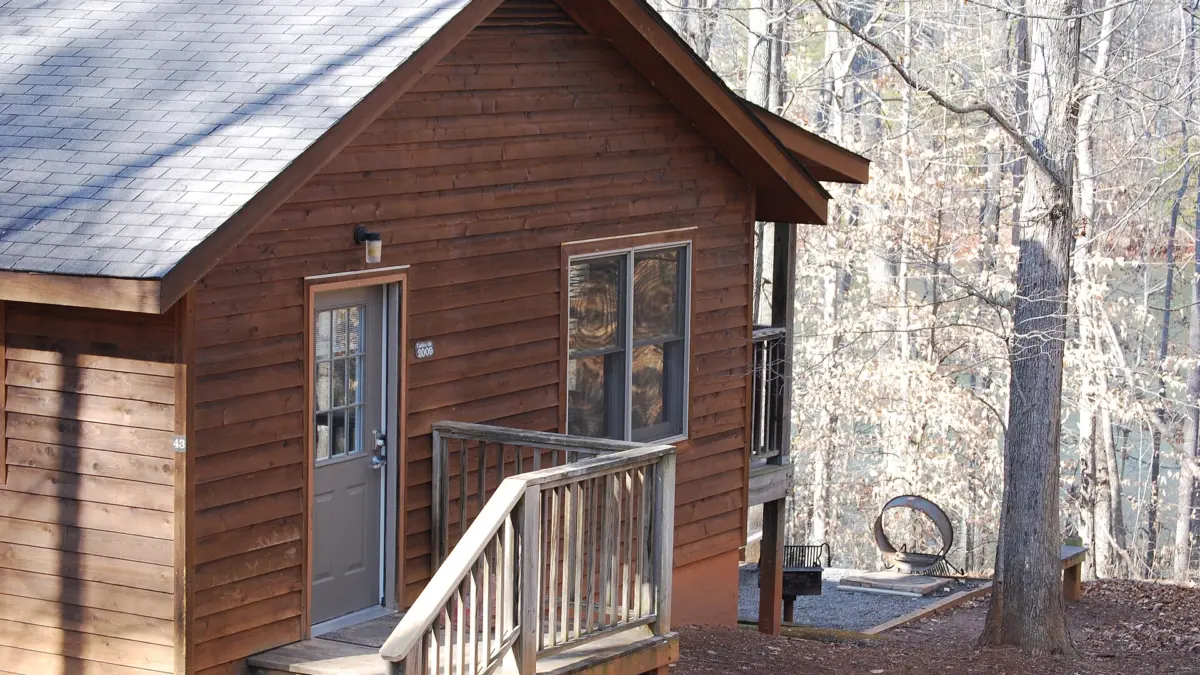
The cabin is on a little bay on the north side of Cross Lake, about twenty minutes from our house in Brainerd. Joan’s father built it in 1958 out of logs he cut himself, and Joan inherited it when he died in 1991. It has two bedrooms and a sleeping porch and a fieldstone fireplace and a dock that I’ve rebuilt three times. Every summer of Stacy’s life, she spent at that cabin. Every Christmas Eve since Chloe was born, we’ve gone up there, the whole family. Joan would cook Swedish meatballs and lefse, and we’d go out on the ice on Christmas morning and look for the eagles that nest in the big pine on the point.
Joan loved that cabin more than anything on this earth except her family. She used to say it wasn’t a building, it was a promise.
“The kids need one happy Christmas,” Brad said again, putting down the knife. “No offense, Earl. You know what I mean. You sit there. You don’t talk. You look at the empty chair. It’s a lot for the kids.”
“It’s a lot for me too,” I said.
“I know. That’s what I’m saying.” He sat down and shook out his napkin. “You should do something for yourself this Christmas. Go see your brother in Duluth. Take a cruise. They’ve got those senior cruises.”
My granddaughter Chloe was sitting next to me. She’s eleven. She has Joan’s eyes, gray-blue like the lake in October, and Joan’s way of watching people when they talk. She was watching Brad now. She hadn’t touched her food.
“Anyway,” Brad said. “There’s one more thing. I’ve got a locksmith coming up to the cabin Saturday morning. We’re changing the locks.”
“Changing the locks,” I said.
“Earl, half of your old fishing buddies have a key to that place. Lenny Swanson’s been using it all fall. I drove by in October and his truck was in the driveway. That’s a liability. If somebody gets hurt up there, it’s on us. On Stacy.” He smiled at me, the smile he uses on people who are trying to sell their houses for more than they’re worth. “I’ll get you a key. Eventually. We just need to get things organized.”
Lenny Swanson is eighty-one years old. He’s been my friend for fifty years. His wife died two years before Joan, and in the fall I’d been giving him the key so he could sit on the dock and fish for crappies and not be alone in his house. I’d told Stacy that. I’d told her in September.
I looked at my daughter. She was still cutting Owen’s turkey. The pieces were very small now.
I want to tell you a little about Brad Kessler, so you understand him.
Brad is a real estate agent in Brainerd. A good one, by most accounts. His face is on the bus bench outside the Cub Foods. KESSLER SELLS THE LAKES. He married Stacy fourteen years ago, and he’s been a fine husband to her, as far as I can tell, and a decent father. But Brad has always looked at things and seen a price. He looked at our house, when he first came to dinner, and told Joan what it would list for. He looked at the cabin the first summer he came up and said, “You know what a hundred and eighty feet of lakeshore on Cross Lake is worth these days?” Joan said, “Yes, Brad. It’s worth my father’s whole life.” He laughed like she was joking.
In the summer of 2023, Brad asked Joan if she’d thought about selling the cabin. He said the market was hot and he had a buyer from the Cities who’d pay cash, no inspection. Six hundred and forty thousand dollars, he said. Joan told him no. He brought it up again at Christmas. Joan told him no again. He brought it up a third time when she was sick, in the hospital in Brainerd, the week before she died. He said Stacy was going to inherit it anyway, and with the medical bills, it might make sense to “get ahead of things.”
Joan sent him out of the room. I was there. After he left, she lay there with her eyes closed for a long time. Then she said, “Earl, call Marv.”
Marv Hultgren has been our lawyer for thirty years. He did our wills. I called him, and he came up to the hospital the next morning with his briefcase, and he and Joan talked for an hour with the door closed. I went down to the cafeteria and drank bad coffee. When I came back up, Marv shook my hand and said, “She’s got it handled, Earl.” Joan was asleep.
She died eight days later. I never asked her what she and Marv talked about. I figured she’d tell me if she wanted me to know.
After the turkey, Brad and Stacy went into the living room to watch the Vikings game. I was at the kitchen sink washing the roasting pan. Joan always washed the roasting pan. I’d never washed it once in forty-four years, and now I wash it every Thanksgiving, and it takes me twice as long as it took her.
Chloe came in and stood next to me. She picked up a dish towel without being asked.
“Grandpa,” she said quietly. “Is it true you can’t come to the cabin because you’re too sad?”
I didn’t answer right away.
“Grandma said the cabin was for everybody,” Chloe said. “She told me. Last summer, on the dock. She said the cabin belongs to everybody who loves it.” Her voice wobbled. “Why does Dad get to say who comes?”
“Your dad’s just trying to make Christmas nice for you, sweetheart.”
“I don’t want it nice,” Chloe said. “I want it like it was.”
She dried a plate very carefully and set it in the cupboard. Then she looked up at me with Joan’s eyes.
“Why does Dad get to change the locks on Grandma’s cabin?” she said. “He never even liked it. He just liked what it was worth.”
From the living room, I heard Brad yell at the TV. Something about a holding penalty.
I stood at that sink with my hands in the water, and I thought about Joan in the hospital bed, with her eyes closed, saying, “Earl, call Marv.”
I dried my hands. I walked into the living room. I stood between Brad and the TV.
“Brad,” I said. “Saturday morning. What time is the locksmith coming?”
He looked up at me, a little surprised. “Nine o’clock. Why?”
“Just wondering.”
“Earl, don’t go up there and make a scene. I mean it. This is for Stacy. This is what Joan would have wanted.”
I looked at him for a long moment.
Then I nodded.
“Understood,” I said.
He smiled, relieved. He thought he’d won. Stacy looked at me over the back of the couch, and I saw something in her face then, something worried, like she knew her father better than her husband did.
They left at seven. I hugged my grandkids at the door. Chloe held on to me an extra second. “Grandpa,” she whispered in my ear. “Don’t let him.”
I didn’t say anything. I just squeezed her.
When the house was empty, I went to the phone on the kitchen wall. It’s the same phone we’ve had since 1987, yellow, with a cord long enough to reach the stove. I called Marv Hultgren at home. It was Thanksgiving night and I felt bad about it, but I did it anyway.
His wife answered. She said Marv was asleep in his recliner, full of pie, but she’d wake him. When he came to the phone, his voice was thick.
“Earl. Happy Thanksgiving. Everything all right?”
“Marv,” I said. “What did Joan do with the cabin?”
There was a long pause on the line. I could hear him waking up.
“She told me you’d call,” he said finally. “She said you’d call the first time somebody tried to take it. She said it’d be Brad, and she said it’d be before the first Christmas.”
“Well,” I said. “She was right.”
“She usually was,” Marv said. “Come by the office tomorrow morning. Ten o’clock. I’ll open up for you.”
On Friday morning, the day after Thanksgiving, I drove downtown and parked in front of Hultgren & Moe, Attorneys at Law, above the old Ben Franklin store. Marv was waiting at the top of the stairs in a flannel shirt with a cup of coffee for me.
He’d laid it all out on his desk. A folder, and a thick document bound in blue paper, and one envelope.
“The Cross Lake Cabin Trust,” Marv said, tapping the document. “Joan signed it in her hospital bed on March sixth. I had two nurses witness it and the hospital notary stamp it. It’s all proper. I recorded the deed transfer at the county recorder’s office on March eleventh, three days before she died.”
“Trust,” I said.
“She deeded the cabin into an irrevocable trust. You’re the trustee, Earl. That means you control it. You decide who uses it, who has keys, who doesn’t. For as long as you live, or until you step down.” He turned a page. “The beneficiary is Chloe.”
“Chloe?”
“When Chloe turns twenty-five, the trust ends and the cabin goes to her, free and clear. Until then, you hold it for her. And the trust says, in so many words, that the property can’t be sold, mortgaged, leased, or transferred by anybody until Chloe’s twenty-five. Not by you. Not by Stacy. Not by anybody.”
I sat back in the chair.
“She didn’t leave it to Stacy,” I said.
“She thought about it for a long time,” Marv said gently. “She said she loved Stacy more than her own life. But she said Stacy can’t say no to Brad. She said if the cabin went to Stacy, it’d be sold within a year. To some fella from Minneapolis who’d tear it down and build a glass box.” Marv looked at me over his reading glasses. “Her words, Earl. Not mine.”
“And Chloe.”
“Chloe’s the one who sat on the dock with her every summer. Chloe’s the one who knows where the eagles nest. Joan said Chloe would keep it.” He picked up the envelope. “And she left this. She said you’d know when to use it.”
The envelope was Joan’s good stationery, cream-colored, with a little sprig of pine printed in the corner. She’d bought it at the gift shop at the Paul Bunyan Land thirty years ago and never used it, because she was saving it for something important.
On the front, in her handwriting, a little shaky by then but still hers, it said:
For Brad. Only if he tries to take the cabin.
I held that envelope in my hands for a long time.
“Do you know what’s in it?” I asked Marv.
“No,” he said. “She sealed it herself. She asked me to keep it with the trust and give it to you if you ever came asking. She said to tell you not to open it. She said it wasn’t for you.”
That afternoon I drove over to Lenny Swanson’s place on the east side of town. Lenny lives alone in a little blue rambler with a ceramic goose on the front step that his wife used to dress up for every holiday. Since she died, the goose has worn the same Fourth of July outfit for two years. Nobody has the heart to change it.
Lenny answered the door in his slippers. He took one look at me and said, “Brad called me.”
“Did he.”
“Wednesday. Before Thanksgiving.” Lenny shuffled back to his kitchen and I followed him. “Said I’d been trespassing on family property. Said if he caught my truck up there again he’d call the sheriff.” He opened a drawer by the sink and took out the cabin key, the spare one I’d given him in September, on a red plastic fob that said CROSS LAKE BAIT. He held it out to me. “Here. I don’t want to cause trouble for you, Earl. Not with your family.”
I looked at the key in his old spotted hand.
“Lenny,” I said. “How many crappies did you catch off that dock in October?”
He thought about it. “Forty-one. Kept nineteen.”
“Joan would’ve liked that,” I said. “Keep the key.”
“Earl—”
“Keep the key, Lenny. I’ll handle Brad.”
He looked at me for a long time. Then he put the key back in the drawer. He made us each a cup of instant coffee, the terrible kind, and we sat at his kitchen table and didn’t talk about our wives, which is how two old men talk about their wives.
When I left, I stopped on his front step and looked at that ceramic goose in its little red, white and blue vest.
“Lenny,” I said. “It’s almost Christmas.”
“I know it.”
“You’ve got a Santa suit for that goose somewhere?”
He was quiet a second. “In the basement. Marlys made it.”
“Might be time,” I said.
When I drove past his house the next week, the goose was wearing a little red Santa suit with white fur trim, and a hat that was a little crooked. I honked twice.
On Saturday morning I got up at five. It had snowed overnight, about four inches, wet and heavy, the kind that bends the birches. I scraped my truck and threw a shovel in the back and drove up to the cabin in the dark.
The driveway hadn’t been plowed. I shoveled a path to the front door and let myself in with my key, the old brass one on Joan’s keychain, the one with the little enamel loon on it. The cabin was cold. Nobody had been up since Lenny’s last fishing trip in October. I built a fire in the fieldstone fireplace with the birch logs stacked by the hearth and put on the old percolator on the propane stove.
Joan’s apron was still hanging on the hook by the stove. I hadn’t been able to move it all summer.
I took my coffee out to the porch, and I put on Joan’s old wool blanket around my shoulders, the red-and-black buffalo plaid one, and I sat in the rocking chair her father made, and I watched the sun come up over Cross Lake. The ice was just starting to form along the shore, thin and gray. Out on the point, in the top of the big pine, I could see the eagles’ nest, dark against the pink sky.
I had the trust folder on my lap. And Joan’s envelope in the breast pocket of my coat.
At eight-fifty, I heard the trucks.
Brad’s black Tahoe came first, crunching up the unplowed drive and stopping behind my pickup. Behind him came a white van with ABC LOCK & KEY — BRAINERD on the side. A young fellow in a Carhartt jacket got out of the van with a toolbox.
Brad got out of the Tahoe. Stacy got out of the passenger side.
Brad saw my truck. Then he saw me, on the porch, in the rocking chair, with the blanket around my shoulders and the fire going inside, smoke coming out of the chimney. His face went red. Then it went a sort of mottled purple.
“Earl,” he said. “Earl, what did I tell you? What did I tell you on Thursday?”
“You told me not to make a scene,” I said. “I’m not making a scene. I’m having coffee.”
“This is exactly what I was talking about! This is exactly—” He turned to Stacy. “Do you see this? Do you see what he does?”
“Dad,” Stacy said. “Dad, why are you here?”
“It’s a nice morning,” I said. “Eagles are on the nest.”
The young locksmith stood in the driveway holding his toolbox, looking back and forth between us like a man who’d walked into the wrong wedding.
Brad came up the porch steps. He stood over me with his arms crossed.
“Earl, I’m going to say this one time,” he said. “This is Stacy’s property now. You need to give the locksmith your key and go home. If you won’t, I’ll call the sheriff and have you removed. I’m not kidding. I’ll do it.”
“Brad,” Stacy said. “Don’t.”
“No, Stace. I’m done tiptoeing around him.” He pulled out his phone. “This is your inheritance. Your mother’s cabin. And he’s sitting up here like he owns it.”
I looked up at my son-in-law.
Then I reached into the breast pocket of my coat and took out the cream-colored envelope with the little sprig of pine in the corner. I held it out to him.
“Joan left this for you,” I said.
Brad looked at the envelope. He saw the handwriting.
And he stopped talking.
He knew her handwriting. Everybody in the family did. Joan wrote the cards for every birthday, every Christmas, every anniversary, for fourteen years of his marriage. That careful, slanted, schoolteacher hand. He’d seen it on a hundred envelopes.
He took it out of my hand very slowly, like it might burn him.
He read the front. For Brad. Only if he tries to take the cabin.
His hand started to shake.
“What is this?” Stacy said, coming up the steps. “Dad, what is that?”
“Your mother wrote it in the hospital,” I said. “I don’t know what it says. It’s not for me.”
Brad opened it. He stood there on the porch of the cabin Joan’s father built, in his expensive wool coat with snow on his shoes, and he read it. It was one page. I watched his eyes go down it. They went down it twice.
When he got to the bottom the second time, he sat down. Right on the porch step. Like his legs quit.
Stacy took the letter out of his hand. She read it. I watched my daughter’s face crumple, the way it did when she was six and fell off her bike.
“Oh, Mom,” she said. “Oh, Mom.”
The locksmith, God bless him, put his toolbox back in the van and sat in the driver’s seat with the engine running.
I never read that letter. Stacy told me what it said, later, at my kitchen table, and Brad told me some of it too, months later, when we were out on the ice together, and I’ll tell you what they told me.
Joan wrote that she knew Brad had wanted to sell the cabin since the first summer he saw it. She wrote that she didn’t hold it against him, that some people see a place and see a price, and that’s how God made them. She wrote that she’d put the cabin in trust for Chloe so that nobody would ever have to fight about it, and so that it would still be there when Chloe brought her own children to see the eagles.
And then she wrote something else. Stacy read it to me exactly, because she’d read it so many times she knew it by heart.
“Brad, you’re going to be the man of this family when I’m gone, whether Earl likes it or not. He’s going to be lonely and stubborn and he won’t ask for help. He’ll sit in my chair and look at the lake and not say anything for hours. I’m asking you to sit with him anyway. You don’t have to talk. Just sit. That’s all I want from you. Not the cabin. Just that.”
And then, at the bottom: “If you’re reading this, it means you didn’t. Do better, honey. I believe you can. Love, Joan.”
Brad sat on that porch step for a long time with his head in his hands. Stacy sat next to him. I sat in the rocking chair with my coffee getting cold and looked at the lake, because I didn’t know what else to do, and because I figured that’s what Joan would have wanted me to do too.
After a while, Brad wiped his face on his coat sleeve. He looked up at me.
“She knew,” he said. “She knew I’d do this.”
“She usually knew,” I said.
“I’m sorry, Earl.” His voice cracked. “I’m sorry. I didn’t— I just thought—” He stopped. “I thought I was doing the right thing for Stacy. For the money. Joan’s medical bills were—”
“Joan’s medical bills are paid,” I said. “I paid them. Out of my pension and the co-op insurance. They’re done.”
He looked at me like I’d hit him.
“I didn’t know that.”
“You didn’t ask,” I said.
I showed them the trust papers. All of it. Marv’s notes, the recorded deed, the part about Chloe at twenty-five. Stacy read every page. When she got to Chloe’s name, she started crying again, but it was a different kind of crying.
“She picked Chloe,” she said.
“She picked Chloe,” I said. “She said Chloe would keep it.”
“She would,” Stacy said. “She’s the only one of us who would.”
Brad paid the locksmith a hundred and fifty dollars for his trip and sent him home. Then the three of us sat in that cabin by the fire, and I made more coffee, and nobody said much. Out the window, the eagles left the nest and went hunting over the open water past the point.
Stacy called me that night. It was after ten. I was in bed but not asleep. I don’t sleep much since Joan.
“Dad,” she said. “There’s something I need to tell you. Brad doesn’t know I’m calling.”
“All right.”
“That buyer. The one from the Cities he told Mom about. With the cash offer.” She took a breath. “He brought him up to the cabin in October. A showing. Brad had a key made from Mom’s spare. The man walked through the whole place and looked at the shoreline and said he’d tear it down and put up something modern.” Her voice broke. “That’s why Brad was so mad about Lenny’s truck. Lenny was on the dock that day. Brad had to tell the buyer he was the caretaker.”
I lay there in the dark.
“He’d already shaken hands on it, Dad. Six hundred and seventy-five thousand. He was going to tell me after Christmas. He said it was for our future. For the kids’ college.” She was crying now. “I didn’t know until he told me in the car today. On the way home. After he read Mom’s letter. He told me everything.”
“Well,” I said. “Now you know.”
“I didn’t stop him at Thanksgiving. I didn’t say one word when he said that to you about bringing the mood down. I just sat there cutting up Owen’s turkey.”
“I saw.”
“Mom would’ve said something.”
“Your mother would’ve thrown the gravy at him,” I said.
Stacy laughed, a wet, surprised laugh. Then she cried some more. I lay there and listened and didn’t say anything, because sometimes that’s all a father can do.
“I’m going to start saying no to him,” she said finally. “About things that matter. I’m going to practice.”
“Start small,” I said. “Work up to it.”
“Like what?”
“Like the stuffing. He always wants the kind from a box. Your mother made hers with wild rice from Lenny’s cousin up at Leech Lake.”
She laughed again. “Okay, Dad. I’ll start with the stuffing.”
I’d like to tell you Brad turned into a different man after that. People don’t, mostly. He still looks at a house and sees a price. He still talks too loud at dinner. He still has his face on the bus bench outside the Cub Foods.
But here’s what happened at Christmas.
On Christmas Eve, the whole family came up to the cabin. Stacy and Brad and the kids. Lenny Swanson came too, because I invited him, and because I’m the trustee, and I get to decide. Stacy made Joan’s Swedish meatballs from the recipe card in Joan’s handwriting, and they weren’t quite right, and she cried about it, and everybody said they were perfect. Chloe and I made lefse on the old griddle, and Chloe burned the first four and got the fifth one just right, and held it up like a trophy.
And after dinner, when everybody else was playing cards at the kitchen table, I went out to the porch and sat in the rocking chair with Joan’s blanket. It was cold and clear and the stars were out over the lake, more stars than you’d believe.
After a few minutes, the door opened behind me. It was Brad.
He didn’t say anything. He sat down in the other chair, the one Joan always sat in. He didn’t look at me. He just sat there with his hands in his pockets and looked at the lake.
We sat there for about an hour. Neither one of us said a word.
When he finally got up to go back inside, he put his hand on my shoulder for a second. Just for a second. Then he went in.
On Christmas morning, we went out on the ice. The whole family, bundled up like sausages, walking out toward the point on four inches of clear black ice that I’d checked with the spud bar the day before. Owen slid on his boots and fell down every ten steps and laughed every time. Brad walked out last, carefully, because Brad doesn’t trust ice, and I don’t blame him.
When we got to the point, Chloe stopped and pointed up at the big pine.
“There,” she said.
Both eagles were on the nest. Big and dark against the white sky, their heads like snowballs. One of them turned and looked down at us, the way they do, like they’ve been expecting you.
Chloe stood there with her mittens pressed together. Her breath came out in little clouds.
“Grandma said they come back to the same nest every year,” she said. “For their whole lives. Even when the tree gets old.”
“That’s right,” I said.
“Grandma said that’s what the cabin is. A nest.”
Stacy put her arm around her daughter. Brad stood behind them with his hands in his pockets. Owen lay on his back on the ice making a snow angel with no snow.
I looked up at those eagles, and I thought about Joan in the hospital bed with her eyes closed, saying, “Earl, call Marv.” I thought about a woman who knew she was dying, spending some of her last strength making sure her granddaughter would have this. These birds. This ice. This exact morning.
She’d handled it. Just like Marv said.
Chloe is twelve now. She knows about the trust. Stacy told her on her birthday. Chloe asked if that meant she could make the rules at the cabin. I told her not until she’s twenty-five, and until then, she has to go through me.
“Okay,” she said. “But the eagles stay. And Lenny gets a key.”
“Lenny gets a key,” I said.
She held out her hand and we shook on it, very seriously, the way Joan used to shake on things with her when she was little.
Brad and I went ice fishing in January. Just the two of us. It was his idea. We sat in my fish house on Cross Lake for six hours, and he caught two walleye and I caught nothing, and he didn’t let me forget it. We didn’t talk about Joan or the cabin or the letter. We talked about the Vikings and the price of propane and whether the ice was thick enough by the point.
On the drive home, he said, “She said I didn’t have to talk.”
“She did,” I said.
“Did that count? Today?”
“That counted,” I said.
He nodded and drove on. I looked out the window at the snow on the pines and didn’t say anything else.
Stacy made the wild rice stuffing at Easter. She told Brad she’d done it his way, out of a box, for fourteen years, and she was going back to her mother’s. He opened his mouth to argue. Then he closed it again and said, “Okay.” Stacy told me about it on the phone that night like she’d won the Super Bowl. I told her I was proud of her. I was.
Lenny’s goose is wearing a little Easter bonnet now. Yellow, with a ribbon. Marlys made that one too.
Joan’s apron is still on the hook by the stove. Nobody’s moved it. Chloe says when she’s twenty-five and it’s her cabin, it’s staying right there.
I believe her. She’s the one who’ll keep it.