Girls Like Me
Part One: 6:07 P.M.
At seven minutes past six on a Tuesday evening in March, a group chat I had muted for fifteen years lit up on my phone with six words.
Turn on Channel 9 right now.
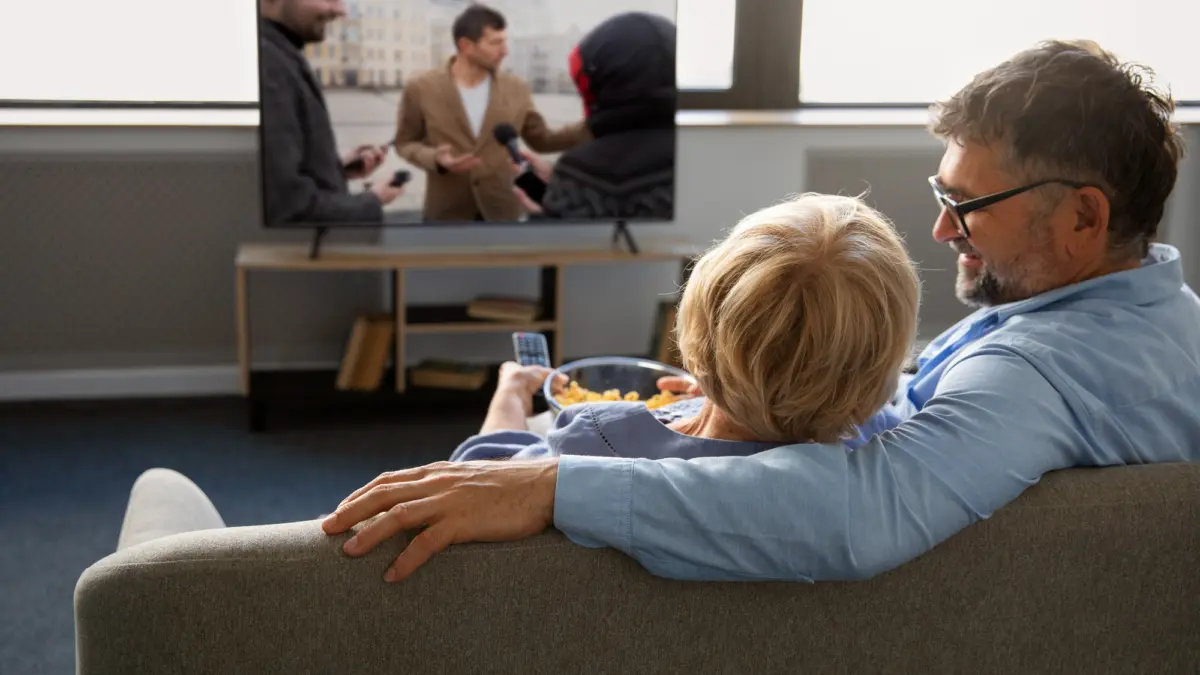
I was sitting on the couch in my living room in Pittsburgh, beside my daughter, with a bowl of popcorn between us and the television already tuned to Channel 9.
Two hundred and thirty miles away, in a split-level house in Lima, Ohio, my mother dropped the remote control on her kitchen floor when my face appeared on the screen. Under it, in white letters on a blue bar:
Dr. Morgan Carpenter — Chief of Pediatric Surgery, Mercy Children’s Hospital.
I was thirty-six years old. For sixteen years, my parents had told everyone we knew that I was a pregnant college dropout. A cautionary tale. Girls like her.
That night, I let the television correct them.
Part Two: The Red Case
That Tuesday started twelve hours earlier, while it was still dark outside Mercy Children’s.
At five-forty in the morning, I stood in front of the surgical board outside the operating rooms on the fourth floor. Most of the cases were in black. One was in red. Red is the color we reserve for the highest-risk procedures of the day.
OR 4 — 06:30 — Fox, Holly — 24w — TTTS — Fetoscopic laser ablation — Carpenter.
Holly Fox. Twenty-four weeks pregnant with identical twin boys. Twin-to-twin transfusion syndrome.
The twins shared a single placenta. And the blood vessels connecting them were unbalanced. One baby was pumping blood to the other through abnormal connections in the placenta. The donor twin was shrinking, running out of fluid. The recipient twin was overloaded, his heart straining under the extra volume.
Without intervention, both babies could be gone within two weeks.
With intervention, a laser procedure, done through a tiny scope inserted into the womb to seal off the abnormal vessels one by one, I put their chances of both surviving at around ninety-four percent.
Holly Fox was also my cousin.
Holly was the golden girl. The one whose name was always held up at every Easter dinner as an example. Pretty, blond, a cheerleader, a nursing student, engaged at twenty-two to a dentist’s son.
And my name was always held up as the warning.
The last time I’d seen Holly, I was twenty. I was standing in my parents’ kitchen in Lima, eight months pregnant, with a suitcase. She was twenty-two. She’d come over with her mother to drop off a casserole. She saw me in the kitchen doorway. She looked at my stomach.
And she said, loud enough for everybody to hear:
“Thank God my mother raised me right. Unlike Morgan.”
Part Three: Staying
When Holly’s case came in, referred from her obstetrician in Columbus, I could have transferred her to a colleague. I thought about it. For about thirty seconds.
There are only a handful of surgeons in the country who do fetoscopic laser surgery for twin-to-twin transfusion. I was the only one in western Pennsylvania and eastern Ohio who’d done it thirty-three times. The next closest was in Cincinnati. Or Philadelphia.
Holly’s babies didn’t have time for a transfer. And they didn’t have time for my history.
So I stayed.
At six-thirty, Holly was on the table in Operating Room 4.
She didn’t know who I was. Not at first. She’d been sedated for the procedure. Her husband, Ryan, the dentist’s son, now a dentist himself, was in the family waiting room. They lived in Columbus. They’d driven up the night before in a panic.
I hadn’t met them. My fellow had done the consultation. My name was on the paperwork. M. Carpenter, MD. Holly didn’t recognize it. Or didn’t remember.
Part Four: Seventeen Degrees
At six-forty, I inserted the fetoscope. A thin tube, three millimeters wide, through a tiny incision in Holly’s abdomen, guided by ultrasound, into the amniotic sac of the recipient twin.
On the screen, the inside of the womb glowed amber and red. The placenta. The umbilical cords. The tiny shapes of two babies.
And the vessels. Running across the surface of the placenta like rivers on a map. Some of them connecting one baby’s circulation to the other.
I started sealing them. One at a time. With short pulses from a laser fiber threaded through the scope.
Seven. Eight. Nine. Ten.
At seven-fifteen, I found something.
A branch vessel. Small. Hidden under the edge of the recipient twin’s umbilical cord. No ultrasound had shown it. No MRI had shown it.
And as I moved the scope to reach it, both babies’ heart rates started dropping.
On the monitor, the numbers fell. One forty. One thirty. One twenty-two.
My surgical fellow, Dr. Raj Patel, standing beside me, caught his breath.
The room went silent.
“Adjusting angle seventeen degrees,” I said. “Everybody hold.”
Nobody moved. Not the anesthesiologist. Not the scrub nurse. Not Raj. Nine people in Operating Room 4, holding perfectly still.
I tilted the scope. Seventeen degrees. Very slowly. The vessel came into view.
I sealed it. One pulse. Two.
On the monitor, the heart rates paused. Then climbed. One twenty-eight. One thirty-six. One forty-four.
Raj let out his breath.
At seven thirty-eight, I tied the last suture.
Both babies were stable. Both hearts strong.
Part Five: The Sleeve
Holly woke up in recovery at nine-fifteen.
I was sitting beside her bed when she opened her eyes. I’d taken off my surgical cap. My dark hair was pulled back. I was wearing navy scrubs with DR. M. CARPENTER — PEDIATRIC SURGERY embroidered over the pocket.
She looked at me. Confused. Groggy. Then her eyes went to the embroidery on my scrubs.
Then back to my face.
I watched her recognize me.
She didn’t say anything. She just stared.
I turned the ultrasound monitor beside the bed so she could see it.
Two babies. Two hearts. Flickering. Strong.
“Both of them,” I said. “Both of them are okay, Holly. The procedure went well.”
Holly reached out from the hospital bed. Her hand was shaking. She grabbed the sleeve of my scrubs. Hard.
“Morgan,” she said. Her voice was hoarse. “You could have let someone else do this.”
“I’m the one who knows how,” I said. “And you’re my patient.”
She held on to my sleeve for a long time. She didn’t let go. Tears were running down her face, into her hair, onto the hospital pillow.
She didn’t say anything else.
She didn’t have to.
Part Six: Five Seconds
In the hallway outside recovery, I leaned against the wall.
For exactly five seconds. I counted.
Then I stood up straight and walked to my office.
My office is on the fifth floor of Mercy Children’s. A corner room with a window looking out over the Allegheny River and the bridges and the hills of Pittsburgh. A desk covered in journals and charts. A bookshelf. A whiteboard with the week’s surgical schedule.
And on the wall behind my desk, three framed photographs.
Ellie at two, asleep in a laundry basket in the corner of a library carrel while I studied anatomy.
Ellie at five, standing on her chair in the auditorium at my medical school graduation, clapping.
Ellie at fifteen, in her first-chair violin seat at the Pittsburgh Youth Symphony.
On my desk was a pink sticky note. From Janet Kowalski in the hospital’s public relations office.
Channel 9 wants to do a feature on the prenatal surgery program. They’d like to interview you. Today if possible. Can you call me?
I looked at the note for a long time.
Part Seven: Ellie’s Question
A month earlier, on a Sunday night in February, Ellie and I were sitting at our kitchen table eating takeout pad thai. She was doing her chemistry homework. I was reviewing a case.
She looked up from her textbook.
“Mom,” she said. “Do you ever wonder if they know? Your family? What you do?”
I put down my fork.
Ellie was almost sixteen. She’d known about my parents for years. I’d never hidden it from her. I’d told her the truth when she was eight and asked why she didn’t have grandparents like the other kids at school. Carefully. Gently. Without making them monsters. They wanted me to give you to another family. I didn’t want to. So I left.
She’d never met them. She’d never seen a picture of them, except the one Easter photo I’d saved in a folder on my computer.
“Sometimes,” I said.
“Do you want them to know?” Ellie asked.
I thought about it.
“I want them to find out,” I said slowly, “the way everybody else does. From somebody who isn’t me. From a source they can’t spin.”
Ellie thought about that.
“Like the news?” she said.
We both laughed. Ellie laughed so hard she snorted pad thai noodles. We laughed until we were crying.
It was a joke. A month earlier.
Now I picked up my office phone. I called Janet Kowalski.
“Schedule it,” I said.
Part Eight: April 2010
To understand why that interview mattered so much, you have to go back sixteen years.
To April 2010.
I was twenty years old. A junior at Ohio State University, in Columbus. Premed. A biology major with a 3.9 grade point average. I’d wanted to be a doctor since I was six, when I watched a pediatrician set my little brother’s broken arm in the emergency room at Lima Memorial and decided she was the bravest person in the world.
And I was eight months pregnant.
The father was a boy I’d dated for a year. A chemistry major named Jordan. When I told him I was pregnant, in October, he said he wasn’t ready. He transferred to a school in California in January. I haven’t heard from him since. I didn’t go after him. I didn’t want anything from someone who’d run.
I’d hidden it from my parents for eight months. Big sweatshirts. Phone calls instead of visits. Excuses for Thanksgiving and Christmas. I have finals. I have a lab. I have to work.
But I couldn’t hide it anymore. The baby was due in June.
So on a Saturday morning in April, I drove four hours from Columbus to Lima. In my old Toyota Corolla. With my hands shaking on the steering wheel the whole way.
Part Nine: The Oak Table
My parents were waiting at the kitchen table when I walked in.
The oak table. The big one my grandfather made, that’s been in my parents’ kitchen since 1985. I’d done my homework at that table every night for twelve years. I’d carved my initials into the underside of it with a compass when I was ten.
My mother, Deborah, sat on one side. My father, Roger, on the other. My mother was the head of the women’s guild at St. Rose Catholic Church. My father was the controller at a manufacturing plant on the east side of Lima. They were the kind of people other people described as pillars of the community.
I sat down across from them. I put my hand on the table. There’s a dark knot in the oak, near the edge, shaped a little like a heart. I’d traced it with my finger a thousand times as a kid when I was nervous.
I traced it now.
“I’m pregnant,” I said. “I’m due in June. And I’m keeping the baby.”
Part Ten: The Check
My mother’s first words were:
“How could you be so careless?”
My father didn’t say anything. He stood up. He left the kitchen.
I heard him go down the hall to his study. I heard a drawer open and close.
He came back with his checkbook. The big leather one he kept in the top drawer of his desk.
He sat down. He wrote a check. He tore it out. He slid it across the oak table to me.
Pay to the order of Morgan Carpenter. Twenty-eight thousand dollars.
One year of tuition at Ohio State. Plus room and board.
“We’ve already talked to Father Murphy,” my mother said. “At St. Rose. There’s a Catholic couple in Findlay. They’ve been trying for years. They can’t have children. They’ll take the baby. It’ll be private. Closed. Nobody ever has to know.”
She folded her hands on the oak table.
“You go back to school in the fall,” she said. “You finish your degree. You go to medical school. And nobody in this town ever has to know what you did.”
I looked at the check.
“You want me to give away my baby,” I said.
“We want you to be smart,” my mother said.
Part Eleven: “Girls Like Me”
“And if I keep her?” I asked.
I already knew it was a girl. I’d found out at my twenty-week ultrasound. Alone. At the student health center.
My mother looked at me for a long time.
“Then you do it without us,” she said.
I looked at the check on the oak table. Twenty-eight thousand dollars.
Then at my mother. Then at my father.
“I’m keeping her,” I said.
My mother stood up.
“If you walk out that door,” she said, “you can’t come back. Do you understand me, Morgan? Not for Christmas. Not for Easter. Not ever.”
I stood up too. I picked up my car keys.
I left the check on the table.
I walked to the front door. My father followed me. He stood in the hallway with his arms crossed.
“You’ll end up on welfare,” he said. “Living in some apartment with a different boyfriend every month. Sleeping around. Proving everybody right about girls like you.”
I turned around.
“Girls like me?” I said.
He didn’t answer.
I looked at my father. The controller at the plant. The pillar of the community. The man who taught me to ride a bike in the church parking lot on Sundays.
“I’ll mail you my graduation announcement,” I said. “From medical school. And you won’t believe it’s real.”
Then I walked out the door.
Part Twelve: June
Ellie was born on June fourteenth. At Ohio State’s Wexner Medical Center, in Columbus.
I was alone in the delivery room. My roommate was in Michigan for the summer. My parents didn’t know I was in labor. Jordan was in California.
A night nurse named Gloria held my hand. A big, gray-haired woman from Jamaica, who’d been a labor and delivery nurse for thirty years. She held my hand for eleven hours. When I was screaming at four in the morning, she put her forehead against mine and said, You can do this, baby. You can do this. I’ve got you.
When Ellie came out, at five-twenty in the morning, Gloria was the first person to say, “It’s a girl.”
I named her Eleanor. After my grandmother, my father’s mother, who died when I was twelve. The only person in my family who ever told me I’d make a good doctor.
Part Thirteen: The Years
I didn’t go back to Ohio State that fall. I couldn’t afford it. Not without the check.
I transferred to Youngstown State University. A state school in northeast Ohio, near the Pennsylvania border. In-state tuition. A Pell Grant. A scholarship for single parents.
I worked nights as a custodian at St. Elizabeth’s Hospital in Youngstown. Mopping floors from eleven at night to five in the morning. I brought Ellie to a twenty-four-hour daycare run by the hospital for its staff.
On weekends, I worked at a different daycare. A church one. They let me bring Ellie for free.
And whenever Ellie was asleep, I did medical transcription. Typing up doctors’ dictated notes for a company in Cleveland. Eight cents a line. At two in the morning, on a secondhand laptop, at our kitchen table, while she slept in a laundry basket beside me.
I studied organic chemistry with Ellie asleep on my chest. I memorized the Krebs cycle while I mopped the floors of the cardiac unit. I took the MCAT when she was two and a half. My mother’s mother, Grandma Ruth, who’d died two years earlier, had left me eleven hundred dollars. I used it for the test fee and a babysitter.
My family told everybody I’d dropped out.
That I was living in some apartment in Youngstown on welfare. With a baby. With no father. Exactly like my father predicted. Girls like her.
I didn’t correct them. I didn’t talk to them at all.
Every Easter, my mother’s side of the family took a big photograph on my Aunt Patricia’s front porch in Lima. Thirty-two relatives. Everybody in pastels. Holly in the front row, always.
In 2012, my aunt posted it on Facebook. Thirty-two smiling people on a porch. With the caption:
Blessed family. Blessed life. 🙏🌷
I wasn’t in it. Neither was Ellie.
I saved a screenshot. In a folder on my laptop. I named the folder Evidence.
Then I closed the laptop and went back to work.
Part Fourteen: Medical School
I got into medical school in 2011. The University of Pittsburgh. On a full scholarship. For first-generation and nontraditional students.
Ellie was one. We moved to a one-bedroom apartment in the Oakland neighborhood of Pittsburgh, two blocks from the medical school. I studied at the kitchen table while she played on the floor. I brought her to the library on weekends in her stroller. She slept in a laundry basket in the corner of my carrel. Another student took a picture of her once. That’s the one on my office wall now.
I graduated in May 2015.
The ceremony was at the Petersen Events Center at Pitt. Two thousand people in the audience. When they called my name, Morgan Elizabeth Carpenter, Doctor of Medicine, I walked across the stage in my blue robe and my velvet tam.
And from the third row of the audience, I heard a little girl’s voice. Over two thousand people.
“THAT’S MY MOM!”
Ellie was standing on her seat. Five years old. In a purple dress. Clapping as hard as she could. A woman sitting beside her was holding her by the back of her dress so she wouldn’t fall.
I mailed my graduation announcement to my parents’ house in Lima. The next week. Like I promised.
A cream-colored card. The University of Pittsburgh School of Medicine announces that Morgan Elizabeth Carpenter has been awarded the degree of Doctor of Medicine. With a little photo of me in my robe.
I never heard back. Not a word.
I assumed they’d thrown it away. Or returned it unopened. I never knew which.
Part Fifteen: The Rest
After medical school, I did a general surgery residency at the University of Pittsburgh Medical Center. Five years. Eighty-hour weeks. Ellie went to a school near the hospital and spent afternoons in the residents’ lounge doing homework while I scrubbed in for surgeries. The nurses adored her. They taught her to play poker.
Then a two-year fellowship in pediatric surgery. At Mercy Children’s. Then a staff position. Then a second fellowship, a year long, in fetal surgery. At Children’s Hospital of Philadelphia. Ellie and I lived in a tiny apartment in West Philly for a year and she learned to love cheesesteaks.
When I came back to Mercy Children’s in 2020, I asked the chief of surgery if I could start a prenatal intervention program. Fetal surgery. Laser procedures for twin-to-twin transfusion. Shunts. Spina bifida repair. Things nobody in western Pennsylvania was doing.
He said yes. He gave me one operating room, one nurse coordinator, and a closet for an office.
I built it from scratch.
In January 2024, I was named Chief of Pediatric Surgery at Mercy Children’s Hospital. At thirty-four. The youngest in the hospital’s ninety-year history.
By the time Holly Fox was on my table, the prenatal intervention program had treated more than a hundred high-risk pregnancies. And saved nearly two hundred babies.
My parents never looked for me. So they never knew.
Part Sixteen: Andrea Perry
The Channel 9 interview was at three-fifteen that afternoon. In the hospital’s family garden on the second floor, under a skylight, beside a fountain.
The reporter was a woman named Andrea Perry. Forty-something, with short natural hair and big hoop earrings and a warm, sharp way of asking questions. She’d been a health reporter in Pittsburgh for fifteen years. She’d done her homework.
She asked about the program. About twin-to-twin transfusion. About the laser procedure. About the two hundred babies. About Holly Fox’s twins, without using Holly’s name. I’d gotten Holly’s permission at noon. She’d said yes immediately.
Then Andrea leaned forward.
“Dr. Carpenter,” she said. “What drew you to this work? To saving babies before they’re even born?”
I looked at the camera.
I’d been thinking about this moment for sixteen years. Since I walked out of my parents’ house with my car keys and left the check on the oak table.
And I finally opened the door.
“I became a mother at twenty,” I said. “In my junior year of college. I was a premed student, and I got pregnant. And I decided to keep my daughter.”
Andrea Perry didn’t say anything. She just waited.
“I finished college,” I said. “Then medical school. Then residency. Then two fellowships. While raising my daughter. Ellie. She’s almost sixteen now. She plays the violin. She wants to be a neonatologist.” I smiled. “She says somebody has to take care of the babies after I’m done with them.”
Andrea stared at me for a moment.
“You did all of that,” she said slowly. “Alone? As a single mother?”
“With a lot of help,” I said. “Nurses. Daycare workers. Professors. Strangers. A night nurse named Gloria who held my hand for eleven hours when Ellie was born.” I paused. “But not my family. No.”
Andrea was quiet for a long moment.
Then she said what everybody always says.
“Your family must be so proud of you.”
I smiled. But I could feel that it didn’t reach my eyes.
“I’ll find out tonight,” I said.
Part Seventeen: The Broadcast
The story aired at six o’clock that evening. On the Channel 9 evening news. Four minutes and twenty seconds. The lead story in the health segment.
Ellie and I watched it on our couch. In our house in Squirrel Hill. A brick rowhouse with a front porch and a magnolia tree, that I bought in 2022. With a bowl of popcorn between us.
There was footage of the operating room. Of me at the surgical board. Of the fetoscope screen, amber and red. Of Holly, in recovery, smiling, with her hand on her stomach, holding up two fingers. Two healthy babies. She’d insisted on being filmed.
And then my interview. In the garden. Under the skylight.
I became a mother at twenty.
At six-oh-seven, my phone buzzed on the coffee table.
I picked it up.
It was the family group chat. The Carpenter-Fox Family 🙏. My mother’s side. Aunt Patricia. My mother. Holly. Cousins. Forty-one people.
I’d been in it since 2009. I’d muted it in April 2010. I’d never left it. I’d never once posted. I’d never read a single message in fifteen years.
It had just lit up with a new message.
Turn on Channel 9 right now.
I looked at who’d sent it.
I stopped breathing.
Roger Carpenter.
My father.
Part Eighteen: Messages
Ellie leaned over to look at my phone.
“Is that…” she said.
“My dad,” I said.
The messages started coming. Fast. One after another.
Aunt Patricia: Oh my God
Aunt Patricia: Is that MORGAN???
Cousin Kyle: holy crap
Cousin Jenna: Chief of Pediatric Surgery?????
Uncle Dave: Wait. She’s a DOCTOR?
Cousin Jenna: She said she has a daughter. Almost 16. Wait.
Aunt Patricia: Debbie, did you know about this???
Then a message from Holly.
Holly Fox: She saved my babies this morning. Both of them. She did the surgery. I didn’t know it was her until I woke up.
Holly Fox: I said something terrible to her 16 years ago. In Aunt Debbie’s kitchen. She did the surgery anyway.
Holly Fox: I’m so ashamed.
The group chat went silent for almost a full minute.
Then one more message.
From my mother.
Deborah Carpenter: Roger, how did you know to turn on the news?
Part Nineteen: What My Mother Didn’t Know
I didn’t find out the answer to that question until four days later.
On Saturday morning, my doorbell rang. At nine o’clock.
I opened the front door.
My father was standing on my porch.
He was sixty-six. Older than I remembered. Thinner. His hair had gone completely white. He was wearing a tan windbreaker and khakis and the same brown loafers he’d worn to church every Sunday of my childhood.
He was holding a manila folder. Thick. Worn soft at the edges.
He looked at me in my doorway. In my jeans and my old Pitt Med sweatshirt.
He didn’t say anything for a long time.
“Morgan,” he said finally.
“Dad,” I said.
“Your mother doesn’t know I’m here,” he said. “She thinks I’m at a golf tournament in Findlay.” He swallowed. “Can I come in? Just for a few minutes. I’ll leave whenever you want.”
I looked at him for a long time.
Then I stepped aside.
Part Twenty: The Folder
He sat down at my kitchen table. A pine one, from IKEA. Nothing like the oak table in Lima.
Ellie was upstairs. Practicing her violin. Brahms. We could hear it through the ceiling.
My father heard it too. He looked up at the ceiling. His face did something complicated.
“Is that her?” he asked. “Your daughter?”
“Ellie,” I said. “Eleanor. After your mother.”
My father closed his eyes.
Then he opened the manila folder. And he laid it on the table between us.
And I stared at what was inside.
My graduation announcement. From the University of Pittsburgh School of Medicine. May 2015. The cream-colored card with the little photo of me in my robe.
Under it, a newspaper clipping. From the Pittsburgh Post-Gazette. 2020. Mercy Children’s Launches Fetal Surgery Program. With my picture.
Another clipping. From the hospital’s newsletter, printed off the internet. 2022. Dr. Morgan Carpenter Performs Region’s First Fetal Spina Bifida Repair.
Another. 2024. Mercy Children’s Names Carpenter Chief of Pediatric Surgery.
A printout of my faculty profile from the University of Pittsburgh website.
A printout of a research paper I’d published in the Journal of Pediatric Surgery. In 2023. Highlighted in yellow in places. With notes in the margins in my father’s tiny, careful handwriting. Look up “anastomoses.” Ask Dr. Gupta what this means.
And at the bottom of the folder, a program.
From the University of Pittsburgh School of Medicine Commencement. May 2015. Petersen Events Center.
With my name circled in blue ink.
Part Twenty-One: The Back Row
I looked up at my father.
“You were there,” I said. “At my graduation.”
He nodded slowly.
“Your announcement came on a Tuesday,” he said. “Two weeks before the ceremony. I got the mail first. Your mother was at guild.” He looked at the cream-colored card. “I read it at the mailbox. At the end of the driveway. I read it about fifty times.”
He swallowed.
“I didn’t tell her,” he said. “I put it in my briefcase. I told her I had a conference in Pittsburgh that weekend. For work. I drove up on Saturday morning.”
“I sat in the very back row,” my father said. “Of the upper deck. In the corner. Where you couldn’t see me.” His voice cracked. “When they called your name, a little girl in a purple dress stood up on her seat in the third row. And she yelled, That’s my mom!“
He put his hand over his face.
“That’s the first time I ever saw her,” he said. “My granddaughter. From the back row of the upper deck. Through a pair of binoculars I bought at a Walmart in Youngstown on the way.”
“I left before it was over,” my father said. “Before you came out. I couldn’t…” He stopped. “I’d told you that you’d end up on welfare. Sleeping around. I’d called you girls like you. I couldn’t walk up to you after that and say congratulations.”
He looked at the folder on my kitchen table.
“So I just kept watching,” he said. “From the back row. For nine years. I set up a Google alert for your name. Every time something came up, I printed it. I kept it in this folder. In the bottom drawer of my desk at work. Where your mother wouldn’t find it.”
Part Twenty-Two: Why Mom Didn’t Know
“Why didn’t you tell Mom?” I asked.
My father looked at his hands on my IKEA table.
“Because she’d told everybody you dropped out,” he said. “Her sister. The guild. Father Murphy. Everybody at St. Rose.” He shook his head. “For five years, by the time your announcement came. She’d built a whole story. Poor Morgan. On welfare in Youngstown. We tried to help her and she wouldn’t let us.“
He looked at me.
“If I’d shown her that announcement,” he said, “she’d have had to admit she was wrong. In front of everybody. In front of her sister.” He shook his head. “Your mother can’t do that, Morgan. She’s never been able to. Not since she was a girl.”
“So you let her keep telling it,” I said. “For nine more years. That I dropped out. That I was on welfare. While you had my medical school diploma in your desk drawer.”
My father closed his eyes.
“Yes,” he said.
“And Tuesday night,” I said. “The group chat. Turn on Channel 9. That was you.”
“My Google alert went off at four o’clock,” my father said. “Channel 9 posted a preview on their website. Tonight at six: The Pittsburgh surgeon saving babies before birth. With your picture.” He almost smiled. “I sat at my desk at work and looked at it. And I thought, She’s going on television. In front of everybody. Debbie can’t hide it anymore.“
He looked at me.
“So I decided,” he said, “I wasn’t going to let her hide it anymore either.”
Part Twenty-Three: The Remote
“Tell me about the remote,” I said.
My father almost laughed.
“Your mother was making dinner,” he said. “Meatloaf. I was in the living room with the TV on. Channel 9. When the story came on, I called her. Debbie, come here. She came in from the kitchen with the TV remote in one hand and a potholder in the other.”
He shook his head.
“She saw your face,” he said. “Under the words Chief of Pediatric Surgery. And she just… dropped it. The remote. On the floor. The back came off and the batteries rolled under the couch.” He looked at me. “She stood there in the living room and watched the whole thing. Four minutes. Without moving. With the potholder still in her hand.”
“What did she say?” I asked.
My father was quiet for a long time.
“When you said I became a mother at twenty,” he said, “she sat down on the floor. Right there. In the living room. Next to the batteries.”
He looked at me.
“And when the reporter said, Your family must be so proud,” he said, “and you said, I’ll find out tonight,” he paused. “Your mother started to cry. I’ve been married to her for forty-one years, Morgan. I’ve seen her cry four times. At her mother’s funeral. At her father’s. When the Browns lost in the playoffs in 2003.” He almost smiled. “And Tuesday night. On the living room floor. With the potholder.”
Part Twenty-Four: The Check
My father reached into the inside pocket of his windbreaker.
He took out something folded. Small. Old. He unfolded it and laid it on my kitchen table on top of the manila folder.
A check.
Pay to the order of Morgan Carpenter. Twenty-eight thousand dollars. Dated April 17, 2010. Signed Roger J. Carpenter.
The check I’d left on the oak table.
“You kept it,” I said.
“Your mother threw it in the trash,” my father said. “After you left. I took it out that night. I’ve had it in my wallet for sixteen years.”
He pushed it across the table toward me.
“It’s no good anymore,” he said. “It’s sixteen years old. The account’s closed.”
He reached into his pocket again. He took out another check. New. Crisp.
Pay to the order of Eleanor Carpenter. Twenty-eight thousand dollars. Dated that morning.
“For college,” my father said. “For Ellie. For neonatology.” His voice broke completely. “It’s sixteen years late. It’s not enough. It’ll never be enough. But it’s hers.”
Part Twenty-Five: Ellie
That’s when the violin upstairs stopped.
I heard footsteps on the stairs.
Ellie came into the kitchen. Fifteen years old, almost sixteen. Tall, with my dark hair and her own brown eyes, in leggings and an oversized Pittsburgh Youth Symphony sweatshirt, holding her violin bow.
She stopped in the kitchen doorway.
She looked at the old man sitting at our kitchen table. With a manila folder full of newspaper clippings in front of him. And two checks.
She knew who he was. I’d shown her the one Easter photo in my Evidence folder. He was in the back row of it.
“You’re my grandfather,” Ellie said.
My father stood up. Slowly. He held on to the back of the chair.
“I am,” he said. “I’m… Roger. Roger Carpenter.”
Ellie looked at him for a long time. With the bow in her hand.
“Mom said you told her she’d end up on welfare,” she said. “When she was pregnant with me. That she’d sleep around. That she was a girl like that.“
My father flinched.
“I did,” he said. “I said that.”
Ellie looked at him. Very seriously. The way she looks at a piece of music she hasn’t figured out yet.
“She didn’t, though,” Ellie said. “She mopped floors at night and typed up doctor notes and went to medical school and became the youngest chief of surgery in the history of Mercy Children’s. And she saved my cousin’s babies on Tuesday. The cousin who said she wasn’t raised right.”
My father’s eyes filled up.
“I know,” he said. “I know she did.”
“I know you know,” Ellie said. She nodded at the manila folder. “You’ve been watching. Mom told me. You were at her graduation. In the back row.”
“With binoculars,” my father said.
“With binoculars,” Ellie said. And for the first time, she almost smiled.
“You saw me stand on my chair,” she said.
“I saw you stand on your chair,” my father said. “In a purple dress. And yell That’s my mom! so loud the whole arena heard you.” He wiped his eyes. “I’ve thought about it every day for nine years.”
Part Twenty-Six: Holly
Holly called me the next week.
She was home in Columbus. On bed rest. Twenty-six weeks. Both babies growing. Both hearts strong.
“Morgan,” she said. “I need to say something. And I need you to let me say it.”
“Okay,” I said.
“Sixteen years ago,” Holly said, “in your mom’s kitchen, I said, Thank God my mother raised me right, unlike Morgan.” She took a breath. “I was twenty-two. I’d just gotten engaged. I thought I was better than you. I thought you’d ruined your life.”
I didn’t say anything.
“And on Tuesday,” Holly said, “I was lying on your operating table. And my babies were dying. And you were the only person in the whole state who could save them.” Her voice cracked. “You could have walked away. You could have sent me to Cincinnati. Nobody would ever have known. And you stayed.”
“I’m sorry, Morgan,” Holly said. “For the kitchen. For the Easter photos. For every time I let my mom tell people you were on welfare.” She was crying now. “For letting everybody pretend you didn’t exist. For sixteen years.”
“Holly,” I said. “You were twenty-two. You repeated what your family told you.”
“I’m a nurse now,” Holly said. “A NICU nurse. At Nationwide Children’s in Columbus. I take care of babies every day. Babies whose moms are nineteen and twenty and alone.” She swallowed. “I’ve been so kind to them. Every single one. And I never once thought about my own cousin.”
Part Twenty-Seven: Deborah
My mother didn’t call. Not for three weeks.
Then, on a Sunday in April, Easter Sunday, she did.
I almost didn’t answer. Then I did.
“Morgan,” she said.
Her voice was small. Older. Nothing like the voice at the oak table.
“Hi, Mom,” I said.
She didn’t say anything for a long time.
“Your father showed me the folder,” she said finally. “Last week. All of it. The clippings. The graduation program. The binoculars.” She paused. “He told me about the back row.”
I waited.
“Nine years,” my mother said. “He knew for nine years. And he never told me.” Her voice broke. “Because he knew I’d never be able to say I was wrong.”
“I told everybody you dropped out,” my mother said. “My sister. The guild. Father Murphy. Everybody at St. Rose. For sixteen years. I told them you were on welfare in Youngstown. I told them we’d tried to help you and you wouldn’t let us.” She was crying. “And you were mopping floors. And typing at two in the morning. And going to medical school. While I sat at the Easter table telling everybody we were blessed.”
Part Twenty-Eight: Why
“Why, Mom?” I asked. “Why did you need me to be a failure?”
My mother was quiet for a long time.
“Because I was one,” she said.
I didn’t understand.
“I was pregnant at nineteen,” my mother said. “Before your father. In 1977. My parents found out. They sent me to my aunt’s house in Toledo for the last four months. They told everybody at church I was studying in Toledo. And when the baby was born, they gave her to a family through Catholic Charities. A closed adoption. I held her for twenty minutes.”
I couldn’t breathe.
“I never told your father,” my mother said. “Not for years. I never told anybody. I went home to Lima and married Roger and joined the guild and had you and your brother and became the woman who runs the Easter breakfast.” She was sobbing now. “And when you sat at that table and told me you were keeping your baby, I wanted to scream. Because I didn’t. Because I let them take mine. And if you could keep yours, if you could do it, then I could have done it too. And I didn’t.”
I sat on my couch in Pittsburgh with the phone against my ear and couldn’t say anything.
“So I needed you to fail,” my mother said. “I needed you to be on welfare in Youngstown. So I could keep telling myself I made the right choice. So I could keep telling myself it was impossible.”
She took a shaking breath.
“And then Tuesday night,” she said, “I turned on the television, and there you were. Chief of Pediatric Surgery. With your daughter. Almost sixteen. And I sat down on the living room floor. And I thought about a little girl I held for twenty minutes in 1977. In Toledo. Who’d be forty-eight years old now.”
Part Twenty-Nine: Easter
Holly’s twins were born on June eighth. At thirty-four weeks. By C-section, at Nationwide Children’s Hospital in Columbus.
Two boys. Healthy. Five pounds two ounces and four pounds eleven ounces. They spent nine days in the NICU where Holly works. Her own coworkers took care of them.
Holly named the bigger one Ryan, after his father.
She named the smaller one Morgan.
“It’s a boy’s name too,” Holly told me on the phone, crying. “Morgan Carpenter Fox. I hope that’s okay.”
I had to sit down.
“It’s okay,” I said.
Part Thirty: The Table
The next Easter, a year after the broadcast, my Aunt Patricia hosted Easter brunch at her house in Lima. Like always.
She called me in February to invite me. Me and Ellie. Personally. On the phone.
“I’m sorry, Morgan,” Aunt Patricia said. “For every Easter. For the Facebook posts. Blessed family.” She was quiet for a moment. “We weren’t blessed. We were missing somebody. Two somebodies.”
We drove to Lima on Easter Sunday morning. Four hours. Ellie drove half of it. She’d just gotten her license.
Aunt Patricia’s house is a big brick colonial on a street lined with maple trees, with a wide front porch where they take the family photo every year.
When we pulled into the driveway, everybody was already there. Thirty-four people now. On the porch and the lawn, in pastels.
Holly was in the front row with a twin on each hip. Ryan and Morgan, ten months old, in matching blue sailor suits.
My father was standing at the top of the porch steps.
And my mother was beside him.
She came down the steps when she saw our car. Slowly. In a pale yellow dress. Holding on to the railing.
She stopped at the bottom of the steps. In front of Ellie.
She looked at her granddaughter for a long time. Sixteen now. Tall, with my dark hair and her own brown eyes.
“Eleanor,” my mother said.
“Ellie,” Ellie said.
“Ellie,” my mother repeated. Her voice broke. “I’m your grandmother. I’m… I’m so sorry it took me sixteen years to say that.”
Ellie looked at her for a long moment. Then she looked at me.
I didn’t say anything. It was hers to decide.
Ellie held out her hand.
“Hi, Grandma,” she said.
Part Thirty-One: The Photo
Aunt Patricia’s neighbor took the photo. Like every year.
Thirty-six people on the front porch. Everybody in pastels. Holly in the front row with the twins. My father in the back row. My mother beside him.
And me and Ellie in the middle. Right in the middle. Where Aunt Patricia put us.
That night, Aunt Patricia posted it on Facebook.
The same porch. The same pastels. The same maple trees.
But a different caption.
Easter. The whole family, for the first time in 16 years. Welcome home, Morgan and Ellie. We were wrong.
I saved a screenshot.
But not in the Evidence folder.
I made a new one. On my laptop that night, in the guest room at my parents’ house in Lima, where Ellie and I stayed because my mother asked us to.
I named it Home.
Part Thirty-Two: The Oak Table
Before we left Lima the next morning, I went into my parents’ kitchen.
The oak table was still there. My grandfather’s table. Where I sat sixteen years earlier and told them I was keeping my baby.
I sat down in my old chair. I put my hand on the table. I found the knot in the wood near the edge, the one shaped a little like a heart.
I traced it with my finger.
My mother came in. In her bathrobe. With two cups of coffee.
She set one down in front of me. She sat down across from me. In the same chair she sat in sixteen years ago.
Neither of us said anything for a while.
Then my mother reached across the oak table. She put her hand on top of mine. On top of the knot shaped like a heart.
“Morgan,” she said. “Can I ask you something?”
“Okay.”
“The little girl,” my mother said. “In 1977. In Toledo.” She swallowed. “You find people, don’t you? With your work. You know people at hospitals. Records.”
I looked at my mother.
“I’d like to know,” my mother said, “if she’s okay. That’s all. I don’t need to meet her. I just want to know if somebody stood on a chair for her.”
I turned my hand over. Under hers. And held on.
“I’ll help you look, Mom,” I said.
Upstairs, I heard Ellie’s footsteps. Then, through the ceiling, faintly, the opening bars of Brahms. On her violin. In the room that used to be mine.
My mother closed her eyes and listened.
“She’s very good,” she said quietly.
“She is,” I said.
“She gets it from you,” my mother said. “The not giving up.”
I didn’t answer. I just held my mother’s hand across the oak table, on top of the knot shaped like a heart, and listened to my daughter play.