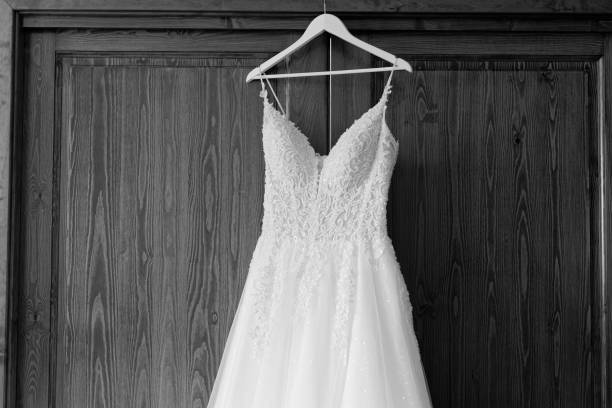
My sister gave me back her reading forty minutes before my wedding.
She’d folded the three pages into quarters, so tight the creases had gone white. She held them out to me in the doorway of the bride’s room at Bethany Lutheran Church in Madison, Wisconsin, and she didn’t come in. She just stood there in the hallway in her blue suit, holding out the pages, with her other hand in her pocket.
I took them. When I unfolded them, I could see the notes she’d written in the margins in pencil. “Slow down” at the top of the first page. “Breathe” halfway down the second. On the third page, next to the last paragraph, she’d drawn a tiny little heart and then scribbled it out.
“Keep these, El,” I said, holding them back out to her. “You might want them later.”
“If I keep them,” Elise said, “you’ll be looking for me when it’s time. And I won’t be up there.”
“I’ll be looking for you anyway, El.”
She almost smiled. Almost.
She was wearing the blue suit she’d bought for my wedding. It was navy, with narrow lapels and a slim cut, and under it she had on a white shirt buttoned all the way to the top, without a tie. It fit her perfectly. She’d had it tailored at a shop on State Street, and she’d sent me pictures from the fitting room of two other suits she’d tried on first, a gray one and a black one, with the caption “help.” I’d voted for the blue one. So had Sutton. So had Sutton’s mother, actually, when I showed her the picture, and she’d said, “Oh, that’s very sharp.”
“I can still come get you when the music starts,” I said. “You don’t have to decide now.”
“Please just let me go sit down before everybody comes in,” she said. “Please, Nora.”
“We can walk in together. I want you beside me. That’s the whole point. That’s all I ever wanted.”
“I know you do,” she said. “But I can’t. Not after…” She looked down at her shoes. They were brown leather oxfords, brand new, polished. She’d shined them herself the night before. “I want to see you get married. Can I just do that? Please? Can I just sit in the second row and watch my sister get married?”
We’d practiced walking down the aisle together the night before, at the rehearsal. Elise kept stopping at the doorway to the sanctuary and asking which foot we were supposed to start on. Left or right. She asked three times. The third time, I told her nobody in the entire church would be looking at our feet.
“I’ll be looking at yours,” she’d said. “So I don’t step on your dress.”
I hated that it had come to this. I hated it so much that standing there in the doorway of the bride’s room with her pages in my hand, I could feel my face getting hot, and my eyes stinging, and I knew if I cried my makeup would run and I’d have to start over.
“Okay,” I said finally. “Okay. I’ll walk in on my own.”
Elise had picked the reading herself. Two months ago, she’d texted me the last paragraph at eleven o’clock on a Tuesday night, with the words “Too much?” underneath it. Then, about a minute later, she’d sent me a selfie of her own face, red and blotchy, with tears running down it.
I’d texted back: “Well, that settles who’s reading it.”
Now she turned around and went down the hallway toward the sanctuary to get her bag from the pew where she’d left it. I watched her go. She walked fast, with her shoulders up near her ears, the way she’s walked since she was a little girl whenever she’s trying not to cry.
I set her reading on the table beside my bouquet. The bottom page curled up against one of the white roses. I flattened it with my hand.
“I’m going to fix this, El,” I said, out loud, to nobody. “I promise.”
I should go back and explain how we got to that hallway.
My sister Elise is two years younger than me. She’s twenty-nine. She’s a structural engineer for a firm in Milwaukee that designs bridges, and she is, without any doubt, the smartest person in our family. She’s also the most stubborn, which is saying something in our family.
She’s worn pants since she was four years old.
I don’t mean she was a tomboy. She liked dolls fine. She liked art class and baking cookies with our grandmother and reading Little House on the Prairie in a blanket fort. She just didn’t like dresses. They itched, she said. They got in the way. You couldn’t climb anything in a dress, and you couldn’t sit cross-legged on the floor, and the wind blew them around and everybody could see your underwear.
Our mother did not accept this.
Our mother, Diane, is a woman of very firm opinions about what girls wear to church. Every Easter Sunday of our childhood, there was a fight. Mom would buy us matching Easter dresses from Kohl’s, pink and yellow, with lace collars and sashes that tied in big bows in the back. I’d put mine on, because I liked them, honestly. Elise would refuse. She’d lock herself in the upstairs bathroom. One year, when she was seven, she put her dress on over a pair of jeans, and Mom didn’t notice until we were standing in the receiving line shaking the pastor’s hand.
When she was twelve, she wore a pair of black slacks and a sweater to our grandfather’s funeral, and Mom didn’t speak to her for the whole car ride to the cemetery.
When she was seventeen, she wore a tuxedo to her senior prom. A rented one, from Men’s Wearhouse, with a bow tie and cummerbund. She went with three girlfriends from the robotics team, all four of them in tuxes, and they took pictures on our front porch. Mom refused to come outside. Dad took the pictures. He stood on the porch steps with his camera and said, “Well, you look very nice, Elise,” like he’d been told he had to say it.
By the time she was an adult, the fights had mostly stopped. Mostly. Elise wore what she wanted to Thanksgiving and Christmas, and Mom made small remarks, and Elise ignored them, and everybody ate their turkey.
Then I got engaged.
I met Sutton four years ago at a friend’s birthday party at a bowling alley on the east side. He’s a high school music teacher. He teaches band and choir at La Follette High School, and he’s the kind of teacher who knows every kid’s name and stays until seven o’clock helping some trombone player who can’t get his scales right. He’s funny and gentle and very tall and terrible at bowling. That night, he bowled a forty-seven. I beat him by ninety points. He asked me out anyway.
He proposed last Christmas Eve, on the frozen shore of Lake Monona, in the snow, with his knees getting soaked through his jeans. I said yes before he even finished the question.
The first thing I did, after I called Mom and Dad, was call Elise.
“I want you to walk me down the aisle,” I said.
There was a long silence on the line.
“What about Dad?” Elise asked.
That’s a fair question. In most families, the father walks the bride down the aisle. But our father, Richard, is not much of a talker, and not much of a hugger, and I’d known since I was eight years old that I wanted Elise beside me when I got married. Not walking behind me as a bridesmaid. Beside me. When I was eight and Elise was six, we used to stage pretend weddings in the backyard with our Barbies, and Elise was always the one who walked the bride down the aisle, a little Barbie in a dress made out of a Kleenex, holding hands with a little Barbie in a suit made out of a black sock.
“Dad’ll be fine,” I said. “He hates walking in front of people anyway. He’ll be relieved.”
“Are you sure?”
“I’ve been sure since I was eight.”
Elise was quiet again for a long time. Then she said, very quietly, “Okay.”
Then she said, “Can I wear a suit?”
“You can wear whatever you want, El.”
“I mean a real suit. Not a pantsuit. A suit.”
“El,” I said. “I don’t care if you wear a suit of armor. You’re walking me down the aisle.”
Dad really was relieved. He told me so in his way, which was to say, “Well, that sounds fine,” and go back to watching the Packers game.
Mom was a different story.
“Elise is going to walk you?” she said, at the kitchen table. “In front of everybody? Not your father?”
“Yes, Mom.”
“What will people think?”
“That I love my sister?”
Mom pressed her lips together into a thin line. She didn’t say anything else that day. But I saw her face. I saw her doing math in her head. I didn’t know yet what she was adding up.
Sutton and I paid for most of the wedding ourselves. It came to about twenty-eight thousand dollars altogether, which was most of our savings. We’d been putting money away for two years. Sutton’s parents gave us five thousand. My parents gave us eight thousand, toward the reception hall. Dad wrote the check at the kitchen table in March and handed it to me and said, “That’s for the hall. We wanted to help.”
I thanked him and hugged him. I didn’t know yet that he thought eight thousand dollars bought him a vote.
I spent two Saturdays choosing my dress. Sutton’s mother came with me the first Saturday, and Elise came the second. It was a strapless white satin gown with a fitted bodice and a long, full skirt and a little train, with corset lacing up the back. I loved it. Elise stood behind me in the three-way mirror at the bridal shop and said, “Oh, Nor,” and covered her mouth with her hand.
My mother didn’t come to either fitting. She said she had a headache both times.
Then, eleven days before the wedding, at my bridal shower in the fellowship hall of Bethany Lutheran, my mother cornered Elise by the punch bowl.
I didn’t hear it. I heard about it later. Elise told me in my car on the way home, staring out the passenger window.
“She asked what I’m wearing to the wedding,” Elise said.
“What did you say?”
“I told her the blue suit.”
“And?”
“And she said, ‘Elise, your sister’s wedding is not the place for one of your statements.’ And she said Pastor Ingrid would be uncomfortable. And Sutton’s family would be uncomfortable. And Grandma Ruth would be uncomfortable. And everybody would be looking at me instead of you.” Elise was quiet. “She said it would be selfish. On your day.”
I pulled the car over on Monroe Street, in front of a closed-up bakery.
“El. Look at me.”
She looked at me.
“It’s my wedding. I said you can wear the suit. That’s the end of it.”
“Okay,” she said. But I saw her face. She didn’t believe me.
And now I have to tell you about the morning of my wedding.
I got to the church at nine o’clock, with my hair already done and my makeup half finished. The ceremony was at two. My dress was hanging on a hook in the bride’s room, a little room off the side of the sanctuary with a long mirror and a couch and a box of tissues. Elise was meeting me at ten. Sutton and his groomsmen were getting dressed in the pastor’s office on the other side of the building.
At ten-thirty, Elise still wasn’t there.
At ten-forty, I texted her. “Where are you?”
No answer.
At ten-fifty, I called her. It went to voicemail.
At eleven o’clock, my cousin Bethany stuck her head into the bride’s room and said, “Nora. Your sister’s out in the parking lot. Sitting in her car. She looks really upset.”
I went out to the parking lot in my bathrobe and my slippers and my half-finished makeup. It was a cold, sunny October morning. Elise’s little gray Subaru was parked at the far end of the lot, under a maple tree that was dropping red leaves on the hood. She was sitting in the driver’s seat in her blue suit, with both hands on the steering wheel and the engine off.
I knocked on her window. She jumped. Then she rolled it down.
Her eyes were red.
“El. What happened?”
She didn’t answer for a long time.
“Dad came to find me,” she said finally. “When I got here. At ten. He was waiting for me by the side door. He had a garment bag. From Kohl’s.”
I felt cold all over.
“What was in it?”
“A dress,” Elise said. “A pink one. With a lace collar.” She laughed, a horrible laugh. “Like Easter. He said Mom bought it. In my size. He held it out to me in the side hallway by the coat rack, and he said, ‘Your mother and I talked it over. You can walk your sister down the aisle today if you go upstairs and change into this. Otherwise, your mother and I think it’d be best if I walk her, the way it’s supposed to be done.'”
I put my hand on the roof of her car. I needed something to hold on to.
“He said that? Dad said that?”
“Word for word,” Elise said. “I memorized it.”
“And what did you say?”
Elise looked down at her hands on the steering wheel.
“I said some things,” she said. “I’m not going to tell you what. I’m not proud of them. And then I came out here.”
“El…”
“Nora, I’m not putting on that dress.” Her voice cracked. “I’m sorry. I can’t. Not even for you. I’ve been wearing a dress I hate to make Mom happy my whole life. I’m not doing it at your wedding. I’m not standing up there in front of everybody we know, feeling like a little girl in an Easter dress. And I’m not walking you down the aisle feeling like that, either. You deserve somebody next to you who’s happy.”
“Then wear the suit,” I said. “Walk me down in the suit. I don’t care what Dad said.”
“And have him and Mom sitting there in the front row the whole time, hating it? Hating me? On your wedding day?” She shook her head. “No. I’ll sit in the second row. I’ll watch you get married. That’s enough for me. I mean it.”
I stood there in the parking lot in my bathrobe for a long time with my hand on her car.
Then I said, “Give me an hour. Don’t go anywhere.”
I went back inside. But I didn’t go to the bride’s room. I went straight across the building to the pastor’s office, where Sutton was getting dressed.
I knocked on the door. One of his groomsmen, his college roommate Marcus, opened it and saw me in my bathrobe and yelled, “Whoa! Bad luck! Bad luck!” and tried to shut the door.
“Marcus, get out of the way,” I said. “I need to talk to my fiancé.”
Sutton was standing by the window in his black tuxedo trousers and his white shirt, with his bow tie hanging untied around his neck. He took one look at my face.
“Guys,” he said, “can you give us a minute?”
The groomsmen filed out. Sutton shut the door and came over and put his hands on my shoulders.
“What happened?”
So I told him. Dad and the garment bag. The pink dress with the lace collar. “You can walk your sister down the aisle if you change into this.” Elise sitting in her car in the parking lot under the maple tree.
When I finished, Sutton didn’t say anything. He just stood there with his hands on my shoulders, looking at me. Sutton is a very calm person. In four years, I’d seen him angry exactly once, at a man who kicked a dog at a gas station in Sun Prairie. He had that same look now.
“What do you want to do?” he asked.
“I want her to walk me down the aisle. In her suit.”
“She won’t do it.”
“No. She won’t. Not now.”
He was quiet.
“Okay,” he said. “Then what?”
I don’t know where the idea came from. I really don’t. I looked at Sutton in his tuxedo trousers and his white shirt. I looked at his black tuxedo jacket, hanging on the back of the office door. And then I thought about my dress hanging on the hook in the bride’s room across the building.
“Sutton,” I said slowly. “How do you feel about wearing my wedding dress?”
He looked at me for a long moment.
Then he started to laugh. Not at me. It was a big, surprised laugh, the kind he laughs when one of his band kids does something completely unexpected.
“Explain,” he said.
“Mom and Dad told my sister she can’t wear a suit at my wedding. In front of everybody. Because people will look at her. Because it’s not how things are supposed to be done.” I took a breath. “So what if I wear one? What if I walk down the aisle in your tuxedo? In the same kind of clothes they told her she couldn’t wear. In front of everybody. Let them look at me instead.”
Sutton thought about it.
“And me?”
“Somebody’s going to have to wear the dress,” I said. “And people are going to have something to say about me in a tux. So I figured… I figured if you’re in the dress, they’ll have to come ask you about yours too. And nobody’s going to be staring at Elise at all.”
Sutton looked down at himself. He looked at the black jacket on the door.
“Is that dress going to fit me?”
“It’s got lacing up the back,” I said. “I can let it out. You’re not that much bigger than me around the middle.”
“Thank you,” he said. “I think.”
“Sutton. You don’t have to. I mean it. This is a crazy idea. Your whole family is going to be out there. Your grandmother is going to be out there. Your principal is coming.”
He was quiet for a long time. Then he took the black tuxedo jacket off the back of the door and held it out to me.
“Your sister’s sitting in her car crying on our wedding day,” he said. “I’m not going to stand up there at the altar in a tuxedo and pretend that’s okay.”
I took the jacket. I put my arms around him, jacket and all, and held on.
“There’s one condition,” Sutton said into my hair.
“What?”
“I’m not wearing heels.”
It took us almost two hours. We did it in the bride’s room, with the door locked and a chair under the knob.
My cousin Bethany helped, and Sutton’s best man Marcus, who’d laughed so hard when he heard the plan that he had to lie down on the floor, and then gotten up and said, “Okay. Okay. I’m in. What do you need?” Sutton’s mother wasn’t told. Neither were mine. The fewer people who knew, the fewer people could try to stop it.
Getting me into Sutton’s tuxedo was the easy part. He’s six-foot-two and I’m five-foot-six, so the trousers were about five inches too long. I folded the cuffs under once each and pinned them inside with emergency safety pins from the sewing kit in the bride’s room. The jacket was huge on me through the shoulders, but it was a tuxedo jacket, and somehow that worked. It looked like I’d borrowed it from a boyfriend, which I had. Marcus tied my bow tie for me. Bethany put my hair up in a low knot at the back of my neck. I wore my own white satin wedding shoes, the ones I’d bought to go with the dress.
Getting Sutton into my dress took a lot longer.
The dress was strapless, with a corset back that laced up with a long white satin ribbon, crisscrossing through little loops. At my fittings, the seamstress had laced it tight. For Sutton, I unlaced it almost all the way and started over, leaving it as loose as it would go, with about four inches of gap down his back where his white undershirt showed through between the ribbons. The bodice sat strangely on his chest. The skirt was too short on him, hitting about at his ankles instead of the floor, so his black dress shoes showed underneath.
When we finally got him all the way in, he stood in front of the long mirror in the bride’s room and looked at himself for a long time. He smoothed the white satin down over his stomach with both hands.
“Huh,” he said.
“How do you feel?”
“Drafty,” he said. Then he lifted the skirt with both hands, exactly the way I’d been shown by the woman at the bridal shop, out at the sides, and walked across the room to the door, and back again, careful in his black shoes. He did it perfectly.
I laughed. “Where’d you learn that?”
“I watched you do it at your second fitting,” he said. “I was paying attention.”
“Want to try it in heels next?”
“I’d love another reason to be afraid of tripping in this thing,” he said. “Thanks, though.”
Somebody tried the door handle. It rattled against the chair.
“It’s just me,” said a voice. “I forgot my phone.”
It was Elise.
I looked at Sutton. He nodded. I pulled the chair away and opened the door.
My sister came in, saw us standing there in the middle of the bride’s room, me in Sutton’s tuxedo with the cuffs pinned up and Sutton in my strapless white wedding gown with his undershirt showing through the lacing, and her jaw dropped.
“You…” she said. She pointed at me. Then at Sutton. Then at me again. “What…”
I told her. Standing there in the bride’s room, in a tuxedo, I told her what we’d decided and why. Then I asked her how she felt about it. I meant it. If she’d said no, if she’d said, “Nora, please don’t, you’re making it worse,” I’d have changed right back into my dress, and Sutton would have changed back into his tux, and we’d have gone out there the regular way and lived with it.
She looked at us for a long time.
“You’re still walking down by yourself?” she asked. “Even like this?”
“If that’s what you want.”
She sighed and looked us both up and down again, slowly.
“Yeah,” she said finally. “It is.” Then she looked at my jacket, at the big shoulders and the satin lapels. “Dad’s going to hate that.”
“It’s a good jacket,” I said.
Elise came over to me and reached up and straightened one of my lapels. Then the other one. She smoothed the front of the jacket flat with both hands, the way you’d fix your little sister’s collar before a school picture.
“Yeah,” she said quietly. “It is a good jacket.”
I hadn’t realized, until Elise reached up and fixed my lapel, how much I’d been waiting for her to tell me I could go ahead and do this. How much I needed her permission.
“See you guys out there,” she said.
She picked up her phone off the couch where she’d left it, and her bag, and she went out the door.
At one-fifty-five, the wedding coordinator, a brisk woman named Pam with a headset and a clipboard, knocked on the door.
“Five minutes, folks. Bride, are we ready?”
Sutton looked at me.
I picked up Elise’s reading off the table beside my bouquet. I folded it carefully and slid it into my white bouquet box. Then I picked up my flowers, white roses and baby’s breath, tied with a navy blue ribbon that matched Elise’s suit.
“We’re ready,” I called through the door.
Pam opened the door. She looked at me in the tuxedo. She looked at Sutton in the wedding dress. She looked at her clipboard. Then she looked back up at us.
“Okay,” she said slowly. “Okay. So the groom walks first? Or…”
“The groom walks first,” Sutton said. “In the dress. Like we planned.”
“Like we planned,” Pam repeated. She made a note on her clipboard. “Got it.” She spoke into her headset. “Organist, we’re going to have the groom come down the aisle first. Yes. The groom. Yes. Just watch for him. You’ll know him.”
I stood at the side of the doorway at the back of the sanctuary and watched Sutton walk down the aisle first.
The organ was playing something soft, a hymn I didn’t know. The church was full. A hundred and forty people, maybe more, in the old wooden pews under the tall stained-glass windows. The afternoon sun was coming in through the glass in long colored stripes, red and gold and blue, across the white runner on the floor.
Sutton came through the doorway in my wedding dress, with the long white skirt held up at his sides in both hands, exactly the way I’d been taught, and his black dress shoes showing at the hem.
The church went silent. Then the whispers started.
There were gasps. A few people giggled. A child somewhere toward the front said, very loudly, “Mommy, why is the man in the dress?” and somebody shushed her.
From the back, I heard an older woman’s voice whisper, “What on earth is he wearing?”
Sutton kept walking. He walked slowly, with his head up, the way he walks onto the stage at La Follette High School in front of three hundred people at the spring band concert. The hem of the white skirt brushed against the rose petals on the runner and scattered a few of them sideways. He didn’t look back once. He walked all the way to the altar, where Pastor Ingrid was standing with her prayer book, looking up at him with her mouth slightly open. And when he got to the front, he turned around and looked down the long aisle toward the back of the church.
By then my music had started.
The organist switched to the processional, the old Pachelbel Canon, which was the one thing in the whole ceremony my mother had insisted on and gotten. Everybody stood up and turned around in the pews to look at the doorway.
And I walked in, in Sutton’s tuxedo.
The noise in the church changed completely. This time there was no laughing at all. People stared. I saw mouths open all down the aisle.
I looked for my mother first. I couldn’t help it. She was in the front row on the left, standing next to Dad, in her pale blue mother-of-the-bride dress, with a corsage of white roses pinned on her shoulder. She was looking straight at my trousers.
For two years, I’d pictured her crying when I came down the aisle. Every bride pictures that. Her mother in the front row, dabbing her eyes with a hankie.
Instead, she gripped her folded program so hard that it bent in the middle. I watched her fingers squeeze it almost in half. Her face went white, then red, then white again. She grabbed the back of the pew in front of her with her other hand.
For a second, I honestly thought she might faint.
Across the aisle, in the front row on the right, Sutton’s father shook his head slowly. Not angry. Just baffled, like a man watching a magic trick he couldn’t figure out.
Halfway down the aisle, my left hand reached out for Elise.
I didn’t mean to do it. My hand just went. We’d practiced it the night before, at the rehearsal, the two of us walking arm in arm. We’d started out too fast and had to slow down together before we got to the first row. We’d laughed about it. I’d thought about that moment so many times in the last eleven days that it took real effort to keep walking at the same speed, by myself, without her there.
Then I saw her.
She was sitting in the second row on the left, on the aisle, right behind our parents, in her navy blue suit with her white shirt buttoned to the top. Her hands were folded in her lap. She wasn’t looking at Mom or Dad. She was looking at me.
When I got even with her pew, she put her hand on the end of it, flat, on the wood, near where my hand would pass. She didn’t reach for me. She just put it there.
I put my fingertips down on top of hers as I walked by. Just for a second. Then I let go and kept going.
At the altar, Sutton held out his hand.
“Hi,” he said, so quietly that Pastor Ingrid had to lean in to hear.
“Hi.”
“You look great,” he said.
“You look better,” I said. “Seriously. It suits you.”
Pastor Ingrid cleared her throat. I think she was trying not to laugh. Then she opened her prayer book and began.
I don’t remember most of the ceremony. People say that about their weddings, and I always thought they were exaggerating. They’re not.
I remember the colored light from the stained glass falling across Sutton’s white skirt. I remember the reading from First Corinthians that Sutton’s sister did, about love being patient and kind. I remember Pastor Ingrid’s voice, steady and warm. And I remember the part where it was Elise’s turn to do her reading, and Pastor Ingrid looked out at the congregation and said, “Elise has asked that her reading be saved for a later time,” and everybody looked at the second row, and Elise looked at the floor.
When it came time for the rings, Sutton’s fingers were cold. He’d been so nervous at the rehearsal the night before that he’d tried to put my ring on my right hand instead of my left. Everybody had laughed.
This time, he took my right hand. He held it for a moment and looked down at it. Then he looked up at me.
“I know what you’re thinking,” he said.
I laughed out loud, right there at the altar. He did too. And then he very carefully switched to my left hand and slid the ring on.
For one second, standing up there in his tuxedo, with him in my wedding dress, laughing, I knew I was living the happiest moment of my life. And I knew it while it was happening, which almost never happens.
Then Pastor Ingrid said, “You may now kiss,” and paused for a long moment, looking back and forth between us, “each other,” and the whole church laughed. And we did.
We signed the marriage license at a little table at the side of the altar. I tucked Sutton’s long white skirt out of the way while he signed. Then he put his hand over mine while I signed my name.
At the reception, Sutton’s mother found us before we even made it to the head table.
The reception was in the event hall at the Monona Terrace, on the lake, with big windows full of water and sky. My parents’ eight thousand dollars had paid for most of that room. There were round tables with white tablecloths, navy blue napkins, and centerpieces of white roses in mason jars that Elise and I had put together ourselves at my apartment the week before.
Sutton’s mother, Carol, came across the room toward us fast, in her green dress, holding her purse with both hands.
“I nearly stood up when I saw you two come in,” she said. “I nearly stood right up out of the pew.”
“What would you have done if you’d stood up, Mom?” Sutton asked.
She opened her mouth. Then she closed it.
“Honestly,” she said, “I don’t know, sweetheart. I just don’t understand why you two did this. In front of everybody. Your grandmother almost had a stroke.”
“You’ll understand later, Mom,” Sutton said. “I promise.”
He patted her hand. She looked at him in my wedding dress, and then at me in his tuxedo, and then she shook her head and went off to find the bar.
People were talking about us all over the room. I could see it. Little groups of people with their heads together, glancing over at us. I heard it, too. Near the cake table, as I walked past, I heard Dad’s cousin Lyle say to his wife, “Is this supposed to be some kind of a joke?”
I was standing by the cake, waiting for the photographer, when my Aunt Jane caught me by the elbow.
Aunt Jane is my father’s older sister. She’s seventy, a retired kindergarten teacher, and she says exactly what she thinks about everything. I braced myself for her to ask the same thing Cousin Lyle had asked. Is this a joke, Nora? What were you thinking?
That’s not what she said.
“Oh, honey,” she said, squeezing my arm. “Your dad told me Elise backed out on you this morning. I’m so sorry she left you to walk down that aisle all by yourself.”
I looked over at Sutton, who was talking to Marcus by the bar. That wasn’t what I’d expected at all.
“She didn’t back out on me, Aunt Jane,” I said. “She didn’t leave me. I told her I’d walk alone.”
Aunt Jane frowned. “Oh. Well, your dad made it sound like you didn’t have any choice. That she just changed her mind at the last minute, and you were stuck.”
She glanced across the room toward my father’s table.
I knew that glance. Aunt Jane taught kindergarten for thirty-five years. That was the glance of a woman deciding which of two kids to believe about who started it.
Dad was sitting at the parents’ table by the window, talking to one of Sutton’s uncles. He didn’t notice us looking at him.
I knew exactly what he’d asked Elise to do that morning, in the side hallway by the coat rack, with the Kohl’s garment bag. So did he. And all afternoon long, he’d been walking around the reception telling people the part of the story that made it sound like walking away had been Elise’s idea.
I could have told Aunt Jane everything right there by the cake.
But I didn’t. If Aunt Jane had heard it from Dad, I wanted to hear what Dad would say when I asked him about it myself.
Sutton had come over. He’d heard. He squeezed my hand.
“You want me to come with you?”
“Give me a minute with him first,” I said.
Dad was straightening his place card when I got to his table. He was lining up the edge of it with the edge of his dinner plate, very carefully, the way he lines up everything. Mom had already gotten up and pushed her chair in and was standing behind it, with one hand on the back of Dad’s chair.
“Dad,” I said. “Please stop telling people Elise walked out on me.”
He didn’t look up from the place card.
“I never said she walked out,” he said. “I said she changed her mind.”
“You know exactly how that sounds to somebody who wasn’t there.”
“Well,” Dad said, still not looking up. “She did change her mind. Didn’t she?”
I looked at Mom.
She reached past Dad and straightened the corner of his place card, which he’d already straightened. She didn’t say a word. She didn’t look at me.
I was thirty-one years old, a grown married woman in a tuxedo, and my mother could still make me wonder if I’d been rude, with one tiny little movement of her hand.
“There’s a little more to it than that,” I said.
And I walked away.
Sutton’s speech would explain the rest.
I went across the room to Elise.
She was sitting at table four, near the dance floor, with our cousins. Our cousin Hannah was leaning across an empty chair toward her.
“So why didn’t you walk her down?” Hannah was asking. “I thought you were walking her down. Everybody said you were.”
Elise had pulled her water glass close and was looking down into it.
I knew that look. She was trying to figure out what she could say, in front of everybody, without saying too much.
“Hannah,” I said. “Can I have a minute with my sister?”
Hannah looked up and saw me in the tuxedo and said, “Oh, yeah, sure,” and went off to get a drink.
I sat down in the empty chair. I told Elise, quietly, that Dad had been telling people she’d backed out. That I’d asked him to stop.
She turned her water glass slowly between her hands on the tablecloth.
“Did he stop?” she asked.
“I don’t know.”
I could have gone around the room table by table correcting Dad’s version. But then Elise would still be the one everybody stared at, the one everybody whispered about. The sister in the suit.
“Sutton’s going to give his speech in a few minutes,” I said. “Last chance to back out, El. Does he tell everybody why we switched clothes? Or not?”
Elise turned her glass around one more time.
“You can tell them what Dad said to me,” she said at last. “This morning. In the hallway. Tell them what he said. Leave out what I said after.”
“Okay.”
“And don’t have Sutton ask me to stand up or anything. So everybody knows which one I am.” She almost smiled. “Half the people in this room changed my diapers. They know which one I am.”
I laughed out loud. She finally picked up her water and drank some.
Then I looked across the room at Dad’s table.
He’d had all afternoon to tell everybody his version. And my sister was still sitting here trying to decide how much of her own morning she was allowed to tell. That’s what got me.
I found Sutton by the cake. He was standing there in my wedding dress with a piece of cake on a little plate, talking to his grandmother, who was eighty-nine and kept touching the satin of the skirt and shaking her head.
“We’re still on?” he asked me.
I nodded.
“Tell them why you wore the dress,” I said. “Tell them what Dad said. Not what Elise said after. I’ll sit with her.”
“If she wants me to stop at any point,” Sutton said, “catch my eye. I’ll stop.”
He went to get the microphone from the DJ.
I went back to table four and sat down next to Elise, close enough that our elbows touched.
Marcus had already given the first toast, as the best man, an hour earlier. People had laughed at it. He’d told the story about the forty-seven at the bowling alley, and Sutton’s college roommate stories, and everybody had laughed. When Sutton stood up at the front of the room with the microphone, in my strapless white wedding dress, with the corset laced loose down his back, a lot of people were already smiling again. They thought it was going to be another funny one.
“I know most of you think we’ve lost our minds,” Sutton said into the microphone.
Somebody near the cake table laughed.
“But there’s a reason we decided to get married like this,” Sutton said. “And I think you all deserve to know what it is.”
Across the room, his mother and father looked at each other.
“Nora’s sister Elise was supposed to walk her down the aisle today,” Sutton said. “Nora’s been planning that since she was eight years old. Since they used to do Barbie weddings in the backyard.” He paused. “This morning, when Elise got to the church, she was told she could walk her sister down the aisle if she went upstairs and changed into a dress.”
Nobody laughed that time.
The room went very quiet. Even the waiters stopped moving, in the back, by the kitchen door.
Beside me, Elise looked down at the tablecloth. I looked down at her sleeve. Her navy blue suit sleeve, with the white cuff of her shirt showing at the wrist.
She’d had every right to go home that morning. To get in her little Subaru and drive back to Milwaukee and leave all of us behind. She hadn’t. She’d stayed. She’d sat in the second row and watched me get married.
“My wife,” Sutton said, and he looked across the room at me and smiled when he said it, the first time he’d said it out loud to a crowd, “asked Elise to walk with her in the suit anyway. Elise didn’t want to walk down that aisle while people who love her sat in the front row wishing she’d dressed differently. So Nora wore my tux. She wanted to walk down the same aisle, in front of the same people, in the kind of clothes her sister had just been told she couldn’t wear there.”
He stopped. He looked across the room at me. I looked over at Elise.
Elise looked up at Sutton. She gave him a tiny little nod.
“And I wore the dress,” Sutton said, “because I knew somebody would have something to say about Nora in a tux. And I figured if they were going to come ask somebody about their clothes today, they could come ask me about mine.”
At the table where Sutton’s father was sitting, a man I didn’t know put his wine glass down on the table slowly, like he’d forgotten he was holding it.
At the next table, one of my cousins suddenly got very busy unfolding a napkin that was already unfolded.
I got up and went to the front of the room, to Sutton. He lowered the microphone and reached for my hand.
“I wish we could’ve told you all sooner,” he said into the mic. “Before the ceremony. But honestly, we didn’t know how.”
That’s when Dad stood up.
He pushed his chair back from the parents’ table by the window and stood up. He didn’t have a microphone. He didn’t need one. The room was so quiet that everybody could hear him.
“It was one request,” he said. “One. I don’t think everybody here needed to hear about it.”
Then Mom pushed her chair back.
All day long, I’d thought she meant to stay silent about the whole thing. Let Dad carry it. Let Dad do the talking, the way he always did the talking in public.
“Wait,” Mom said.
Her voice was shaking.
“There’s something you two need to know.” She wasn’t looking at Dad. She wasn’t looking at me. She was looking at Elise, across the room at table four. “Your father said he was speaking for both of us this morning. He wasn’t. It was all me.”
The room was completely silent.
“I bought the dress,” Mom said. “At Kohl’s. Last week. I picked it out in your size. I asked your father to take it to you, because I couldn’t make myself ask you to put it on. I knew what you’d say to me. I was too much of a coward to hear you say it.”
One of Mom’s hands was still resting on the back of Dad’s chair. Her knuckles were white.
I’d spent the whole afternoon thinking Dad had dragged Mom into it. That he’d done the hard thing and Mom had stood behind him, uncomfortable, going along.
I should have known better. I’d known my mother for thirty-one years.
“I didn’t want Elise to embarrass you, Nora,” Mom said. “At your wedding. In front of Sutton’s family. In front of Pastor Ingrid. A woman wearing a suit. A man’s suit. It’s very…” She made a little gesture with her free hand, a kind of helpless flutter, like she couldn’t find the word. “And then you went and did this.” She gestured at my tuxedo.
I took the microphone out of Sutton’s hand.
“I told her she could wear a suit, Mom,” I said. “Eleven days ago. And two months ago. And on the phone the night I got engaged. It’s my wedding. It was my choice.” I looked over at Elise. “And hers.”
I handed the microphone back to Sutton. I walked across the room, past the dance floor, past table three, to table four. I bent down next to Elise’s chair so I could ask her quietly, without anybody else hearing.
“What do you want to do, El?”
She looked up at me. Her eyes were wet. But her chin was up.
“Do you still have my pages?” she said.
“I left them in my bouquet box.”
“Can I have them?”
Across the room, Dad pushed his chair a few more inches back from the table.
“We’ve held up dinner long enough,” he said, loudly. “We can sort all this out later. Let the people eat.”
“We have time for the reading, Dad,” I said.
I left Sutton standing at the front of the room holding the microphone, and I went to get my bouquet box from the gift table by the door. I opened it. The three folded pages were tucked down at the bottom under the tissue paper. They smelled faintly of roses.
When I came back to table four, Mom had come over. She’d walked across the whole room. She’d pulled her own chair in at the next table, so Elise would have room to get by.
“Elise,” Mom said.
My sister stopped halfway out of her chair. I stopped next to her.
“You didn’t back out on your sister,” Mom said. Her voice was very low. Only the three of us could hear it, and maybe Hannah. “I put you in that position. Me. I’m sorry.”
Elise stood there for a long moment. She took a breath.
“I heard you,” she said.
That was all she said. Then she held out her hand for the pages.
For a second I waited for her to say more. To say “it’s okay, Mom,” or “I forgive you,” or anything. Then I realized her hand was still out, palm up. And I was the one making her wait.
I handed her the pages.
She walked up to the front of the room in her navy blue suit, and Sutton handed her the microphone.
Over at table six, Aunt Jane turned her whole chair around so she could see.
Dad was still sitting at the parents’ table by the window. He’d stopped trying to get anybody to move along to dinner. He was just sitting there with his hands folded on the white tablecloth, looking at his daughter at the front of the room.
Elise unfolded the first page. It shook a little in her hand at first. Then she got to the place where she’d written “slow down” in the margin in pencil, and she pressed the fold flat against her palm with her thumb, and she took the breath she’d practiced.
This time the whole room waited for her.
“This is something I wrote,” Elise said. Her voice was steady. “For my sister. I was going to read it in church today, but I’m going to read it here instead.”
She looked down at the page.
“When we were little, Nora used to make me walk her Barbies down the aisle,” she read. “In the backyard, by the lilac bush. She always made the bride’s dress out of a Kleenex, and she always made me be the one who walked beside her. I asked her once why I couldn’t be the bride. She said, ‘Because you’re the one who walks next to me. You always are.’ I was six. I didn’t know what she meant. I think I do now.”
She turned the page.
I don’t remember the rest word for word. I was crying too hard. So was Sutton, standing next to her in my wedding dress, wiping his eyes with a cocktail napkin. So was Aunt Jane. So was half the room. Elise read about the Easter dresses, and the tuxedo at her prom that Dad took pictures of on the front porch, and the night I called to say I was getting married and asked her to walk with me. She read about the Barbie in a suit made of a black sock. She didn’t say one word about that morning, or the garment bag, or anything she’d said after. She’d told me to leave that part out. She left it out herself.
When she got to the last paragraph, the one she’d texted me two months ago with “Too much?” underneath it, her voice cracked. She stopped. She looked down at the page, at the little heart she’d drawn in the margin and scribbled out.
Then she looked up, straight at me, and finished it without looking at the paper.
When she was done, nobody clapped for a long moment. Then Sutton’s grandmother, eighty-nine years old, started clapping, all alone, from her table by the cake. Then Aunt Jane. Then the whole room.
Elise handed the microphone back to Sutton and came straight back to table four and sat down hard in her chair, like her legs had given out. I sat down beside her, elbow to elbow.
“Too much?” she whispered.
“Way too much,” I said. “It was perfect.”
The waiters brought dinner out about ten minutes later, forty minutes late. Chicken or salmon. I had the salmon. I don’t remember tasting it.
Dad ate his chicken quietly at the parents’ table by the window and didn’t talk much to anybody. He didn’t come over to table four. He didn’t say anything to Elise, then or later that night. When the DJ played “My Girl” for the father-daughter dance, he came across the room and danced with me, in my tuxedo, stiffly, without saying a word, and then went back and sat down.
Some things don’t get fixed in one night. Some of them don’t get fixed at all.
Mom came over to table four once more, at the very end of the night, when the DJ was packing up and people were getting their coats. She stood behind Elise’s chair for a minute without saying anything. Elise didn’t turn around.
“Elise,” Mom said finally.
“Yeah, Mom.”
Mom reached down and touched the shoulder of Elise’s navy blue suit jacket. Just touched it, with two fingers, lightly, like she was checking the fabric at a store.
“Where did you buy this?” she asked. “It’s very well made.”
Elise looked up at her over her shoulder for a long moment.
“A place on State Street,” she said. “They do alterations.”
Mom nodded. She left her two fingers on Elise’s shoulder for another second. Then she took her hand away and went to get her coat.
Elise watched her go. She didn’t say anything. Then she turned to me.
“Can I keep the pages now?” she asked.
“They’re yours,” I said. “They always were.”
She folded them back up into quarters, along the old creases, and put them in the inside pocket of her suit jacket. Then she got up and went to help Sutton figure out how to sit down in my wedding dress without stepping on the hem, because the DJ had just announced the last song, and my new husband was determined to dance to it.