The night my father told me to go live in the streets, the china on the table cost more than most people pay in rent for a month, and the silence before he said it had the quality of a held breath. Everyone was waiting for the blade to fall. They knew it would. They were only unsure of the angle.
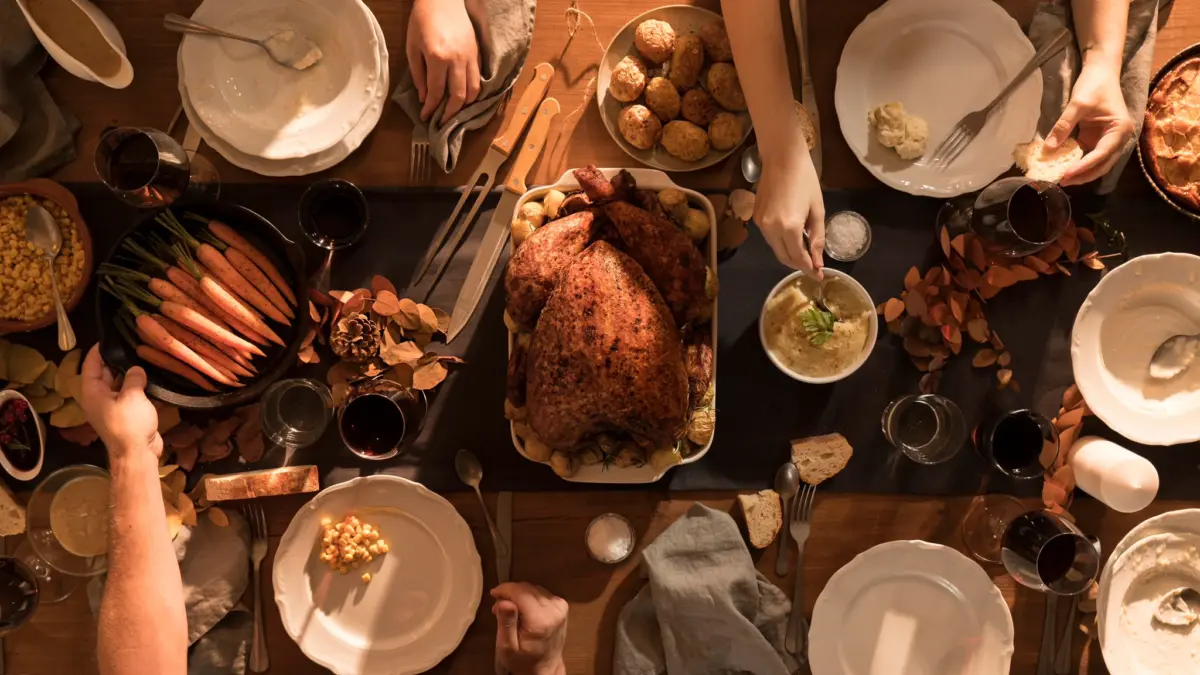
The dining room glowed with the careful elegance my mother had spent decades perfecting. The chandelier poured soft yellow light over crystal stemware that caught it and broke it into tiny rainbows on the tablecloth. Outside, the Chicago wind leaned against the tall windows of their Victorian townhouse and made the old glass chatter in its frames. Inside, the air was thick with roasted turkey and garlic butter and something harder to name, the pressure that gathers in a house before a family quarrel.
I sat at the far end of the table, the seat I had held since the autumn five years earlier when I left medical school and, in my father’s phrase, abandoned the family plan. My mother, Patricia, presided at the head with the posture of a woman who believed authority was a birthright and not something earned. My father, Richard, sat opposite her like a chairman at a board meeting, carving the bird with great precision, though he had never in his life finished surgical training himself. My younger sister, Alyssa, the golden child and the family’s resident artistic genius, lounged in the middle swirling a red wine she could not possibly afford on a gallery assistant’s salary. Nobody ever asked her to account for her spending the way they interrogated mine.
“Jasmine,” my father said, and the table went quiet in the particular way that means everyone knows what is coming and has agreed to pretend otherwise.
I set down my fork with care. “Yes, Dad?”
He did not lower his voice. Richard Monroe had never lowered his voice in his life, not when there was an audience for his pronouncements, not when disappointment could be performed in front of witnesses who would repeat the story later with breathless relish.
“If you can’t get your life together,” he said, the knife sliding through white meat, “maybe you should try a shelter. Go live in the streets. See how you like it. Maybe then you’d appreciate what you threw away.”
The word streets landed on the table like a dropped plate, loud and jagged. My mother touched the pearls at her throat as though it were a perfectly reasonable thing to say to a daughter over Thanksgiving dinner. Her mouth tightened into what I had long ago named her church face. Tomorrow she would wear it when she asked her prayer circle to hold our troubled family in their hearts, without once mentioning who had done the troubling.
Alyssa choked on her wine, and I knew it was laughter she was swallowing. She lifted the glass in front of her mouth like a shield, but I saw the smile curling at its edges. This was the moment she had been waiting for all evening, the public confirmation that she was the success and I was the cautionary tale.
“Richard,” my mother murmured, which was her signature move, objecting just enough to seem fair without ever actually contradicting him. “That seems a little harsh.”
“Harsh?” His face was flushed with wine and righteousness. “She’s thirty two years old, Patricia. No husband, no children, no real career. She plays with computers in an apartment we are probably subsidizing in some way. What was it you told us last time, Jasmine? Freelancing? What exactly do you do that is so important you couldn’t finish medical school?”
My silence was not wounded and it was not shocked. It was the silence of long practice, the stillness of someone who had spent years refusing to give them the scene they wanted.
I could have said that my quarterly statement suggested I would clear thirty million dollars this year, so I thought I was managing fine. I could have set my phone beside the cranberry sauce with my banking app open and let the numbers do the talking. I could have explained that my playing with computers had become an AI logistics platform that routed shipments for three of the largest retailers in North America, and that my algorithms were at that very moment moving billions of dollars of goods across the world while they sat here performing superiority.
But numbers had never mattered to my family unless the numbers were theirs. And I had learned that trying to prove yourself to people who have already decided what you are is like pouring water into a bucket with no bottom. You can pour forever and never reach anything.
So I watched my father, red faced and certain, and my mother in her martyrdom, and my sister barely containing her glee.
He leaned forward with the carving knife still in his fist like a prop. “You think life is a game, Jazz? When you run out of couches to sleep on, don’t you dare show up here. You wanted independence? Fine. Be independent. But when you fail, and you will fail, don’t come crawling back expecting us to save you.”
They wanted me to break. They wanted tears, or frantic explanations, or at least some begging. They wanted the part they had written for me, the struggling daughter who needed rescuing from her own bad choices.
Instead I pushed back my chair. The legs scraped softly on the hardwood, and every head turned as if I had fired a starting pistol.
I could have told them everything right then and shattered the illusion they had spent years polishing for their friends. But there is a certain power in silence, in knowing what others do not, in holding cards they cannot see. In business we call it leverage.
I smoothed my sweater and reached for my bag. “Thank you for dinner,” I said, so evenly that my aunt beside me actually flinched, as if she had braced for an explosion. “Happy Thanksgiving.”
My mother’s eyes widened with something that might have been alarm if she had been capable of feeling beyond the performance of it. “Jasmine, don’t be dramatic.”
“I’m not being dramatic. You’ve already decided who I am. I wouldn’t want to complicate your story.”
Something flickered across my father’s face. It unsettled him that I was not groveling or defending myself, that I was refusing him the reaction he had come to depend on. He covered it with anger, as he always did.
“Fine,” he snapped. “Walk out. But don’t come back until you’ve learned some responsibility. Maybe the real world will teach you what we couldn’t.”
Behind her wine glass, Alyssa’s smirk sharpened into victory. I turned and held her eyes just long enough to watch the satisfaction settle in them. She sat there in a thrift store aesthetic that had cost more than any actual thrift store, playing the starving artist, and I knew her credit cards were maxed and her job barely paid her rent.
“You should be careful,” I told her quietly. “The stories people tell about others have a way of coming back around.”
Her smirk faltered, just for a second.
Then I walked out. In the hallway I pulled on my coat and boots with the efficiency of someone who has practiced leaving without a scene, and I opened the front door onto the Chicago winter. The cold hit like a physical force, wind that did not so much blow as attack, finding every gap in my clothes. Snow drifted down from a sky the color of old concrete and caught on my eyelashes. I went down the stone steps with my head up and my pace steady, and behind me the door closed with the finality of punctuation.
They thought they had exiled a failure. They had no idea they had just declared war on a ghost.
Three days later I stood in my penthouse forty five floors above the city with a mug of tea going cold in my hands, watching Chicago sprawl beneath me like a circuit board made of gold and steel. The quiet up there was not lonely. It was expensive, the kind you can only buy when you own the whole floor and no one above you can make noise. Lake Michigan lay black and endless to the east, and to the west the city pulsed with light. Cars moved along the wet streets like data packets through cable. From that height Chicago looked less like a place where people lived than like a system somebody had designed, full of patterns and flows and logic.
I had always been good at seeing the logic in things.
The apartment was minimal in the way only truly expensive spaces can be. It was not empty but exact, every piece chosen for function and form in equal measure. One leather sofa faced the windows. A coffee table of reclaimed wood and steel sat before it, and nothing else, because nothing else was needed. The kitchen gleamed with commercial appliances I rarely touched, since I usually worked straight through meals.
And then there was the office. I carried my mug into it and felt the old sense of coming home, which had nothing to do with the building and everything to do with the work. My desk was a floating slab of black marble I had imported from Italy, ridiculous and extravagant and chosen partly because my parents would never understand why anyone would spend that much on a desk. Three curved monitors wrapped around it, dark until I touched a key.
The screens woke and washed my face in blue. Dashboards, metrics, live maps of shipping lanes across the globe, small dots pulsing where my software was making decisions in real time about how to move goods from one place to another, balancing cost and speed and a hundred other variables my competitors were still trying to name.
This was what I had built while my family believed I was failing.
AI Logistics began six years earlier in a studio apartment with an ancient laptop and a theory about machine learning in supply chains. I wrote the first version of the algorithm during the same semester I dropped out of medical school, in coffee shops at two in the morning, because I could not afford to heat my apartment and stay awake at the same time. My parents had been furious about medical school. They had plans, a whole future drawn up. Dr. Jasmine Monroe would join her father’s practice, marry another doctor, and produce grandchildren with proper pedigree. When I told them I was leaving, my father laughed, certain I would be back within a month begging for tuition.
I never asked them for anything again. I lived on ramen and instant coffee and took freelance coding jobs to cover rent, and every spare hour went into the algorithm. The first real contract came from a small online retailer whose shipping was such a disaster that they were willing to try anything. I cut their costs by thirty percent, and suddenly I had a reference client. Then another. Then another. By the time my father was telling relatives I had thrown my life away, I was quietly optimizing the supply chains of companies whose names everyone knew. By the time my mother was asking her church to pray for my mental stability, I was hiring my first employees and signing the lease on a real office.
I opened my banking portal, something I did less out of need than as a reminder that reality and my parents’ account of it lived in different universes. Last year’s adjusted gross income was twenty eight point seven million dollars. This year was on pace for thirty, perhaps more if the fourth quarter kept its trajectory.
I was not rich in a way that showed. I had no yacht, no car collection, no feed of curated luxury. I was rich in the way that means freedom, the freedom never to return my father’s calls, to block my mother’s number and feel relief instead of guilt. The freedom to build something real while other people built narratives.
My phone buzzed against the marble. My cousin Ashley.
Your mom is at church group right now, asking for prayers for you. Told them you’re mentally unstable and sleeping on friends’ couches. Thought you should know.
I read it and felt nothing like surprise. It was their pattern, as dependable as any algorithm. When reality threatened to expose their cruelty, they rewrote reality until they looked like worried parents with a troubled child.
I typed back: Let her.
You’re not going to say anything? Ashley wrote.
What would be the point? She needs me to be failing. If I’m not failing, she’s just mean. Better for her if I’m the tragedy.
Three dots appeared, vanished, appeared again. That’s really sad.
It’s really freeing, I corrected, and set the phone facedown.
That evening Ashley sent a screenshot of my mother’s post in the church group. She had chosen a photograph of me from college, eyes half shut, slumped over a stack of textbooks during finals week, looking exactly like someone who had survived forty eight hours on coffee and stubbornness. I had forgotten it existed. My mother had not.
The caption read: Please keep our family in your prayers during this difficult season. Our eldest daughter Jasmine is struggling with severe instability and housing insecurity. We are doing everything we can to support her from a distance, but sometimes tough love is the only way to help a lost soul find her footing.
Housing insecurity. I looked around at thirty five hundred square feet of marble and glass and heated floors, every surface clean because I paid someone very well to keep it that way. The deed sat in the fireproof safe in my bedroom, paid in full, with my name on it and no one else’s.
I closed the screenshot and opened Instagram, curious what part my sister was playing. There she was, exactly as expected, standing in the middle of The Gilded Frame, the gallery where she worked, one hand lifting a champagne flute, her hair artfully tousled, wearing a black dress that probably cost more than her monthly paycheck. The caption said she was honored to be part of the city’s cultural heartbeat, and that true art demanded sacrifice.
I almost laughed. Months earlier, after my parents spent an entire lunch bragging about Alyssa’s success, curiosity had pulled me into the public records, which are remarkably candid once you know where to look. Foot traffic in that district had fallen forty percent in eighteen months. Two neighboring galleries had closed. The building was flagged in city files for outdated wiring and deferred repairs, and the utility company’s records showed two late payment notices in six months.
Alyssa was taking selfies in a burning building while my parents told everyone to admire the smoke.
I locked the phone. Let them perform. Let my mother collect sympathy like currency and spend it on social standing. Let my father tell his story about the ungrateful daughter to anyone who would sit still. I had better things to do than haunt people who had already decided I was dead.
Monday started the way most Mondays did, with a call to my Singapore team before dawn, coffee measured and brewed while I scanned the European shipping lanes, and the quiet satisfaction of watching problems resolve themselves because I had built systems that did not need me hovering. I was answering a note from our warehouse in New Jersey when a new message landed at the top of my inbox.
Subject: Urgent Notice of Default, Commercial Lease Agreement.
I nearly deleted it. The sender was a property management firm I did not know, and urgent notice was exactly the language scammers loved. But years of running a company had taught me never to dismiss legal phrasing without at least a glance, so I opened it.
It was dry and formal, full of the language lawyers use when they want to sound official without sounding human. One line stopped me. Ms. Jasmine Monroe was listed as the personal guarantor on a commercial lease that had fallen into default.
A cold prickle ran down my spine. I downloaded the attached PDF and scrolled through pages of boilerplate until I found the section that mattered. Tenant: The Gilded Frame. Landlord: a real estate investment trust based in New York. Rent amounts, months in arrears, dates of missed payments. And near the end, highlighted in yellow by someone at the management firm: As per the personal guarantee signed by Ms. Jasmine Louise Monroe on August 14, 2020.
I jumped to the signature page. There was my name in blue ink, the J curling exactly the way mine curls, the M peaking sharp as I had been taught in elementary school penmanship. For a moment I actually questioned my own memory. Had I signed something and forgotten? Had I done my sister some favor four years ago that I had blocked out entirely?
Then I looked closer. The pressure was wrong, too heavy in some places and tentative in others, like someone who had practiced my signature many times and then rushed it before their nerve failed. The spacing was a hair off. The tail on the final e lacked my usual flourish. It was a good forgery. It was still a forgery.
I sat back, the PDF glowing on the screen, and felt something click into place. It was not anger, not yet. It was the cold clarity of finally holding proof of something you have suspected for years.
They had not simply told everyone I was a failure. They had used me as collateral for their golden child’s dream.
I pieced together the timeline. Four years earlier, when Alyssa opened The Gilded Frame with champagne toasts and a ribbon cutting, the landlord would have needed a guarantor. My father’s credit was overextended from maintaining the lifestyle. My mother’s part time consulting would never satisfy a landlord’s requirements. So they had forged the signature of their failure of a daughter on a personal guarantee carrying five hundred and eighty thousand dollars in potential liability.
The beautiful thing about scapegoats is that they are not only vessels for blame. They are useful in practical ways. You can sacrifice them when things go wrong, and you can lean on them when you need something. And the best part is that they are so accustomed to hearing they are worthless that they rarely notice they are being used.
Except I had stopped being a scapegoat years ago. I simply had not told them.
I called Ryan Banks, my corporate attorney, a shark in a custom suit who specialized in acquisitions and the kind of warfare in which nobody goes to jail but people certainly end up ruined. He picked up on the second ring.
“Jasmine. Please tell me you’re calling about the Brazilian port expansion and not because you’ve decided to buy a sports team.”
“Neither,” I said, and my voice surprised me with how steady it was. “I need you to look at something. Forgery, identity theft, and commercial lease fraud.”
A pause. “Who’s the perpetrator?”
“My family.”
I sent him the documents. Twenty minutes later we were on a video call, Ryan in his downtown office with Lake Michigan filling the window behind him, me in pajamas with my hair in a bun and no desire to pretend I cared how I looked. His eyes moved back and forth across the pages, and his face cycled through disbelief, professional interest, and finally a restrained fury on my behalf.
“This is remarkably sloppy,” he said, zooming in on the signature. “Whoever did it didn’t bother to model pressure. And they submitted the digital copy from an IP address that,” he clicked through a few screens, “traces to your parents’ home internet four years ago. Most likely your father’s computer, going by the browser data.”
“Can you prove it?”
“In court, in your sleep.” He leaned back. “But court is public and messy, and it gives them the chance to play victims. Your mother would tell her church you’re tearing the family apart. Your father would tell everyone his ungrateful daughter is suing her parents. It would drag on for a year or more.”
I had already walked through that scenario. “I don’t want public. I want effective.”
His expression sharpened into something calculating. “The landlord is a REIT in New York. They’ve been trying to shed non performing assets for two quarters. We know because they approached us last month about a warehouse in Newark.” He pulled up a file. “What if JLM Holdings made an offer? Not just for the debt. For the building.”
“My holding company,” I said.
“They’re motivated. If we offer cash, we can close in forty eight hours.”
The idea unfolded in my mind like an equation solving itself, each variable sliding into place. If I sued them, I became a plaintiff in a courtroom drama they would spin into proof of my instability. If I bought the building, I became something else entirely. I became their landlord and their creditor, the person who decided whether their performance went on.
“Do it,” I said. “Cash. Forty eight hours.”
Ryan was already typing. “You’ll need to be ready to sign quickly. And Jasmine?” He looked up. “This is going to hurt them.”
“Good,” I said, and I meant it.
They called it divine intervention. I heard about it from Ashley two days later, in a message that made me laugh out loud in the middle of a call I had muted.
You’re going to love this. Your dad told everyone at dinner that a mysterious angel investor bought the building and wiped out the debt. He toasted the benevolence of the universe. Your mom is calling it a miracle. Alyssa is posting about it. This is the most delusional I’ve ever seen them.
I was looking at the signed purchase agreement Ryan had sent an hour before. JLM Holdings, which stood for Jasmine Louise Monroe, though none of them had ever thought to wonder, now owned the three story brick building at 414 West Marlowe, along with every debt and lease agreement attached to it.
I did not answer Ashley. I put on my coat.
The night was cold and clear, the kind of Chicago evening when the sky looks like black glass and the city lights bounce off low clouds. A car took me to West Marlowe, and I stepped out on the sidewalk across from The Gilded Frame. Through the big plate glass windows I could see them celebrating. The room was full of people in expensive coats holding cheap champagne in plastic flutes. A jazz trio played in the corner, the saxophone’s mournful notes slipping out whenever the door opened. The walls were hung with art that probably looked better in photographs than in person.
My father stood in the center, flushed with wine and vindication, glass raised high. Alyssa stood beside him, luminous in a dress that had probably consumed three months of rent, basking in the attention. My mother hovered close, one hand over her heart, her face calibrated to express humble gratitude. I could not hear the speech through the glass, but I knew every line. I had heard versions of it all my life. We struggled but we persevered. God provides for those who believe. The universe rewards the worthy.
Snow began to fall in light flakes that melted the moment they touched the warm glass. My phone buzzed. Ryan.
“The deed is recorded,” he said. “Transfer is final. You own 414 West Marlowe. Building, debt, lease, all of it. What do you want to do?”
Inside, my father threw back his head and laughed. My mother dabbed her eyes with a napkin. Alyssa clinked glasses with a man who clearly had no idea how precarious her situation was.
“Let’s go tell them,” I said.
When I pushed open the heavy glass door, a small bell chimed overhead, cheerful and bright, cutting through the music. Heads turned. For a moment no one recognized me. I was just a woman in a dark coat coming in out of the cold. Then my mother’s face changed. Her smile did not fade so much as collapse, like a building losing its structural support.
“Jasmine,” she said, her voice climbing higher than usual. “What are you doing here?”
I brushed snow from my shoulders and stepped inside, letting the door close behind me. The warmth hit my skin along with the smell of cheap champagne and too much perfume. “I heard there was a celebration. Thought I’d stop by.”
Alyssa crossed the room quickly, her dress whispering, her smile bright and brittle. Up close I could see the careful makeup over the shadows beneath her eyes and the tension in her shoulders that told me things were not as perfect as her feed suggested.
“Jasmine, please,” she hissed, still smiling for the room. “We have an important guest arriving any minute. The investor who bought the building is coming to sign the lease addendum. We really can’t have you here.”
I tilted my head. “The investor. You mean JLM Holdings?”
My father, who had been drifting toward us with his glass raised, stopped. “How do you know the name of the company?”
“I pay attention to details. It’s sort of my thing.”
He relaxed, apparently satisfied that I had read it somewhere. “Then you should know they saved this place. Bought the building, took the debt, gave us terms we can actually live with. It’s a miracle.” He lifted his glass. “Somebody out there recognizes the value of what your sister creates. Not everyone thinks art is worthless.”
A few guests chuckled awkwardly. My mother seized my arm, her fingers digging through my coat. “You need to leave,” she whispered. “You are not going to embarrass us in front of these people. Mr. Banks will be here any moment.”
“Mrs. Monroe,” said a familiar voice from the doorway. “I’m afraid Mr. Banks isn’t the investor.”
Everyone turned. Ryan stood there with snow still on his shoulders, every inch the high powered attorney he was, and the room shifted around him the way rooms do when someone with real authority walks in. My father’s face lit up. He hurried over with his hand out. “Mr. Banks, welcome. We are so grateful.”
Ryan walked past him without breaking stride. “I’m not the investor. I’m legal counsel for the investor.” He turned to face my parents. “The owner of JLM Holdings is already here.” He gestured toward me with one open hand. “May I introduce the sole proprietor of JLM Holdings and the new owner of this building, Ms. Jasmine Louise Monroe.”
The silence that followed was more than quiet. It was the absence of sound, as if the air itself had been taken out of the room. I watched understanding dawn on their faces one by one. Alyssa’s smile froze and then cracked, her mouth falling open. My mother made a small choking noise. My father looked at Ryan, then at me, then at Ryan again, waiting for one of us to laugh and admit it was a joke.
“That’s not possible,” Alyssa whispered.
“It’s entirely possible. Jasmine Louise Monroe. The holding company bought the debt and the building. As of four o’clock Friday, I own the property you’re standing in.”
My father’s glass trembled in his hand. “This is insane. You’re homeless. You have no money. You’re lying.”
Ryan drew a document from his briefcase. “Ms. Monroe is the founder and CEO of AI Logistics, one of the most successful supply chain companies in North America. She is also, as of Friday, your landlord.”
Murmurs rippled through the crowd. Several of Alyssa’s art world friends discovered a sudden fascination with the wine table. A couple I recognized from my parents’ church studied the floor.
“You can’t do this,” Alyssa said, her voice shaking. “We have a lease. We have rights.”
“You had a lease,” I said. “You also had a personal guarantor, supposedly me. I never signed that guarantee. The signature is a forgery, which makes the guarantee void and the whole arrangement fraudulent.”
Ryan held out an envelope. “This is a notice of default and a demand for payment. You owe forty eight thousand dollars in back rent, plus penalties and fees. The total due is sixty seven thousand.”
My father did not take it, so Ryan set it on a pedestal beside an abstract sculpture.
“Additionally,” Ryan went on, “the lease is being adjusted to current market rates for this district. Based on comparable properties, the new monthly rent is eighteen thousand dollars.”
“Eighteen?” My mother’s voice came out as a squeak. “We pay six.”
“You paid six when you had a guarantor with excellent credit. That no longer applies.” He turned a page. “You have seven days to pay the arrears and accept the new terms, or vacate.”
“We don’t have sixty seven thousand dollars,” Alyssa cried, tears gathering, the kind that always arrived when she realized charm would not get her out of something.
“Then you have option two,” I said. “Leave.”
My father stared at me like a stranger. “You’re evicting us. Your own family.”
The word family sat bitter on my tongue. “I’m evicting a tenant who hasn’t paid in four months and whose lease was obtained by fraud. Sharing DNA doesn’t change a contract. Business is business. Isn’t that what you always taught me?”
No one moved. The trio had stopped playing. The gallery, once staged to look like a temple of culture, felt small and shabby, a set after the play ends when you can see the cheap paint and the cardboard.
I turned toward the door. “Seven days. After that the locks change.”
I did not look back. I knew exactly what I would see, an empire built on lies, giving way under its own weight.
Seven days later The Gilded Frame stood empty. The street that had glowed with celebration lay quiet under a gray winter sky, and the windows that had held warm light and art now reflected only dull daylight and the occasional passing car. I unlocked the door and stepped inside. My footsteps echoed on bare concrete. The paintings were gone, and the sculptures, and the white pedestals. They had stripped the place to studs and paint, as if leaving it hollow might punish me.
I walked to the front window and ran a finger along the vinyl letters that spelled THE GILDED FRAME. The adhesive had stiffened in the cold. It resisted for a moment and then began to peel away in one long, satisfying strip. Letter by letter, the name disappeared.
Ryan arrived with a ring of keys. “They’re out. They took the track lighting, which technically violates the lease, but I don’t imagine you care.”
“Not particularly.”
“What will you do with it?” He glanced around. “We could sell. The market’s decent. You’d turn a profit.”
I stood in the middle of the room and turned slowly, looking at the good bones beneath the pretense. High ceilings. Solid brick. Wonderful light from the tall windows. This building deserved better than to be a monument to my sister’s aesthetic.
“I’m keeping it,” I said. “A tech incubator for women founders who don’t have access to capital or connections. Workspace, mentorship, infrastructure, some seed funding.”
His face softened. “Poetic justice.”
“It isn’t about them anymore,” I said, and discovered as I said it that it was true. “It’s about turning this into something that matters.”
There was one more thing, and it was Ryan’s idea. A week after the eviction my parents’ lawyer called, in a voice that sounded as if he had been dragged out of bed. They wanted to avoid anything formal, he said. They wanted to avoid, in his phrase, unnecessary escalation. Ryan and I had already decided what we wanted. In exchange for my not filing criminal charges over the forged guarantee, my parents signed a statement acknowledging the forgery, repaid the arrears on a schedule they could actually meet, and agreed in writing to no contact of any kind. My father signed with his jaw clenched so hard I was told a vein stood out on his forehead. My mother, I heard, wept in the lawyer’s office and then complained about the coffee. It was not revenge. It was a boundary with a signature on it, which turns out to be the only kind they respect.
Within six weeks the transformation was complete. We softened the stark white walls with warm wood and plants. The gallery spotlights gave way to desk lamps and long shared tables. The front room became an event space with movable furniture and a screen for pitches. I named it FrameShift Labs, a small private joke about changing the frame of reference, shifting the narrative, redefining what the story was even about.
The first cohort arrived on a Monday morning. Maya came with an AI legal assistant for immigrants navigating paperwork they could not afford a lawyer to explain. Lila brought a device for catching strokes early. Priyanka brought supply chain transparency tools that made my logistics loving heart sing. They walked into the space that had once been my sister’s monument to herself, carrying laptops and backpacks covered in stickers, and they filled it with something The Gilded Frame had never had, which was purpose.
The week before the doors opened I blocked my parents’ numbers. It was not dramatic. It was a practical decision, like unsubscribing from mail you should have stopped years earlier. Ashley tried once more to keep me informed. They’re saying you schemed for years to steal Alyssa’s gallery. Your mom’s prayer group is having a field day.
I read it, then looked up at the women around me arguing cheerfully about API integrations, and wrote back: I’m not interested.
My therapist once told me that boundaries are not punishments. They are instructions. They teach people which version of you they are allowed to reach. For years my family had known only the version they could use, small and struggling and apologetic. Breaking that pattern did not require them to learn the truth. It only required me to stop performing for an audience that had already settled on its verdict.
The story should have ended there, but a few months later it had one more scene.
It was a gray afternoon in early spring, and I was crossing the front room of FrameShift with a stack of pitch decks when the little brass bell above the door chimed. I had kept that bell on purpose, a small reminder, and it rang the way it always did, bright and a little foolish. A woman stood on the mat shaking rain from her coat. It took me a second to know her. Alyssa had lost weight, and the careful tousle was gone from her hair. She wore no dress that cost three months of rent. She wore a plain gray coat and carried a folder, and she looked at the room, at Maya laughing over a laptop and Lila bent over a circuit board, with the expression of someone entering a house she was not sure she was allowed to stand in.
Our receptionist started toward her. I lifted a hand to stop him and walked over myself.
“I’m not here to ask for anything,” Alyssa said quickly, before I could speak. Her voice was smaller than I remembered. “I saw the posting for a community coordinator. I wanted to apply. I wanted to apply like anyone would, and I wanted to say to your face that I know what I did.”
I did not say anything. Behind her the rain ran down the big windows in long, quiet lines.
“I knew about the signature,” she said. “Not at first. Dad told me later, when the lease was already signed, and he said it was harmless, that you’d never find out, that you had so much more than we did anyway, that family helped family. I knew it was wrong. I let it stand because I wanted the gallery so badly, and then I let it stand because it was easier than telling the truth. And at that dinner, when he said what he said to you, I laughed.” Her voice broke on the word. “I have been trying to forgive myself for that laugh for four months and I can’t.”
I looked at my sister, the golden child, who had never once had to account for herself in her whole life, and I found that what I felt was not triumph. It was something quieter and sadder, the way you feel passing a house you once lived in and seeing that the garden has been let go.
“I’m not going to forgive you today,” I said. “I don’t know if I will. But I’m not going to pretend you didn’t walk through that door, either.” I held out my hand for the folder. “The posting is real. It goes to the hiring committee, not to me, and I won’t be in the room. If you get it, it will be because you earned it, and if you don’t, it will be because someone better applied. That’s the only deal I have.”
She stared at my hand. Then she gave me the folder, and her fingers shook a little as she did, and she nodded once. She did not cry. I think she had run out of the kind of tears that ask for something. She turned and went back out into the rain, and the bell chimed behind her, and I stood there holding the folder and listening to the sound fade.
She did not get the job. A woman named Dani, who had run community programs for a refugee nonprofit for nine years, did, and she was extraordinary. But I heard from Ashley, who has never learned to stop sending news, that Alyssa took a position at a small framing shop on the north side, and that she was learning to cut mats and mix glue and sweep floors. She was paying her share of the settlement every month, on time, out of a paycheck I knew was small. It was not redemption, and it was not meant to be. It was a start.
That summer, on a morning when the sun came up gold over the lake, I stood on my penthouse balcony with a cup of coffee watching the city wake. Steam rose from rooftop vents. Sunlight turned ordinary buildings into towers of light. Traffic hummed far below, too distant to be anything but a river of color and motion. From up there my building on West Marlowe was a small brick dot in a grid of steel and glass, but I knew what was happening inside it. Maya would be on her fourth coffee, deep in a feature sprint. Lila would be arguing with her hardware supplier. Someone would be on a call with an investor, voice pitched in that blend of terror and hope that comes from asking strangers to bet on your dream.
My phone lay facedown on the table, silenced except for true emergencies. I did not know where my parents were living, or what my mother told her prayer circle now, or whether my father still told the story of the ungrateful daughter to anyone who would hold still. For the first time in my life I did not care, and that was the strangest part. For so long my whole existence had orbited their approval or its absence. Even when I built my company, even as I piled up wealth they could not imagine, some part of me had stayed that girl at the dinner table, waiting to be told she had done well.
But standing there in the light, something finally settled. They had told me to go live in the streets. They had rewritten my story so many times they half believed their own version, the unstable daughter, the tragic failure, the cautionary tale that made them look better by comparison. I had never been theirs to define. I was not the homeless daughter, or the tragedy in my mother’s prayer chain, or the punchline of my father’s bitter anecdotes.
I was the architect. I had built a life from the ground up, not only out of money and marble and a view, but out of choices they would never understand. I had built systems that moved goods across oceans. I had built a company that employed hundreds of people. And now I was helping other women build, women who were not waiting for anyone’s permission to exist.
The foundation under my feet was solid. Paid for. Mine.
Down in the street a bus sighed to a stop, and a young woman stepped off with a laptop bag over her shoulder and a look of fierce, nervous resolve, and started walking toward West Marlowe. I could not see her face from forty five floors up. I did not need to. I knew that walk. I had walked it myself, once, toward a door nobody was holding open.
I finished my coffee and went inside to get ready for work. Somewhere behind me the sun climbed over the lake, and the city lit up one window at a time, and I was not haunting anyone. I had a future to build, and it was already under way.