When the Wolves Come Circling
Part One: The Conference Room
“Sign the damn document, Warren. Or I’ll drag you through every court in New York until you’re bankrupt.”
My father’s palm came down on the mahogany conference table so hard that the lawyer’s silver pen jumped half an inch and rolled toward me.
Harlon Pryce stared across the table at me the way he’d stared at me my whole life. Like I was still a scared ten-year-old who’d broken something in his study and could be ordered to stand in the corner until he decided otherwise.
I was thirty-two years old. I hadn’t spoken to my parents in two years. Not a phone call. Not a birthday card. Not a single text.
And there he was. Demanding my signature like nothing had ever happened.
Beside him sat Mr. Conrad Sterling. Sixty, silver-haired, in a navy suit that probably cost more than my first car. A thick legal document lay squared up in front of him on the table. A yellow sticky arrow pointed to a signature line near the bottom.
Neither man had asked how I was. Neither had asked about my wife.
They wanted the cabin.
Part Two: The Cabin
The hunting cabin in the Adirondacks.
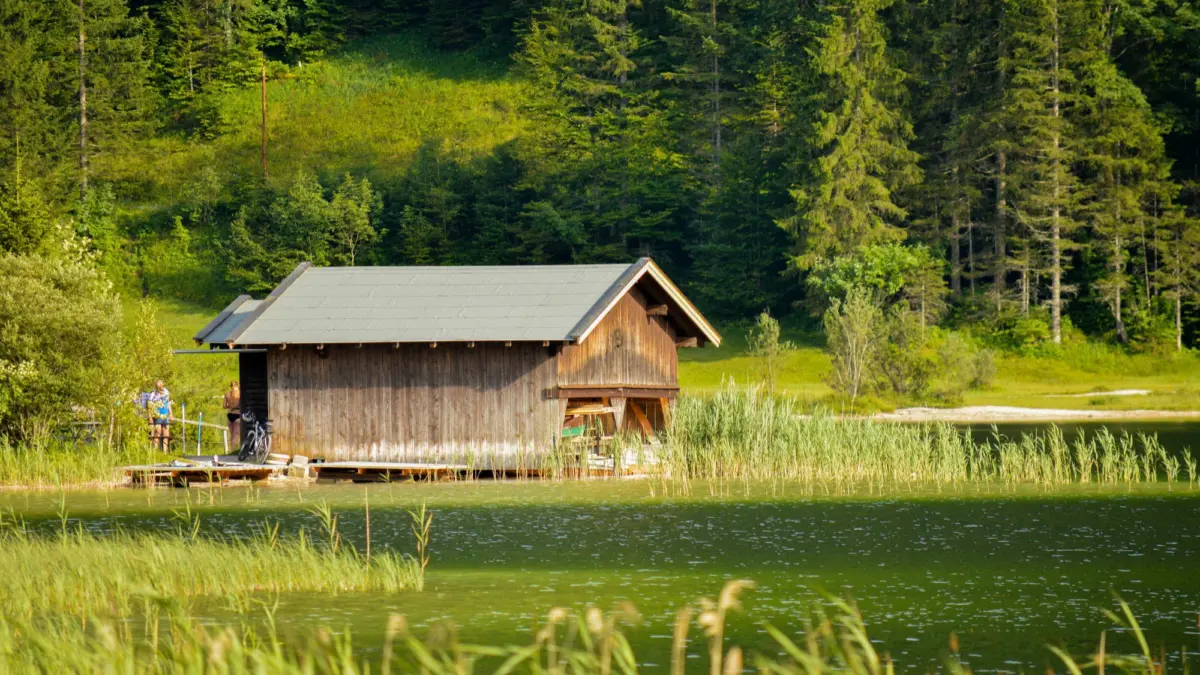
A small log cabin on forty acres on the shore of a little lake called Loon Pond, outside the town of Indian Lake, deep in the mountains of upstate New York. Three hours north of my parents’ estate in Saratoga Springs. A wood stove. A screened porch. A dock with a rowboat tied to it. And woods all the way around, spruce and white pine and balsam fir, so thick you couldn’t see another light at night.
My grandfather Cyrus built most of it himself. In 1968. With his brother and a borrowed chainsaw.
It was the only place in my whole childhood where I ever felt safe. Where the air smelled like pine needles and woodsmoke and wet earth after rain. Where nobody called me a disappointment.
Now my father wanted to sell it. To save my brother.
“Your brother needs the money, Warren,” Harlon said. “You owe this family.”
I looked at the silver pen lying beside the papers.
My hands stayed still on the table.
Part Three: The Golden Child
For most of my life, those four words had worked on me. You owe this family.
My older brother, Dexter, is three years older than me. He was always the golden child. When he turned sixteen, my father gave him a cherry-red BMW convertible, with a bow on the hood, in the circular driveway of our house in Saratoga Springs. When Dexter flunked out of Cornell, my father called the dean. When Dexter decided at thirty that he wanted to open a craft brewery, my father wrote him a check for four hundred thousand dollars.
Pryce Brothers Brewing Company. In a renovated warehouse in Troy. With a taproom and Edison bulbs and a chalkboard menu.
When I turned sixteen, I got a job at the True Value hardware store on Broadway.
I paid my own way through Clarkson University, up in Potsdam, working double shifts at the hardware store every summer and weekends during the school year. I graduated with a degree in civil engineering and thirty-one thousand dollars in student loans. I paid them off in five years.
I designed bridges now. And highway overpasses. And building foundations. For a firm in Syracuse.
“Dexter just needs a push,” my father used to say. To my mother. To his friends at the country club. Loud enough for me to hear. “Warren’s a workhorse. He’ll survive.”
My mother, Sylvia, never once corrected him.
She wore pearls. Every day. She chaired the hospital gala and the racetrack charity luncheon and the garden club. She treated our family’s image like something far more important than the people in it.
Part Four: Grandpa Cyrus
My grandfather Cyrus was different.
He was my father’s father. A mechanic. He’d owned a garage in Glens Falls for forty-one years. Pryce Auto Repair. His hands were huge and rough and permanently stained with grease in the creases, no matter how hard he scrubbed them with Lava soap.
My father was ashamed of him. I didn’t understand that as a kid. I understand it now. My father went to Dartmouth on a scholarship and came home a real estate developer and never once in his life let anybody at the country club know that his father fixed transmissions.
But every summer, from the time I was six, Grandpa Cyrus took me to the cabin on Loon Pond. For two weeks. Just the two of us.
He taught me to fish. Brook trout and smallmouth bass. He taught me to clean them on the dock with his old Buck knife and fry them in a cast-iron pan with butter and cornmeal.
He taught me to fix a leaking roof. To split firewood. To sharpen a chainsaw. To row a boat in a straight line.
And he taught me to stand up straight when somebody tried to make me feel small.
“You put your shoulders back, Warren,” he’d say, when I came to the cabin quiet and hunched after another year of being the kid who didn’t matter. “Nobody gets to make you small. Not even your father. You hear me?”
He died when I was twenty-seven. A heart attack, at the garage in Glens Falls, under the hood of a 1972 Chevy pickup he’d been restoring for a customer.
He left me his old cedar tackle box. Hand-made. Dovetailed. With brass hinges and a leather handle and his initials burned into the lid. C.W.P.
I kept it on my desk at home. Some days, the faint smell of cedar and fishing line and old lures was the only thing from my childhood I wanted to remember.
Part Five: Camille
Then I met Camille.
She’s an emergency room nurse at Upstate University Hospital in Syracuse. I met her at two in the morning, when I came in with a nail gun injury from helping a friend frame a garage. She stitched up my hand and told me I was an idiot and asked me if I wanted coffee.
She’s kind. Steady. Funny. She grew up in a trailer in Oswego with a single mother who cleaned motel rooms. She paid for nursing school herself, the same way I paid for engineering school.
And she was completely, totally unimpressed by my family’s money.
My parents couldn’t stand her.
They couldn’t stand that she didn’t care about the house in Saratoga or the country club or the racetrack. That she didn’t flatter them. That when my mother asked her at our engagement dinner which charity boards she served on, Camille laughed and said, “None, Mrs. Pryce. I work three twelve-hour shifts a week holding people’s guts in.”
My mother put down her fork.
Part Six: The Wedding
We got married at a little stone church in Skaneateles. Sixty guests. A potluck reception at the firehall afterward.
My parents came. They stayed for exactly one hour.
Before they left, my father pulled me aside into the church vestibule. He had a glass of champagne in his hand. He looked across the room at Camille, laughing with her mother by the coat rack, in her simple white dress from a consignment shop.
“A nurse,” he said. “From a trailer in Oswego.” He took a sip of champagne. “That’s white trash, Warren. You know that, right? You could’ve married anybody.”
I remember the cold feeling that went through my chest. Like someone had opened a window in January.
And I remember realizing, standing in that church vestibule in my rented tuxedo, that I’d spent thirty years waiting for an apology from my father that was never going to come.
Part Seven: Christmas Eve
Christmas Eve, two years ago, was worse.
Camille and I drove to Saratoga Springs because my mother had called and asked us to come. The first time she’d called in six months. I thought maybe things were changing. I thought maybe she wanted to try.
Snow was coming down hard against the tall windows of my parents’ house on North Broadway. Inside, the dining room glowed. A twelve-foot Christmas tree with white lights. A fire in the marble fireplace. My mother’s good Waterford crystal. A standing rib roast from the butcher on Phila Street.
And Dexter, pacing in front of the fireplace with a glass of bourbon, sweating through his blue dress shirt.
His brewery was failing. I’d heard rumors. Supplier bills unpaid. Two lawsuits. A failed expansion into a second taproom in Albany. He’d been spending money he didn’t have on things he didn’t need. A Porsche. A lake house on Saratoga Lake. A girlfriend who liked Cartier.
After dinner, he cornered me in the hallway outside the powder room.
“I need fifty thousand dollars, Warren,” he said. “Wire it by tomorrow.”
He didn’t ask if I could help. He didn’t ask if I had it. He didn’t even lower his voice.
“No,” I said.
Part Eight: “Get Out”
Dexter’s face went hard.
“No?” he said. Loud. Loud enough to carry into the dining room. “You’re sitting on your engineering salary like a dragon on a pile of gold while your family’s drowning, and you say no?“
“I’m not sitting on anything, Dex,” I said. “Camille and I are saving for a house. And your brewery’s not my responsibility.”
Within seconds, my father was in the hallway. Standing over me. He’s six-foot-three. He still had his napkin in his hand.
He pointed his finger at my chest.
“Get out of my house,” he said. “What kind of brother lets his own flesh and blood drown?”
My mother was standing at the foot of the big curved staircase. In a red silk dress. Touching the pearls at her throat. Calm. Like she was watching a play.
“You’re dangerously delusional, Warren,” she said. Very quietly. Very clearly. “That woman has poisoned your mind.”
Part Nine: Into the Snow
Camille was standing beside me in the hallway.
My parents had called her trash. They’d turned my brother’s spending into my responsibility. And now they were throwing us out of their house on Christmas Eve, in a snowstorm, because I wouldn’t give Dexter fifty thousand dollars.
I took Camille’s hand.
We got our coats from the hall closet. We walked out the front door. Down the long front walk. Into the snow.
Nobody came after us.
We drove home to Syracuse that night. Three hours. On the Thruway. In a blizzard. Neither of us said a word until we got past Utica.
Then Camille reached over and put her hand on my knee.
“Your grandpa would be proud of you,” she said.
I didn’t say anything. I just drove.
Part Ten: Two Years
For two years, I heard nothing from them.
No birthday cards. No Christmas calls. No texts. Not one single question about whether their son was okay.
Camille and I bought a little house in Cazenovia, a village outside Syracuse, with a front porch and a vegetable garden and a maple tree. I kept designing bridges. Camille kept working in the ER. We made a quiet life where nobody measured love in money.
Meanwhile, the relatives stopped calling. My aunt Rosalind. My cousins in Albany. My father’s college roommate, who used to send me a card every Christmas.
I found out why from a cousin I ran into at a gas station in Saratoga.
My mother was telling people I’d had a breakdown. That I was unstable. Dangerously delusional. That I’d become paranoid and controlling. That Camille had cut me off from the family and was poisoning my mind against them.
I didn’t respond. I didn’t defend myself. I didn’t call anybody to explain.
I just let them say it. And I lived my life.
Part Eleven: The Envelope
Then, on a Tuesday afternoon in October, a heavy envelope came in the mail.
Big. Manila. Thick. Sent by certified mail, with a green return receipt card.
The return address was Sterling & Associates, Attorneys at Law, Broadway, Saratoga Springs, NY.
Conrad Sterling. My father’s real estate lawyer for thirty years.
I opened it at my kitchen table.
Inside was a cover letter, two pages. And a document. Eight pages. QUITCLAIM DEED.
The letter said that Harlon Pryce, as the executor of the Estate of Cyrus W. Pryce, was selling the real property known as Loon Pond Camp, Indian Lake, Hamilton County, New York, to a buyer. A developer from Albany. For one million, one hundred thousand dollars.
It said that a technical issue had been found in the title search. That my signature on the enclosed quitclaim deed was required to clear a cloud on the title and allow the sale to close.
It said that I had thirty days to sign the enclosed deed, have it notarized, and return it to Sterling & Associates. Or my father would pursue all available legal remedies.
Two years. Not one word.
And this was how they contacted me.
I stood alone in my kitchen in Cazenovia, holding a quitclaim deed. They weren’t asking me to come home. They weren’t asking how I was. They weren’t apologizing.
They were asking me to sign away the only place in the world I still associated with love.
Part Twelve: The Laugh
I read the cover letter again. Slower this time.
A technical issue has arisen in the title examination. Your signature is required to clear a cloud on the title.
I stopped.
Your signature is required.
Why would my signature be required?
I’d never owned anything at the cabin. I’d never inherited anything. When Grandpa Cyrus died, his will left everything to my father. The garage. His house in Glens Falls. The cabin. Everything. I’d gotten a tackle box.
So why would a title company need my signature to sell a cabin that belonged to my father?
I turned to the second page of the quitclaim deed. The part that described what I’d be giving away.
Grantor: Warren C. Pryce.
Grantee: Harlon D. Pryce, individually.
Grantor hereby remises, releases, and quitclaims unto Grantee all right, title, and interest of Grantor in and to the following described real property…
Then a long legal description. Loon Pond. Lot 47. Forty-one point three acres. Township 15, Totten and Crossfield Purchase. Hamilton County.
All right, title, and interest of Grantor.
My right. My title. My interest.
I don’t know why it hit me the way it did. Standing in my kitchen. Holding that deed.
But I started to laugh.
Not a little laugh. A real one. A big, helpless laugh, from my stomach, the kind you can’t stop once it starts. I laughed until I had to sit down. Until I had tears running down my face.
Camille came in from the garden with dirt on her hands.
“Warren?” she said. “Are you okay?”
I held up the quitclaim deed.
“They want me to sign this,” I said, still laughing. “They want me to give them something. But they’re not telling me what.”
Part Thirteen: The Tackle Box
That night, I sat at my desk in the little room off our kitchen that I use as an office. Grandpa’s cedar tackle box was sitting where it always sat. On the corner of the desk. Under the lamp.
And I remembered something.
Three weeks before he died, Grandpa Cyrus and I spent a weekend at the cabin. The last time. In June. We fished off the dock at sunset. He seemed tired. Slower than usual.
On the last night, he set the tackle box down on the kitchen table between us. He opened the lid. He lifted out the top tray, full of lures and hooks and sinkers. Then the second tray, with the fishing line and the little screwdriver he used to adjust his reels.
Then he tapped the bottom of the box with his knuckle. The wooden bottom panel.
“Warren,” he said. “Someday, the wolves are going to come circling. You’ll know when.” He looked at me. “When they do, you open this up. The bottom. Not before.”
I laughed. I thought he was joking. “What’s in there, Grandpa? Your secret fishing spots?”
He didn’t laugh.
“When the wolves come circling,” he said again. And put the trays back in. And closed the lid.
Three weeks later, he was gone.
I’d never opened the bottom. I’d honestly forgotten he’d said it. In five years.
Part Fourteen: The Bottom Panel
I got a small screwdriver out of my desk drawer.
I opened the tackle box. I lifted out the top tray. The lures still smelled like lake water. Then the second tray.
The bottom panel was a thin piece of cedar, fitted perfectly into the box. I’d always thought it was just the bottom. But when I looked closely under the lamp, I could see four tiny brass screws. One in each corner. Countersunk so they were almost flush with the wood.
I unscrewed them. One at a time.
I lifted out the panel.
Underneath, there was a shallow compartment. About an inch deep. Lined with green felt.
Inside was a long white envelope. Folded in thirds. Sealed with a piece of electrical tape.
On the front, in Grandpa’s big, square, block-letter handwriting, the handwriting of a man who wrote work orders on clipboards for forty-one years:
WARREN. FOR WHEN THE WOLVES COME.
My hands were shaking.
I peeled off the electrical tape. I opened the envelope.
Inside were three things.
And when I read the first one, I stopped breathing.
Part Fifteen: What Was Inside
The first thing was a deed.
Not a copy. A certified copy, with a raised seal from the Hamilton County Clerk’s Office in Lake Pleasant, New York. And a recording stamp in the corner, in red ink.
Recorded April 11, 2016. Liber 412, Page 88.
WARRANTY DEED WITH RESERVATION OF LIFE ESTATE.
Grantor: Cyrus W. Pryce.
Grantee: Warren C. Pryce.
Grantor hereby grants and conveys unto Grantee the following described real property: Loon Pond Camp, Lot 47, Totten and Crossfield Purchase… reserving unto Grantor a life estate in said premises for the remainder of Grantor’s natural life.
I read it three times.
Grandpa had given me the cabin.
In 2016. Five years before he died. He’d deeded it to me. And recorded it at the Hamilton County courthouse. And kept the right to live there and use it for the rest of his life. A life estate, the deed called it.
And the moment he died, it became mine. Completely.
It had been mine for five years.
And nobody had ever told me.
Part Sixteen: The Letter
The second thing in the envelope was a letter.
Two pages. On yellow lined paper from a legal pad. In Grandpa’s block letters.
WARREN —
IF YOU’RE READING THIS, YOUR FATHER IS TRYING TO SELL THE CAMP. I KNEW HE WOULD. I’VE KNOWN FOR YEARS.
IN 2016 HE ASKED ME TO PUT IT IN HIS NAME. HE SAID IT WAS FOR TAXES. I SAID NO. HE GOT ANGRY. HE SAID A MECHANIC DOESN’T NEED A LAKE HOUSE. HE SAID HE’D SELL IT THE DAY I DIED AND GIVE THE MONEY TO YOUR BROTHER FOR SOME BUSINESS.
SO I WENT TO A LAWYER IN LAKE PLEASANT. MARTY OSTROWSKI. AND I DEEDED IT TO YOU. AND I KEPT A LIFE ESTATE SO I COULD STILL FISH THERE. MARTY RECORDED IT AT THE COUNTY.
I DIDN’T TELL YOU BECAUSE I DIDN’T WANT YOUR FATHER TO PUT THE SCREWS TO YOU. HE WOULD HAVE MADE YOU GIVE IT BACK. YOU WERE ALWAYS TOO GOOD TO SAY NO TO HIM.
MY WILL LEAVES EVERYTHING TO HARLON. THE GARAGE. THE HOUSE. THE TRUCK. THAT’S FINE. BUT THE CAMP WAS NEVER IN THE WILL, BECAUSE IT WASN’T MINE TO LEAVE ANYMORE. IT WAS ALREADY YOURS.
HE’LL FIGURE IT OUT SOMEDAY WHEN HE TRIES TO SELL IT. THE TITLE COMPANY WILL FIND IT. THEN HE’LL COME TO YOU AND TRY TO MAKE YOU SIGN IT AWAY.
DON’T.
THAT CAMP IS THE ONLY THING I EVER BUILT THAT YOUR FATHER COULDN’T SELL. YOU’RE THE ONLY ONE WHO EVER LOVED IT LIKE I DID.
PUT YOUR SHOULDERS BACK, WARREN. NOBODY GETS TO MAKE YOU SMALL.
— GRANDPA
Part Seventeen: Marty Ostrowski
The third thing was a business card.
Martin J. Ostrowski, Attorney at Law. Route 8, Lake Pleasant, New York. With a phone number. And on the back, in pencil, in Grandpa’s handwriting: He knows. Call him.
I called the next morning.
A woman answered. She said Mr. Ostrowski was eighty-one and only came into the office on Tuesdays and Thursdays now. But when I told her my name, she put me on hold.
A minute later, an old man’s voice came on the line. Gravelly. Slow. With a North Country accent.
“Warren Pryce,” he said. “Cyrus’s grandson. I’ve been waiting five years for this phone call.”
Marty Ostrowski told me everything.
Grandpa had come into his office in Lake Pleasant in March of 2016. In his work coveralls, with grease on his hands. He’d sat down across Marty’s desk and said, “My son wants to sell my camp when I die. I want to give it to my grandson instead. Today. But I want to keep using it till I’m dead.”
Marty drafted the deed. A warranty deed, with a reserved life estate. Grandpa signed it. Marty notarized it. And Marty drove it himself to the Hamilton County Clerk’s Office down the road and recorded it the same afternoon.
“It’s as solid as any deed I ever drew,” Marty said. “And I’ve drawn about four thousand. When Cyrus died, the life estate ended, and you became the owner in fee simple. Free and clear. It’s been yours since the day of the funeral.”
“Then why,” I asked, “does my father think it’s his?”
Marty Ostrowski laughed. A long, wheezing old man’s laugh.
“Because he never checked,” he said. “He’s a real estate developer, and he never ran a title search on his own father’s camp. He just assumed. Cyrus’s will left him everything, so he figured the camp was part of everything.” He chuckled. “Cyrus told me he’d assume that. He said, Marty, my son’s so sure he’s owed everything, he’ll never think to look.“
Part Eighteen: Phone Calls
I didn’t answer Mr. Sterling’s letter right away.
I made a few quiet phone calls first.
I called a college friend who works at a commercial bank in Albany. He couldn’t tell me anything confidential. But he could tell me what was in public court records.
Pryce Brothers Brewing Company had four lawsuits filed against it in Rensselaer County Supreme Court. Unpaid suppliers. An unpaid contractor for the failed Albany expansion. A landlord. Total claims: just over one point eight million dollars.
And Dexter had personally guaranteed most of the debt.
Then I looked up my parents’ house on North Broadway on the Saratoga County Clerk’s website.
Two mortgages. The original one, from 1998. And a second one. A home equity loan, from fourteen months earlier. For nine hundred thousand dollars.
My father had mortgaged the house I grew up in to keep Dexter’s brewery alive.
And it hadn’t been enough.
The cabin sale wasn’t just a business decision.
They were desperate.
The buyer from Albany was paying one point one million for forty acres on Loon Pond. A developer. He wanted to tear down Grandpa’s cabin and build six luxury lake houses.
Without that money, the bank would come for the house on North Broadway. And Dexter would lose everything.
Part Nineteen: Sterling’s Office
I called Mr. Sterling’s office and scheduled a meeting. For a Thursday morning at ten. At his office on Broadway in Saratoga Springs.
I didn’t tell him why.
Camille offered to come. I told her no. I needed to do this one myself.
Sterling & Associates is on the second floor of an old brick building on Broadway, across from Congress Park. A conference room with tall windows, a long mahogany table, and framed photographs of racehorses on the walls.
My father was already there when I came in.
He was sitting at the far end of the table in a charcoal gray suit. He’d aged in two years. More gray in his hair. Heavier around the middle. His face was redder. But he had the same expression. The one he wore every time I’d ever said no to him. Patient. Annoyed. Certain.
He didn’t stand up when I came in.
“Warren,” he said.
“Dad,” I said.
I sat down across the table from him. I set a brown leather folder on the table in front of me. I didn’t open it.
Mr. Sterling slid the quitclaim deed across the table toward me. With a silver pen on top.
“Mr. Pryce,” Sterling said. “Thank you for coming. This is a simple matter. Your signature, notarized, and we can close the sale on schedule.”
Part Twenty: “You Owe This Family”
My father leaned forward.
“Sign the paper, Warren,” he said. “And we can put all this ugliness behind us. Your mother misses you.”
I looked at him.
“You threw me out into the snow,” I said. “On Christmas Eve. You called my wife white trash at my wedding. Mom’s been telling everybody in Saratoga I’m dangerously delusional.” I kept my voice very calm. “And now you want me to save you.”
My father’s face went red. Then redder.
His hand came down on the mahogany table. Hard. The silver pen jumped.
“You owe this family!” he shouted. “Dexter’s going to lose everything! His business! His house! Do you understand that? Your brother is going to lose everything, and you’re sitting there with your arms crossed!”
Mr. Sterling watched silently from his end of the table.
My father pushed the quitclaim deed another inch toward me. The silver pen rolled across it.
I didn’t touch it.
My father leaned forward on his elbows. I could see it in his face. He was sure. One more threat. One more push. One more you owe this family. And I’d fold. The way I always had.
I put my hand flat on the brown leather folder.
“I’m not signing anything,” I said.
Part Twenty-One: The Folder
For the first time that morning, Mr. Sterling stopped watching my father.
He looked directly at me.
I opened the folder.
I took out the certified copy of the deed. The one with the raised seal from the Hamilton County Clerk’s Office and the red recording stamp in the corner. Recorded April 11, 2016. Liber 412, Page 88.
I slid it across the mahogany table. Past my father. To Mr. Sterling.
“Mr. Sterling,” I said. “Before anybody threatens to take me to court, I think you should read this.”
Part Twenty-Two: Sterling Reads
Mr. Sterling picked up the deed. He put on his reading glasses.
I watched him read it. The heading. WARRANTY DEED WITH RESERVATION OF LIFE ESTATE. The names. Grantor: Cyrus W. Pryce. Grantee: Warren C. Pryce. The legal description. Loon Pond Camp, Lot 47. The date. The recording stamp.
I watched his face change.
He read it twice. Then he set it down very carefully on the table. He took off his reading glasses.
He turned and looked at my father.
“Harlon,” Mr. Sterling said slowly. “Where did you tell me the cloud on the title came from?”
My father frowned. “What?”
“Three weeks ago,” Sterling said. “When the buyer’s title company flagged a problem with the Loon Pond property. You told me it was a minor issue. You told me Cyrus had made some kind of confused verbal gift to Warren years ago, before he got sick, and Warren might have a claim. You told me a quitclaim from Warren would clean it up. A formality.”
“That’s right,” my father said.
Sterling tapped the deed.
“This isn’t a confused verbal gift, Harlon,” he said. “It’s a recorded warranty deed. From 2016. Drafted by Marty Ostrowski in Lake Pleasant. I know Marty. He doesn’t draft confused anything.” He looked at my father over his glasses. “Your father conveyed this property to Warren five years before he died. With a reserved life estate. When Cyrus died, the life estate ended. Warren owns it. Outright.”
Part Twenty-Three: The Room
The conference room went completely silent.
Outside the tall windows, a horse-drawn carriage clopped past on Broadway. Somebody laughed on the sidewalk.
My father stared at the deed.
“That’s impossible,” he said. “Dad’s will left me everything. Everything. I’m the executor.”
“The will left you everything Cyrus owned when he died,” Mr. Sterling said. “He didn’t own the camp when he died. He’d already given it away. It was never part of the estate.” He paused. “As the executor, you can’t sell what the estate doesn’t own, Harlon. You never had the right to put this property on the market.”
I opened the leather folder again. I took out the second thing from the envelope. Grandpa’s letter. On yellow legal paper.
I laid it on the table in front of my father.
“He knew you’d do this, Dad,” I said. “He wrote it all down. In 2016.”
Part Twenty-Four: Grandpa’s Handwriting
My father looked down at the letter.
At his own father’s handwriting. Big, square block letters. The handwriting from every birthday card my father ever got as a boy. Every work order on the clipboard at the garage in Glens Falls.
IN 2016 HE ASKED ME TO PUT IT IN HIS NAME. HE SAID IT WAS FOR TAXES. I SAID NO.
HE SAID A MECHANIC DOESN’T NEED A LAKE HOUSE.
HE SAID HE’D SELL IT THE DAY I DIED AND GIVE THE MONEY TO YOUR BROTHER.
I watched my father read it. His lips moved slightly.
THAT CAMP IS THE ONLY THING I EVER BUILT THAT YOUR FATHER COULDN’T SELL.
My father’s hand was shaking on the table.
He didn’t say anything for a long time.
Then he said, very quietly, to the letter, “He never told me.”
“He told you no,” I said. “In 2016. You just didn’t listen.”
Part Twenty-Five: Why I Laughed
Mr. Sterling cleared his throat.
“Warren,” he said. “May I ask you something?”
“Sure.”
“When you received my letter,” Sterling said. “With the quitclaim. Did you already know about the deed?”
“No,” I said. “I found it Tuesday night. In the bottom of Grandpa’s tackle box. Under four brass screws.” I looked at my father. “He told me to open it when the wolves came circling.”
“Then why,” Sterling asked, “didn’t you just call me? On Wednesday? And tell me?”
I thought about it.
“Because I wanted to see if he’d say it,” I said. “If he’d sit across from me and say, Warren, I’m sorry. I need your help. If he’d ask.” I looked at my father. “Instead, he threatened to bankrupt me.”
Then I said something I hadn’t planned to say.
“Do you know what I did, Mr. Sterling? When I first read your letter? Before I opened the tackle box?”
“What?”
“I laughed,” I said. “Standing in my kitchen. I laughed so hard my wife came in from the garden. Because your letter said your signature is required to clear the title. And I thought, why on earth would my father need my signature on anything?” I looked at my father across the mahogany table. “He’s never needed me for anything my whole life. Not once. And then, the one time he finally needed me, it was because something was mine. And he didn’t even know.”
Part Twenty-Six: Dexter
That’s when the conference room door opened.
Dexter came in. Unannounced. In a wrinkled suit, unshaven, with dark circles under his eyes. He was holding his phone. He looked like he hadn’t slept in a week.
“Dad,” he said. “Did he sign? The bank called again. They’re giving us until Friday.”
Then he saw the room. My father, white-faced, holding a yellow legal pad. Mr. Sterling, with his glasses off. Me, with my leather folder.
He stopped.
“What’s going on?” Dexter said.
Nobody answered.
Mr. Sterling slid the certified deed across the table to him.
Dexter picked it up. He read it. I watched his face go from confusion to disbelief to something worse.
“This says Grandpa gave the cabin to Warren,” Dexter said slowly. “In 2016.”
“He did,” I said.
Dexter looked at our father.
“Dad,” he said. “You told me the cabin was yours. You told me you’d sell it and pay off the bank. You promised.“
Part Twenty-Seven: What Dexter Said
My father didn’t answer him.
Dexter sat down hard in one of the leather chairs. He put the deed on the table. He put his face in his hands.
“It’s over,” he said through his fingers. “The brewery. The lake house. All of it. The bank’s foreclosing on Friday.”
He looked up at me.
“You knew,” he said. “You’ve known.”
“I found out Tuesday,” I said.
“And you came here anyway,” Dexter said. “And let Dad yell at you. And didn’t say anything.”
“I wanted to see if anybody would ask me,” I said. “Instead of telling me.”
Dexter looked at me for a long time. My older brother. The golden child. With the cherry-red BMW at sixteen and the four-hundred-thousand-dollar brewery at thirty.
“I’ve never asked you for anything in my life,” Dexter said slowly. “Have I? I just… told you. Or I told Dad, and Dad told you.”
“Christmas Eve,” I said. “You told me to wire fifty thousand dollars by morning.”
Dexter closed his eyes.
“Yeah,” he said. “I remember.”
Part Twenty-Eight: Sterling Withdraws
Mr. Sterling stood up.
“Harlon,” he said. “I’m going to have to withdraw from this sale.”
My father stared at him.
“You told me Warren had a minor claim,” Sterling said. “Based on a confused verbal gift. You asked me to send him a quitclaim deed and a letter threatening legal action. Without ever running a title search yourself.” He picked up his reading glasses. “I’ve represented you for thirty years. I’m not going to put my name on a contract to sell property my client doesn’t own. And I’m not going to threaten the actual owner into giving it away.”
He looked at me.
“Warren,” he said. “I apologize for my letter. I’d have written it very differently if I’d known.”
“Thank you,” I said.
Then Mr. Sterling did something I didn’t expect.
He reached into the pocket of his navy suit. He took out a business card. He wrote something on the back. He handed it to me.
“Marty Ostrowski and I clerked together,” he said. “Fifty years ago. In Albany. When you talk to him next, tell him Conrad says he’s still the best deed man in the Adirondacks.”
Part Twenty-Nine: The Taxes
My father didn’t say anything as Sterling left.
He sat at the mahogany table. Holding his father’s letter. Reading it again. And again.
Dexter sat across from him with his face in his hands.
I closed my leather folder. I started to stand up.
Then I stopped.
“Dad,” I said. “There’s one more thing.”
He looked up at me.
“You’ve been paying the property taxes on the cabin,” I said. “Since Grandpa died. For five years. Hamilton County taxes. I looked it up. About four thousand a year.”
My father didn’t answer.
“That’s twenty thousand dollars,” I said. “You paid it on a property you didn’t own. Because you thought it was yours.” I took out my checkbook. “I’m going to pay you back.”
I wrote a check. Twenty thousand, two hundred and eleven dollars. I’d looked up the exact amount on the Hamilton County website the night before.
I tore it out. I set it on the table in front of him.
“I’m not going to owe this family anything,” I said. “Not one dollar.”
Part Thirty: What My Father Said
My father looked at the check for a long time.
Then he looked at me.
“Why?” he said.
“Because Grandpa taught me to pay what I owe,” I said. “In the garage in Glens Falls. When I was ten and I broke a customer’s side mirror. He made me pay for it out of my lawn-mowing money. Every dollar.” I looked at him. “You never taught me that. Grandpa did.”
My father’s face did something I’d never seen it do.
It crumpled.
He put his father’s letter down on the mahogany table. He put both hands over his face. And my father, Harlon Pryce, six-foot-three, the most important real estate developer in Saratoga Springs, cried at a conference table in his lawyer’s office.
“He wore coveralls to my graduation,” my father said through his hands. “From Dartmouth. In 1979. He came straight from the garage. Grease on his hands. And I was so ashamed. I pretended I didn’t know him. I told my roommate he was the janitor.”
He wiped his face.
“I spent my whole life,” my father said, “trying to be anybody but a mechanic’s son. Trying to make sure nobody ever looked at me and saw grease on my hands.” He looked at the letter. “And he gave the cabin to you. Because you’re the one who loved what he loved.”
He looked at me.
“You’ve got grease on your hands, Warren,” he said. “Don’t you? You’re an engineer. You build things. Like him.”
“Yes,” I said.
“I never once told you I was proud of that,” my father said.
Part Thirty-One: The Bank
The bank foreclosed on Dexter’s brewery that Friday.
Pryce Brothers Brewing Company filed for Chapter 7 bankruptcy two weeks later. The warehouse in Troy was sold at auction. Dexter sold the Porsche and the lake house on Saratoga Lake. The girlfriend who liked Cartier left in November.
My father didn’t lose the house on North Broadway. Not quite. He sold it himself, before the bank could take it. In January. He and my mother bought a smaller house. A three-bedroom on Circular Street, near the hospital.
It was the first time in my life I’d ever seen my mother cry.
Part Thirty-Two: Sylvia
My mother came to see me in February.
To our little house in Cazenovia. She drove herself. Two hours on the Thruway. In her old Lexus. She’d never been to our house before.
She stood on our front porch in a camel coat. No pearls.
Camille opened the door.
My mother looked at her for a long moment. My wife. The emergency room nurse from a trailer in Oswego.
“Camille,” my mother said. “May I come in?”
Camille looked at her. Then she stepped aside.
My mother sat at our kitchen table. Camille made coffee. I sat across from her.
“I told people you were delusional,” my mother said. “For two years. I told everybody at the club. The garden club. The hospital gala committee.” She looked at her hands. “I said Camille had poisoned your mind. I said you’d had a breakdown.”
I didn’t say anything.
“It wasn’t true,” my mother said. “I knew it wasn’t true. I said it because it was easier than telling people the truth. That my husband threw my son out on Christmas Eve because he wouldn’t give his brother fifty thousand dollars.” She swallowed. “And I stood at the bottom of the stairs and let him.”
She looked at Camille.
“And I’m sorry I let Harlon say what he said at your wedding,” she said. “I heard it. In the vestibule. I was standing right by the door.” Her voice cracked. “I didn’t say anything.”
Camille looked at my mother for a long time.
“Mrs. Pryce,” she said. “Do you know what I did that night? After the wedding?”
My mother shook her head.
“I went to work,” Camille said. “The next morning. A twelve-hour shift in the ER. I held a man’s hand while he died of a heart attack at sixty-one. A mechanic. From Liverpool. He still had grease under his fingernails.” She paused. “And I thought, I married a man whose grandfather had hands like that. And I’m proud of it.“
My mother put her hand over her mouth.
Part Thirty-Three: Dexter at the Cabin
In May, I called Dexter.
He was living in a one-bedroom apartment in Troy. Working as a bartender at a restaurant downtown. He’d gotten his bankruptcy discharge in April.
“I’m going up to the cabin,” I said. “Memorial Day weekend. Opening it up for the season. Grandpa’s old dock needs new boards.”
There was a long silence on the line.
“Why are you telling me?” Dexter asked.
“Because I could use help,” I said. “With the dock. It’s a two-person job.”
Another long silence.
“I don’t know how to fix a dock, Warren,” Dexter said.
“I know,” I said. “Grandpa taught me. I’ll teach you.”
He came.
He drove up from Troy in a used Honda Civic, three hours, and pulled into the dirt driveway at Loon Pond on Friday evening. He got out of the car and stood there in the pine needles, looking at the little log cabin Grandpa built in 1968. At the screened porch. At the old dock going out into the lake, gray and weathered, with three rotten boards.
“I haven’t been here since I was twelve,” Dexter said. “I stopped coming. I said it was boring.” He looked at the lake. “Dad said it was a waste of time. Said there was nothing up here but bugs.”
“There’s a lot of bugs,” I said.
Dexter almost laughed.
We fixed the dock on Saturday. All day. In the sun, with the black flies biting. I showed him how to pull the old boards with a cat’s paw. How to measure. How to cut new ones with Grandpa’s old circular saw. How to drive galvanized screws so they wouldn’t rust out in the lake water.
He was terrible at it. He bent eleven screws. He hit his thumb with a hammer twice and swore so loud a loon on the far side of the lake called back.
But by six o’clock, the dock was done.
We sat on the end of it with our feet hanging over the water and a couple of beers. Watching the sun go down behind the mountains.
“Warren,” Dexter said finally. “I’m sorry. For Christmas Eve. For telling you to wire me fifty grand. For letting Dad throw you out.” He looked at the water. “For my whole life, really.”
“I know,” I said.
“I never had to fix anything,” Dexter said. “Dad always fixed it. The car. Cornell. The brewery. Every time I broke something, he wrote a check.” He held up his swollen thumb. “This is the first thing I ever fixed with my own hands.”
“It’s a good dock,” I said.
“It’s a terrible dock,” Dexter said. “Half the screws are crooked.”
“Grandpa’s first dock was terrible too,” I said. “He told me. In 1968. He said it took him three tries.”
Part Thirty-Four: Dad
My father came to the cabin in August.
I invited him. By phone. I asked if he’d like to come up for a weekend. Just him.
He didn’t say anything for a long time on the phone. Then he said yes.
He drove up on a Friday afternoon. In his Mercedes. He got out in the dirt driveway in a golf shirt and khakis and loafers. Completely wrong for the Adirondacks.
He stood there for a long time, looking at the cabin. At the screened porch where his father used to sit in the evenings. At the woodpile his father stacked. At the lake.
“I haven’t been here since 1975,” he said. “I was eighteen. I told him I was never coming back. That I didn’t want to be a mechanic who spent his summers fishing in the woods.” He looked at the dock. “I wanted to be somebody.”
I’d brought something down from the cabin. I handed it to him.
Grandpa’s old fishing rod. A split-bamboo fly rod he’d bought in 1958. With his initials on the handle. C.W.P.
My father held it in both hands.
“He taught me to cast with this,” my father said slowly. “When I was eight. On this dock. Before…” He stopped. “Before I decided I was too good for him.”
We went out in the rowboat that evening. Just the two of us. I rowed. My father sat in the stern with Grandpa’s fly rod.
He was rusty. His first dozen casts were terrible. The line tangled. The fly landed in a heap.
Then, on maybe the fifteenth cast, something came back. His wrist remembered. The line unrolled out over the water, smooth and straight, the fly dropping soft as a leaf at the edge of the lily pads.
A brook trout hit it.
My father reeled it in with his hands shaking. Twelve inches. Speckled and gold and red, in the evening light.
He held it up. He looked at it.
Then he looked at me.
“I’m proud of you, Warren,” he said. “I’m proud you’re an engineer. I’m proud you married Camille. I’m proud you kept this place.” His voice broke. “I’m proud you’ve got his hands.”
He let the trout go. Over the side of the boat. It flicked its tail once and disappeared into the dark water.
We sat in the rowboat on Loon Pond and watched the sun go down behind the mountains. Neither of us said anything for a long time.
Part Thirty-Five: The Tackle Box
I keep Grandpa’s tackle box on the kitchen table at the cabin now. Not on my desk at home. At the cabin. Where it belongs.
The bottom panel is back in. The four brass screws are tight.
But the compartment isn’t empty anymore.
In September, Camille told me she was pregnant. A boy. Due in April.
That night, at the cabin, after she’d gone to bed, I sat at the kitchen table under the old oil lamp. I took out a pad of yellow legal paper. And I wrote a letter. In block letters. Like Grandpa.
FOR CYRUS. FOR WHEN THE WOLVES COME.
I’m not going to tell you what it says. That’s between me and my son.
But I put it in a white envelope. I sealed it with electrical tape. I put it in the compartment under the bottom panel of the tackle box, next to the certified deed and Grandpa’s letter.
Then I screwed the four brass screws back in. One at a time.
Someday, my son will sit on this dock with me and learn to cast with Grandpa’s bamboo rod. Someday, he’ll learn to split firewood and fix a leaking roof and fry trout in a cast-iron pan with butter and cornmeal.
And someday, if he’s lucky, he’ll never need to open the bottom of that box.
But if the wolves ever come circling, he’ll know where to look.
And he’ll know to put his shoulders back.