“Your husband is paying me to watch you.”
The boy said it so quietly I almost didn’t hear it over the hum of the gas pump.
He was standing two feet from me in the yellow light of the Shell station on Route 9. Seventeen, maybe. Skinny. A gray hoodie two sizes too big. A backpack with a broken zipper hanging off one shoulder. He’d just handed me back my phone.
His eyes kept going past me. Over my shoulder. To the entrance of the parking lot.
I laughed.
It came out sharp. Startled. The kind of laugh you make when somebody tells you a joke that isn’t funny and you don’t know what else to do.
“You’ve got the wrong person, sweetheart,” I said.
The boy didn’t move.
He didn’t laugh with me. He didn’t look embarrassed. He just kept those tired eyes on mine.
“My husband is a doctor,” I said. “He would never do something like that.”
“I know,” the boy said. “He told me you’d say that.”
A chill went down my back.
It started at my neck and went all the way down to my heels.
The pump clicked off behind me. I didn’t turn around.
Before I tell you what that boy told me, I need to tell you who I was that night. When I pulled into that gas station.
Because twenty minutes earlier, I thought I had the most solid life of anybody I knew.
My name is Rachel Whitman. I was fifty-one.
I’d been an ER nurse at St. Joseph’s for twenty-six years. Charge nurse for the last twelve. I’d worked Christmas and New Year’s and every Fourth of July since 1998. I’d seen every kind of bad thing a human body can go through. I’d held hands while people died. I’d done CPR on a nine-year-old in a Little League uniform.
I don’t scare easily.
I’d been married to David for twenty-two years.
Dr. David Whitman. Cardiologist. Tall. Silver at the temples. A warm, low voice that made his patients trust him in about four seconds. He ran the Saturday morning 5K for the American Heart Association every year in a red T-shirt. He coached Ben’s soccer team for six seasons. He cried at Emma’s high school graduation.
People called us the unshakable couple.
I’d heard it a hundred times. At dinner parties. At the hospital Christmas party. At our twentieth anniversary, at the country club, where his partner, Dr. Feld, raised a glass and said, “To David and Rachel. Proof that it can actually work.”
Everybody clapped.
I believed it.
Both our kids were away at college that fall. Emma was a junior at Ohio State, studying biology. She wanted to be a doctor like her dad. Ben was a freshman at Miami of Ohio. He didn’t know what he wanted to be yet. Something with music, maybe. Or history. He changed his mind every week.
The house was quiet without them. Too quiet. I’d started leaving the TV on in the kitchen just to hear voices.
And there was the cabin.
My father left it to me when he died, four years ago.
A little log cabin on Tamarack Lake, about forty minutes north of our house in Westerville. Two bedrooms. A screened porch. A stone fireplace he built himself, one rock at a time, the summer I was nine. A dock with a green rowboat tied to it that leaked if you didn’t bail every ten minutes.
My father was a high school shop teacher. Hank Doyle. He bought that land in 1974 for eight thousand dollars. Back when nobody wanted to live on Tamarack Lake, because there wasn’t a paved road and the nearest grocery store was twenty miles away.
Now there was a paved road. And a marina. And a golf course going in on the north shore. And big glass houses going up all around the lake that looked like dentist offices.
Three months earlier, a developer had made an offer.
Lakeshore Partners. Out of Columbus. They wanted to buy the cabin and the three acres around it and put up six luxury lake homes.
Two point four million dollars.
David had been stunned.
“Two point four, Rach,” he said. He’d read the letter three times at the kitchen table. “For a cabin with a leaky roof and a rowboat.”
“It’s not for sale.”
“Of course,” he said. “I know. I just—that’s a lot of money.”
“It’s my dad’s cabin, David.”
“I know, honey. I know.”
He’d folded the letter and put it in his pocket.
I didn’t see it again.
Some things are worth more than a check.
That’s what my father used to say.
I believed that too.
There had been little things.
I want to be honest about that. I’m not stupid. Looking back, I can see them all lined up, like dominoes.
But at the time, they were just little things. Bumping against the edge of my attention. The way a fly bumps against a window.
A new lock on David’s home office.
Brass. Shiny. He’d had a locksmith put it in while I was working a double shift in September.
“Patient files,” he said, when I asked. “HIPAA. I bring work home sometimes. I can’t have it lying around.”
“You’ve had that office for fifteen years without a lock.”
“New rules at the practice,” he said. “Compliance stuff. You know how it is.”
I knew how it was. HIPAA’s real. I deal with it every day.
I let it go.
A business card in his coat pocket.
I found it in October, taking his good wool coat to the dry cleaner. A thick cream-colored card. Embossed letters.
MARTIN R. KESSLER, ESQ. ELDER LAW & ESTATE PLANNING.
“What’s this?” I said, holding it up.
David barely looked at it.
“Referral,” he said. “For a patient. Mr. Henley. The guy with the bypass. His family’s trying to figure out what to do with his mother. She’s got dementia. I said I’d find them somebody.”
“Elder law?”
“That’s what they need,” David said. “Guardianship stuff. It’s nothing to do with us.”
Nothing to do with us.
I believed him.
And the questions.
That week, David asked me twice whether I’d stopped anywhere on the way home from work.
Monday, at dinner. “Did you stop anywhere on the way home?”
“No. Why?”
“No reason. You were late.”
“I was fifteen minutes late. There was an accident on 270.”
“Okay.”
Then Wednesday, when I came in the door. “You stop anywhere, Rach?”
“No, David. I came straight home.”
He nodded. He went back to his laptop.
I thought maybe he was worried about me. I’d been tired. Short-tempered. The ER was understaffed again. I’d been pulling extra shifts.
I thought he was being sweet.
So that Tuesday night, I pulled off Route 9 at the Shell station two exits from home.
I always fill up on Tuesdays.
I’ve done it for years. Tuesday is the day after my long shift. Gas is a few cents cheaper. It’s just a thing I do. A habit.
David knew that.
Of course he knew that. He’d been married to me for twenty-two years.
I swiped my card. I put the nozzle in. I leaned against the car and let the pump do its slow work.
That’s when I noticed the boy.
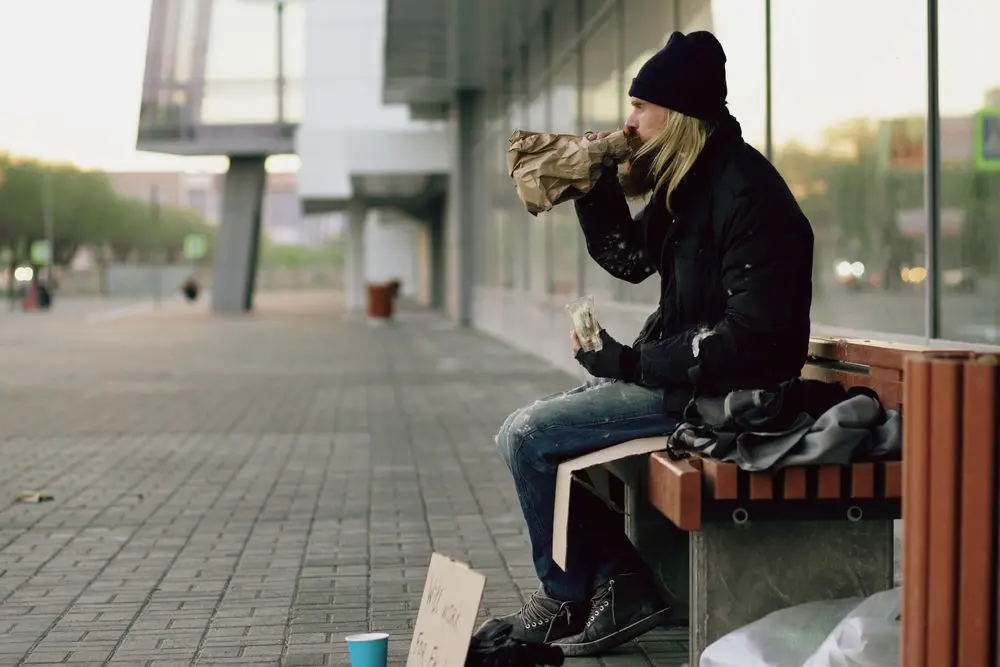
He was sitting cross-legged beside the ice machine. On the cold concrete. With a worn backpack between his knees.
His hoodie was two sizes too big. Gray. With a faded Cleveland Browns logo on the front. His jeans had a hole in one knee. His sneakers were the kind of white that used to be white.
He was thin. Not skinny. Thin. The way kids get thin when meals aren’t a sure thing.
I’ve seen a lot of thin kids in the ER. I know the difference.
He caught me looking.
He stood up.
He walked toward me. Slowly. Like he didn’t want to scare me.
He stopped about six feet away. Keeping his distance.
“Ma’am,” he said. “I’m real sorry to bother you. But could I borrow your phone? Just for a minute?”
I hesitated.
Every woman knows that feeling. Alone at a gas station at night. A stranger asking for something.
“I need to call my aunt,” he said quickly. “She’s supposed to pick me up. But I don’t have any minutes left.”
He held up an old flip phone. Held together with Scotch tape.
I thought about Ben.
My own boy. Eighteen. Off at school in Oxford, Ohio, with his guitar and his messy dorm room and his phone that was always at four percent.
If he were standing at some gas station somewhere, needing help from a stranger, I’d want that stranger to choose to be kind.
“Sure,” I said. I unlocked my phone. “Take your time.”
He turned away from me. For privacy.
He spoke quickly and quietly into the phone. I couldn’t hear what he said. Maybe thirty seconds.
Then he came back and held it out to me. Carefully. With both hands. Like it was made of glass.
“Thank you, ma’am,” he said. “Really.”
“You’re welcome. Are you okay out here?”
“Yeah. She’s coming.”
I slid the phone into my coat pocket.
The pump clicked off behind me.
I was about to smile at him and wish him well and get back in my car.
Then I saw his eyes flick past me.
Over my shoulder.
Toward the entrance of the parking lot.
Whatever he saw there, or was afraid he might see there, it made his jaw go tight.
He took a small step closer.
Close enough that I could smell the cold night on his hoodie.
“Ma’am,” he said. So low I almost missed it. “Please don’t get in your car yet. There’s something I need to tell you.”
Something in his voice pulled the air out of my lungs.
I’ve heard that voice before. In the ER. From kids who come in with their mothers and won’t look at their fathers. From women with bruises who say they fell down the stairs.
It’s the voice of somebody who’s about to tell you the truth and is scared to death of what happens next.
“What is it?” I said.
He looked across the lot one more time.
Then he leaned in.
And he whispered it.
“Your husband is paying me to watch you.”
So that was where we were.
Me, laughing. Him, not laughing. Me telling him he had the wrong person. Him telling me David had said I’d say that.
“What’s your name?” I said.
“Marcus.”
“Okay, Marcus.” My voice was steady. My hands weren’t. “Why are you telling me this?”
He looked at the entrance again.
Then down at his hands.
“Because I can’t do it anymore,” he said.
I stared at him.
Twenty-six years in an ER. You get good at reading people. You learn who’s lying about how much they drank, who’s lying about how they got the burn, who’s lying about how much pain they’re in.
I looked at Marcus.
I didn’t think he was lying.
“Start from the beginning,” I said.
He took a breath.
“There’s a church over on Fremont Street,” he said. “First Methodist. They do meals on Wednesdays. For people like me. Your husband came in about two months ago. He asked to talk to me.”
“David?” I said. “At a church outreach?”
“He said his name was David. He said he was a doctor. He showed me a picture of you. On his phone.”
He swallowed.
“He said his wife was sick,” Marcus said. “Something with her memory. He said she was wandering around town. Forgetting things. Getting lost. He said he was scared she was going to get hurt.”
My hand found the side of the car.
I held on to it.
“Go on.”
“He said he couldn’t put a tracker on your phone because you’d notice,” Marcus said. “He said you were stubborn. That you’d never admit anything was wrong. So he needed somebody regular. Somebody nobody would look at. Somebody who could just see you around town. Text him when you stopped somewhere. Where you went. Who you talked to.”
“How much?” I said.
Marcus flinched.
“Three hundred a week,” he said.
“For how long?”
“Almost two months, ma’am.”
Two months.
Two months of grocery runs. Coffee from the Starbucks on Polaris. Picking up David’s dry cleaning. Filling up at the Shell on Tuesdays. Stopping at CVS for my blood pressure pills.
And somewhere in the background, the whole time, this boy had been watching me. Like a ghost I never turned around fast enough to catch.
“What did he ask you?” I said.
My voice didn’t sound like mine.
“Specifically. What questions?”
“At first, just normal stuff,” Marcus said. “Where’d she go. Was she okay. Was she driving safe. Does she ever drive up toward the lake.”
“The lake,” I said.
“He asked that a lot. If you went to some lake. Tamarack, I think. If you were up there by yourself.”
My stomach went cold.
“But then it changed,” Marcus said.
“Changed how?”
“He started asking different things,” Marcus said. “If you stopped anywhere after work. If you met any men. If you bought alcohol. If you seemed confused.”
“Confused,” I said.
“Yes, ma’am,” Marcus said. “That word a lot. Confused.”
I stared down at a smear of oil on the concrete next to my tire. It had a little rainbow in it from the overhead lights.
My father used to say the worst lies were the ones people told themselves first. Because those were the ones they could sell to everybody else without blinking.
And for one terrible second, standing at that gas pump, I wondered.
Was I?
Was I sick?
Had I been wandering around town, forgetting things, getting lost, the way Marcus said?
Would I even know?
I’m a nurse. I know how dementia works. Early-onset Alzheimer’s can start in your fifties. Sometimes the person is the last one to notice. Sometimes everybody else sees it before they do.
I made myself breathe.
“Marcus,” I said. “Have you ever seen me confused?”
“No, ma’am,” he said right away. “That’s the thing. That’s the whole thing. I told him you seemed fine. Every time. You go to work. You go to the store. You go home. You fill up your car on Tuesdays. You’re normal. You’re more normal than anybody.”
He shook his head.
“And he got mad,” Marcus said. “Real mad. He said I needed to look harder. He said I wasn’t paying attention. He said if I ever saw you buy wine, I should take a picture and text it to him right away.”
Something behind my ribs went very, very quiet.
“You said you couldn’t do it anymore,” I said. “Why now?”
Marcus looked away.
He didn’t answer for a long time.
When he did, his voice was different. Smaller.
“My dad used to talk about my mom like that,” he said. “The way your husband talks about you. Like he was the only one keeping her together. Like she was falling apart and he was this hero holding all the pieces.”
He wiped his nose on his sleeve.
“She wasn’t broken,” Marcus said. “He just needed her to be.”
I let that sit there between us.
On the cold concrete. Under the yellow lights. With the cars going by on Route 9.
“Where’s your mom now?” I said.
“Toledo,” Marcus said. “With my aunt. My dad’s in jail. I came down here for a job last spring. Roofing. The job fell through. I didn’t have money to get back.”
He shrugged.
“The call,” he said. “On your phone. That was my aunt. For real. She’s not coming tonight. But I called her. I just—I needed a reason to come over here. To get close enough to tell you.”
“How do you contact him?” I said. “David.”
Marcus reached into his backpack.
He pulled out a folded slip of paper. His hand was shaking a little.
“That’s his Venmo,” he said. “And the number he texts me from. I think it’s a burner. It’s not the one on his business card. I looked him up.”
I took the paper.
I unfolded it.
@DW_Cardio. And a phone number I didn’t recognize.
I slipped it into my back pocket.
It felt like it might burn through the fabric.
“Marcus,” I said. “Where are you staying tonight?”
“The shelter on Ninth. The men’s one. I’m okay.”
“Do you have a phone? A real one?”
He held up the flip phone. The tape. The cracked screen.
“I’ll get you a real one,” I said. “Tomorrow. I’m going to need to find you again. Is that alright?”
“Yes, ma’am.”
I opened my wallet. I had sixty-three dollars in cash. I gave him all of it.
Not out of pity.
Out of something else. Something closer to gratitude. I didn’t have the words for it yet.
He looked at the money in his hand.
“Ma’am, you don’t have to—”
“Take it,” I said.
He took it.
“Don’t tell him you talked to me,” I said. “Please. Keep texting him whatever you’d normally text him. Like nothing happened.”
“Yes, ma’am.”
“And Marcus?”
“Yeah?”
“Thank you.”
He looked at me for a long time.
Then he nodded. And he went back to his spot by the ice machine. And sat down. And pulled his hood up.
I got in my car.
I sat there.
I didn’t start the engine for almost five minutes.
I drove home the long way.
Up Route 9 past the turnoff. Around through Sunbury. Thirty minutes instead of ten.
I needed to think.
My mind went through it all, one thing at a time. The way I’d go through a chart.
The locked office.
The lawyer’s card. Elder law. Guardianship.
Did you stop anywhere on the way home?
The offer on the cabin. Two point four million. The letter he folded and put in his pocket.
Does she ever drive up toward the lake?
Confused.
By the time I pulled into our driveway, I knew one thing for certain.
I wasn’t going to say a single word to David.
Not yet.
Not until I knew exactly what he was doing.
And why.
David was in the kitchen when I came in.
He was making salmon. He does that sometimes. On my long-shift weeks. He’s a good cook. He likes to show it.
He looked up and smiled.
“Hey, you,” he said. “You’re late. Stop anywhere?”
I looked at him.
At his warm smile. His silver hair. His reading glasses pushed up on his head. The blue apron Emma gave him for Father’s Day that says TRUST ME, I’M A DOCTOR.
Twenty-two years.
“Just the gas station,” I said. “Tuesday.”
“Right,” he said. “Tuesday.”
He went back to the salmon.
We ate dinner at the kitchen table. The way we did every night.
We talked about the same things we always talked about. His day. My day. Emma’s midterm. Ben’s new girlfriend, whose name was either Kayla or Kylie, we weren’t sure.
David told me about a patient who’d come in with a heart rate of thirty-two and insisted he felt fine.
I laughed in the right places.
But this time, I was cataloguing every word.
Every look. Every pause.
I was watching my husband the way I’d watch a patient I didn’t trust.
Halfway through dinner, David put down his fork.
“Have you given any more thought,” he said, “to that offer on the cabin?”
I kept my face very still.
“Of course not,” I said.
“It won’t stay open forever, Rach,” he said. Gently. Reasonably. “Lakeshore’s got other properties they’re looking at. If we wait too long—”
“I’m not selling the cabin, David.”
He looked at me for a moment.
Something moved across his face. Fast. Like a cloud across the sun.
Then he smiled again.
“Okay,” he said. “Okay. It’s your cabin.”
He picked up his fork.
Then he said, “You’re quiet tonight.”
“Long shift,” I said.
“You’ve been tired a lot lately,” he said. “I’ve noticed. You’ve been forgetting things.”
I put down my fork.
“What have I forgotten?” I said.
He shrugged. Easy. Casual.
“Little things,” he said. “You left the stove on last week.”
“I didn’t leave the stove on.”
“Honey, you did. Thursday. I came home and the front burner was on. Low. Nothing on it.”
I stared at him.
I hadn’t touched the stove on Thursday. I’d worked a twelve-hour shift and came home and ate a bowl of cereal standing up at the counter and went to bed.
“And you asked me twice on Sunday what time Emma’s flight was,” David said. “She’s not even flying anywhere. She’s driving home for Thanksgiving.”
I hadn’t asked him that.
Not once. Let alone twice.
I looked at my husband across our kitchen table.
He was looking back at me with soft, worried eyes.
The eyes he uses with his patients’ families. Right before he tells them the bad news.
“I’ve been worried about you, Rach,” he said quietly. “That’s all.”
I picked up my fork.
“I’m fine, David,” I said.
That night, I lay awake next to him in our bed.
I listened to him breathe.
At 2:14 a.m., his phone buzzed on his nightstand. Once.
He didn’t wake up.
I didn’t look.
But I thought about Marcus, at the shelter on Ninth. With his taped-up flip phone.
Texting my husband that I’d come home and gone to bed.
The next morning, after David left for the hospital, I sat down at the kitchen table with my laptop.
I pulled up our joint checking account.
I’d never really looked at it closely. David handled the money. He always had. That’s how we’d split it for twenty-two years. I made money and he managed it. I trusted him.
I scrolled back.
There they were.
Cash withdrawals. Every Friday. From the ATM at the Kroger on Sawmill Road.
$300.
$300.
$400.
$300.
$300.
Every single Friday. For eight weeks.
Small enough not to notice. If you weren’t looking.
Steady enough to be a paycheck.
I kept scrolling.
And I found something else.
Transfers. Large ones. From our savings account to an account at a different bank. One I didn’t recognize.
$15,000 in June.
$22,000 in August.
$40,000 in September.
I sat back in my chair.
Our savings had been almost two hundred thousand dollars in the spring. For emergencies. For the kids. For retirement.
It was sixty-one thousand now.
I went upstairs.
I stood in front of David’s office door. The shiny brass lock.
It was locked. Of course.
But a few weeks earlier, I’d been digging around in the junk drawer in the kitchen. Looking for a battery for the smoke detector. And way in the back, under the takeout menus and the rubber bands and the dead pens, I’d found a key.
A shiny new key. Brass. On a little ring by itself.
I’d thought it was weird. I’d put it back.
I went downstairs. I opened the junk drawer.
It was still there.
I went back upstairs.
I put the key in the lock.
It turned.
David’s office looked the way it always did.
Big wooden desk. Leather chair. Bookshelves full of medical textbooks and golf trophies. A framed picture of the four of us at Emma’s high school graduation. A window looking out at the backyard.
It smelled like his cologne.
I opened the top drawer of his desk.
There was a manila folder.
Thick. With a rubber band around it.
I sat down in his leather chair.
My legs wouldn’t hold me.
I took off the rubber band.
I opened the folder.
The first thing was a notebook.
A small black Moleskine. The kind he uses for patient notes.
I opened it.
Dated entries. In his handwriting. Small and neat. Every page.
At first I thought they were all just notes about me. From Marcus. Where I’d gone. When.
Then I read more carefully.
Monday, Oct. 3. Subject left work 7:12 PM. Arrived home 7:58 PM. Unaccounted 23 min. (Normal commute 22 min.)
Thursday, Oct. 6. Subject at CVS, Polaris Pkwy. Purchased Rx + unknown item. Possibly wine? (Check.)
Sunday, Oct. 9. Subject asked twice re: Emma’s flight time. Disoriented.
Thursday, Oct. 13. Stove left on. Front burner. Subject denies.
Subject.
He called me subject.
I kept reading.
Tuesday, Oct. 18. 6:47 PM. Subject stopped at Elm Street Wine & Spirits. Purchased two bottles red wine. Appeared unsteady exiting store. Dropped keys in parking lot.
I read that one three times.
I’d never been to Elm Street Wine & Spirits in my life. I didn’t even know where Elm Street was.
On Tuesday, October 18th, I’d worked until seven and driven straight home. I’d filled up at the Shell. Then I came home and made chili.
Marcus had never sent him that.
He couldn’t have. It never happened.
I thought about what Marcus said. About David getting angry when Marcus told him I seemed fine.
He said I needed to look harder.
David had stopped waiting for Marcus to see what he wanted.
He was writing it himself.
The stove. The questions about Emma’s flight. They weren’t in Marcus’s texts either.
They were David’s.
He’d been building it. One fake memory at a time. In a little black notebook.
And then telling me about them at the kitchen table. Gently. With his worried doctor eyes.
You’ve been forgetting things, Rach.
Behind the notebook, there was a stack of printed text messages.
From Marcus’s number to the burner.
She’s at Kroger. Normal.
She’s at work. Normal.
She stopped at Shell. Got gas. Went home. Normal.
Normal. Normal. Normal.
And David’s replies.
Look harder.
Are you sure? Did she seem confused?
Did she buy alcohol?
You’re not paying attention. I’m paying you to pay attention.
Behind those, photographs.
Printed out on regular printer paper. Grainy. Taken from far away.
Me at the grocery store. Pushing a cart. Me at the pharmacy counter. Me at a stoplight, in my car, with my hand on my forehead. I remembered that. I’d had a headache. Long shift.
Me sitting in my car in the hospital parking lot, after a shift, with my eyes closed.
I remembered that too. A two-year-old had died that night. Drowned in a backyard pool. I’d sat in my car for twenty minutes before I could drive.
Under that photo, in David’s handwriting, it said:
Subject sitting alone in vehicle 20+ minutes. Unresponsive?
I put my hand over my mouth.
Behind the photographs, there was a letter from a law firm.
Kessler & Associates. Elder Law & Estate Planning.
Martin R. Kessler, Esq.
The business card from his coat.
It was a draft.
PETITION FOR APPOINTMENT OF GUARDIAN OF THE ESTATE AND PERSON. ON GROUNDS OF DIMINISHED CAPACITY.
And at the top, typed neatly in bold:
IN RE: RACHEL ANNE WHITMAN.
My name.
I read it.
All of it. Every page.
It said I’d been showing signs of cognitive decline for months. Memory loss. Disorientation. Confusion. Episodes of wandering. Excessive alcohol consumption.
It said my husband, Dr. David Whitman, a board-certified physician, had observed these symptoms personally and documented them carefully.
It said I lacked insight into my condition and refused evaluation.
It said I was at risk of harming myself.
It said I was at risk of making “imprudent financial decisions” regarding “significant separately held real property.”
It asked the probate court to appoint my husband as my guardian.
My guardian.
He’d control my money. My medical decisions. My property.
My life.
And there, at the very bottom of the folder, I found the reason.
A property appraisal.
For 1142 Tamarack Lake Road.
My father’s cabin.
$2,650,000.
Behind it, a revised purchase offer from Lakeshore Partners. Dated two weeks ago.
$2,600,000. Contingent on clear title and court approval.
Clipped to that was a printed email.
From Martin Kessler to David.
David,
As we discussed, once a guardian is appointed, any proposed sale of your wife’s separately owned real property would require court approval. Given the circumstances, I don’t anticipate difficulty.
However, the medical documentation must clearly establish that your wife is no longer capable of managing the property herself. Your observations alone will likely not be sufficient. The court will want an independent evaluation from a neurologist or psychiatrist.
Please let me know if you’ve been able to arrange that.
In the meantime, any additional documentation of public incidents (intoxication, confusion, etc.) would strengthen the petition considerably. Photographs are particularly persuasive.
Best,
Marty
I sat in my husband’s leather chair and read that email four times.
Photographs are particularly persuasive.
There was one more piece of paper.
At the very back.
It was a letter. Not from a lawyer. From a bank.
FINAL NOTICE OF DEFAULT. PERSONAL GUARANTEE.
Addressed to David.
It said Polaris Surgical Partners, LLC, had defaulted on a construction loan. It said David had personally guaranteed $1.8 million of that loan. It said the bank intended to pursue collection against his personal assets if payment wasn’t made by January 31st.
Polaris Surgical Partners.
I’d heard him mention it. Two years ago. A new outpatient surgery center. He and Dr. Feld and three other doctors were investing. “Easy money, Rach,” he’d said. “Can’t miss.”
He’d never mentioned it again.
It missed.
And he’d been moving our savings to cover it. Fifteen thousand. Twenty-two thousand. Forty thousand.
And when that wasn’t enough, he looked at the one thing left that was worth anything.
My father’s cabin.
The one thing he couldn’t touch.
Unless I was declared incompetent.
I photographed every page.
Every single one. With my phone. Twice. Then I emailed them to myself at an account David didn’t know about. Then I texted them to myself. Then I put my phone in my bra.
I put everything back exactly the way I’d found it.
The rubber band. The order of the papers. The notebook on top.
I closed the drawer.
I locked the office.
I put the key back in the junk drawer. Under the takeout menus.
Then I went out to my car, so there was no chance David had something recording in the house, and I called Karen.
Karen Delgado has been my best friend since nursing school. We were roommates for two years. Then she decided she hated blood and went to law school instead.
She does family law now. Divorces. Custody. Protective orders.
She’s the toughest person I know.
She picked up on the second ring.
“Rach! I was just thinking about you. Are we still on for—”
“Karen,” I said. “I need you to be my lawyer. Not my friend. Today.”
The line went quiet.
“Where are you?” she said.
“In my car. In my driveway.”
“Is David there?”
“He’s at work.”
“Are you safe?”
I thought about it.
“I don’t know,” I said.
“Tell me everything,” Karen said.
I told her everything.
The gas station. Marcus. The Venmo. The withdrawals. The notebook. Subject. The stove I never left on. The wine store I never went to. The photo of me in the parking lot after the drowning. The guardianship petition. The cabin. Marty Kessler’s email. Photographs are particularly persuasive. The bank. Polaris Surgical. $1.8 million.
When I was done, Karen didn’t say anything for a long time.
“Rachel,” she said finally. “Listen to me very carefully.”
“Okay.”
“Do not go home and confront him. Do you hear me?”
“I hear you.”
“I’m serious. Do not say a word. Do not let on that you know anything. Not a look. Not a sigh. Nothing.”
“Okay.”
“He has been building this for months,” Karen said. “Months. He has a lawyer. He has a paper trail. He has a notebook full of lies in his own handwriting, which is great for us, but he also has a medical license and twenty-two years of everybody thinking he’s a saint.”
She took a breath.
“If you confront him now, before we’re ready,” she said, “he’ll say you’re paranoid. He’ll say you broke into his office in a confused state. He’ll say this proves everything in his petition. And a judge might believe him.”
I closed my eyes.
“So what do I do?”
“You go to work,” Karen said. “You come home. You eat dinner. You smile. You let him think he’s winning.”
She paused.
“You are going to be smarter than he is,” she said. “For one more week.”
It was the hardest week of my life.
Every morning, I woke up next to him.
Every night, I ate dinner across from him.
I smiled. I laughed at his jokes. I told him about my shifts. I let him kiss me goodbye in the morning.
On Wednesday, he told me I’d left the garage door open overnight.
I hadn’t.
“I’m sorry,” I said. “I don’t know what’s wrong with me lately.”
He put his hand on my shoulder.
“It’s okay, honey,” he said. “We’ll figure it out.”
I went into the bathroom and threw up.
Karen worked fast.
On Monday, she pulled the probate court docket.
David’s lawyer had already filed. Not a draft. The real petition. Last Friday. A preliminary petition for guardianship. Public record.
The hearing was set for December 12th.
He’d been planning to serve me with it the week after Thanksgiving. Right after the kids went back to school.
On Tuesday, Karen called David’s partner.
Dr. Harold Feld. Neurologist. Not cardiology. He shares the building with David’s practice. They’d been friends for twenty years.
Karen asked him one question.
“Has David Whitman ever asked you to evaluate his wife?”
Dr. Feld was quiet for a long time.
Then he said, “Who is this?”
Karen told him.
Then Dr. Feld said, “I’d like to come to your office. In person. Today.”
He came that afternoon.
He sat in Karen’s office with his hands folded in his lap and told her that three weeks ago, David had come into his office and closed the door. And asked him to write a letter. On his letterhead. Stating that Rachel Whitman showed signs consistent with early-onset dementia and alcohol-related cognitive impairment.
“I asked when I could examine her,” Dr. Feld said. “He said I didn’t need to. He said he’d already observed everything. He said he’d give me his notes. He said it would save her the humiliation of a full workup.”
Dr. Feld shook his head.
“I’ve known Rachel twenty years,” he said. “I’ve had dinner at their house. She’s the most competent person I know.”
He looked at Karen.
“I told him no,” he said. “I told him I’d never sign a letter like that without examining a patient. He got angry. He said I was a coward. He said I owed him. Because of Polaris.”
“What did you do?” Karen asked.
“Nothing,” Dr. Feld said. “God help me, I did nothing. I thought it was a marital thing. I thought I’d misunderstood.”
He put his face in his hands.
“I’ll testify,” he said. “To whatever you need.”
On Thursday, I met Marcus at a diner off the highway.
The Blue Plate. On Route 3. A little place with red booths and a waitress named Doris who’s been there since Nixon.
I’d bought him a phone. A real one. A cheap Android with a prepaid plan. He held it like it was made of gold.
I’d also bought him a coat. A real winter coat. Navy blue. From Kohl’s. With the tags still on.
He put it on right there in the booth. He didn’t take it off the whole time.
He ate two cheeseburgers and a plate of fries and a piece of apple pie.
I watched him eat.
Twenty-six years in an ER. I know what a kid looks like who hasn’t had a real meal in a while.
When he was done, he put down his fork.
“He texted me this morning,” Marcus said. “Your husband. On the burner.”
“What did he say?”
Marcus took out his old taped-up flip phone. He showed me.
Need a specific report this Saturday. Will send location. She’ll be at a restaurant. I need photos. Her drinking. Looking confused. Unsteady. Anything. $500 bonus.
I felt something cold and clear settle into my chest.
“Saturday,” I said.
“He said it’d be somewhere public,” Marcus said. “He said his wife has been drinking again and somebody needs to document it before she hurts somebody.”
“Did he say where?”
Marcus shook his head.
“Just that he’d handle the where. I was supposed to wait for an address.”
I looked at this boy across the table from me.
Seventeen years old. In a brand-new coat. Eating apple pie in a diner booth. Who’d been paid three hundred dollars a week to spy on me.
Who’d decided he couldn’t do it anymore.
“Marcus,” I said carefully. “Would you be willing to talk to my lawyer?”
He looked up at me.
There was guilt in his face. Still. A lot of it.
But underneath it, there was something steadier.
“He reminded me of my dad,” Marcus said. “My real dad. When he talked about you. Same voice. When he lied.”
He looked down at his plate.
“My dad told everybody my mom was crazy,” he said. “For years. He told the neighbors. He told her family. He told the police, the times they came. He told them she drank. She didn’t. She never drank. But by the time she left him, nobody believed anything she said.”
He swallowed.
“I was nine,” he said. “I didn’t say anything. I knew he was lying. I didn’t say anything.”
He looked up at me.
“I’ll talk to her,” he said. “Your lawyer. I’ll say whatever I need to say. I’ll say the truth.”
Karen met Marcus on Friday morning at her office.
She recorded his statement. Two hours. Every text. Every meeting. Every dollar. The church on Fremont Street. The picture of me on David’s phone. Look harder. I’m paying you to pay attention.
Then she took him to a notary and had him sign it under oath.
Then she took screenshots of his Venmo account. Every payment from @DW_Cardio. Eight of them. Matching the Friday cash withdrawals from our joint account to the dollar.
Wait. Not cash. Venmo.
He’d been withdrawing cash and depositing it into a separate account and paying Marcus from that. To hide it.
But the Venmo was in Marcus’s name. On Marcus’s phone.
None of it came from David’s office. None of it came from his desk drawer.
All of it was Marcus’s.
That night, at home, David poured himself a scotch.
He leaned against the kitchen counter.
“I made us a reservation for Saturday,” he said. “That place by the lake you like. Lakeside Grill. I thought we could use a night out. Just the two of us. We’ve both been so tired.”
The lake.
Of course.
Lakeside Grill was on Tamarack Lake. Twenty minutes from the cabin.
The address Marcus was waiting for.
He’d booked a romantic dinner on the lake.
So that he could order me wine. So that Marcus could photograph me drinking it. Twenty minutes from the property he was trying to steal.
So the judge could see the pictures.
Photographs are particularly persuasive.
I smiled at my husband.
“That sounds perfect,” I said.
He kissed my forehead.
He went upstairs with his scotch.
I waited until I heard the shower running.
Then I took out my phone and texted Karen one word.
Saturday.
Saturday evening came with a strange calm.
I got dressed in front of the bedroom mirror. A navy blue dress. The pearl earrings David gave me for our twentieth anniversary.
I looked at myself for a long time.
Fifty-one years old. Charge nurse. Mother of two. Hank Doyle’s daughter.
Subject.
I put the earrings back in the box.
I wore my mother’s little gold hoops instead.
We drove to the lake in David’s BMW. He talked the whole way. About a golf trip he wanted to take in the spring. About Emma’s grades. About how nice it was to get away.
I looked out the window at the trees.
Lakeside Grill is a nice place. White tablecloths. Candles. Big windows looking out at the lake. In the summer, you can see sailboats. In November, the water was dark and gray and still.
The hostess took us to a table by the window.
David pulled out my chair for me.
He sat down across from me. He smiled.
He ordered a bottle of cabernet without looking at the menu. A good one. Ninety dollars.
“For you,” he said. “You’ve earned it.”
The waiter poured me a glass.
I didn’t touch it.
Through the big window, I could see the parking lot. The lights. A few cars.
And over by the dumpster, in the shadows, a kid in a navy blue coat.
With a phone.
Not taking pictures.
Just standing there. Watching. Like I’d asked him to.
Karen was sitting at the bar.
She’d come in twenty minutes before us. She was nursing a club soda and pretending to read something on her phone. She had a manila folder on the bar stool next to her.
David didn’t notice her. He’d met her a dozen times. At the kids’ birthday parties. At our anniversary. He didn’t even look.
He never really looked at anybody except himself.
“You’ve seemed tired lately, Rach,” David said.
He’d ordered the halibut. I’d ordered the chicken. I hadn’t eaten a bite.
He leaned across the table. He put his hand on mine.
“I’ve been worried about you,” he said softly. “Really worried. I think maybe we should talk to somebody. A specialist. Just to rule some things out.”
I looked at his hand on mine.
His long, steady doctor’s fingers.
“I’ve been worried too,” I said.
Then I reached into my purse.
I took out a folder.
A manila folder. With a rubber band around it.
I slid it across the white tablecloth.
Past the candle. Past the bottle of cabernet. Past my full, untouched glass of wine.
He looked at it.
He frowned.
He took off the rubber band.
He opened it.
I watched his face.
Twenty-six years in an ER. I’ve watched a lot of faces get bad news.
His went white.
All of it. At once. Like somebody pulled a drain.
Inside were copies of his little black notebook.
Subject stopped at Elm Street Wine & Spirits. Appeared unsteady exiting.
The Venmo records. @DW_Cardio. Eight payments. To Marcus.
The text messages. Look harder. I’m paying you to pay attention.
Marty Kessler’s email. Photographs are particularly persuasive.
The guardianship petition. IN RE: RACHEL ANNE WHITMAN.
The bank letter. Polaris Surgical Partners. $1.8 million.
David turned the pages slowly.
His hands had started to shake.
“I know about Marcus,” I said quietly.
He didn’t look up.
“I know about the guardianship petition,” I said. “I know you filed it last Friday. I know about the hearing on December 12th. I know about Polaris. I know about the savings. I know about the notebook full of things I never did.”
I leaned forward.
“I know you’re trying to have me declared incompetent,” I said, “so you can sell my father’s cabin to pay your debts.”
He looked up.
For one second, I saw it. The real David. Under the warm voice and the silver hair and the TRUST ME, I’M A DOCTOR apron.
Scared. Cornered. Calculating.
Then it was gone.
“Rachel,” he said.
His voice was soft. Gentle. His doctor voice.
“Honey. Whatever you think you found, you’re misreading it. This is exactly what I’ve been worried about. This kind of thinking. This paranoia. You’re confused, sweetheart. You’re not well.”
“Am I forgetting that too, David?” I said.
He stopped.
He looked at me.
Then he shifted. Like flipping a page.
His voice went hard.
“You went through my office,” he said. Low. Cold. “You broke into a locked room. Anything you took from that drawer is inadmissible. You know that, right? Any judge will throw it out. And it’ll go right into my petition. ‘Wife broke into husband’s private office in a paranoid episode.’”
He smiled.
“You just made my case for me, Rach,” he said.
“I didn’t need the drawer,” I said.
His smile stopped.
“Marcus gave a sworn statement this morning,” I said. “Under oath. With a notary. Two hours. Every meeting. Every text. Every dollar.”
I tapped the Venmo pages.
“The Venmo records are in his account,” I said. “On his phone. Not yours. Not your office. His.”
I tapped the petition.
“The guardianship petition was filed with the probate court on Friday,” I said. “It’s public record. Anybody can pull it.”
I tapped the bank letter.
“And Polaris’s default is in the county recorder’s office. Also public.”
“And Dr. Feld came to see my lawyer on Tuesday,” I said. “He told her you asked him to write a letter saying I had dementia. Without examining me. He told her you called him a coward when he said no.”
David’s face dropped.
All the way.
“None of that came from your office, David,” I said.
He sat there.
He didn’t say anything.
The candle flickered between us.
Somewhere behind me, somebody laughed at the bar.
“Karen has the originals,” I said. “All of them. She’s sitting at the bar right now. You can wave to her if you want.”
David turned his head.
Karen lifted her club soda.
David turned back to me.
His mouth opened.
Nothing came out.
“Emma and Ben will hear this from me,” I said. “Tonight. Not from you. I’m driving up to see Ben tomorrow and Emma on Monday. In person. I’m going to tell them the truth.”
I took a breath.
“You don’t get to tell them first,” I said. “You don’t get to tell them I’m sick. You don’t get to tell them I’m confused. You don’t get to tell them anything.”
I reached into my purse again.
I took out one more envelope.
I put it on top of the folder.
PETITION FOR DISSOLUTION OF MARRIAGE.
Franklin County Court of Common Pleas.
Whitman v. Whitman.
“You don’t have to sign it here,” I said. “But you will.”
He looked at the envelope.
He looked at me.
He opened his mouth.
He closed it.
I took two twenty-dollar bills out of my wallet.
I laid them on the white tablecloth. For my half.
I stood up.
I left the glass of wine exactly where it was. Full.
I walked out.
Karen met me in the parking lot.
She didn’t say anything. She just put her arms around me.
I didn’t cry. Not yet.
Over by the dumpster, Marcus was standing in the shadows in his new navy coat.
He walked over.
He looked at me. Then at Karen.
“Is it done?” he said.
“It’s done,” I said.
He let out a long breath.
Like he’d been holding it for two months.
“He texted me,” Marcus said. “Like five minutes ago. Before you went in. He said, ‘She’s here. Get ready.’”
He held up the old flip phone. The one with the tape.
He opened it. He pressed a few buttons. He showed me the screen.
He’d written back.
No.
Then he closed the phone.
He walked over to the dumpster.
He dropped it in.
I drove to Oxford the next morning.
Two hours. I didn’t call ahead. I knocked on Ben’s dorm room door at ten a.m. on a Sunday.
He opened it in his boxers and a Miami T-shirt with his hair sticking straight up.
“Mom?” he said. “What are you—is everything okay?”
I told him.
Sitting on his narrow dorm bed. With his roommate’s dirty laundry on the floor and a poster of Jimi Hendrix on the wall.
All of it.
He didn’t believe me at first.
“No,” he said. “No. Dad wouldn’t. Dad’s not like that. Dad coached my soccer team. Dad—”
He stopped.
I didn’t say anything.
I just handed him my phone. With the pictures. The notebook. Subject.
He read it for a long time.
Then he put the phone down on the bed.
He looked at me.
“Are you okay?” he said. “Mom? Are you sick? Is any of it—”
“No, baby,” I said. “I’m not sick. I’m fine. I promise.”
He started crying.
My eighteen-year-old son. Who hadn’t cried in front of me since he was twelve.
He put his head on my shoulder and cried.
Emma was harder.
I drove to Columbus on Monday. She lives off campus. A little apartment with two roommates.
She listened to the whole thing without interrupting.
When I was done, she was quiet for a long time.
Then she said, “He called me last week.”
I went cold.
“What did he say?”
“He said he was worried about you,” Emma said slowly. “He said you’d been forgetting things. He said you’d left the stove on. He said he thought you might be drinking more than you should. He said he might need my help. He said, ‘You’re going to be a doctor, Em. You understand these things. If it comes to it, I might need you to back me up.’”
She looked at me.
“I said okay,” she said. “I said, ‘Of course, Dad. Whatever you need.’”
Her face crumpled.
“I believed him, Mom,” she said. “I believed him. I was going to stand up in court and say you were sick.”
I held her.
My daughter. Who wants to be a doctor like her father.
“He’s very good at it, honey,” I said. “He fooled me for twenty-two years.”
The next few months were hard.
David didn’t sign the divorce papers right away.
He hired a lawyer. An expensive one from downtown. He fought. For about three weeks.
His lawyer sent Karen a letter saying I was unstable and that David intended to pursue the guardianship petition “in the interest of his wife’s safety.”
Karen sent back a letter with Marcus’s sworn statement attached. And Dr. Feld’s. And a copy of the notebook entry about Elm Street Wine & Spirits, along with a sworn statement from the store’s manager and the security footage from October 18th, which showed that no woman matching my description had entered the store between six and eight p.m.
And a credit card receipt showing that at 6:47 p.m. on October 18th, I’d been buying gas at the Shell on Route 9.
Twelve miles away.
David withdrew the guardianship petition the next day.
Marty Kessler withdrew as his attorney the day after that.
Dr. Feld filed a complaint with the State Medical Board.
I didn’t ask him to. He did it on his own.
The Board opened an investigation. For attempting to obtain a fraudulent medical evaluation. For “conduct unbecoming a physician.”
It took eight months.
In the end, they didn’t take his license. But they suspended it. For six months. And put him on probation for three years.
His practice asked him to leave.
The hospital revoked his privileges.
Polaris Surgical’s bank came after his personal assets in February. Just like they said they would.
He sold his half of the house to me. To pay them.
He sold his BMW.
He sold his golf clubs.
He moved into a one-bedroom apartment in Dublin.
He signed the divorce papers in March.
I thought about whether to press charges.
Karen said I could. Theft, maybe. For the savings he moved without telling me. Fraud. For the petition.
She said the prosecutor would probably take it.
I thought about it for a long time.
In the end, I didn’t.
Not for David’s sake.
For Emma’s. And Ben’s.
They’d already lost their father. The one they thought they had.
They didn’t need to watch him in a courtroom too.
But I got the money back.
All of it. Every dollar he took from our savings. The divorce settlement made sure of it. Karen made sure of it.
And the cabin is in a trust now.
The Hank Doyle Family Trust. My name. Emma’s. Ben’s.
Nobody can sell it. Not without all three of us agreeing.
Not ever.
David called me once.
In April. Late at night. I almost didn’t answer.
“Rach,” he said.
His voice sounded old. Tired.
“I’m sorry,” he said. “I don’t know what happened to me. I was so scared. About the money. About Polaris. About losing everything. And the cabin was just sitting there. Worth so much. And I thought—”
He stopped.
“I thought if I could just make it look like you couldn’t handle it,” he said. “Just for a little while. Just long enough. Then I’d fix everything. Then I’d make it right.”
“You wrote that I was drunk, David,” I said. “In a notebook. In your own handwriting. You wrote down things I never did. You told me I left the stove on. You told me I was forgetting things. You were trying to make me believe I was losing my mind.”
He didn’t say anything.
“You were trying to make me believe it,” I said. “Not just the judge. Me.”
“I know,” he said quietly.
“Goodbye, David,” I said.
And I hung up.
Marcus is eighteen now.
He got his GED in February. He studied every night at the public library on Main Street. I helped him with the math. He’s terrible at fractions. Worse than Ben.
He works at the hospital now. In the cafeteria. Morning shift. Six to two. I got him the interview. He got the job himself.
Every day at noon, he brings me a coffee in the ER. Black. Two sugars. He leaves it on the nurses’ station without saying anything.
The other nurses think he has a crush on me.
He doesn’t. He’s dating a girl named Tasha from the pharmacy.
He just remembers how I take my coffee.
He has an apartment. A little studio over a laundromat on Fifth Street. It smells like dryer sheets. He says he likes it.
His aunt came down from Toledo in March. She brought his mother. They hadn’t seen each other in a year.
I was there. At his apartment. When his mother walked in the door.
She was a small woman. Gray-haired at forty-three. With tired eyes.
She looked at her son for a long time.
Then she started crying.
He held her.
Later, while his aunt and his mother were making dinner in his tiny kitchen, Marcus stood next to me by the window.
“I told her,” he said. “About you. About your husband. About what I did.”
“What did she say?”
He looked over at his mother. She was laughing at something his aunt said. Stirring a pot of rice.
“She said I did what she couldn’t,” he said quietly. “She said she wished somebody had told her. When it was happening to her. She said she wished somebody had whispered.”
That summer, we went to the cabin.
All of us.
Emma. Ben. Me.
And Marcus.
It was the first time I’d been there since the fall.
I stood on the screened porch and looked out at Tamarack Lake. Blue and calm, with the sun on it. The dock. The green rowboat, still leaking.
The stone fireplace my father built the summer I was nine.
Lakeshore Partners had sent another letter in May.
Three million now.
I’d thrown it in the fireplace.
Ben and Marcus took the rowboat out. They didn’t bail fast enough. They sank about fifty feet from the dock and had to swim back pushing the boat, laughing so hard they swallowed half the lake.
Emma sat on the dock with her feet in the water and a medical textbook in her lap.
She’s decided she’s still going to be a doctor.
“A good one,” she said. “One who actually examines her patients.”
That night, we built a fire.
We sat around it on the porch. Eating hot dogs. Making s’mores. Ben played his guitar. Badly.
Marcus didn’t say much. He never does.
But at one point, he looked at me across the fire.
“Ma’am,” he said.
“Marcus. You can call me Rachel.”
“Rachel,” he said. Like he was trying it out. “Can I ask you something?”
“Of course.”
“That night,” he said. “At the gas station. When I asked to borrow your phone. Why’d you say yes?”
I thought about it.
The cold concrete. The yellow lights. The skinny kid in a too-big hoodie, holding up a flip phone with tape on it.
I’d almost said no.
“Because of Ben,” I said. “I thought about him. Standing somewhere. Needing help. I thought, if he were standing there, I’d want somebody to be kind.”
Marcus nodded slowly.
He looked into the fire.
“I almost didn’t tell you,” he said. “I’d decided not to. That whole week. I’d decided I’d just take the money and keep my mouth shut. Like I did with my dad.”
He swallowed.
“But then you said, ‘Take your time,’” he said. “When you gave me your phone. Nobody’s said that to me in a long time. Take your time.”
He looked at me.
“And I thought,” he said, “she’s nice. She’s just nice. And he’s going to hurt her. And I’m helping him.”
He looked back at the fire.
“So I told you,” he said.
I still fill up my car on Tuesdays.
At the Shell on Route 9. Two exits from home.
It’s a habit. I don’t think I’ll ever break it.
But I do it differently now.
Now, while the pump does its slow work, I look around.
At the ice machine. At the corner by the air pump. At the bench by the door.
At whoever’s sitting there.
Some nights, there’s nobody.
Some nights, there’s a kid. Or an old man. Or a woman with a shopping cart.
And I walk over.
I don’t wait for them to ask.
I just say, “Are you okay? Do you need anything?”
My father used to say the worst lies are the ones people tell themselves first.
I’ve been thinking about that a lot this year.
For twenty-two years, I told myself I had the unshakable kind of marriage. I told myself the lock was for patient files. I told myself the lawyer’s card was for Mr. Henley’s mother. I told myself David was asking where I’d stopped because he loved me.
It took a seventeen-year-old boy at a gas station to tell me the truth.
Five seconds. A whisper.
That’s all it took.
I think about how close I came to not hearing it.
If I’d said no when he asked for my phone.
If I’d gotten in my car one second sooner.
If I’d been the kind of person who looks away.
So now I look.
Every Tuesday.
You never know who’s sitting by the ice machine.
You never know who’s waiting for somebody to stop long enough to listen.