Violet
Part One: The Bathroom Floor
My daughter, Olivia, is seventeen years old. Three months ago, her biggest worry in the world was whether the dress she’d ordered online would arrive in time for her senior prom.
Today, she’s fighting cancer.
It’s Hodgkin lymphoma. Stage II. The doctors at the University of New Mexico Comprehensive Cancer Center in Albuquerque found it in February, after she’d had a lump in her neck for six weeks that we all thought was a swollen gland from a cold. They told us it was one of the most treatable cancers there is. They told us the survival rate for a girl her age was over ninety percent. They told us she’d need six months of chemotherapy, and maybe radiation after that, and that she’d lose her hair.
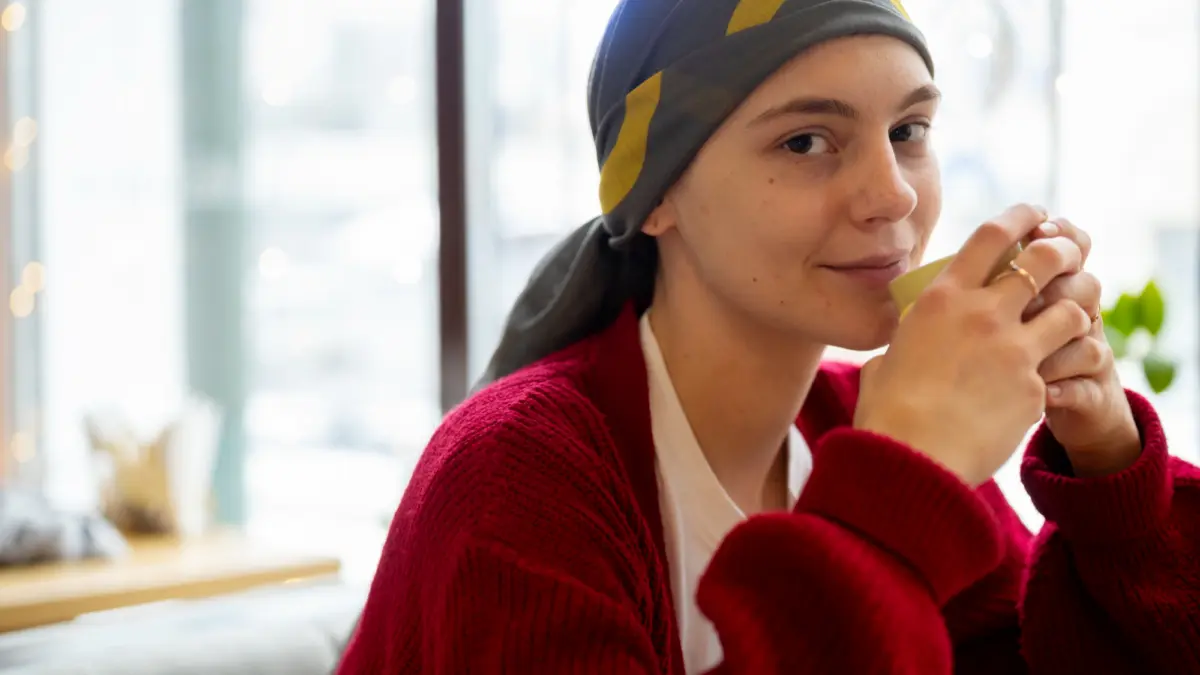
Six weeks ago, she started losing it.
I’ll never forget finding her on the bathroom floor that Tuesday morning. Sitting on the bath mat in her pajamas, with her back against the tub, staring down at her hands.
Her hair was in them. Long brown strands, tangled between her fingers. More on the floor around her. More on her shoulders. She’d been brushing it, the way she did every morning, and it had just come out.
She looked up at me in the doorway.
“Mom,” she whispered. “Do you think it’ll ever grow back?”
I sat down on the bathroom floor beside her. I put my arms around her and held her against my chest, the way I used to when she was little and had a nightmare. I stroked what was left of her hair and told her yes. Of course. It always grows back. Sometimes even curlier.
I didn’t know if that was true. I said it anyway.
But losing her hair wasn’t the worst thing my daughter went through that spring.
Losing Nate was.
Part Two: Nate
They’d been together almost two years.
Nate Delgado was her first boyfriend. Her first kiss, on the back porch of our house in the North Valley, after a movie, the summer before junior year. He was tall and lanky and quiet, with dark eyes and a slow smile and a habit of tapping his fingers on any flat surface like he was playing drums. He played trumpet in the jazz band at Valley High School. Olivia played clarinet. That’s how they met, in the band room.
He became part of our family. Every Sunday afternoon, he came over to help my husband, Mark, wash our two cars in the driveway. The two of them would stand out there with buckets and hoses and the radio playing old Santana, arguing about the Isotopes and the Lobos, spraying each other when they thought I wasn’t watching.
Nate’s mother died when he was eleven. Breast cancer. He lived with his father, Ray, a quiet man who worked as a lineman for PNM, the power company. I think our house became a kind of second home for Nate. Somewhere with a mother in the kitchen. Somewhere loud.
He and Olivia laughed all the time. They had a hundred inside jokes I never understood. They’d already decided what they’d wear to senior prom, back in November. She’d ordered a pale blue gown, floor-length, with a fitted bodice and a flowing skirt, from a website. He was going to wear a navy suit with a pale blue tie to match.
They’d planned the whole night. Dinner at El Pinto. The dance. Then the after-party at a friend’s house in Corrales.
Then came the diagnosis.
And exactly one week later, it was over.
Part Three: The Breakup
I can still see her sitting on the edge of her bed that Sunday night in February, holding her phone in both hands. Her hands were shaking. She’d been crying. Her eyes were swollen.
I’d heard her through the door and come in.
“Liv?” I said. “Honey, what happened?”
She looked up at me.
“Nate broke up with me,” she said. “He said he can’t do this anymore, Mom. He said it’s too much.”
My heart broke in half.
I sat down on the bed and held her while she cried. For an hour. Until she fell asleep with her head in my lap, still holding her phone.
When I came downstairs, Mark was standing in the kitchen. He’d heard.
His face was red. His jaw was tight. He’s a big man, my husband. A high school football coach and P.E. teacher at Cibola High School across town, six-foot-three, with a voice that can carry across a stadium. He almost never gets angry. When he does, it’s like weather.
“I’m going over there,” he said. He picked up his car keys from the hook by the door. “Right now. I’m going to look that boy in the eye and ask him what kind of person walks away from a girl a week after she finds out she has cancer.”
I wanted him to. God help me, I wanted to go with him. I wanted to call Nate’s father and tell him exactly what I thought of his son.
But Olivia had come down the stairs behind me. She was standing on the bottom step in her pajamas.
“Please,” she said. “Mom. Dad. Please don’t.”
Mark turned around.
“Please just leave him alone,” Olivia said. Her voice was shaking. “Promise me. Both of you. Don’t call him. Don’t call his dad. Don’t go over there. Just let it go.”
Mark stood there in the kitchen with his car keys in his hand for a long time.
Then he hung them back on the hook.
We promised.
Part Four: The Weeks After
For the next six weeks, Olivia barely mentioned the prom.
She went to chemo every other Thursday at the cancer center. ABVD, the regimen is called. Four drugs through an IV in a port in her chest. She’d come home exhausted and nauseated and sleep for two days. She went to school when she could. She did her homework at the kitchen table. She played her clarinet in her room in the evenings, quiet, sad songs.
She didn’t play in the jazz band anymore. She said she was too tired. I think it was because Nate was there.
Her pale blue prom dress hung untouched in the back of her closet, still in its plastic garment bag, with the price tags hanging from the sleeve.
I thought she’d decided not to go. I didn’t ask. I didn’t want to push.
Mark didn’t go back to the Delgados’ house. He’d promised. But I could see it eating at him.
On Sundays, he washed the cars alone in the driveway. With the radio off.
Once, in March, I saw Nate at the Smith’s grocery store on Fourth Street. He was in the cereal aisle with his father. He looked terrible. Thin, pale, with dark circles under his eyes. He saw me at the end of the aisle.
He looked at me for a long moment. He opened his mouth like he was going to say something.
Then he turned around and walked away.
I stood in the cereal aisle with my cart and shook with anger. How dare he look so miserable, I thought. He’s the one who left.
Part Five: Four Days Before
Then, four days before prom, on a Tuesday evening in April, Olivia came quietly into the kitchen while I was making dinner.
She was wearing one of Mark’s old Cibola High football sweatshirts, which swallowed her. Her head was bare. Most of her hair was gone by then. What was left was patchy and thin, and she’d stopped bothering with the scarves at home.
“Mom,” she said. “Will you help me get ready? For prom?”
I turned around from the stove. “You still want to go?”
She nodded.
“Even if nobody dances with me,” she said, “I don’t want to miss my senior prom. I’ve been looking forward to it since freshman year.” She swallowed. “I’m not going to let cancer take that too.”
I put down the spoon. I hugged her as tight as I could.
Then I went into the downstairs bathroom and locked the door and cried with my face in a towel where she couldn’t hear me.
Part Six: Prom Night
On the night of the prom, a Saturday at the end of April, Mark and I volunteered to help.
The dance was in the gymnasium at Valley High School. The student council had decorated it with a “Night in Havana” theme: strings of white lights across the ceiling, paper palm trees, a photo booth with a vintage car painted on a backdrop. Mark and I had signed up to help the teachers at the refreshment table, handing out bottled water and lemonade and checking that nobody snuck anything in.
Really, we just wanted to be there. In case Olivia needed us.
She looked absolutely beautiful.
She wore the pale blue gown. Floor-length, with the fitted bodice and the flowing skirt that moved like water when she walked. A pair of delicate silver earrings that belonged to my mother. A little silver bracelet.
And no wig.
We’d bought her one in March. A good one, real human hair, almost exactly the color hers used to be. It cost eleven hundred dollars. She’d worn it twice.
That night, she decided not to. She’d stood in front of the mirror in her bedroom for a long time. Then she took it off and put it back in its box.
“I want to go as me,” she said. “This is me right now.”
She went with her bare head. Smooth, pale, a little fuzz coming in at the back. She’d put on just a touch of makeup. Mascara and a little lip gloss.
I’d never been prouder of anything in my life.
She came with two girls from the band, Priya and Hannah, who’d stuck by her all spring. They’d driven her and walked in on either side of her, holding her hands.
At first, people stared. Of course they did. A bald girl in a ball gown. But then, one by one, the kids in her class came over. Hugged her. Told her she looked amazing. A boy from the soccer team asked her to dance during the second song. She said yes.
She was standing near the photo booth at eight-thirty, laughing with Priya and Hannah, holding a cup of lemonade, when the gymnasium doors swung open.
And Nate walked in.
Part Seven: The Purple Dress
His head was completely shaved. Smooth and pale, like hers.
And instead of the navy suit we’d all expected, he was wearing a dress.
A long, floor-length gown. Shimmering purple, a deep violet, with a sweetheart neckline and thin straps and a skirt that swept the floor. It was obviously borrowed. It was too short in the torso for his long frame, and too tight across the shoulders. He was wearing black sneakers under it. And he’d pinned a single violet ribbon to the strap, over his heart.
For several seconds, I just stared. I couldn’t make sense of what I was seeing.
Then somebody near the photo booth started laughing. A boy, loud. Then another one. A couple of girls whispered behind their hands. I saw phones coming out all over the gym. Somebody said, loud enough to hear across the room, “Oh my God, is he serious?”
Olivia turned toward the doors.
I saw her see him. Bald. In a purple dress.
The happiness vanished from her face like somebody had switched off a light.
Beside me at the refreshment table, Mark set down the case of bottled water he was carrying. Hard. The bottles rattled.
“Is that boy,” Mark said, and his voice was shaking, “seriously trying to humiliate our daughter? At her prom?”
He started toward the doors.
“Mark,” I said. “Wait.”
I grabbed his arm. He pulled away. He was already halfway across the gym floor, through the dancing kids, his big shoulders squared, the way he walks onto a football field when a ref makes a bad call.
He was going to throw Nate Delgado out of that gym. I knew it. Everybody near us knew it.
But Nate didn’t look at Mark. He didn’t look at the kids laughing or the phones pointed at him. He walked straight across the gym floor in his purple dress and his black sneakers, past the dancers, to the DJ’s table by the bleachers.
He reached for the microphone.
Part Eight: The Microphone
“Could I have everybody’s attention?” Nate said. “Just for a minute?”
His voice came booming out of the speakers. The DJ, a twentysomething guy with headphones around his neck, looked confused. Then he turned the music down. Then off.
The gym went quiet. Three hundred kids in suits and gowns, under the strings of white lights and the paper palm trees, turned to look.
Mark stopped in the middle of the dance floor, ten feet from the DJ table.
Nate’s hands were shaking. I could see it from across the gym. The microphone was trembling.
He looked out over the crowd. Searching. Until he found Olivia by the photo booth, in her pale blue gown, with her hand over her mouth.
Then he looked at Mark, standing in the middle of the floor. And then at me, by the refreshment table.
“I know what everybody’s been saying,” Nate said. “About me and Olivia. About what happened.”
His voice wobbled.
“And I know how this looks,” he said. “Me. Standing up here. Like this.” He looked down at the purple dress. Somebody laughed. He ignored it. “I know I look ridiculous.”
He took a breath.
“But there’s something about our breakup,” he said, “that nobody knows.”
The gym was completely silent.
“Olivia asked me to keep it a secret,” Nate said. “And I promised her I would.”
I looked across the gym at my daughter.
Her face had gone white. Whiter than her bare scalp. She took a small step forward, her eyes locked on Nate.
Nate swallowed. Then he looked straight at her.
“Liv,” he said into the microphone. “I’m sorry. I know I gave you my word.”
His voice cracked completely.
“But I can’t let everybody keep believing this,” he said. “I can’t let your dad keep believing it.”
Olivia’s eyes filled with tears.
“Nate,” she whispered. “Please. Don’t.”
I could see her lips move from across the room. I don’t think anybody else could hear it.
But Nate did.
He shook his head. Then he raised the microphone again.
Part Nine: The Truth
“I didn’t break up with Olivia,” Nate said. “She broke up with me.”
The whole gym went still.
I heard Mark make a sound. Out in the middle of the dance floor.
“One week after she found out she had cancer,” Nate said, “she called me. At eleven o’clock at night. And she said she didn’t want to be with me anymore.”
He was looking right at her now. Only at her.
“I asked her why,” he said. “Over and over. She wouldn’t tell me at first. Then she did.”
His voice was shaking so badly I could barely understand him.
“She said,” Nate said, “You already watched your mom die of cancer. I’m not going to make you watch it again.”
Somebody near me gasped. A girl by the refreshment table put her hand over her mouth.
Across the gym, Olivia was crying. Standing by the photo booth in her pale blue gown, with Priya and Hannah holding her arms.
“I was eleven,” Nate said. “When my mom died. Breast cancer. Liv knows that. She knows I sat by my mom’s hospital bed for three months and watched her lose her hair and get thin and stop eating and stop talking.” He wiped his eyes with the back of his hand. “And when Liv got sick, she decided she wasn’t going to make me do that again. So she broke up with me. To protect me.”
Part Ten: The Lie
“And then,” Nate said, “she made me promise something.”
He took a breath.
“She made me promise to tell everybody I broke up with her,” he said. “Not the other way around.”
I stopped breathing.
“She said if people knew she broke up with me,” Nate said, “everybody would feel sorry for me. They’d say I was the sad guy whose girlfriend dumped him and who had to watch her be sick from a distance. And her parents would feel guilty. And I’d never be able to move on.” He looked at Mark. “She said if everybody thought I was the jerk who left, I could just… go. Be free. Go to college. Not have to carry it.”
He looked back at Olivia.
“She said, Let them hate you. It’s easier than letting them pity you.”
The gym was so quiet I could hear the air conditioning humming in the ceiling vents.
“So I said I’d do it,” Nate said. “Because she asked me to. Because I love her. And I’ve been doing it for ten weeks.” He laughed. A terrible, broken sound. “People at school stopped talking to me. Liv’s friends unfollowed me. Somebody wrote COWARD on my locker in Sharpie. Mr. Hollister,” he looked at Mark, “you drove past my house every single night for two weeks. I saw your truck. I know what you thought of me.”
Mark didn’t move. He stood in the middle of the dance floor in his good blue suit, with his arms hanging at his sides.
“And I let you think it,” Nate said. “Because I promised.”
Part Eleven: Why Now
“But I can’t do it anymore,” Nate said.
He looked down at his purple dress. At his black sneakers.
“Three weeks ago,” he said, “Liv texted me. The only time since February. She said she was thinking about not going to prom. She said, You don’t know what it’s like to walk into a room and have everybody stare at you. You’ll never know.”
He looked up.
“So tonight,” he said, “I wanted to find out.”
A ripple went through the gym. Somebody near me said, “Oh.”
“I shaved my head this afternoon,” Nate said. “In my bathroom. With my dad’s clippers. And I borrowed this dress from my cousin Marisol.” He tugged at the strap. “It’s purple because purple is the color for Hodgkin lymphoma. Violet. I looked it up.” He swallowed. “And because it’s Liv’s favorite color. It always has been. She told me in eighth grade.”
He looked out at the three hundred kids.
“I walked in here tonight,” he said, “and you all laughed. And you all took out your phones. And for about thirty seconds, I wanted to turn around and run.”
He looked at Olivia.
“That’s what she’s been doing every day,” he said. “Every single day, for six weeks. Walking into rooms where people stare. And she didn’t run. She came tonight anyway. Without a wig. In her blue dress.” His voice broke. “She’s the bravest person I’ve ever met.”
He set the microphone down on the DJ’s table.
Then he picked it back up.
“And Liv,” he said. “I don’t want to be free. I never did. You don’t get to decide that for me.”
He put the microphone down for good.
Part Twelve: Mark
Nobody moved.
Three hundred kids in suits and gowns stood frozen under the strings of white lights. The phones were still out, but nobody was laughing now.
Then Mark walked across the dance floor.
He walked straight to the DJ table, where Nate was standing in his purple dress. Nate saw him coming. I watched Nate brace himself. His shoulders went up. He was ready to be grabbed. Thrown out. Yelled at in front of everybody.
Mark stopped in front of him.
He looked at Nate for a long time. At his shaved head. At the borrowed purple dress, too tight across the shoulders. At the violet ribbon pinned over his heart.
My husband is six-foot-three and two hundred and forty pounds. Nate is seventeen and a hundred and fifty pounds soaking wet. He looked very small in that dress.
Then Mark put his big hand on the back of Nate’s neck. And pulled him into a hug.
He held him in front of three hundred kids. In the middle of the gym. Nate’s face pressed into Mark’s shoulder, his bald head against Mark’s blue suit.
I saw Mark’s shoulders shaking.
He said something into Nate’s ear. I didn’t hear it then. I found out later.
I’m sorry, son. I’m so sorry. I drove past your house every night. I should have knocked on the door.
Part Thirteen: Olivia
Then Olivia walked across the gym.
In her pale blue gown. With her bare head. Through the crowd, which parted to let her pass.
She stopped in front of Nate. Mark let him go and stepped back.
The two of them stood there. A bald girl in blue. A bald boy in purple.
“You promised,” Olivia said. Her voice was shaking. She was crying. “You promised me, Nate.”
“I know,” Nate said.
“You told everybody,” she said. “In front of the whole school.”
“I know,” he said.
Olivia looked at him for a long time. At his shaved head. At his cousin’s purple dress. At the violet ribbon.
“You look ridiculous,” she said.
“I know,” Nate said.
Then my daughter started laughing. Through her tears. And she reached up and put her hand on his bald head, very gently. The way you’d touch something to make sure it was real.
“It’s scratchy,” she said.
“Yours is too,” Nate said.
Then she put her arms around his neck. And he put his arms around her waist. And they stood there in the middle of the gym, in front of everybody, two bald kids holding on to each other.
The DJ, God bless him, didn’t wait for anybody to ask. He put on a song.
At Last. Etta James.
Part Fourteen: The Dance
They danced.
In the middle of the gym floor, under the strings of white lights, with the paper palm trees and the vintage car on the photo booth backdrop. A girl in pale blue and a boy in violet, swaying slowly, with her head on his chest.
For a minute, nobody else moved. Everybody just watched.
Then Priya and Hannah walked out onto the floor and started dancing too. Then a couple from the soccer team. Then a couple from student council. Then half the gym.
I stood at the refreshment table with my hand over my mouth.
Mark came back across the gym and stood beside me. His eyes were red. He didn’t say anything. He just took my hand and held it.
We watched our daughter dance.
Part Fifteen: The Kids
Something else happened that night that I didn’t expect.
About twenty minutes after Nate’s speech, a boy from the football team walked up to the DJ table. A big kid, a lineman, named Marcus Begay, who Mark had coached at a summer camp years ago. He asked the DJ for the microphone.
“I just want to say something,” Marcus said. His voice was rough. “I’m the one who wrote COWARD on Nate’s locker. In February.” He looked out at the dance floor, where Nate and Olivia were standing together. “Nate, I’m sorry, man. I didn’t know.”
He set the microphone down.
Then he went over to the refreshment table, where there was a box of violet ribbons that Nate had brought and left by the door. A whole box. Two hundred of them. He must have bought them at a craft store.
Marcus took one. He pinned it to his tuxedo lapel.
Then another kid took one. Then another.
By the end of the night, almost every kid in that gym was wearing a violet ribbon.
Part Sixteen: The Parking Lot
After the dance, at eleven o’clock, Mark and I found Nate in the parking lot.
He was standing by his father’s old Ford pickup in his purple dress, with a hoodie thrown over it now because it was cold. Ray Delgado was there too. He’d driven Nate. He’d been sitting in the truck in the parking lot the whole time.
Mark walked up to them. He held out his hand to Ray.
“Ray,” he said. “I owe you an apology. And your son.”
Ray Delgado shook his hand. He’s a quiet man, sun-weathered from thirty years climbing utility poles across the desert. He looked at Mark for a long time.
“He came home in February,” Ray said quietly, “and sat on the kitchen floor and cried. Like when his mom died.” He looked at his son. “He wouldn’t tell me why. He said he’d promised. He said Olivia didn’t want anybody to know.”
Ray shook his head.
“Ten weeks,” he said. “He’s been carrying it for ten weeks. Every day. Letting everybody think the worst.” He looked at Mark. “Including you.”
“I know,” Mark said. “I’m sorry.”
Then Mark turned to Nate.
“Son,” he said. “Sunday. Two o’clock. The cars need washing.”
Nate stared at him.
“If you want,” Mark said. “If you’ll come.”
Nate looked at him for a long time. Then he nodded.
“I’ll come,” he said.
Part Seventeen: What Olivia Said
That night, when we got home, Olivia sat at the kitchen table in her pale blue gown with her shoes off and a cup of chamomile tea.
Mark and I sat across from her.
“Why didn’t you tell us?” I asked. “About the breakup? That it was you?”
She looked at her tea for a long time.
“Because you’d have told me I was wrong,” she said. “You’d have told me to call him. You’d have told me he loved me and I should let him stay.”
“You were wrong,” Mark said gently.
“I know,” Olivia said. “I know that now.”
She wiped her eyes.
“Mom,” she said. “When I found out I had cancer, the first thing I thought about wasn’t me. It was Nate. In seventh grade. Sitting in the hospital with his mom.” She shook her head. “He told me about it once. Just once. The summer we started dating. He said he used to sit by her bed and count the pills in the little cup. And he’d pretend if he counted them exactly right, she’d get better.”
She looked up at me.
“I couldn’t do that to him again,” she said. “I couldn’t make him sit by my bed and count my pills.”
“So I lied,” Olivia said. “To you. To Dad. To everybody. I made him lie too. I made him take all of it. Everybody hating him. Because I thought if he didn’t have to watch me be sick, he’d be okay.”
She looked at Mark.
“And you drove past his house every night,” she said. “I know you did. I saw you leave.”
Mark closed his eyes.
“I’m sorry, Daddy,” Olivia said. “I made you hate him. He didn’t deserve it. He never once did anything wrong.”
Part Eighteen: Sunday
On Sunday, at two o’clock, Nate came over to wash the cars.
He walked up our driveway in jeans and an old Valley High Jazz Band T-shirt, with his bald head shining in the April sun. Mark was already out there with the buckets and the hose and the radio.
He turned on Santana.
They didn’t say much at first. They just washed the cars. Mark’s truck and my Subaru. The same way they’d done every Sunday for almost two years. Soap, rinse, dry. Mark scrubbed the wheels. Nate did the windows.
About halfway through my Subaru, I saw Mark turn the hose on Nate. Just a little. On his back.
Nate yelped. Then he grabbed a soapy sponge and threw it at Mark’s head. It hit him right in the face.
The two of them stood in the driveway laughing like idiots, soaking wet, while Santana played on the radio.
I watched from the kitchen window. Olivia came up beside me in her pajamas, with a scarf on her head. She watched them too.
“They’re so dumb,” she said.
She was smiling.
Part Nineteen: Chemo
Nate came to her next chemo appointment the following Thursday. And every one after that.
He’d take the morning off school. Ray signed the excuse notes. He’d sit beside her in the infusion room at the cancer center for four hours while the IV dripped into the port in her chest. He brought his trumpet once and played Happy Birthday very quietly for an elderly man in the next chair who was turning eighty. The nurses let him. They loved him.
He brought cards and played Uno with her. He brought her ginger ale and saltines when she got nauseated. He held a pink plastic basin under her chin when she threw up.
Once, in May, I came into the infusion room with lunch and found them both asleep. Olivia in the big recliner with the IV in her chest and a blanket over her. Nate in the plastic chair beside her, with his head down on the arm of her recliner, holding her hand.
On the little rolling table beside them was a paper cup with Olivia’s anti-nausea pills in it. Three of them. Small and white.
Nate had lined them up on a napkin in a neat row. Counting them.
I didn’t wake them up. I just stood in the doorway and watched them sleep.
Later, when Olivia woke up, I asked her about it.
“Doesn’t it bother you?” I said quietly. “That he’s doing exactly what you were afraid of? Sitting by your bed? Counting your pills?”
Olivia looked at Nate, still asleep with his head on her recliner.
“I asked him about it,” she said. “Last week. I said, Isn’t this hard? Doesn’t it remind you of your mom?”
“What did he say?” I asked.
“He said yes,” Olivia said. “He said it’s the hardest thing he’s ever done.” She smiled. “Then he said, But I was eleven with my mom. I didn’t get to choose. This time I get to choose. And I choose you.”
Part Twenty: Graduation
Valley High School’s graduation was on the last Friday in May, at the Tingley Coliseum at the state fairgrounds.
Olivia had finished her fifth round of chemo two weeks before. She was exhausted. Her face was puffy from the steroids. She’d lost twenty pounds. Her doctors weren’t sure she should go.
She went.
She walked across the stage in a green cap and gown, with no wig. Bald under her mortarboard. When they called her name, Olivia Grace Hollister, the whole coliseum stood up and cheered. Not just her class. Everybody. Parents. Grandparents. Teachers.
Pinned to her gown, over her heart, was a violet ribbon.
Pinned to the gown of every single senior in her class, three hundred and twelve of them, was a violet ribbon too.
Nate had bought four hundred. He’d handed them out in the parking lot before the ceremony.
When Nate’s name was called, Nathaniel Ramon Delgado, he walked across the stage in his green gown. His hair was starting to grow back. A dark fuzz. Under his mortarboard.
As he passed the front row, where Olivia was sitting, he stopped. Right there on the stage. In front of eight thousand people.
He took off his mortarboard and bowed to her.
The whole coliseum laughed and cheered. Olivia put her face in her hands.
Part Twenty-One: The Scholarship
There was one more secret. Nate told us about it in June, sitting on our back porch after a Sunday car wash.
“I got into Arizona State,” he said. “Music performance. Full scholarship. Trumpet.” He looked at his hands. “I got the letter in March. A month after Liv broke up with me.”
Mark and I stared at him.
“I turned it down,” Nate said. “In April. I’m going to UNM instead. Here. In Albuquerque.”
Olivia was sitting on the porch steps. She went very still.
“You turned down Arizona State?” she said. “Nate. That’s the program you always wanted. Since sophomore year. You were going to be a jazz trumpeter. In Phoenix.”
“I know,” Nate said.
“For me?” Olivia said. “Because I’m sick?”
Nate shook his head.
“Not because you’re sick,” he said. “Because you’re here.” He looked at her. “Liv, when my mom was dying, I was eleven. I didn’t get to choose anything. My dad decided everything. The doctors decided everything. The cancer decided everything.”
He reached over and took her hand.
“I’m eighteen now,” he said. “I get to decide. And I decided I’d rather play trumpet in Albuquerque with you than in Phoenix without you.”
Olivia started crying. “That’s stupid,” she said. “That’s so stupid, Nate.”
“I know,” he said. “You keep saying that.”
“UNM has a good music program,” Mark said quietly, from his chair. “The jazz band plays at the Outpost Performance Space. I’ve seen them.”
Nate looked at him.
“That’s what I figured, Coach,” he said.
Part Twenty-Two: The Last Treatment
Olivia finished chemotherapy on August 14th.
Six months. Twelve infusions. ABVD, every other Thursday, from February to August. The scan the week after showed no evidence of disease. Complete remission.
At the University of New Mexico Comprehensive Cancer Center, there’s a brass bell mounted on the wall in the hallway outside the infusion room. With a little plaque underneath it.
Ring this bell three times well, its toll to clearly say, my treatment’s done, this course is run, and I am on my way.
When patients finish their last treatment, they ring it.
We were all there. Mark and me. Ray Delgado. Priya and Hannah. Olivia’s oncologist, Dr. Tsosie, and three of the infusion nurses who’d taken care of her for six months.
And Nate.
He showed up at the cancer center that morning in the purple dress.
The same one. His cousin Marisol’s shimmering violet gown, too short in the torso, too tight across the shoulders. With the violet ribbon pinned over his heart. And black sneakers. And his dark hair, grown back now, a little curly, the way his mother’s was.
He walked into the infusion center past the reception desk. The receptionist looked up. She’d seen him every other Thursday for six months. She started laughing.
“Oh, honey,” she said. “Not again.”
“Last time,” Nate said. “I promise.”
Olivia came out of the infusion room for the last time with her port unhooked and a bandage on her chest. She saw him standing in the hallway by the bell. In the purple dress.
She stopped.
“You’re kidding,” she said.
“I wanted you to have something to look at,” Nate said. “When you ring it. Instead of the hallway.”
Part Twenty-Three: The Bell
My daughter walked up to the brass bell. She was wearing jeans and a Valley High Jazz Band T-shirt that used to be Nate’s. Her hair was starting to grow back. A soft dark fuzz all over her head. A little curly.
She took hold of the rope.
She looked at all of us. Mark, with tears running down his face. Me. Ray Delgado. Priya and Hannah. Dr. Tsosie. The nurses.
And Nate, in his purple dress, standing right beside the bell.
She rang it three times.
Loud. So loud they heard it on the second floor, one of the nurses said later. The whole hallway cheered. People came out of the infusion rooms. Patients in their recliners with IVs in their arms started clapping. An elderly man in a wheelchair, the one Nate had played Happy Birthday for in April, raised his fist in the air.
Then Olivia turned around and threw her arms around Nate’s neck.
He picked her up off the floor. In the hallway of the cancer center. In his purple dress. And spun her around.
“You did it,” he said into her shoulder. “You did it, Liv.”
“We did it,” she said.
Part Twenty-Four: The Closet
Olivia’s pale blue prom dress is back in the closet now. In its plastic garment bag. The price tags are gone.
Next to it hangs a shimmering purple gown, too short in the torso, too tight across the shoulders. Nate’s cousin Marisol said he could keep it. She said she’d never be able to wear it again without crying.
The violet ribbon is still pinned over the heart.
Last week, I was putting laundry away in Olivia’s room, and I saw them hanging side by side in the closet. Blue and purple.
Olivia was sitting on her bed doing homework. She’s a freshman at UNM now. Biology. She wants to be a pediatric oncology nurse. Like the ones who took care of her.
She saw me looking at the dresses.
“Mom,” she said. “Do you remember the bathroom floor? In March? When my hair started falling out?”
“I remember,” I said.
“I asked you if it would ever grow back,” Olivia said. “And you said yes. Of course. Sometimes even curlier.”
She ran her hand through her hair. It’s about an inch long now. Dark and soft and very, very curly.
“Did you know?” she asked. “When you said that? That it would come back curlier?”
I sat down on the edge of her bed.
“No,” I said. “I didn’t know anything that day. I was just as scared as you were.”
Olivia thought about that.
“Nate didn’t know either,” she said. “When he walked into the gym. In the dress. He didn’t know if everybody would laugh at him forever. He didn’t know if I’d ever forgive him for telling. He didn’t know if I’d get better.”
She looked at the purple dress in the closet.
“He just did it anyway,” she said. “Without knowing.”
I looked at the two dresses. Blue and purple. Side by side.
“That’s the only kind of brave there is, sweetheart,” I said. “The kind where you don’t know how it ends.”
Olivia nodded. Then she went back to her homework.
Out in the driveway, through her bedroom window, I could hear the radio playing Santana. And the hose running. And my husband and a curly-haired boy who wants to play jazz trumpet arguing about the Lobos, the way they do every Sunday at two o’clock.