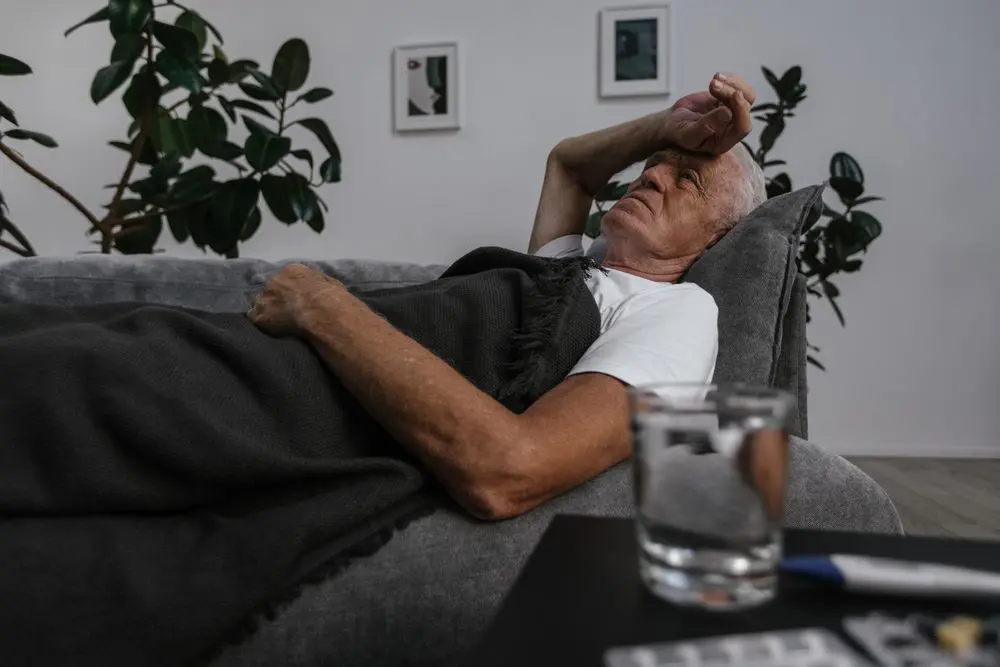
I found the envelope on a Thursday afternoon in March, while my husband was asleep.
I was kneeling beside his nightstand with an empty duffel bag on the floor next to me. I was looking for his watch. The old Timex with the cracked leather band that he’d worn almost every day for thirty years.
I’d already packed three of his flannel shirts. His good gray cardigan. His reading glasses, which he couldn’t use anymore but liked to hold. A framed photo of our granddaughters at the beach.
I was packing his things to take to a nursing home.
He didn’t know yet.
I hadn’t found the courage to tell him.
The watch wasn’t in the drawer where it usually was. I moved his pill organizer. A pack of Juicy Fruit gum. A pencil stub. A rubber band.
I pulled the drawer out farther. All the way out. It came off its little track and I had to catch it.
And that’s when I saw it.
Something wedged in the narrow gap at the back of the nightstand. Behind where the drawer slides in. Pushed down so far you’d never see it unless you took the whole drawer out.
An envelope.
I reached in and pulled it free.
It was old. The corners were soft and worn. The paper had gone a little yellow, the way paper does when it’s been sitting in the dark for years.
My name was written across the front.
Linda.
I knew that handwriting. I’d know it anywhere. The big loopy L. The little circle he always put over the i instead of a dot, like a teenager.
David’s handwriting.
From before. From when his hands still worked.
And underneath my name, a second line.
For Linda, if the day ever comes when she can’t take care of me anymore.
I stopped breathing.
I read it again.
Then a third time.
I looked over at the bed.
David was asleep. On his back, the way he always slept now, because he couldn’t turn over by himself. His mouth was a little open. His hands were folded on top of the blanket, shaking slightly even in his sleep. They never stopped shaking anymore.
He had no idea what I was holding.
My name is Linda Harmon. I’m sixty-six years old.
David and I have been married for forty-four years.
I need to tell you about him. Before I tell you what was in that envelope. Because you won’t understand any of it unless you know who he was.
David was a man who couldn’t sit still.
He was a high school shop teacher at Manheim Township for thirty-four years, here in Lancaster County, Pennsylvania. He taught generations of sixteen-year-old boys how to build birdhouses and bookshelves and, once, a whole canoe. When he retired, the school named the woodshop after him. There’s a little brass plaque on the door. THE DAVID HARMON SHOP.
At home, he fixed everything.
If the faucet dripped, he fixed it that night. If a cabinet door hung crooked, he’d be under the sink with a screwdriver before I finished complaining about it. He built our kitchen table out of walnut the year we got married. He built our daughter’s crib. He built the swing on the back porch.
If I came home from the grocery store, he’d hear my car in the driveway and come running out the back door to carry the bags. Every single time. Forty-four years.
“I’ve got it, Lin,” he’d say. “Go sit down.”
He took pride in being useful.
That’s the best way I can put it. He wasn’t a talker. He wasn’t a romantic, really, not in the flowers-and-poems way. But he showed you he loved you by doing things for you. By fixing your car. By shoveling the neighbor’s driveway before they woke up. By making sure there was always gas in my tank.
He was happiest when he was doing something for somebody else.
He was diagnosed with Parkinson’s disease when he was sixty-three.
It started with his right hand. A little tremor when he held his coffee cup. He thought it was too much caffeine. He cut back. It didn’t help.
Then he started shuffling a little when he walked. Then his handwriting got smaller and smaller until he couldn’t read it himself.
The neurologist at Lancaster General explained it to us. A disease of the brain. It kills the cells that make dopamine. Dopamine controls movement. There’s medicine that helps for a while. There’s no cure.
“Every person is different,” the neurologist said. “Some people do well for fifteen, twenty years. Some people progress faster.”
David progressed faster.
For the first few years, it wasn’t so bad.
He took his pills. He kept going to the woodshop in the garage. Slower. More carefully. He built our granddaughters a dollhouse with three floors and a staircase that took him four months. His hands shook the whole time. He did it anyway.
Then, just after he turned sixty-seven, it got much worse.
He fell for the first time in the garage. Reaching for a clamp on a high shelf. He broke his wrist.
After that, things went downhill fast.
His walking got worse. He’d freeze in doorways. Just stop. His feet wouldn’t move. He’d stand there, stuck, looking down at them like they belonged to somebody else.
His hands got worse. He couldn’t button his shirts. He couldn’t hold a fork without dropping food. He couldn’t sign his name.
He started choking sometimes when he ate. The swallowing muscles were affected too.
And sometimes, in the evenings, he got confused. He’d call me by his mother’s name. He’d ask where the kids were. Our daughter, Emily, is forty-one.
Slowly, the man who took care of everything needed help with everything.
Getting dressed.
Taking a shower.
Eating his meals.
Sometimes even walking the twelve feet between our bedroom and the bathroom.
At first, I told myself I could manage.
He was my husband. We’d spent our whole lives together. He’d carried my grocery bags for forty-four years.
Taking care of him was simply what a loving wife does.
That’s what I believed.
Whenever anybody asked how we were doing, I smiled.
“We’re doing fine.”
At church. At the pharmacy. At the grocery store. On the phone with my sister in Pittsburgh.
“We’re doing fine. He has good days and bad days. But we’re managing.”
Emily offered to come more often.
She lives in Harrisburg, forty minutes away. She’s a physical therapist at Holy Spirit Hospital. She has two daughters, Maddie and Grace, who are nine and six. Her husband, Ryan, travels for work.
“I can come on Saturdays, Mom,” she said. “Every Saturday. I’ll do his shower. I’ll do his exercises. You can go get your hair done. Go see Carol.”
“You don’t need to do that, honey.”
“I want to.”
“You’ve got the girls. You’ve got work. You’ve got enough on your plate. We’re fine. Really.”
My friends from church offered to bring meals. Carol Fischer, who I’ve known since we were in Girl Scouts together. Barb Weaver from the quilting group. Pastor Jim’s wife, Nancy.
“Let us bring a casserole, Linda. Just once a week.”
“Oh, that’s so sweet. But there’s no need. Really. We’ve got plenty.”
I kept saying everything was under control.
Over and over.
I think I said it so many times I started to believe it.
The truth was very different.
I was barely sleeping.
David couldn’t turn over by himself at night. Somebody had to turn him every few hours or he’d get bedsores. That somebody was me. I set an alarm on my phone. Midnight. Three. Six.
And in between, every little sound from his side of the bed woke me up. A cough. A groan. A rustle of sheets.
I worried he’d fall. I worried he’d choke. I worried he’d get confused and try to get up and walk somewhere in the dark.
I’d lie awake listening to him breathe.
I stopped seeing my friends.
I couldn’t leave him alone. Not even for an hour. What if he fell? What if he needed the bathroom? What if he choked?
I stopped going to quilting group on Wednesdays. I stopped going to lunch with Carol after church. I stopped going to church.
I went to the grocery store and the pharmacy. That was it. I’d race through the aisles as fast as I could, with my heart pounding, and drive home over the speed limit.
Some afternoons I’d look up at the kitchen clock and realize it was four o’clock.
And I hadn’t eaten anything.
Not breakfast. Not lunch. I’d made David’s oatmeal and his soup and his pudding with his pills crushed up in it. I’d fed him every bite, slowly, with a spoon, wiping his chin.
I just hadn’t fed myself.
I lost eighteen pounds that first year.
Emily noticed at Christmas. She hugged me in the front hall and pulled back and looked at me.
“Mom,” she said. “You’re skin and bones.”
“I’ve been walking more,” I said.
I hadn’t walked anywhere except to the mailbox in six months.
I was tired all the time.
Not regular tired. Not the kind of tired where a good night’s sleep fixes it. The kind of tired that gets into your bones. That makes everything look gray. That makes you cry over a spilled glass of milk.
But I kept going.
Because I didn’t know what else to do.
Then, last Tuesday, it finally became too much.
I was in the basement, doing laundry. It was about two in the afternoon. David was napping. He’d been asleep for an hour. I’d checked on him before I went downstairs.
I was folding his undershirts when I heard it.
A thud. Heavy. From upstairs.
And then a sound I’d never heard David make before. A small, frightened sound. Like a child.
I dropped the laundry basket.
I ran up the basement stairs and through the kitchen and up the second staircase. My knees screaming. My heart pounding so hard I could feel it in my throat.
I threw open the bedroom door.
David was on the floor.
He’d tried to get out of bed by himself. To go to the bathroom, I found out later. He didn’t want to call me. He didn’t want to bother me.
He’d gotten his feet on the floor. He’d tried to stand up. And his legs had frozen, and he’d fallen sideways, between the bed and the nightstand.
He was sitting there on the carpet. Wedged into the narrow space. His pajama bottoms were wet. His face was gray. His hands were shaking so hard they rattled against the side of the nightstand.
He looked up at me.
He looked so scared. And so ashamed.
“I’m sorry, Linda,” he whispered.
He hadn’t broken anything. Thank God. I checked everything. His hips. His wrists. His head. A bruise on his shoulder. That was all.
“There’s nothing to be sorry about,” I told him. “Nothing. You hear me? Nothing.”
I couldn’t lift him. He’s six foot one. Even now, even after losing so much weight, he’s a hundred and sixty pounds. I’m five foot three.
I called the fire department. The non-emergency number. They sent two young men in navy blue T-shirts who lifted him back into bed like he weighed nothing.
“Happens all the time, ma’am,” one of them said. “Don’t you worry. You call us anytime.”
I changed his pajamas. I changed the sheets. I washed him. I made sure he was comfortable. I fixed his pillows. I brought him a glass of water with a straw.
He lay there looking up at the ceiling.
“I didn’t want to wake you,” he said. “You were doing laundry. You looked so tired this morning.”
“David.”
“I thought I could make it,” he said. “Just to the bathroom. It’s twelve feet.”
“I know.”
“Twelve feet, Lin,” he said. “I used to run the mile in five-forty.”
I told him to rest.
I walked out of the bedroom.
I walked into the bathroom across the hall.
I closed the door.
I locked it.
And I started to cry.
Not quietly.
Not the way I’d cried on other bad days. A few tears in the shower. A little sniffle in the car.
I cried so hard I couldn’t breathe. I sat down on the edge of the bathtub and cried until my whole body shook. I grabbed a bath towel off the rack and pressed it over my mouth so David wouldn’t hear me through the wall.
I cried for him. On the floor. Wet. Saying he was sorry.
I cried for me.
I cried because I was so tired. Because I was so scared. Because I didn’t know how much longer I could do this.
And I cried because, underneath everything, I was ashamed.
Ashamed of how badly I wanted somebody else to take over. Even for a little while. Even for one night.
I sat on the edge of that bathtub for almost an hour.
When I finally came out, my eyes were swollen shut.
David was awake. He was looking at the bedroom door.
He didn’t say anything.
He didn’t ask where I’d been.
But I saw his face.
He knew.
That evening, I called Emily.
I sat at the kitchen table in the dark. I hadn’t turned on the lights. I’d forgotten.
She picked up on the second ring. I could hear the girls in the background. Bath time. Grace was singing something about a frog.
“Mom? Is everything okay?”
I didn’t say anything for a long time.
“Mom?”
“Dad fell today,” I said.
“Oh no. Is he okay? Is he hurt?”
“He’s okay. A bruise. The fire department came.”
“Oh, Mom.”
I didn’t say anything.
“Mom,” Emily said. “Are you okay?”
And for the first time, I told the truth.
“I don’t think I can keep doing this,” I whispered.
Emily didn’t say anything.
I could hear the bath water draining in the background. Grace still singing about the frog.
Then I said the words I’d been terrified to say out loud. For months.
“I think Dad needs to go somewhere,” I said. “Somewhere that can take care of him.”
There was a long pause.
So long I thought maybe we’d been cut off.
Then Emily answered.
“Mom,” she said quietly. “I think you need somebody to take care of you, too.”
I put my head down on the kitchen table. On the walnut table David built the year we got married.
And I cried again.
Because I couldn’t remember the last time I’d thought about what I needed.
I couldn’t remember the last time anybody had asked.
The next morning, Emily drove down from Harrisburg.
She didn’t call first. She just showed up at nine o’clock with two coffees from Wawa and a folder under her arm.
She hugged her father. She sat with him for an hour. She did his exercises with him. She talked to him about the girls. Maddie’s science fair. Grace losing her first tooth.
Then she came downstairs and sat at the kitchen table across from me.
She opened the folder.
It was information about a nursing home.
Willow Creek Care Center. In Lititz. Twenty minutes from our house.
“I’ve already looked into it,” Emily said. “I called them on Monday. Before you even called me. I knew it was coming, Mom. I’ve been watching you.”
She slid a brochure across the table.
“They have a memory care unit,” she said. “And a skilled nursing unit for people with Parkinson’s. They have physical therapy on-site. Speech therapy, for the swallowing. Nurses around the clock.”
I looked at the brochure.
Smiling old people in a bright dining room. Eating lunch at tables with white tablecloths. A man in a wheelchair laughing with a young nurse. An old woman in a garden, touching a rosebush.
Everyone looked peaceful.
Nobody looked scared.
Nobody looked worn down by two years of turning somebody over at midnight and three and six.
And none of the wives in those pictures looked like they felt guilty.
I hated looking at it.
But I kept reading.
Two days later, I went to see it.
Emily stayed with David. She told him I was going to the pharmacy and the bank. I let her lie for me. I didn’t know what else to do.
Willow Creek is a long, low brick building on a hill outside Lititz, surrounded by farm fields. You can see Amish buggies on the road below.
Inside, it was clean. Bright. It didn’t smell like nursing homes are supposed to smell. It smelled like coffee and lemon cleaner.
The director of admissions was a woman named Gloria. Fifties, warm, with reading glasses on a beaded chain. She walked me through the whole building.
The nurses were friendly. They said hello to every resident by name.
There was a garden in the back. A big one, with paths and benches and a little fountain and raised flower beds at wheelchair height so residents could garden.
There was a physical therapy room with parallel bars and exercise bikes.
And there was a television room. With big comfortable recliners and a huge screen.
“We show classic movies every afternoon at two,” Gloria said. “Our residents love them. Today it’s Casablanca.”
I stood in the doorway of that television room.
David loves old movies.
Loves them. Always has. He used to stay up until two in the morning watching Turner Classic Movies. He can quote every line of The Philadelphia Story. He cried every single time at the end of It’s a Wonderful Life. He made me watch Casablanca on our third date, at a revival theater in Philadelphia. He mouthed along to the whole ending.
I could see him. Right there. In one of those big recliners. With his hands shaking on the armrests. Watching Humphrey Bogart in the fog.
Here’s looking at you, kid.
The staff explained how they help residents. With everything. Dressing. Bathing. Eating. Moving. Medications. They answered every single question I had. Patiently. Kindly.
Everything about the place was reassuring.
I should have felt relieved.
Instead, I walked out to my car in the parking lot.
I got in.
I put my hands on the steering wheel.
And I cried.
Because I couldn’t stop thinking about the promise.
St. John’s Lutheran Church, June 1980. I was twenty-two. David was twenty-three. He was wearing a brown tuxedo with a ruffled shirt, which was the style then, and which he regretted for the rest of his life.
In sickness and in health.
I’d promised to stand by him.
And now I was going to ask strangers to take care of him.
I knew he needed more help than I could safely give him.
I knew it. In my head.
But knowing it didn’t make it any easier.
For four days, I went back and forth.
In the morning, I’d be sure. I’d look at David struggling to swallow his oatmeal and I’d think, he needs a speech therapist. He needs nurses. He needs people who can lift him. He needs more than me.
By afternoon, I’d change my mind. I’d sit next to him on the couch while he watched an old movie and I’d think, how can I take him away from this? From his home? From the walnut table and the porch swing and the garage where he built the dollhouse?
By evening, I’d be sure again.
By midnight, turning him over, I’d be crying.
Then, on Wednesday, I made the call.
I sat at the kitchen table at nine in the morning with Gloria’s business card in my hand. I dialed the number.
“Willow Creek, this is Gloria.”
“Gloria,” I said. “This is Linda Harmon. We’d like to take the room.”
She explained everything. The paperwork. The medical records they’d need from Dr. Patel, his neurologist. The insurance forms. What he could bring. Clothes, labeled with his name. Photographs. Small personal items. No sharp objects. No space heaters.
“He can bring his own pillow,” Gloria said. “And his own blanket. A lot of residents find that really helps.”
I wrote everything down on a yellow legal pad.
“We can have the room ready for a week from Monday,” Gloria said.
“A week from Monday,” I said.
When the call ended, I sat at the kitchen table for a long time.
It was decided.
The room was waiting.
But David didn’t know.
How could I tell him?
How do you look into the eyes of the man you’ve loved for forty-four years and tell him he’s not going to live in his own house anymore?
That you can’t do it anymore?
That you’re not strong enough?
I decided I’d pack some of his things first.
His favorite clothes. Some photographs. His watch.
I thought maybe it would be easier to have everything ready. Before the conversation. So that once we talked, it would already be done. Already decided. So I couldn’t back out.
I think, if I’m being honest, I was hoping I’d get everything packed and find some way to never have to say the words at all.
So on Thursday afternoon, while David slept, I went quietly into our bedroom with an empty duffel bag.
And now I was sitting on the edge of our bed with the envelope in my hands.
For Linda, if the day ever comes when she can’t take care of me anymore.
The envelope was old.
Really old. The paper was soft. The flap had been taped shut, and the tape had gone brown and brittle.
He hadn’t written this recently. He couldn’t have. His hands haven’t been able to write like that in three years.
He’d written it before.
Before the Parkinson’s got bad. Maybe before he was even diagnosed. Maybe before either of us had any idea how much our lives would change.
My hands were shaking.
Not the way David’s shake. A different way.
I looked at the bed. David was still asleep. Breathing slow and even. His hands folded on the blanket, trembling.
For several minutes, I just sat there.
Holding it.
Part of me didn’t want to open it.
I didn’t know what was inside. I didn’t know if I could handle one more thing. One more emotional moment. I was already so tired. I was already so empty.
What if it was something terrible? What if it was something I didn’t want to know?
But eventually, I peeled back the old brown tape.
I opened the flap.
And I unfolded the first page.
The letter began:
Linda, if you’re reading this, then you’ve already cared for me longer than I ever had the right to expect.
My chest went tight.
I read the sentence again.
Then my legs lost their strength.
I slid down off the edge of the bed until I was sitting on the carpet. Right where David had fallen on Tuesday. In the narrow space between the bed and the nightstand.
I put my hand over my mouth.
David had known.
Somehow. Long before I got here. Long before I locked myself in the bathroom with a towel over my mouth. Long before I called Emily in the dark.
He’d known this day might come.
And he’d gotten ready for it.
Behind me, he shifted a little in his sleep. The sheets rustled.
I turned around and looked at him.
Then I looked back down at the letter.
There were several pages. Five. More than I expected. David was never a letter writer. Birthday cards, he’d sign “Love, D.” That was it. Forty-four years of “Love, D.”
Five pages.
And as I carefully separated them, I saw something else.
Underneath the letter. Folded in thirds. Thicker paper.
Another document.
My name was on that one too.
I didn’t understand.
I looked at the document. Then back at the letter.
And I realized this wasn’t just a letter. Something sweet he wrote in case he got sick.
He’d made arrangements.
Quietly. Without telling me.
Long before I ever thought about calling a nursing home.
I sat there on the bedroom floor in the quiet house we’d lived in for thirty-eight years.
The brochure for Willow Creek was downstairs on the kitchen table.
Emily’s voice was still in my head. I think you need somebody to take care of you, too.
And in my shaking hands was something my husband had hidden for the day I couldn’t carry everything alone anymore.
I’d thought I was making the hardest decision of our marriage by myself.
But David had been thinking about this day long before I ever imagined it would come.
I turned back to the first page.
And I started to read.
Linda, if you’re reading this, then you’ve already cared for me longer than I ever had the right to expect.
I’m writing this at the kitchen table on a Sunday night in October. You’re asleep upstairs. It’s 2011. Mom’s funeral was yesterday.
I stopped.
Fourteen years ago.
Before the Parkinson’s. Before anything. David was fifty-four. He was still teaching. He was still running three miles every morning before school.
His mother’s funeral.
I remembered.
David’s mother, Ruth, died in October of 2011. A heart attack. In the kitchen of her house in Ephrata. She was sixty-nine.
She’d been taking care of David’s father for six years. Walter had Alzheimer’s.
Ruth wouldn’t let anybody help. Not David. Not David’s brother, Mark. Not the church. Not the home health aide the doctor recommended.
“He’s my husband,” she’d say. “I’ll take care of him.”
She did everything. The bathing. The feeding. The nights when Walter would wander out of the house at two in the morning in his pajamas looking for his mother, who’d been dead for forty years. Ruth would follow him down the road in her nightgown with a flashlight.
She lost forty pounds. She stopped going to church. She stopped seeing her friends. She stopped seeing her grandchildren.
When David went over on Sundays, she’d meet him at the door with a smile.
“We’re doing fine,” she’d say. “We’re managing.”
And one Tuesday morning in October, she was making Walter’s oatmeal and she fell down on the kitchen floor and died.
Walter was sitting at the kitchen table. He didn’t know what had happened. He sat there for three hours, waiting for his oatmeal, until the mailman looked through the window.
I’d forgotten.
I don’t know how. But I’d forgotten.
I kept reading.
I watched her die doing this, Lin.
I watched my mother turn into a ghost. Six years. I’d go over on Sundays and she’d be gray. Shaking. Skin and bones. And she’d smile and say they were fine. And I believed her. Because I wanted to. Because it was easier. Because if she said she was fine, I didn’t have to do anything.
Dad didn’t even know she was gone. He sat at the table for three hours.
I’ve been thinking all day about what I’d do if it was us. If I got sick. If it was me who didn’t know who you were.
And I know you, Linda. I know exactly what you’d do. You’d do what Mom did. You’d say we were fine. You’d say you were managing. You wouldn’t let Emily help. You wouldn’t let the church help. You’d stop seeing Carol and stop going to quilting and stop eating lunch. You’d lose weight. You’d stop sleeping. And you’d smile at everybody and say we’re fine.
And one day you’d fall down on the kitchen floor.
I’m not going to let that happen.
I put the letter down on my lap.
I couldn’t see. My eyes were too full.
He was describing me.
Exactly. Every single thing. Fourteen years before it happened.
We’re doing fine. We’re managing. Carol. Quilting. Lunch. Skin and bones.
He’d known. He’d known me better than I knew myself.
I wiped my eyes and kept reading.
So here’s what I’ve done.
I’ve been paying into a long-term care insurance policy since August. I didn’t tell you because I knew you’d say it was a waste of money. It’s $162 a month. I’ve been taking it out of my summer school paycheck so you won’t see it on the statement. I’ve set it up so it’ll keep paying until I’m 85, or until I need it.
The policy is in this envelope. Your name is on it as the contact. It covers a nursing home. Or in-home care. Or assisted living. Up to $200 a day. For as long as I need it.
I’ve also put money aside. In a savings account at Fulton Bank. Your name and mine. It’s not a lot. I put in $50 a month. By the time you read this, it might be a few thousand dollars. Maybe more.
That money is for you. Not for me. For you.
I turned the page.
I couldn’t breathe.
I know what you’re going to feel when you read this. You’re going to feel like you failed. You’re going to feel like you broke a promise.
You didn’t.
You promised to stand by me in sickness and in health. You did. You have. If you’re reading this, you’ve stood by me longer than anybody could. Longer than you should have.
But standing by me doesn’t mean doing it alone. And it doesn’t mean doing it until it kills you.
Mom thought it did. She was wrong. And it cost her everything. And Dad sat at a kitchen table for three hours waiting for oatmeal that never came.
I’m not going to let that be us.
The next page.
I need you to listen to me now, Lin. Like I’m sitting right there across the kitchen table from you. The walnut one.
This is my decision. Not yours.
I’ve already made it. Right now. In 2011. While I can still think straight and hold a pen and know what I’m saying.
If the day comes when you can’t take care of me anymore, I want to go somewhere they can. I want you to take me there. And I want you to know I asked you to.
I don’t want you carrying this. Not the guilt. Not the shame. Not one ounce of it. You’re not putting me away. You’re doing what I asked you to do. You’re keeping your promise to me. The one I’m asking you to make right now, on this paper.
And underneath that, in his big loopy handwriting:
Promise me, Lin.
I was sobbing now.
Sitting on the bedroom floor. Between the bed and the nightstand. Where he’d fallen.
I pressed the pages against my chest so my tears wouldn’t fall on them. So the ink wouldn’t run.
I didn’t care if he heard me anymore.
There was one more page.
I want to tell you some things I want for you. After. When I’m somewhere they can take care of me and you’re home by yourself.
I want you to go to lunch with Carol. Every Sunday after church. Like you used to. Order the chicken salad croissant at the Lititz Springs Inn. The one you always say is too expensive.
I want you to go back to quilting. I want you to finish the wedding ring quilt you started in 2008. It’s in the cedar chest. I know you think I don’t know. I know.
I want you to sleep through the night. Every night. Eight hours.
I want you to eat lunch.
I want you to let Emily help.
I want you to go to Maine. You’ve wanted to go to Maine since we were twenty-five. To see the lighthouses. Go. Take Carol. Take Emily and the kids. Use the money in the Fulton Bank account. Don’t you dare spend it on me.
And I want you to come see me. As much as you want. But I want you to come as my wife. Not my nurse. I want you to sit next to me and hold my hand and watch an old movie. I don’t want you to feed me or wipe my chin or change my sheets. Let them do that. You just be Linda.
That’s all I’ve ever wanted. For you to just be Linda.
And then, at the bottom of the last page:
I love you. I’ve loved you since the first day I saw you at the roller rink in Columbia, in 1976, in those yellow shorts. I’ll love you on whatever day you read this. Even if I don’t know your name anymore. Even if I call you Mom. Even if I can’t say it out loud.
I’ll still know. Somewhere.
Love, D.
P.S. There’s another envelope. It’s taped to the bottom of the cedar chest, under the quilt. Don’t open it until your first night alone in the house. Not before. I mean it.
I sat on that bedroom floor for a long time.
I don’t know how long. The light from the window moved across the carpet. A car went by outside. A dog barked somewhere down the street.
I held the five pages against my chest and cried until there was nothing left.
Then I opened the other document.
The one folded in thirds. On thicker paper.
It was the insurance policy.
Genworth Life Insurance Company. Long-Term Care Policy. Insured: David Allen Harmon. Policy effective date: August 15, 2011.
And on the last page, under Authorized Contact, in David’s handwriting:
Linda Marie Harmon. Wife.
And there was a third thing. I almost missed it.
A small piece of paper. Folded in half. Tucked into the policy.
I opened it.
It was a printout. A page from a website. Faded, from an old inkjet printer.
WILLOW CREEK CARE CENTER — LITITZ, PA — SKILLED NURSING & MEMORY CARE.
I stared at it.
Willow Creek.
The same place.
The exact same place.
There was a note on the printout. In David’s handwriting. In the margin. With an arrow pointing at a picture of the television room.
They show old movies every day. If I have to go somewhere, I want to go here. I drove up and looked at it on Saturday. They have a garden. Tell them I like Casablanca.
I put my head down on my knees.
On the floor of our bedroom.
And I laughed.
I laughed and cried at the same time, so hard I couldn’t stop. Because he’d done it. He’d done it fourteen years ago. He’d driven up to Lititz on a Saturday in October of 2011 and walked through Willow Creek and looked at the television room.
And he’d written: Tell them I like Casablanca.
“Lin?”
I froze.
I looked up.
David was awake.
He’d turned his head on the pillow. As far as he could. He was looking at me. Sitting on the floor. In the narrow space where he’d fallen. With five pages of yellowed paper pressed against my chest. My face a mess.
“Lin,” he said. His voice was soft and slow. Parkinson’s makes it quiet. Makes it hard to get the words out. “Why are you on the floor?”
I didn’t say anything.
I held up the envelope.
The old one. With the brown tape. With my name on it.
David looked at it for a long time.
I watched his face.
I watched him remember.
His face crumpled.
“You found it,” he said.
I got up off the floor.
My knees were stiff. I didn’t care.
I sat down on the edge of the bed next to him. I took his hand. It was shaking. It’s always shaking. I held it anyway.
“I found it,” I said.
“I forgot it was there,” David said. “I forgot. I put it there so you’d find it. And then I forgot.”
He was crying now. Slow tears. Running down the sides of his face onto the pillow.
“I wanted to tell you,” he said. “When it got bad. Last year. I wanted to tell you about it. But I couldn’t remember where I put it. I looked. One night. When you were asleep. I couldn’t find it.”
“David,” I said.
He looked at me.
“I called Willow Creek,” I said. “On Wednesday. I took the room. A week from Monday.”
David didn’t say anything.
He closed his eyes.
I thought, here it is. Here’s where he gets hurt. Here’s where he looks at me like I’ve betrayed him.
When he opened his eyes, they were wet.
But he was smiling.
“I know,” he said.
I stared at him.
“You know?”
“I heard you,” David said. “On the phone. Wednesday morning. In the kitchen. I was awake.”
He swallowed. It took a long time.
“And Tuesday,” he said. “In the bathroom. After I fell. I heard you.”
“David—”
“You had a towel over your mouth,” he said. “I could still hear.”
I put my face down on his chest.
He lifted his shaking hand. Slowly. It took a long time. It trembled the whole way up.
He put it on the back of my head.
The way he used to. When we were young. When I’d cry over something stupid and he’d hold me like that and say, “There now. There now, Lin.”
“There now,” David said. Very quietly. “There now, Lin.”
“I’m sorry,” I said into his pajama shirt. “I’m so sorry. I tried. I tried so hard. I promised you. In sickness and in health. And I couldn’t do it.”
“You did do it,” David said.
“I didn’t—”
“Two years,” David said. “Two years, Lin. Every night. Midnight. Three o’clock. Six. I know. I’m awake. I know every time you turn me.”
His hand moved on the back of my head. Slowly. Shaking.
“You did it longer than Mom,” he said. “No. That’s not right. Mom did six years. But she didn’t have to. Because nobody made her stop.”
He took a long breath.
“I’m making you stop,” he said. “That’s what the letter is. I made the decision. In 2011. Not you.”
I lifted my head and looked at him.
“Tell them I like Casablanca,” I said.
David laughed. A small, cracked, wonderful laugh. I hadn’t heard him laugh in months.
“I did write that,” he said. “Didn’t I?”
“You did.”
“Do they still show it?”
“They’re showing it today,” I said. “At two o’clock. I was there on Monday. I stood in the doorway of the TV room. Gloria told me.”
David closed his eyes.
“Here’s looking at you, kid,” he said.
We told Emily that night.
She came down from Harrisburg. She brought the girls. Maddie and Grace sat on the end of the bed and told their grandpa about the science fair and the lost tooth. Grace showed him the gap.
After the girls went downstairs to watch TV, I showed Emily the letter.
All five pages.
She read it sitting in the rocking chair by the window. The one David made when she was born.
When she got to the part about Grandma Ruth, she put her hand over her mouth.
When she got to the part about Maine, she started crying.
When she got to “I just want you to be Linda,” she put the letter down on her lap and cried so hard Maddie called up the stairs to ask if everything was okay.
“I remember Grandma Ruth,” Emily said finally. Wiping her face. “I was twenty-seven. I remember Dad coming home from her funeral. He didn’t say anything. He went straight out to the garage and he was out there all night.”
She looked at her father.
“Is that when you wrote it?” she said. “That night? In the garage?”
“No,” David said. “Kitchen table. The next night. Your mother was asleep.”
“Why didn’t you tell us?”
David was quiet for a long time.
“Because I hoped,” he said slowly, “you’d never need it.”
There’s something else I need to tell you.
Something I didn’t expect.
Something about the policy.
I called Genworth on Friday morning. The number on the front of the policy. I sat at the kitchen table with the policy in front of me and my legal pad and a pen.
A man named Curtis answered. I read him the policy number.
He was quiet for a moment. Typing.
“Okay,” Curtis said. “Mrs. Harmon. I’ve got it. This is a fully paid policy. Premiums are current. Your husband’s been paying a hundred sixty-two dollars a month since August of 2011.”
“I know,” I said. “I just found out.”
“You just found out?”
“He never told me,” I said. “He hid it. In his nightstand.”
Curtis was quiet for a moment.
“Well, ma’am,” he said. “He did a good thing. This policy pays two hundred dollars a day toward skilled nursing care. For up to five years. Starting the day he’s admitted.”
I did the math in my head.
“Two hundred dollars a day,” I said. “That’s—”
“Seventy-three thousand a year,” Curtis said. “Give or take.”
I put my pen down.
“Willow Creek is two hundred and eighty a day,” I said.
“Then this covers most of it,” Curtis said. “Medicare might cover some of it too, for the first part. Rehab, after his fall. You’d want to talk to the facility about that. But ma’am, with this policy, you’re not going to have to sell your house.”
I put my hand over my mouth.
I hadn’t told anyone. Not Emily. Not anyone.
But I’d been doing the math too. For weeks. At two hundred and eighty dollars a day, Willow Creek was a hundred and two thousand dollars a year. We had about sixty thousand in savings. David’s teacher’s pension and our Social Security together were about four thousand a month.
I’d figured we’d run through the savings in a year.
And then I’d have to sell the house.
The house David’s father helped him frame in 1987. With the walnut table and the porch swing and the garage with the dollhouse.
I’d been planning to put it on the market in the spring.
“Mrs. Harmon?” Curtis said. “Are you still there?”
“I’m here,” I said.
“Can I say something? Off the record?”
“Yes.”
“I’ve been doing this nineteen years,” Curtis said. “Most people buy these policies when they’re seventy. Seventy-five. When they’re already worried. Your husband bought it at fifty-four. Healthy. Running every morning, from what it says in the file.”
He was quiet for a moment.
“That’s not a man who was worried about himself,” Curtis said. “That’s a man who was worried about you.”
The Fulton Bank account had a little over eleven thousand dollars in it.
Fourteen years of fifty dollars a month. Plus interest.
Emily went with me to the bank. The manager, a young man named Josh, printed out the statement. Every deposit. The first of every month. Fifty dollars. From David’s checking account.
The last one was March of 2022.
“That’s when his hands got too bad,” I said. “To write checks.”
Josh looked at the statement. Then at me.
“Mrs. Harmon,” he said. “It’s set up as an automatic transfer. It’s still going. Every month.”
I stared at him.
“It never stopped,” Josh said. “He set it up in 2011. It just kept going. He’d never have known to stop it.”
I sat in that little office at Fulton Bank on Duke Street with my daughter’s hand on my shoulder.
Eleven thousand, two hundred and forty dollars.
For Maine.
On a Monday in March, I drove David to Willow Creek.
Emily came. She drove separately with the girls, so they could help him get settled.
I packed his duffel bag. His flannel shirts. His gray cardigan. His reading glasses. The framed photo of the girls at the beach. His own pillow. The quilt from our bed. The one my mother made us for our wedding.
And his watch.
I found it, finally. In the pocket of his bathrobe on the back of the bathroom door. Where he’d put it one morning when his hands were too shaky to buckle it.
I buckled it for him. On his wrist. In the car.
“There,” I said.
He looked at it.
“It’s slow,” he said. “Three minutes.”
“It’s always been three minutes slow.”
“I know,” David said. “I just like that you know.”
Gloria met us at the front door with a wheelchair.
She shook David’s hand. She held onto it a long time.
“Mr. Harmon,” she said. “Welcome to Willow Creek.”
“Thank you,” David said.
Gloria looked at me.
“Mrs. Harmon,” she said. “When you called last week to confirm, you mentioned something. That your husband had been here before? Years ago?”
“In 2011,” I said. “He toured the place. On his own. He wrote it down.”
Gloria looked at David.
“Do you remember what you liked best, Mr. Harmon?” she asked.
David looked up at her from the wheelchair.
“The television room,” he said. “You show old movies.”
Gloria smiled.
“We do,” she said. “Every day at two.”
She looked at her watch.
“It’s one-forty,” she said. “Would you like to see what’s playing?”
She wheeled him down the hall. Past the dining room. Past the garden doors. To the television room.
The big comfortable recliners. The huge screen.
On the screen, the movie was just starting.
Black and white. A spinning globe. And music.
David’s face lit up.
“Casablanca,” he said.
He turned his head and looked at me.
I shrugged.
“I might have mentioned,” I said, “that you like Casablanca.”
Gloria wheeled him into the room. She helped him into one of the big recliners. Right in the middle. Right in front of the screen.
Emily and the girls stood in the doorway. Grace was holding Emily’s hand.
I sat down in the recliner next to David.
He reached over. Slowly. Shaking. He found my hand on the armrest.
He held it.
We watched the whole thing.
All one hundred and two minutes.
When it got to the end, the fog on the runway and Bogart with his collar turned up and the plane taking off into the night, David mouthed every word.
Here’s looking at you, kid.
Louis, I think this is the beginning of a beautiful friendship.
When the lights came up, David was crying.
So was I.
So was an old woman two recliners over, in a pink bathrobe, who’d been sitting there the whole time.
“It gets me every time,” she said. Wiping her eyes. “Every single time.”
“Me too,” David said.
I drove home alone that night.
Emily offered to stay. I said no.
“Dad wrote me a letter,” I said. “He said don’t open the next one until my first night alone in the house. Not before. He meant it.”
Emily looked at me for a long time.
“Call me,” she said. “After. If you need me.”
“I will.”
“I mean it, Mom. I’m not twenty minutes away. I’m forty. But I’ll come. Anytime.”
“I know, honey.”
She hugged me in the Willow Creek parking lot. Hard.
“You let us help now,” she said. “You hear me? That’s an order. From Dad. It’s in writing.”
The house was so quiet.
I stood in the kitchen with my coat still on.
No monitor crackling on the counter. No alarm set for midnight on my phone. No sheets to change. No oatmeal to cook. No pills to crush.
Just the refrigerator humming. And the clock on the wall over the sink. The one David built for our twentieth anniversary. Walnut, to match the table.
It was three minutes slow.
I went upstairs to the bedroom.
I opened the cedar chest at the foot of the bed.
The wedding ring quilt was on top. The one I started in 2008 and never finished. Interlocking rings of blue and yellow and white. About two-thirds done. A needle still stuck in the corner, where I’d left it seventeen years ago.
I lifted it out.
I felt along the bottom of the chest.
And there it was. Taped to the cedar. A second envelope.
Smaller. Same yellowed paper. Same brown tape.
On the front, in his big loopy handwriting:
Lin — First night alone. Read this in bed.
I got into bed.
On my side. In my nightgown.
The other side was empty. His pillow was at Willow Creek. The covers were smooth.
I opened the envelope.
There was one page.
Lin,
It’s your first night by yourself. I know it’s quiet. I know you’re lying there listening for me. You’re going to wake up at midnight because you think you have to turn me over. And at three. And at six.
You don’t.
Go back to sleep.
Here’s what I want you to do tomorrow morning. Call Carol. Tell her you’ll be at lunch on Sunday. Then go to the cedar chest and get out that quilt and finish it. It’s been seventeen years. That’s long enough.
And then call that number on the brochure for the bed and breakfast in Bar Harbor. It’s in the second drawer of the desk. I got it in 2011 too. They’re probably still in business. Maine doesn’t change much.
Book a room for June. Take whoever you want.
And when you get there, go stand on the rocks at Bass Harbor Head Light at sunset. That’s the one you always showed me in the calendar. The one on the refrigerator for ten years.
Stand there and think of me.
Then stop thinking of me. And just look at the lighthouse.
You’ve spent long enough looking after me. Look at something beautiful for a while.
I love you. Sleep tight.
D.
P.S. My watch is three minutes slow. Don’t fix it. It’s how you’ll know it’s mine.
I fell asleep holding that letter.
I didn’t wake up at midnight.
I didn’t wake up at three.
I woke up at seven-fifteen in the morning, with the sun coming in the window, with the letter still in my hand.
I’d slept eight hours.
For the first time in two years.
That was eight months ago.
I go to Willow Creek every day.
Not to take care of him. They do that. The nurses and the aides and the physical therapist, a cheerful young man named Andre, who’s gotten David walking with a walker again. Down the hall and back. Twice a day.
I go to sit with him.
At two o’clock. Every day.
In the television room.
We’ve watched a hundred and forty-one movies.
The Philadelphia Story. Roman Holiday. It Happened One Night. Singin’ in the Rain. The Thin Man, all six of them. Arsenic and Old Lace. North by Northwest. Some Like It Hot.
And Casablanca. Four times.
David holds my hand during the movies.
He doesn’t always know where we are. Some days are bad. Some days he thinks it’s 1985 and asks me if Emily’s home from school yet. Some days he calls me Mom.
But he always holds my hand.
And when the movie ends, he always turns his head and looks at me. And no matter what day it is in his mind, no matter what year, he always says the same thing.
“That was a good one, Lin.”
He always knows my name at the end.
The old woman in the pink bathrobe is named Dorothy. She’s ninety-one. She was a bookkeeper at the Armstrong cork factory for forty years. She comes to every movie.
She and David argue about which is better. Cary Grant or Jimmy Stewart.
David says Jimmy Stewart.
Dorothy says Cary Grant.
They’ve been arguing for eight months. Neither one of them has budged an inch.
I go to lunch with Carol every Sunday after church.
At the Lititz Springs Inn. I order the chicken salad croissant. It’s eleven dollars and fifty cents.
It’s too expensive.
I order it anyway.
I went back to quilting group in April.
Barb Weaver cried when I walked in. She hugged me so hard my glasses fell off.
I brought the wedding ring quilt. The one from 2008.
I finished it in September. Seventeen years after I started it.
I gave it to Emily. For her bed. She cried too.
I let Emily help now.
She comes down on Saturdays with the girls. We go to Willow Creek together. The girls play checkers with their grandpa. He lets Grace win. He doesn’t let Maddie win. Maddie’s furious about it.
After, we go to lunch. Then Emily drives back to Harrisburg.
And I go home and sleep for eight hours.
I gained back twelve pounds.
In June, I went to Maine.
Emily came. And the girls. And Carol.
We stayed at the bed and breakfast in Bar Harbor. The one from the brochure in the second drawer of David’s desk. It was still there. Same name. Same address. The owner, a woman in her seventies named Martha, looked at the yellowed brochure I handed her at the front desk and laughed.
“Lord,” she said. “We haven’t printed those since 2010.”
“My husband saved it,” I said.
“For fifteen years?”
“For fourteen,” I said. “He was planning ahead.”
Martha looked at me for a long time.
Then she gave us the best room in the house. With a view of the harbor. And didn’t charge us for the third night.
On the last evening, I drove out to Bass Harbor Head Light.
By myself. I asked Emily and Carol and the girls to stay at the inn.
I parked in the little lot. I walked down the path through the pine trees. To the rocks.
The lighthouse stood on the cliff above me. White. With a red light at the top. Exactly like the calendar on our refrigerator for ten years.
The sun was going down over the water. Orange and pink and gold. The waves were crashing on the rocks below.
I stood there.
I thought about David.
About the roller rink in Columbia in 1976. About the yellow shorts. About the brown tuxedo with the ruffled shirt. About forty-four years of “Love, D.”
About a Sunday night in October of 2011. A man at a walnut kitchen table, with his mother just buried, writing five pages to his wife while she slept upstairs.
About him driving up to Lititz on a Saturday. Alone. Walking through Willow Creek. Standing in the doorway of the television room.
Tell them I like Casablanca.
Then I stopped thinking about him.
Like he asked.
And I just looked at the lighthouse.
The sun went down. The light at the top of the lighthouse came on. Red. Turning. Sweeping out across the dark water.
I stood there on the rocks until it was completely dark.
It was the most beautiful thing I’ve ever seen.
When I got home from Maine, I went straight to Willow Creek.
It was a Tuesday. Two o’clock.
David was in his recliner in the television room. Dorothy was two seats over in her pink bathrobe. The movie hadn’t started yet.
I sat down next to him.
He turned his head and looked at me.
It was a bad day. I could tell. His eyes were cloudy. He was looking at me like he was trying to figure out who I was.
“Hi, David,” I said.
He didn’t say anything.
I reached into my purse. I took out a postcard. From the gift shop at Bass Harbor.
The lighthouse. White, on the cliff. With the red light at the top. At sunset.
I held it up so he could see it.
He looked at it for a long time.
His hand came up off the armrest. Shaking. Slowly.
He touched the postcard.
“Lin’s lighthouse,” he said.
I put my hand over my mouth.
“The one on the refrigerator,” David said. Slowly. Like the words were coming up from somewhere very deep. “For ten years. She always wanted to go.”
He looked at the postcard.
Then he looked up at me.
And his eyes cleared.
Just for a second. Like a cloud moving off the sun.
“Lin,” he said. “You went.”
“I went,” I said.
“Did you stand on the rocks?”
“At sunset.”
“Did you think of me?”
“For a minute,” I said. “Then I stopped. Like you said. And I just looked at the lighthouse.”
David smiled.
The whole smile. The one from the roller rink in 1976. The one I hadn’t seen in months.
“Good,” he said. “Good girl.”
The lights went down.
The movie started. Black and white. A train station in the rain. Music.
It was The Shop Around the Corner. Jimmy Stewart.
Dorothy groaned from two seats over. “Not him again.”
“Best actor there ever was,” David said.
“Cary Grant,” Dorothy said.
“Jimmy Stewart,” David said.
I sat between them in the dark.
I held my husband’s shaking hand on the armrest.
And I watched the movie.
I didn’t think about the laundry. Or his pills. Or whether he’d choke at dinner. Or what time I had to turn him over.
Somebody else was taking care of all of that.
I was just sitting next to him. Holding his hand. Watching Jimmy Stewart fall in love in a little shop in Budapest.
Just being Linda.
When the movie ended, the lights came up.
David turned his head and looked at me.
He didn’t know what day it was. He didn’t know what year. I could see it in his eyes. The cloud had come back.
But he knew one thing.
“That was a good one, Lin,” he said.
I looked down at his wrist.
At the old Timex with the cracked leather band. That I buckle for him every morning when I come in.
It was three minutes slow.
I didn’t fix it.