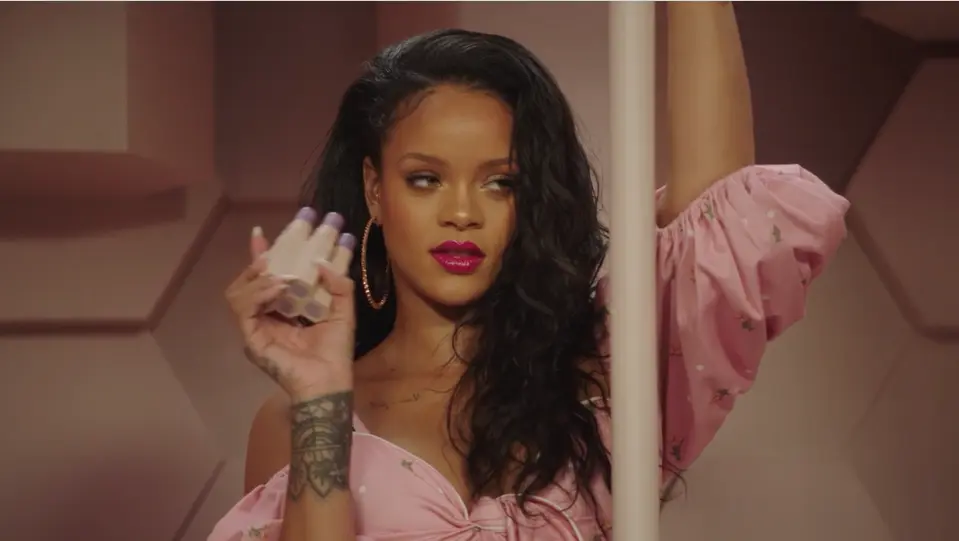
On the night of September 7, 2017, Rihanna celebrated the launch of Fenty Beauty at Duggal Greenhouse in Brooklyn. By the next morning, shoppers walking into Sephora found a new wall of makeup with a very long row of foundation bottles: 40 shades of Pro Filt’r Soft Matte Longwear Foundation, running from the palest porcelain to deep, rich browns. Fenty Beauty by Rihanna opened that day in roughly 1,600 stores across 17 countries at once.
Big celebrity beauty launches were nothing new. What stopped people in the aisle was the shade range, and the fact that the deepest tones were part of the main event rather than an afterthought.
Inside the Launch Day Lineup
According to the brand’s launch press release, Fenty Beauty debuted as a 91-product line. Alongside the 40 foundations came a universal Pro Filt’r Instant Retouch Primer, 30 Match Stix skinsticks in matte and shimmer finishes, six Killawatt Freestyle Highlighters, Invisimatte Blotting Powder and blotting paper, and a single universal lip gloss called Gloss Bomb.
The line was sold through Sephora stores, Sephora’s website and FentyBeauty.com. Rihanna explained the thinking in the release: “The Fenty Face was created for women of all skin tones, of all personalities.” That Fenty Face was a simple three-step routine: a soft matte base, strategic highlighting, then blotting to control shine. A Global Artistry Team led by resident artist James Kaliardos, with makeup artists Priscilla Ono and Hector Espinal, helped bring it to life.
Even the name was personal. Rihanna was born Robyn Rihanna Fenty in St. Michael, Barbados, according to Biography.com, so the brand carries her family name.
She developed the line with Kendo Brands, the beauty developer owned by the luxury group LVMH. A partner of that size helps explain how a brand-new label could open in 17 countries on the same day, something few new makeup brands even attempt.
Why 40 Shades Felt Like a Big Deal
Before Fenty Beauty, many people with very fair or very deep skin were used to hunting across several brands for a foundation that matched. Plenty of lines offered a dozen or so options, often bunched in the middle of the spectrum. Fenty gave every part of the range serious attention, thinking about undertones as well as depth.
The response came fast. In November 2017, Time named Fenty Beauty one of its 25 Best Inventions of the year, putting a makeup line on the same unranked list as Apple’s iPhone X and a sports hijab from Nike.
Rihanna said the reaction surprised her. “I never could have anticipated the emotional connection that women are having with the products and the brand as a whole,” she told Time, as reported by Global Cosmetics News. She also described customers getting emotional at the counter after finding their shade for the first time. In a tweet quoted by The Fader, she wrote that she was “honored” and thanked everyone who had supported the brand in its first two months.
How the “Fenty Effect” Got Its Name
Within a year, the industry had a label for what followed. Other cosmetics companies began widening their own foundation ranges, and the beauty press started calling it the “Fenty Effect.”
Time used the phrase again in October 2018, when it placed Fenty Beauty on its list of the 50 Most Genius Companies under the line “Broadening makeup’s palette.” As quoted by Teen Vogue, the magazine wrote: “In only a year, Fenty Beauty has pulled off a makeover of the makeup industry.” The same Time piece said the brand had reportedly made $100 million in sales in its first 40 days on the market.
Shade range was only part of the story. Fenty’s campaigns featured models with a wide spread of skin tones, and that casting set a new bar for how a mainstream beauty launch could look. Customers started asking other brands a simple question: where is my shade?
From One Foundation to a Family of Brands
The brand kept building on that first foundation. In 2019 it released a Pro Filt’r concealer in 50 shades, and in August of that year it added a Pro Filt’r Hydrating Longwear Foundation, also in 50 shades, according to Paper magazine.
Fenty also moved past makeup. Fenty Skin launched on July 31, 2020, with three products: the Total Cleans’r Remove-It-All Cleanser, the Fat Water Pore-Refining Toner Serum and the Hydra Vizor Invisible Moisturizer with SPF 30, according to Cosmetics Business. Fenty Hair followed on June 13, 2024, with a nine-piece range focused on repair, including a shampoo, two conditioners, a treatment and several styling products, as reported by Retail Dive. In September 2024 the hair line reached Sephora stores in North America.
The Foundation Gets a Rewrite
Nearly nine years after that first launch, the formula that started it all was retired. Cosmetics Business reported in August 2026 that the original Pro Filt’r Soft Matte was making way for Pro Filt’r Fluid Flex Natural Matte Longwear Foundation, a waterproof, buildable formula developed in Japan and offered in 50 shades with more neutral options and refined undertones.
Rihanna said she had been testing it in public for a while. “I have been wearing Fluid Flex in every appearance for the past year,” she told the trade title, adding: “It looks like skin, and it feels like nothing.” The new foundation went on sale in the UK on September 4, 2026, according to the same report.
What Changed on the Shelf
The “Fenty Effect” label stuck because the change was easy to see in stores. Shoppers began treating a broad shade range as a basic expectation rather than a bonus, and that is still the most practical legacy for anyone standing in the foundation aisle today: if a brand cannot match your skin, there are now plenty that can.
Fenty Beauty did not invent inclusive makeup. Smaller and specialist brands had been serving deeper skin tones for years. What Rihanna’s launch did was put that idea in front of a global audience on a single day, inside one of the world’s biggest beauty retailers, and the rest of the industry took notice.