My key didn’t work.
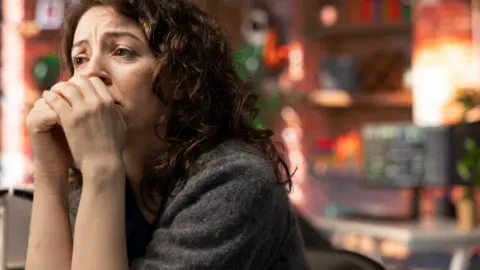
I stood on my mother’s front porch on a Thursday afternoon in November with the mail under one arm and her house key in my hand, and I turned it, and nothing happened.
I tried again. Jiggled it. Pulled the door toward me the way you have to in summer when the wood swells.
Nothing.
I bent down and looked at the lock.
It was new. Bright brass. The old one had been dull and scratched around the keyhole from fifty-eight years of my mother missing it in the dark. This one was shiny. There were fresh wood shavings on the welcome mat underneath it.
Somebody had changed the locks on my mother’s house.
I stepped back off the porch.
I looked at the windows. The curtains were the same. Mom’s blue curtains with the little white flowers. The porch swing was still there. The ferns she’d hung in October, before she fell, were brown and dead in their baskets because nobody had been watering them.
Then I turned around and looked at the yard.
There was a sign stuck in the grass by the walk. Red and white. A real estate company I’d seen on billboards along I-85.
FOR SALE.
And under it, a little rider hanging on two hooks:
OPEN HOUSE SUNDAY, 1–4 P.M.
I don’t remember walking to my car. I remember sitting in the driver’s seat with the mail in my lap, staring at that sign through the windshield, with my heart beating in my ears.
Then I pulled out my phone and called the number on it.
My name is Kathleen Dupree. I’m fifty-two years old. I’m a guidance counselor at Dorman High School in Spartanburg, South Carolina. I’ve spent twenty-six years helping teenagers figure out their lives. College applications. Bad breakups. Parents who drink. Kids who sleep in their cars.
I’m good at staying calm when other people can’t.
I didn’t feel calm.
My mother’s name is Goldie Mae Whitlock. She’s eighty-four years old.
She’s lived in the same white house with the green shutters on Magnolia Street for fifty-eight years. She and my father bought it in 1966 for eleven thousand dollars. They were twenty-six and twenty-eight. Daddy worked at the Milliken mill. Mom taught piano lessons in the front room.
My father built the front porch with his own two hands the summer of 1967. Every board. He cut the railings himself in the backyard with a handsaw. He carved our initials into the underside of the porch swing, one for each of us kids as we came along. KAW. RJW. DLW. MEW.
Kathleen, Ray, Donna, Michael.
Mom raised all four of us in that house. She taught three hundred children to play piano in that front room. She buried my father from that house in 2009, and she’s lived there alone ever since.
The house is paid off. It has been since 1991. It’s in her name only.
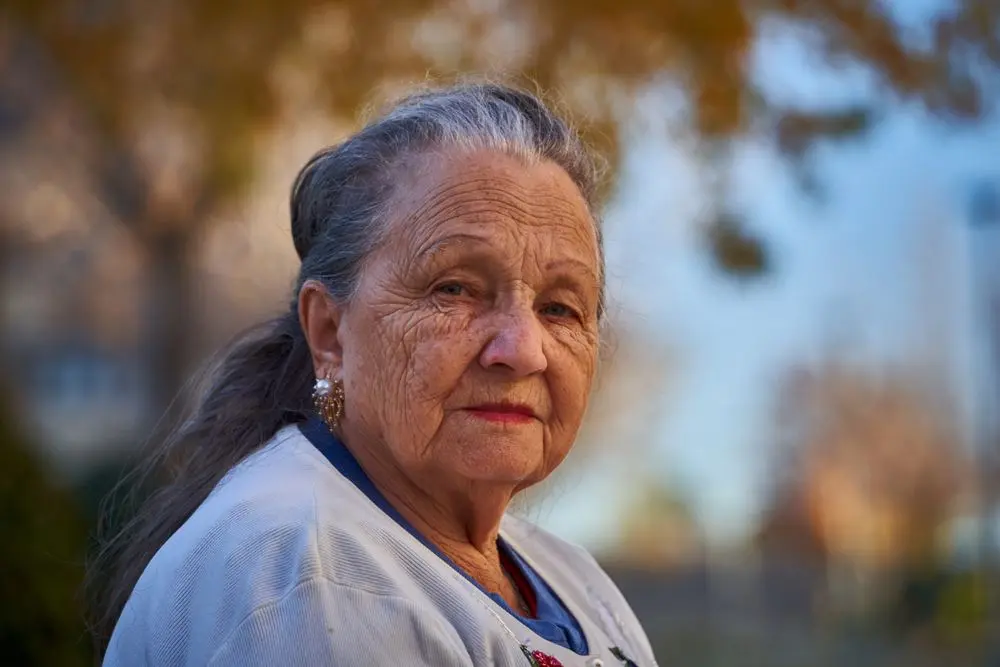
My mother is a small woman. Five foot one, and shrinking. White hair she still sets in pin curls every Saturday night. She wears pearls to the grocery store. She drinks one Coca-Cola a day, at three o’clock, in a glass bottle, and she’ll tell you that’s why she’s lived so long.
She’s sharp as a tack. She does the crossword in pen. She still plays the piano every morning. Hymns, mostly. Sometimes Gershwin, when she’s in a mood.
She is also eighty-four. I’m not going to pretend she isn’t.
On the eleventh of October, she fell in her kitchen.
She was reaching for a can of Crisco on the top shelf. She’d climbed up on the little step stool Daddy made her. The one she’s not supposed to use. The one all four of us have begged her to throw away.
The stool tipped. She went down hard on the linoleum and broke her left hip.
She lay there for three hours before anybody found her.
It was me who found her.
I came by after school like I do every Tuesday and Thursday, with a bag of groceries and her prescriptions from the Walgreens. I let myself in the front door with my key.
“Mama?”
“In here, sugar.”
Her voice was so calm. That’s what I remember. Like she was calling me in for supper.
I found her on the kitchen floor in her housecoat, flat on her back, with her head on a dish towel she’d somehow pulled down from the oven handle. Her face was gray. Her lips were blue.
“I’m all right,” she said. “I just can’t get up.”
“Mama, how long have you been here?”
“Since about one. I’ve been saying the Psalms. I got through all hundred and fifty and started over.”
They did surgery the next morning at Spartanburg Regional. A partial hip replacement. The surgeon was a young man named Dr. Okafor who called her Miss Goldie and held her hand before they wheeled her back.
“Miss Goldie, you’re going to do fine.”
“I know I am,” she said. “I’ve got piano students.”
She hadn’t had a piano student in eleven years. But I didn’t correct her.
Then she went to a rehabilitation center for six weeks to learn to walk again.
It was called Magnolia Manor, which made Mom laugh. “They named it after my street,” she said. “That’s a sign.”
It was a nice place. Clean. Bright. They had her up on a walker the second day, in parallel bars the third. She had a physical therapist named Marcus, a big man from Gaffney with forearms like hams and the patience of Job. She called him “my young man.” He called her “the boss.”
And the house sat empty.
I drove by every few days.
I’d stop on my way home from school to get the mail. Water her African violets. Check that the heat was on low so the pipes wouldn’t freeze if we got a cold snap. Run the faucets. Make sure nobody had broken in.
I’d stand in her kitchen for a minute sometimes. Looking at the spot on the floor where I’d found her.
Then I’d lock the door and go home.
Her next-door neighbor is a man named Irwin Beaumont.
He moved in three years ago. He bought the old Hendricks place after Mrs. Hendricks passed and her children in Charlotte didn’t want it. He’s in his forties. Tall, tan, good teeth. Wears pressed khakis and boat shoes to mow his lawn.
He buys old houses, fixes them up cheap, and sells them for a lot more than he paid. Flipping, they call it. He’s done four on Magnolia Street and two on Pine. You can tell which ones are his. Gray paint. White trim. Black front doors. The same light fixtures from Lowe’s in every one.
He’s asked my mother to sell him her house four times.
The first time was the week he moved in. He brought her a bundt cake from Publix in the plastic container.
“Ma’am, I don’t mean any disrespect. But it’s an awful lot of house for one lady. Let me take it off your hands. I’ll give you a fair price. You could get yourself one of those nice condos over by the mall.”
“No, thank you,” Mom said. “I like it here.”
The second time was the next spring. He stood at the end of her driveway while she was weeding her azaleas.
“Miss Goldie. Have you given any more thought to my offer?”
“I have not.”
The third time, he left a letter in her mailbox. Typed, on letterhead. BEAUMONT PROPERTIES LLC. With a number on it. A hundred and forty thousand dollars. Cash. As is.
She tore it in half and put it in the trash.
The fourth time was last August. He came up on the porch while she was sitting in the swing with her three o’clock Coca-Cola.
“Ma’am, I’m going to be honest with you. At your age, you’re not going to be able to stay here forever. Somebody’s going to have to sell it. Might as well be now, while you can still enjoy the money.”
My mother set her Coca-Cola down.
“Mr. Beaumont,” she said. “My husband built this porch. You are standing on it. And I’d like you to get off.”
He laughed and went home.
She told me about it on the phone that night. She thought it was funny.
I didn’t.
So now I was sitting in my car in front of my mother’s house, looking at a FOR SALE sign, calling the number on it.
A woman answered on the second ring. She sounded like a morning show host.
“Good afternoon, this is Tiffany Lowe with Carolina Premier Realty! How can I help you today?”
“I’m calling about the house on Magnolia Street. 412.”
“Oh, yes! That’s a lovely property. A real gem. Original hardwoods, beautiful front porch, lots of potential. The owner is very motivated.”
“How much?”
“Two eighty-nine,” she said. “Two hundred and eighty-nine thousand. Which is a great price for the neighborhood, honestly. We’ve already had a lot of interest. The open house is this Sunday, one to four.”
“Who’s the owner?”
I heard her typing.
“Let me just check my notes here,” she said. “It’s a gentleman named Irwin Beaumont. Through his company, Beaumont Properties. He purchased it from the previous owner last month.”
My hands went cold.
Not a figure of speech. They actually went cold. I couldn’t feel my fingers on the phone.
“The previous owner,” I said, “is my mother.”
“Oh! Well, isn’t that nice. I hope she’s enjoying her—”
“My mother is in a rehabilitation center. With a broken hip. She hasn’t sold anything to anybody.”
The line went quiet.
“Ma’am,” Tiffany said slowly. Her voice wasn’t so cheerful anymore. “I have a copy of the recorded deed right here. It’s in the county records. It has her signature on it. It’s notarized.”
“I don’t care what it has on it,” I said. “She didn’t sign it.”
There was a long pause.
“I— I think you should probably speak to Mr. Beaumont,” Tiffany said. “Or an attorney. I’m just the listing agent. I just go by what’s in the records.”
“Don’t hold that open house,” I said.
“Ma’am, I can’t cancel an open house because of a phone call. The seller has instructed me to proceed. If there’s a legal dispute, you’d need to—”
I hung up.
I got out of the car.
I walked across my mother’s front yard, past the sign, across the strip of grass between her driveway and the old Hendricks place.
Irwin Beaumont’s house was gray. White trim. Black front door. A brass knocker shaped like a pineapple.
I didn’t use the knocker. I pounded on the door with my fist.
He answered with a coffee mug in his hand.
He was wearing a quarter-zip pullover and khakis and leather slippers. He looked like he’d just come from a golf course.
He didn’t even pretend to be surprised.
“Kathleen,” he said. “I figured you’d come by.”
“You forged my mother’s signature.”
He smiled.
He actually smiled. A slow, easy smile. Like I’d told him a joke he’d heard before.
“Prove it,” he said.
“She’s eighty-four,” he said. “With a broken hip. Old ladies don’t come back from rehab. You know that. Everybody knows that. They go in, and they get the pneumonia, or they fall again, or they just give up. And then the family’s stuck with a house full of junk and a roof that needs replacing and a big old mess to deal with.”
He took a sip of his coffee.
“I’m doing your family a favor,” he said. “You’d have to sell it anyway.”
“She’s coming home,” I said.
“No, she isn’t,” Irwin said.
He said it so calmly. Like he was telling me what the weather was going to do.
“And even if she does,” he said, “good luck fighting a recorded deed. That takes years. Lawyers. Money. Court dates. Title searches. Quiet title actions. You know what that costs? Thirty, forty thousand dollars. Minimum. And by the time you get in front of a judge, I’ll have sold it. To some nice young family from Greenville with two kids and a golden retriever. And you’ll have to sue them too.”
He leaned against the doorframe.
“You want to go after a nice young family with a golden retriever, Kathleen? On behalf of an old lady who’ll probably be dead by then?”
I stared at him.
“You’re a monster,” I said.
“I’m a businessman,” he said. “There’s a difference. Not a big one. But there is one.”
And he shut the door in my face.
I stood on his porch.
The pineapple knocker swung a little from the door closing.
I could hear him inside, walking away. I could hear his TV come on. Golf. That hushed announcer voice.
I stood there for a long time.
My first instinct was to pound on the door again. To scream. To kick his potted ferns off his porch. To go home and cry.
I didn’t do any of that.
I took a breath. A long one. The kind I tell my kids at school to take when they’re about to say something they can’t take back.
Then I said, out loud, to his black front door:
“Okay.”
I want to tell you something about myself.
When Irwin said You’d have to sell it anyway, it hit me harder than anything else he said.
Because I’d thought it.
Three weeks earlier, my brother Ray had called me from Atlanta.
Ray’s the second oldest. He’s fifty. He does something with commercial insurance and drives a Lexus and has opinions.
“Kath,” he said. “We need to talk about Mama.”
“What about her?”
“About the house. She can’t go back there. You know she can’t. Three steps up to the porch. Stairs to the bedroom. The bathroom’s upstairs. She’s eighty-four with a hip replacement. What happens the next time she falls and nobody finds her for six hours?”
“It was three hours.”
“Three hours, six hours. What’s the difference?”
“Three hours.”
“Kath. Come on. You’re the one who has to deal with it. You’re right there. Donna’s in Florida. Michael’s in Denver. I’m in Atlanta. You’re the one who’ll be driving over every day. You can’t keep doing that. You have a job. You’ve got your own life.”
I didn’t say anything.
“I’m just saying,” Ray said. “Maybe it’s time. Brookdale over in Boiling Springs has a waiting list, but I know a guy. We could sell the house. Use the money for her care.”
“Have you asked her?”
“She’s on pain meds. She’s not in a state to make big decisions.”
“She’s doing the crossword in pen, Ray.”
He sighed.
“Just think about it,” he said.
I’d thought about it.
I’d lain awake thinking about it. About the stairs. About the step stool. About the three hours on the kitchen floor. About me, driving over every day after school, and every weekend, for however many years she had left.
About how tired I was.
I’d never said it out loud. But I’d thought it.
And then a man in boat shoes said it to my face. Like it was obvious. Like it was already decided. Like my mother was a piece of furniture someone had left on the curb.
Old ladies don’t come back from rehab.
I stood on his porch and realized that I’d been halfway to believing it myself.
That’s what made me say Okay.
Not because I had a plan. Not yet.
Because I’d decided right then that whatever happened to my mother’s house, it was going to be her decision.
Not Irwin’s. Not Ray’s.
Not even mine.
I drove home. I sat at my kitchen table with a cup of coffee going cold and my laptop open.
I was trying to figure out where to even start. Who you call. Police? A lawyer? The county?
And then I remembered something.
Two years ago, there’d been a story on WSPA, Channel 7. About deed fraud. About how people were stealing elderly people’s houses by forging their signatures on deeds and recording them at the county office. They interviewed a woman in Greer who’d come home from a cruise to find a stranger living in her house.
At the end of the story, the reporter said the county had a free service. A property fraud alert. You signed up with your name and address, and anytime a document was recorded in the county with your name on it, you got an email.
I’d signed Mom up that same night. Using my email address. It took four minutes. I’d forgotten all about it.
I opened my email.
I searched for “Spartanburg County Register of Deeds.”
There it was.
Three weeks and two days ago.
SPARTANBURG COUNTY PROPERTY FRAUD ALERT — A document has been recorded containing the name GOLDIE MAE WHITLOCK.
I’d gotten that email.
It had come in the same week as Mom’s surgery. The same week I was driving back and forth to the hospital twice a day. The same week I was on the phone with Medicare and her supplemental insurance and Magnolia Manor and Ray and Donna and Michael. The same week I had sixty-three college recommendation letters due at work.
I’d seen it in my inbox. I remember seeing it.
I’d thought it was spam. Or a newsletter. I’d thought, I’ll look at that later.
I hadn’t opened it.
I opened it now.
I sat there at my kitchen table and read it with my hand over my mouth.
There was a link to the recorded document. I clicked it.
A deed. A general warranty deed, it said at the top. Transferring 412 Magnolia Street from Goldie Mae Whitlock to Beaumont Properties LLC. For the sum of one hundred and twenty thousand dollars.
There was a signature at the bottom.
Goldie M. Whitlock.
It wasn’t her signature.
I knew it the way you know your own mother’s handwriting. Mom signs her name with a big looping G that runs into the O like a ribbon. She’s done it the same way since 1946, when Miss Eula Pratt taught her penmanship at the Pacolet Mills school. Every birthday card I’ve ever gotten. Every report card. Every permission slip.
This G was small and tight. Careful. Somebody copying it.
And underneath the signature was a notary block.
Sworn and subscribed before me this 12th day of October.
Darlene P. Suggs, Notary Public, State of South Carolina.
My commission expires March 2027.
And a stamp.
October 12th.
The day after she fell.
I sat very still.
October 12th, my mother was in surgery at Spartanburg Regional. Dr. Okafor took her back at 7:40 in the morning. I was in the waiting room. I had the little buzzer they give you, the kind restaurants use, that lights up when your person is out of surgery.
It lit up at 10:15.
By noon, she was in a room on the fifth floor. Room 518. With a morphine pump and an IV and a catheter and a nurse named Bettye checking on her every half hour.
She couldn’t sit up. She couldn’t hold a cup. She could barely keep her eyes open.
And according to this deed, on that same day, she’d signed her house away in front of a notary named Darlene Suggs.
I picked up my phone.
I made two phone calls.
The first was to the Spartanburg County Sheriff’s Office.
I told the woman at the front desk that I needed to report a property fraud and the financial exploitation of a vulnerable adult. She put me on hold. Then a man picked up. He said his name was Sergeant Lewis Hampton. Financial Crimes Unit.
I told him everything. The locks. The sign. Tiffany Lowe. Irwin and his coffee mug. Old ladies don’t come back from rehab. The fraud alert email. The deed. The notary. October 12th.
He listened without interrupting.
When I was done, there was a pause on the line.
“Ms. Dupree,” he said. “Do you have documentation that your mother was hospitalized on October 12th?”
“I have her discharge papers. I have the surgery report. I have the hospital bill. I have a picture I took of her in her hospital bed that afternoon, with the date on it, that I sent to my brother.”
“Good. Keep all of that.”
He paused again.
“Ma’am, I’ve been doing this for nineteen years. I’ve seen a lot of these. And I’m going to tell you something. Most of the time, these folks are careful. They wait until somebody passes. Or they forge it on a day when the person really could have been at home. They pick a date that works.”
“He didn’t.”
“No, ma’am,” Sergeant Hampton said. “It sounds like he didn’t.”
“Why not?”
“Because he thought she was never coming home,” he said. “So he figured nobody would ever check.”
He asked me a lot of questions. He asked if I knew Darlene Suggs. I didn’t. He asked if I knew any other properties Irwin had bought. I named the ones I knew on Magnolia and Pine.
“I’m going to pull those,” he said. “Every one of them.”
Then he asked me when the open house was.
“Sunday. One to four.”
There was a long silence.
“Ms. Dupree,” he said. “I’d like to be there.”
The second phone call was to my mother’s physical therapist.
Marcus picked up on the third ring. I could hear the clank of weights in the background. The rehab gym at Magnolia Manor.
“Ms. Kathleen? Everything all right with the boss?”
“She’s fine,” I said. “Marcus, how soon can she leave the building for a few hours?”
“Leave the building? Like for an outing?”
“Like for an outing.”
“I mean. She’s been doing real good. She’s on the walker. She did forty feet yesterday. We usually start community outings in week five or six. Doctor’s appointments, church, that kind of thing. In the wheelchair, with a family member. Why?”
“There’s something she needs to see.”
He was quiet for a second.
“What is it?”
So I told him.
When I finished, he didn’t say anything for a long time. I could hear the weights clanking in the background. Someone laughing.
“He said what?” Marcus said finally.
“He said old ladies don’t come back from rehab.”
Another long pause.
“Ms. Kathleen,” he said. “I’m going to have to talk to her doctor. And I’m going to need a family member to sign off. And she’ll need the wheelchair van, because she can’t do a regular car yet. And she can’t do stairs. And she can’t be out more than three hours.”
“Okay.”
“And I want to come.”
“Marcus—”
“I’ve had her on those parallel bars every day for four weeks,” he said. “She cries every single time. Every time. Not because it hurts, though it does. Because she wants to go home so bad. She talks about that porch every day. Her husband built it. I know every board on that porch and I’ve never seen it.”
He took a breath.
“I want to come,” he said.
Then I had to tell my mother.
I went to Magnolia Manor on Friday after school. She was in the dayroom in her wheelchair, in a pink cardigan, doing the crossword. In pen.
She looked up and smiled when she saw me.
“Hey, sugar.”
“Hey, Mama.”
I pulled a chair up next to her.
“Seven letters,” she said. “‘Unwanted guest.’ Starts with an I.”
I stared at her.
“Intrude,” I said.
“No, that’s a verb. I need a noun.”
“Interloper’s too long,” I said.
“Interloper’s eleven. You never could count, Kathleen.” She tapped her pen. “I’ll get it.”
I didn’t know how to start.
So I just told her. All of it. Slowly. In order. The locks, the sign. The phone call. Irwin and his coffee mug.
She listened without saying a word. Her pen was still in her hand. She didn’t put it down.
When I got to Old ladies don’t come back from rehab, she closed her eyes.
When I got to the deed with her signature on it, she opened them again.
“Let me see it,” she said.
I’d printed it out. I gave it to her.
She held it close to her face. She put on her reading glasses, the ones on the chain around her neck. She looked at the signature for a long, long time.
“That’s not my G,” she said.
“I know, Mama.”
“Miss Eula Pratt would have rapped that man’s knuckles with a ruler.”
She looked at the notary block.
“October twelfth,” she said.
“The day after you fell. The day of your surgery.”
“I was asleep,” Mom said. “I was full of morphine. I thought your daddy was in the room. I told Bettye the nurse to please make him take off his work boots because he was tracking sawdust on my floor.”
I’d forgotten that.
“I didn’t sign anything,” she said. “I couldn’t have signed my own name if you’d held my hand.”
She put the deed down in her lap.
She didn’t cry. My mother doesn’t cry in front of people. She looked out the window at the parking lot for a long time.
“Four times,” she said. “That man asked me four times. And I told him no four times.”
“I know.”
“And the minute I’m flat on my back, he goes and does it anyway.”
“Yes.”
She turned and looked at me.
“Kathleen,” she said. “Did you think I wasn’t coming home?”
I wanted to lie.
I sat there in that dayroom and wanted so badly to say, No, Mama, of course not, never.
But she’d always been able to tell when I was lying. Since I was five years old and told her the cat ate the last Little Debbie.
“I thought about it,” I said. “Ray called. He thinks you should go to Brookdale. He thinks we should sell the house. And I was so tired, Mama. I was so tired and so scared from finding you on that floor. And I thought about it.”
She didn’t say anything.
“I’m sorry,” I said.
She reached over and patted my hand.
“Don’t be sorry for thinking,” she said. “Thinking’s free. I’ve thought about it too.”
“You have?”
“Of course I have. I’m eighty-four, not stupid. I lay on that kitchen floor for three hours, sugar. I thought about a lot of things.”
She picked up her crossword.
“But I’ll be the one that decides,” she said. “Not Ray. Not you. And certainly not that man in his boat shoes.”
“So you’ll come?” I said. “On Sunday?”
My mother looked at me over her reading glasses.
“Kathleen Anne,” she said. “I wouldn’t miss it for the world.”
She clicked her pen.
“Now. What does a person wear,” she said, “to their own open house?”
She worked harder that weekend than she’d worked in four weeks.
Marcus told me. He called me Saturday afternoon.
“She did eighty feet on the walker this morning,” he said. “Eighty. She was only doing forty on Wednesday. And then she asked me to put her back on the parallel bars.”
“Is that okay?”
“No, it is not okay. I told her it wasn’t okay. She did it anyway. She said, ‘Marcus, I have somewhere to be on Sunday, and I’m going to walk through that door if it kills me.’”
“Is it going to kill her?”
“No,” Marcus said. “But it might kill me.”
On Sunday at one o’clock, the open house began.
I was parked down the street in my Camry, three houses away, in front of the Pattersons’. Mrs. Patterson came out to get her newspaper and saw me sitting there and knocked on my window.
“Kathleen? Honey, what’s going on? Who are all these people at your mama’s house?”
“It’s a long story, Mrs. Patterson.”
She looked up the street. At the sign. At the cars.
“Your mama didn’t sell that house,” she said.
“No, ma’am. She didn’t.”
Mrs. Patterson’s mouth went tight. She’s eighty-one. She and Mom have been neighbors for fifty-two years.
“I’m going to go get my coat,” she said.
Cars lined Magnolia Street on both sides. A BMW. Two minivans. A pickup truck with a ladder rack. A little red Mini Cooper.
Families walked up my mother’s front walk. Past her dead ferns. Up the three steps my father built. Across the porch. Through her front door.
Young couples holding hands. A man with a baby in a carrier on his chest. An older couple with a measuring tape. A woman on her phone saying, “No, it’s really cute, it’s got the original floors.”
Tiffany Lowe was there, in a red blazer, with a stack of flyers. She kept looking up and down the street. She looked nervous.
And Irwin Beaumont stood on my mother’s porch shaking hands.
He’d dressed up. Navy blazer. White shirt. No tie. He was leaning on the porch railing my father cut by hand in 1967 like he’d built it himself.
I watched him through my windshield. Shaking hands. Laughing. Pointing at things. At one point he patted one of the porch posts and said something, and the couple he was talking to both laughed.
I found out later what he’d said. He’d told them, “They don’t build ’em like this anymore. Solid oak. Previous owner’s husband built it himself. Real craftsman.”
He knew.
He knew my father built that porch. He knew whose house it was. He stood there and used it to sell it.
At 1:15, my phone buzzed.
It was a text from Sergeant Hampton.
On our way. ETA 1:55. We’ll wait for your mother.
At 1:30, Mrs. Patterson came back out in her good wool coat and her church hat and stood at the end of her driveway with her arms folded.
At 1:40, Mr. and Mrs. Okonkwo from across the street came out on their porch.
At 1:45, old Mr. Fred Tillman, who’s ninety-two and still drives a 1987 Buick, came out of his house in his bathrobe and stood in his yard.
I hadn’t told any of them.
But it was Magnolia Street. Everybody knows everything on Magnolia Street. Mrs. Patterson had made some phone calls.
At 1:58 p.m., a white wheelchair van pulled up in front of my mother’s house.
It said MAGNOLIA MANOR REHABILITATION on the side in green letters.
I got out of my car and walked up the street.
Marcus was already out of the passenger seat. He came around and opened the side door. The ramp came down slowly, whirring.
And there she was.
My mother was sitting in her wheelchair at the top of the ramp in her church dress.
Navy blue, with little white polka dots. The one she wore to Easter services for the last fifteen years. Her pearls. Her good white cardigan. Her hair was set in pin curls, every one perfect. She’d had one of the aides at Magnolia Manor do it the night before. She was wearing lipstick. Revlon, Cherries in the Snow, the same shade she’s worn since 1953.
Her walker was folded up on her lap.
“Well,” she said. “Here I am.”
I helped her down the ramp.
Marcus walked beside us, one hand on the back of the chair. When we reached the sidewalk, he stopped and looked up at the house.
At the white siding. The green shutters. The porch.
“That’s it,” he said quietly. “That’s the porch.”
“That’s the porch,” Mom said.
Behind us, a sheriff’s cruiser rolled to a stop at the curb.
Then another one.
Sergeant Hampton got out of the first one. He was older than I expected, maybe fifty-five, with gray hair cut short and a brown suit instead of a uniform. Two deputies in uniform got out of the second car. A man and a woman.
Sergeant Hampton walked over and bent down next to my mother’s wheelchair.
“Mrs. Whitlock,” he said. “I’m Sergeant Hampton. With the sheriff’s office.”
“I know who you are, young man,” Mom said. “Kathleen told me. Thank you for coming.”
“Yes, ma’am.”
“Are you going to arrest him?”
“That depends on what he says, ma’am.”
“Well,” my mother said. “Let’s go hear what he says.”
Irwin saw us coming up the walk.
He was in the middle of shaking hands with a young couple. The man with the baby carrier. He looked over the man’s shoulder, down the front walk.
At a white wheelchair van with MAGNOLIA MANOR on the side.
At two sheriff’s cruisers at the curb.
At a big man in scrubs and a sergeant in a brown suit.
At me.
And at a tiny eighty-four-year-old woman in a navy polka-dot dress and pearls, rolling up the front walk of her own house in a wheelchair.
His face went gray.
Not pale. Gray. The color of old dishwater.
His hand was still out, shaking the young man’s hand. He just forgot to let go.
My mother stopped her wheelchair at the bottom of the porch steps.
She looked at the FOR SALE sign stuck in her lawn. She looked at it for a long time.
She looked at her dead ferns hanging in their baskets.
She looked at the new brass lock on her front door, shining in the sun.
Then she looked straight up at him.
“Irwin,” my mother said. “Honey.”
Her voice was perfectly calm. Perfectly pleasant. The voice she used for sixty years to tell a nine-year-old that no, they had not practiced their scales that week, and she could tell.
“You’re standing on my porch.”
The whole front yard went silent.
The young couple with the baby took a step back. Tiffany Lowe, in her red blazer, dropped her flyers. They blew across the yard like leaves.
Inside the house, somebody said, “Wait, who’s that?”
Irwin let go of the young man’s hand.
“Mrs. Whitlock,” he said. His voice cracked. He cleared his throat and tried again. “Mrs. Whitlock. This is— You’re— I didn’t think—”
“No,” Mom said. “You didn’t.”
“My husband built that porch in the summer of 1967,” my mother said. “Every board. He cut those railings with a handsaw in the backyard. He carved my children’s initials under the swing. He’d have had a few things to say about you standing on it.”
She folded her hands in her lap. On top of the walker.
“I’m a Christian woman,” she said. “So I’ll just say this. Get off.”
He didn’t move.
He just stood there at the top of the steps, gray-faced, with his hands at his sides.
“Mrs. Whitlock, I can explain,” he said.
“I’m sure you can,” my mother said. “You’re very good at explaining. You explained four times why I ought to sell you my house. And I said no four times. Did you not hear me?”
“I— Ma’am, it was a business decision. The family was going to have to—”
“Don’t you talk to me about my family,” Mom said.
Her voice didn’t get louder. It got quieter. Which is so much worse. Every one of her four children knows that.
“You told my daughter that old ladies don’t come back from rehab,” she said.
Irwin’s eyes went to me.
“Well,” said my mother. “Here’s one.”
Sergeant Hampton stepped forward.
“Mr. Beaumont,” he said. “I’m Sergeant Lewis Hampton. Spartanburg County Sheriff’s Office, Financial Crimes. I’d like to ask you a few questions about the deed for this property.”
Irwin looked at him. Then at the two deputies standing at the bottom of the walk.
“I’d like to speak to my attorney,” he said.
“That’s your right,” Sergeant Hampton said. “You can call him on the way.”
“On the way where?”
“To the Law Enforcement Center on Ralph Hall Parkway,” the sergeant said. “Mr. Beaumont, you’re under arrest for forgery, for filing a false and fraudulent instrument with the Register of Deeds, and for financial exploitation of a vulnerable adult. Please come down off the porch.”
Somebody in the house gasped.
The young man with the baby carrier said, “Oh my God,” and backed all the way down the steps onto the grass.
Irwin stood very still at the top of the steps.
“This is ridiculous,” he said. “It’s a recorded deed. It’s notarized. She signed it. She just doesn’t remember. She’s eighty-four. She’s on painkillers. She probably forgot.”
Sergeant Hampton nodded slowly.
“Mr. Beaumont,” he said, “according to that deed, Mrs. Whitlock appeared before a notary named Darlene Suggs on October twelfth and signed it in person.”
“That’s right.”
“At what time?”
Irwin hesitated.
“The notary log says ten a.m.,” Sergeant Hampton said. “I pulled it yesterday.”
“So?”
“So at ten a.m. on October twelfth,” the sergeant said, “Mrs. Whitlock was on the operating table at Spartanburg Regional Medical Center. Under general anesthesia. With Dr. Emmanuel Okafor replacing her left hip.”
He took a folded paper out of his jacket pocket.
“I have the surgical record,” he said. “Dr. Okafor signed it at 10:52. The anesthesiologist logged her as unconscious from 7:58 to 10:31.”
The front yard was completely silent.
Irwin looked at the paper. Then at my mother.
“Darlene must have gotten the time wrong,” he said.
“Darlene,” said Sergeant Hampton, “is at the Law Enforcement Center right now. With her attorney. We picked her up at her house this morning. She’s been very helpful.”
That was the moment.
I watched it happen. I watched Irwin Beaumont realize that it was over.
His shoulders came down. His hands came up and then fell. He looked around the yard. At the young couples who’d come to see a nice house. At Tiffany Lowe, standing in a drift of her own flyers with her hand over her mouth. At Mrs. Patterson in her church hat. At Mr. Tillman in his bathrobe. At the Okonkwos on their porch.
At my mother, in her wheelchair, in her pearls.
He came down the steps.
Slowly. One at a time. The steps my father built.
When he reached the bottom, he stopped in front of my mother’s wheelchair.
For a second, I thought he was going to say something. Apologize, maybe.
He didn’t.
He just looked at her. And she looked at him. And neither of them said a word.
Then the female deputy put her hand on his arm and walked him down the front walk to the cruiser.
Tiffany Lowe came over to us while they were putting him in the back seat.
Her face was bright red. Her mascara was running.
“Mrs. Whitlock,” she said. “I am so sorry. I am so, so sorry. I had no idea. I swear to God, I had no idea. He showed me the deed. It was recorded. It looked— I didn’t—”
“Did you check?” my mother asked.
Tiffany opened her mouth.
“Did you check,” Mom said again, “whether the lady who signed it was still alive? Whether she was in the hospital? Did you knock on a single door on this street and ask anybody who lived here?”
Tiffany closed her mouth.
“No, ma’am,” she whispered.
“Well,” my mother said. “Next time, sugar, you might want to knock.”
Tiffany cancelled the listing on her phone right there in the front yard. She pulled the sign out of the grass herself. It took her three tries. The ground was hard. Marcus finally walked over and pulled it out for her with one hand.
He handed it to my mother.
She held the FOR SALE sign in her lap for a moment, on top of her walker. She looked at it.
Then she handed it back to Marcus.
“Put that in the trash, would you, honey?”
“Yes, ma’am, boss.”
The people who’d come for the open house drifted away. Slowly. Back to their cars.
But some of them didn’t go right away.
The young man with the baby carrier came over to my mother’s wheelchair. He crouched down.
“Ma’am,” he said. “I just want you to know. We put in an offer on Friday. Ten thousand earnest money. We were going to raise our son here.”
He looked up at the house.
“I’m glad it’s still yours,” he said. “It’s a beautiful house. Your husband did good work.”
My mother put her hand on his arm.
“Get your earnest money back,” she said. “Then go find yourselves a house that nobody stole. And when you do, take care of the porch.”
Then my mother looked up at her front door.
“Kathleen,” she said. “I’d like to go in.”
I looked at Marcus.
Marcus looked at the steps. Three of them. Up to the porch.
“Boss,” he said. “We talked about this. You can’t do stairs yet.”
“I know I can’t do stairs,” my mother said. “I’m not a fool. You’re going to carry me up the stairs. And then I’m going to walk through that door.”
Marcus looked at me.
I shrugged.
“You heard her,” I said.
He lifted her out of the wheelchair like she weighed nothing. Which, I suppose, to Marcus, she didn’t. Ninety-four pounds in a polka-dot dress.
He carried her up the three steps my father built. Very carefully. One at a time. Mrs. Patterson was crying at the end of her driveway. So was Mrs. Okonkwo. So was Mr. Tillman, in his bathrobe.
So was I.
At the top, Marcus set her down gently on her feet on the porch. I unfolded her walker and put it in front of her. She gripped the handles.
Sergeant Hampton came up the steps behind us. He had a key in his hand.
“Took it off Mr. Beaumont,” he said. “For the new lock.”
He held it out to my mother.
She didn’t take it.
“You open it, Kathleen,” she said.
I unlocked my mother’s front door with Irwin Beaumont’s key.
I pushed it open.
The front room. The upright piano against the wall. The blue sofa. The braided rug. Daddy’s recliner, still in the corner, still with his reading glasses on the side table, where they’d been for fifteen years.
Irwin had moved some things around for the open house. He’d put a bowl of fake lemons on the piano. A candle that smelled like vanilla. A little sign on the mantel that said GATHER.
Otherwise, it was exactly the same.
My mother stood in the doorway with her walker.
Marcus was behind her, one hand hovering at her back.
She looked at her front room for a long time.
“Ready, boss?” Marcus said quietly.
“I’ve been ready for five weeks,” my mother said.
She walked through the door.
Step. Walker. Step. Walker.
Slowly. Her arms shaking. Her knuckles white on the handles. Her lips pressed tight. Marcus right behind her, not touching her, just there.
Step. Walker.
Across the threshold my father laid in 1966.
Into her own house.
Seven steps. I counted.
She stopped in the middle of the braided rug.
She was breathing hard. Her face was pink. One of her pin curls had come loose.
“There,” she said.
And then my mother, who doesn’t cry in front of people, put her head down on the handle of her walker and cried.
I’d like to tell you everything was fixed that day.
It wasn’t. Not right away. But it was fixed a lot faster than Irwin promised.
Darlene Suggs, the notary, turned out to be Irwin’s ex-girlfriend’s sister. She’d notarized documents for him for two years. She told Sergeant Hampton she’d never actually seen my mother. Irwin brought her the deed already signed. He told her the old lady was too sick to come in, that he had power of attorney, that it was all above board. He paid her two hundred dollars.
She knew it was wrong. She did it anyway.
She lost her notary commission. She was charged with official misconduct and aiding in the forgery. She pleaded guilty in February and got probation and three hundred hours of community service.
Irwin was a different story.
When Sergeant Hampton pulled the records on Irwin’s other properties, he found two more.
A house on Pine Street, bought in 2023 from a man named Odell Briggs. Mr. Briggs was ninety-one. The deed was signed four days before he died in hospice. His family in Columbia never questioned it. They thought he’d sold it to pay for his care.
And a house on Cedar Lane, bought from a woman named Lorraine Sims. Mrs. Sims had dementia. She’d been in memory care for two years. Her son lived in California. He’d never even known the house was sold.
Same notary. Same small, tight, careful handwriting.
They found my mother’s handwriting too. In Irwin’s office. In a manila folder.
The torn letter he’d left in her mailbox. The one with the $140,000 offer. She’d torn it in half and put it in her trash can. He’d gone through her trash. He’d taped it back together.
He was practicing her signature off the thank-you note she’d sent him for the bundt cake. The first week he moved in.
Goldie M. Whitlock. Over and over. On a yellow legal pad. Forty-one times.
He never could get the G right.
Irwin’s lawyer advised him to make it easy on himself.
In January, before his first court date, Irwin signed a quitclaim deed transferring 412 Magnolia Street back to Goldie Mae Whitlock. Along with a sworn affidavit stating that the October deed was fraudulent and void.
The Register of Deeds recorded it the same day.
I got an email.
SPARTANBURG COUNTY PROPERTY FRAUD ALERT — A document has been recorded containing the name GOLDIE MAE WHITLOCK.
I opened that one right away.
No quiet title action. No forty thousand dollars. No years in court.
Seven weeks.
Irwin pleaded guilty in April. Three counts of forgery. Three counts of filing false instruments. Three counts of exploitation of a vulnerable adult. The Briggs family and Mrs. Sims’s son came to the sentencing. So did my mother. In her church dress and her pearls. In her walker, this time. Not her wheelchair.
The judge gave him eight years.
The houses on Pine Street and Cedar Lane went back to the families. Mrs. Sims’s son flew in from San Diego and sat on her front porch for a whole afternoon and cried.
When it was over, Irwin’s lawyer came over to my mother in the hallway outside the courtroom.
“Mrs. Whitlock,” he said. “My client asked me to give you something.”
He held out an envelope.
My mother looked at it. She didn’t take it.
“What is it?”
“A letter,” the lawyer said. “He wanted to apologize.”
My mother thought about it for a long time.
“You tell your client,” she said finally, “that I don’t need his letter. I already know he’s sorry. He’s sorry he got caught.”
She tucked her pocketbook under her arm.
“If he wants to apologize,” she said, “he can apologize to Mr. Briggs. Except he can’t. Because Mr. Briggs is dead. And he never got to know his house was stolen. And his grandchildren believed for two years that their granddaddy sold it.”
She started down the hall with her walker.
“Tell him that,” she said. “That’s my letter.”
Mom came home for good on December 4th.
Six weeks and two days after she fell.
But first, we had a family meeting.
I called all of them. Ray, Donna, Michael. I told them everything. The deed. Irwin. The open house. The seven steps across the braided rug.
Ray was quiet on the phone for a long time.
“I said the same thing,” he said finally. “Didn’t I? What he said. That she’d have to sell it anyway.”
“You did.”
“I didn’t mean it like he did.”
“I know you didn’t. I thought it too, Ray. We both did.”
He was quiet again.
“I’m coming home,” he said. “This weekend. We need to talk to her. Not about her. With her.”
They all came.
Ray drove up from Atlanta. Donna flew in from Tampa. Michael flew in from Denver with his wife and his two teenage boys, who’d never been to their grandmother’s house without their phones and spent the whole weekend looking confused.
We sat in Mom’s room at Magnolia Manor. All four of us around her bed. It was the first time all four of us had been in the same room since Daddy’s funeral.
Ray started to say something about Brookdale.
My mother held up her hand.
“I’ll tell you what I want,” she said.
She wanted to go home.
She knew the stairs were a problem. She knew the bathroom was a problem. She knew the step stool was a problem. She’d thought about all of it, lying in that rehab bed for six weeks.
She’d made a list. On the back of her crossword puzzle.
A bed in the front room. Moved downstairs. Next to the piano.
The downstairs half bath turned into a full bath. With a walk-in shower and grab bars.
A ramp. Off the side of the porch. “Not the front,” she said. “Not your daddy’s steps. Off the side.”
A medical alert pendant. “One of those things on a necklace,” she said. “That I push if I fall. I’ll wear it. I promise. I’ll wear it with my pearls.”
A home health aide. Three mornings a week. “Somebody to help me with my bath,” she said. “Somebody who isn’t Kathleen. Kathleen has a job.”
The step stool. “Throw it out,” she said. “I know. I know. Throw it out.”
And one more thing, at the bottom of the list, underlined twice.
Kathleen comes on Tuesdays and Thursdays. Because she wants to. Not because she has to.
We all sat there.
“It’ll be expensive,” Ray said finally. “The bathroom. The aide.”
“I have money,” Mom said. “I’ve been saving my Social Security for twenty years. I don’t spend anything. What would I spend it on? Coca-Cola?”
“And if it doesn’t work?” Ray said. “If you fall again?”
My mother looked at her oldest son.
“Then I’ll fall,” she said. “In my own house. On my own floor. And then we’ll talk about Brookdale. Together. And I’ll decide.”
She looked around the room at all four of us.
“But I’m not done yet,” she said. “Not by a long shot.”
Ray put his face in his hands. Then he looked up.
“Okay, Mama,” he said.
Michael’s boys built the ramp.
Fifteen and seventeen. They’d never built anything in their lives. Michael drove them to Lowe’s on Saturday morning and they came back with a truck full of pressure-treated lumber and a YouTube video and a lot of opinions.
It took them all weekend. Mrs. Patterson’s grandson came over to help. So did the Okonkwos’ son. Mr. Tillman sat in a lawn chair in his bathrobe and supervised.
The ramp is a little crooked. The handrail wobbles at the top.
My mother says it’s the most beautiful thing she’s ever seen.
Donna and I moved the bed downstairs. Into the front room. Next to the piano.
Ray paid for the bathroom. He wouldn’t let Mom pay for it. They argued about it for an hour on the phone. He won, for once.
The home health aide is a woman named Precious. She’s sixty-two. She comes Monday, Wednesday, and Friday mornings at eight. She helps Mom with her bath and her hair and her exercises. On Fridays, she stays an extra hour so they can watch The Price Is Right together.
“She’s terrible at guessing,” Mom says. “She has no idea what anything costs.”
“Your mama thinks a car still costs four thousand dollars,” Precious says.
It’s May now.
My mother walks to the mailbox and back every afternoon. With her walker. Down the ramp the boys built, across the yard, and back again. She’s done it every day since March. She does it at three o’clock, and then she sits in the porch swing and drinks her Coca-Cola.
The ferns are green again. She hung new ones in April.
She still plays the piano every morning. Hymns. Sometimes Gershwin.
Marcus came to visit last week.
He drove over on his day off. He said he just wanted to see her. And the porch.
He walked all the way around it. He ran his hand along the railing. He crouched down and looked at the underside of the swing, at the initials my father carved. KAW. RJW. DLW. MEW.
“Your daddy did fine work,” he said.
“He did,” my mother said.
He sat on the top step and she sat in the swing and they talked for two hours. About his kids. About his mama in Gaffney. About the Panthers, who my mother has strong feelings about.
When he left, she gave him a jar of her fig preserves and a hug.
“You come back,” she said.
“Yes, ma’am, boss.”
I come on Tuesdays and Thursdays.
Because I want to. Not because I have to.
There’s a difference. I didn’t know there was. Not until my mother wrote it at the bottom of her list and underlined it twice.
Last Thursday, I came over after school and found her on the porch swing with her crossword.
She looked up and smiled.
“Hey, sugar.”
“Hey, Mama.”
I sat down next to her. The swing creaked. It always creaks. Daddy never did fix that.
“Seven letters,” she said. “‘Unwanted guest.’ Starts with an I.”
I looked at her.
“Mama, that’s the same one. From November. At Magnolia Manor.”
“I know it,” she said. “I never got it. It’s been bothering me for six months. I cut it out and saved it.”
She showed me. A little square of newspaper, yellow at the edges. Seven blank boxes. In her handwriting, in the margin: Ask Kathleen.
I thought about it.
“Intruder’s eight,” I said.
“I know. I counted.”
“Invader?”
“That’s seven,” Mom said slowly. “I-N-V-A-D-E-R.”
She wrote it in. In pen.
She sat back in the swing and looked at it.
“Took me long enough,” she said.
We sat there for a while.
The afternoon sun came slanting across the porch. Across the boards my father cut in 1967. Next door, the old Hendricks place had a new FOR SALE sign out front. The bank had seized it after Irwin’s sentencing. A young couple was walking around the yard with a real estate agent, looking at the gray paint and the black door.
The young man stopped and looked over at us. At my mother in her swing, with her crossword and her Coca-Cola and her pearls.
He lifted his hand and waved.
My mother waved back.
“Kathleen,” she said.
“Yes, Mama?”
“Go over there and tell that young man something for me.”
“What?”
“Tell him to knock on my door if he ever wants to know anything about this street,” she said. “I’ve been here fifty-eight years. I know everything.”
She took a sip of her Coca-Cola.
“And tell him,” she said, “that old ladies come back from rehab all the time.”