My mother in law spent the better part of a year telling me that my daughter looked like a boy, and for most of that year I treated it like weather, something unpleasant that blew through every Sunday dinner and left again by the time the dishes were done.
“She needs earrings, honey,” Linda would say, tilting her head at Ellie across the table. “Just a little pair of studs. People keep mistaking her for a little boy.”
My name is Hannah, and Ellie was two years old, with a cap of soft brown curls that she refused to let anyone brush, a gap between her front teeth, and a wardrobe that consisted mostly of yellow rain boots and a green sweatshirt with a dinosaur on it. She loved trucks and puddles and the word “no,” which she used with the joy of a person who has just discovered fire. She did not look like a boy. She looked like a toddler, which is a category of person that has its own face and does not need to be sorted into anything else.
“Linda,” I said, the first time and the fifth time and the fifteenth, “her hair will grow. She’s two. And I’m not putting holes in her ears so a cashier at the grocery store will stop saying ‘sir.'”
“It’s not about the cashier.”
“Then what’s it about?”
She would press her lips together and look wounded, the way she does, and say something like “I only want what’s best for her,” and then Josh would clear his throat and say, “Mom, we’ve talked about this,” and she would sigh as though she were being asked to carry something heavy up a hill. Josh had always backed me up in those moments. That is something I need you to understand about my husband before I tell you the rest. He was a kind man, a gentle one, who had spent thirty four years being the easy child in a house where his mother set the weather, and he was in the habit of agreeing with whoever was closest. Most of the time that habit had worked in my favor.
In October, at her husband’s retirement party, Linda cornered me beside the dessert table. “I’m only saying what everyone is thinking,” she told me. “I’m not old fashioned, Hannah. I know it’s a different time. But a little girl should look like a little girl, and the sooner the better.”
“Everyone isn’t thinking that. And she does look like a little girl, because she is one.”
“You know what I mean.”
“I do,” I said. “And the answer is still no, and it’s going to stay no. It’s not a negotiation. I don’t want you to bring it up again.”
She gave me a thin, tight smile and said, “Of course, dear.” I should have noticed how quickly she agreed. People who have truly given up an argument tend to look tired, and Linda looked pleased.
That Saturday in early November was bright and cold, the kind of morning that makes you want to be outside. Linda had offered to take Ellie to the park by the river, the one with the tall metal slide and the ducks, so that I could finish a work deadline I had been dreading. It was a gift, and I took it as one. Josh said he would go along, since he had nothing else on his list, and I remember standing in the front hallway with a travel mug in my hand while he buckled Ellie into her car seat.
“Jacket,” I said. “She’ll say she’s not cold. She will be cold.”
“We’ve got it,” Josh said.
“And please don’t let your mother give her a cookie before lunch.”
“Hannah.”
“I’m only saying.”
He grinned at me over the roof of the car, that easy lopsided grin I had married, and I kissed Ellie on her sticky forehead, and she said, “Bye bye, Mama, bye bye,” in her small serious voice, and waved at me with her whole arm. I stood on the porch until the car turned the corner. Then I went inside and opened my laptop, and I did not give them another thought for nearly an hour.
When my phone buzzed, I assumed it was a photo of the ducks.
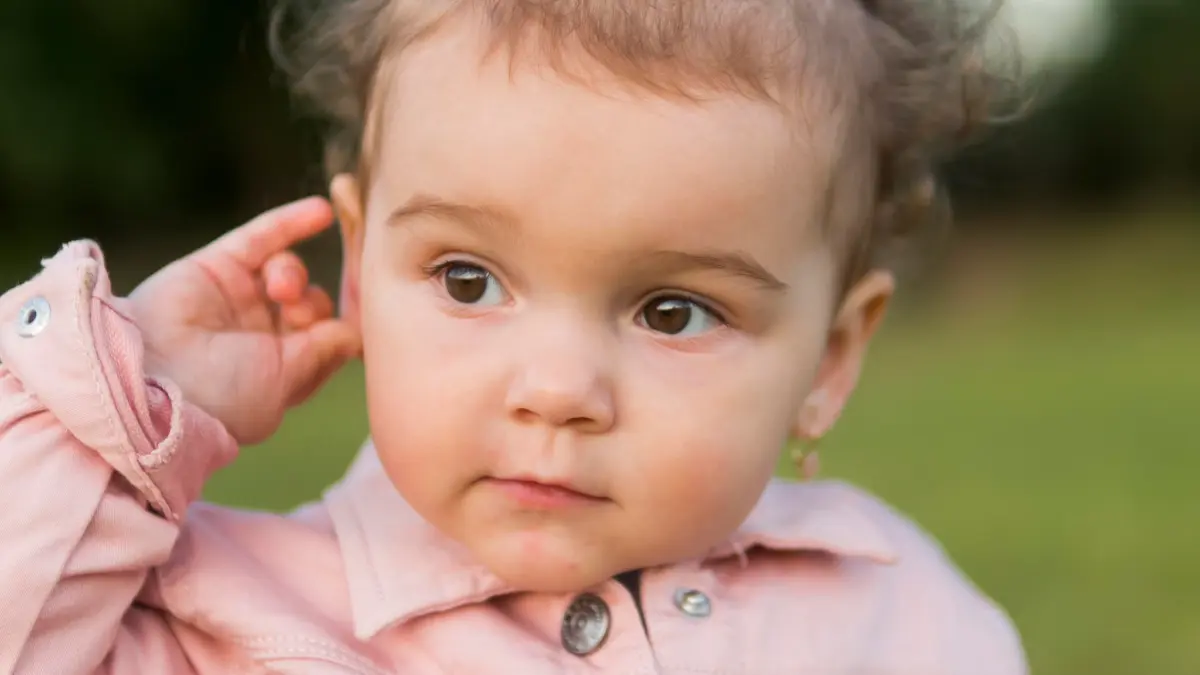
It was a photo of Ellie. She was sitting on Josh’s lap in what looked like a small bright shop, with a glittering display case behind her and a pink plastic cape draped over her shoulders. Her face was red and swollen from crying. Her mouth was open mid wail, and her eyes were squeezed nearly shut, and on each of her tiny earlobes, bright against the pink of her skin, sat a small gold stud.
Josh’s hands were around her, holding her still.
Underneath the photo, Linda had written: “See? Now she finally looks like a little girl! Josh agreed with me too. He even held her while they did it.”
I read it, and then I read it again, and the words did not rearrange themselves into something kinder. It is difficult to describe what happens inside a person at a moment like that. There was no explosion. There was a sort of drop, as if I had stepped off a curb I had not seen, and then a very still, very cold clarity settled over everything. I looked at my daughter’s face. I looked at my husband’s hands. I knew exactly how those hands had felt around her, because I had held her the same way in the pediatrician’s office when she got her shots, and I knew what she would have been doing. She would have been twisting around to find me.
I called Josh. It rang until it went to voicemail. I called again and got the same flat recording of his voice. A third time, and the same.
My phone buzzed in my hand.
“You’re welcome, by the way,” Linda had written. “A thank you would have been nice.”
I put the phone face down on the kitchen counter and stood there with both palms pressed against the cool laminate. My heart was going so hard that I could feel it in my ears. I thought about the fact that I had said no, clearly, many times, with Josh sitting right beside me. I thought about how I had been standing in a hallway an hour ago reminding them about a jacket. I thought about the pink plastic cape. Mostly, I thought about the way my two year old had looked in that photograph, the way she was looking at nobody, because nobody she trusted was looking back.
I picked the phone up again and began to type. I wrote four lines and they were all true. I told Linda what she had done, in language I will not repeat. My thumb hovered over the arrow, and then I thought about what would happen if I sent it. She would call. She would cry, or she would not, and either way I would be on the phone with her for an hour while my daughter was somewhere in a car with holes in her ears. She would tell the story in her own way. She would say I had overreacted, and she would tell it to Frank, and to her sister, and to her church group, and by Sunday the main fact of the afternoon would be my temper, not her choice. Linda had practice at that, at turning an argument into a performance she could win.
I deleted every word.
I stood in the quiet kitchen and let myself think, which is a skill I have always been better at when I am angry than when I am calm. I did not want a screaming match. A screaming match would give her everything she needed. What I wanted was for Linda, and for my husband, to understand what they had done in a way that could not be argued with, explained away, or softened by tone. I wanted them in a room where I was holding the pen.
So I wrote back, and I made every word cheerful.
“You’re right, Linda. You two should enjoy the rest of your walk. Ellie was looking forward to it, and now you can show everyone her pretty new earrings. I’ll make dinner while you’re out. Come over afterward. I’d like to thank you properly.”
I read it over once. I did not like the way it sat on the screen, so polished and false, like a smile on a mannequin. But I sent it.
Her reply came in under a minute. “I’m glad you’re finally starting to understand. I’m not as old fashioned as you think, honey. I’ve raised children. You really should listen to me more often. We’ll be there in an hour!”
“Perfect,” I wrote.
Then I turned my phone over and got to work.
The first thing I did was call the nurse line at our pediatrician’s office, which is staffed on Saturdays by a woman named Denise who has talked me through two fevers and a swallowed button. I explained, briefly and without much inflection, that my daughter’s ears had just been pierced without my knowledge, and I asked what I needed to watch for. Denise was quiet for a moment, and when she spoke again her voice had gone careful in the way that people’s voices go when they are being kind to you. She told me to clean the area twice a day with saline, to keep the studs in for at least six weeks even if I disliked them, because pulling them early could close the holes and invite infection, and to bring Ellie in on Monday so someone could check how it had been done. She asked whether the piercing had been done with a gun or a needle. I said I did not know. She said she would put a note in the chart.
“Honey,” she added, “I’m sorry. I know that’s not what you called for.”
“It’s what I needed,” I said, and meant it.
The second thing I did was look up the shop. A little detective work on the internet found it quickly, because Linda had been foolish enough to let the display case sit in her photograph. It was a kiosk in the mall on Fairmont Avenue called Sparkle Station, between a phone case stand and a pretzel counter. Their website said, in a cheerful pink font, that they did “gentle, safe, fun ear piercing for ages six months and up.” There was a line of fine print at the bottom of the page, and I read it carefully. A parent or legal guardian must be present and must sign a consent form for all clients under eighteen.
So Josh had signed. That was the part I stared at the longest. He had stood at a counter in a mall, with the pretzel smell drifting over, and written his name on a line that said he was the legal guardian of our daughter and that he consented to what was about to happen to her. It was one thing for him to fail to stop it. It was another to put his signature on it, in ink, with a date.
At ten past one the phone finally rang with Josh’s name on it. I let it ring three times before I answered.
“Hannah.” His voice was thick and unsteady. “I’m so sorry. My phone was in the car. I didn’t see anything until just now. Hannah, listen, I need to explain.”
“Is Ellie all right?”
There was a pause. “She’s fine. She was crying a lot, but she’s calmed down. She’s eating a cracker. Mom’s with her.”
“I’m asking you directly. Did anything go wrong? Any bleeding? Did she fall asleep or seem feverish?”
“No. No, she’s okay. It was fast.”
“Good,” I said. “Then bring her home for dinner. Six o’clock. Bring your mother.”
“Hannah, can we talk first? Before?”
“We’ll talk at six,” I said, and I could hear how level my voice was, and I think it frightened him more than shouting would have. “I’m making chicken and dumplings. Your mother likes those.”
“Are you…” He stopped. “Are you angry?”
“I’ll see you at six,” I said, and ended the call.
The third thing I did was telephone my father in law.
Frank Delaney is seventy two years old and has been retired from the county water department for three years. He is a large, quiet man with a gray mustache, a persistent cough, and a habit of fixing things while other people argue. In thirty eight years of marriage to Linda, I believe he has raised his voice perhaps four times. He picked up on the second ring, and I could hear a ballgame on his television.
“Hannah. Everything all right?”
“Frank, are you free tonight? I’m making dinner, and I’d like you to come. Linda and Josh will be here, and Ellie.”
“Sure, honey. I wasn’t told. Linda said she was taking the baby out for the day.”
“I know,” I said. “I’d like you to be at the table, though. Come around five thirty if you can. And Frank?”
“Yes?”
“Don’t mention to Linda that I called you.”
There was a long pause, filled with the muffled roar of a crowd. Then he said, in a different voice, “What did she do?”
“I’d rather tell you in person.”
“I’ll be there at five,” said Frank, and hung up.
I made the dumplings from scratch, which I do not usually do on a weeknight, let alone a Saturday afternoon. The work steadied me. I stirred the broth, and I cut the butter into the flour with my fingertips, and I rolled out the dough, thinking about nothing except the next small task. I made a lemon cake, too, because lemon was Linda’s favorite and because I wanted everything about that meal to be impeccable. I set the table with the good plates my grandmother had left me. I put out cloth napkins. I even found a candle.
Then I went into the study and opened the bottom drawer of my desk, and I took out a folder, and I set it beside my place at the table.
At five o’clock, Frank arrived in his old work jacket with a bakery box of cookies, which he handed to me without a word. He looked at my face, and he looked at the table, and he sat down in the chair I pointed to with the heavy patience of a man who is waiting for something to fall.
At a quarter to six, I took a breath, wiped my hands on a dish towel, and went to stand by the door.
They came up the walk together at six on the dot. Linda walked in front, wearing her good camel coat and a bright red scarf, with her shoulders squared and her chin lifted the way it gets when she believes she has won something. Josh followed a step behind her, carrying Ellie, and I will never forget how he looked. He was gray. His eyes had the glassy, stunned look of someone who has been awake for two days.
Ellie saw me, and her whole face crumpled.
“Mama,” she said. “Mama, owie. Owie, Mama.”
I took her from Josh’s arms before he could say anything. She was warm and damp and smelled of cracker and cold air, and she buried her face in my neck and held on with a grip that made my throat ache. I rocked her and said “I know, baby, I know,” over and over. When she lifted her head, I looked at her ears. Both lobes were pink and a little puffy. The gold studs sat in them like two small seeds, and they were, I had to admit, neatly done. That was almost the worst of it. Someone had taken care to make it tidy.
“Isn’t she precious?” said Linda behind me. “Look at her, Hannah. Doesn’t she look darling? I told you.”
“Hello, Linda,” I said. “Come in. Dinner’s ready.”
She stepped inside, unwinding her scarf, glowing, and then she stopped in the hall. Through the arch of the dining room she could see the table and the lit candle, and at the far end of it, in the chair beside mine, her husband, with his hands folded in front of him.
“Frank,” she said. “What are you doing here?”
“Hannah invited me,” said Frank.
“Well, that’s lovely, but nobody told me.”
“No,” said Frank mildly. “Nobody told me a lot of things.”
I settled Ellie in her high chair with a bowl of dumplings I had cooled in advance, and I wet a clean cloth with saline, just as Denise had told me, and cleaned each ear while Ellie held very still and watched my face. She did not fuss, but she did not smile either. When I was done, I kissed each of her cheeks, put a spoon in her hand, and sat down.
For the first ten minutes, dinner was almost normal. Linda talked, because Linda always talks. She described the mall, and how nicely the girl at the kiosk had handled it, and how Ellie had been such a brave little thing, and how the earrings were real gold, fourteen karat, not the cheap kind. She said she had been thinking about it for so long, and wasn’t it nice to finally have it done. She said it twice, and the second time she looked straight at me.
“And now,” she said, “I believe someone owes someone a thank you.”
I set down my fork.
“You’re right,” I said. “I do. And I’d like to do that properly, as I said I would. So if everyone will let me, I’ll go first, and then I’ll want to hear from each of you.”
Linda smiled and folded her hands. She had no idea. I think she imagined an apology, or a gift, or the sort of grudging, tight lipped acceptance she had been collecting from me for years. She sat back in her chair like a woman waiting for the dessert course.
I opened the folder.
“Linda, thank you,” I said, “for showing me something I needed to know. I have spent a year saying no to you, in plain words, and I believed that when I said it, it meant something. I thought it settled the question. You’ve shown me today that it does not. You have shown me that a clear, repeated, reasonable no from Ellie’s mother can be set aside whenever you find a day when I’m not in the room. I’m grateful, because I would much rather learn that now than later.”
The smile on her face stayed where it was, but something behind it started to flicker.
“Thank you, too, for showing me what my husband will do when pressure is applied.” I turned my head. “Josh, I’m saying this at the table because I want your father to hear it. You sat in my kitchen and agreed with me. You said it out loud, more than once, with me right beside you. And today you stood in a mall and signed a piece of paper that said you were the parent giving consent. I don’t know how you could have written your name on that line. I really don’t. But I’d like to hear you say it.”
Josh’s mouth worked. He lowered his eyes to his plate, and then, to his credit, he raised them again.
“I knew it was wrong,” he said. His voice was rough. “I knew it the second we pulled into the lot. Mom said it would take two minutes, and that you’d be so happy once you saw her, that you were just being stubborn. I said we shouldn’t. She said I always do what you want and that it was my daughter too. And I just…” He swallowed. “I gave in. I thought if I did it quickly it would be over, and then there’d be nothing to fight about. Then Ellie started to scream, and she was reaching for me, and I was holding her down. I was holding her still so a stranger could put a needle gun in her ears. I’ll never forget it. I held my own kid down.”
The table had gone completely quiet. Even Ellie had stopped chewing, watching her father with wide, solemn eyes.
“Joshua,” said Linda sharply, “that is not what happened. You make it sound like something terrible. It was a perfectly ordinary procedure. Millions of girls get their ears pierced.”
“Millions of girls ask to,” I said. “Or their mothers decide, which is a different conversation, and I’m the mother. Ellie’s two. She doesn’t know what an earring is. She does know what pain is, and she knows who holds her when it comes. This afternoon, that was her father, and she’ll remember it. Maybe not as a picture. But she’ll remember it in her body, the way kids do.”
Frank had not moved. He sat with his big, weathered hands flat on the tablecloth, and when he spoke it was in the low, slow voice of a man who has been asked to identify something in a line.
“Linda,” he said. “Did you take that baby’s ears without her mother saying yes?”
“Frank, it’s a little jewelry.”
“Did Hannah tell you no?”
“Well, she said…”
“Did she say no?”
Linda drew in a breath. “She did. But she’d have come around.”
“We talked about this in October,” said Frank. “In the car, coming home from the party. I told you to leave it alone. You said you would.”
“I said I’d stop bringing it up. I didn’t promise anything about…”
“Linda.”
She closed her mouth.
“I want to say something,” I said, “and then I’ll stop, and everyone can eat their cake.” I opened the folder and took out three sheets of paper. “First, the practical part. I called the pediatrician. Ellie’s going in Monday morning to have her ears checked for infection, and the studs have to stay in for six weeks, which means that for six weeks, every time I look at my daughter, I’m going to see what you did. I’m going to clean those ears twice a day, and every time I do it, I’ll be thinking of this table.”
I slid one sheet across to Linda. “That’s the receipt from the kiosk. Josh left it on the counter this afternoon. Forty five dollars. I’ve put the cash in the envelope behind it, because I don’t want you spending a cent on my daughter’s body, now or ever.”
“You can’t be serious.”
“I’m entirely serious. And this is the second page.” I laid it beside the first. “I wrote it this afternoon. It’s a short list. For the next six months, Ellie will not be alone with you. Not at the park, not in the car, not for an hour while I run to the store. You are welcome to see her, but I will be in the room, or Josh will, or Frank. You will not comment on her hair, her face, her clothes, or whether she looks like a boy or a girl or a duck, in front of her or behind her back. You will not offer her any gift that goes on or into her body. And when the six months are over, we’ll talk, and what I decide will depend on how you’ve behaved.”
Linda stared at the paper. Her hands had begun to shake.
“This is cruel,” she said. “I’m her grandmother. You can’t keep a child from her grandmother over a pair of earrings.”
“I’m not keeping her from you. I’m keeping her safe from a decision you made on her behalf after I told you not to. I’d say the same to anyone.” I kept my voice steady. “If a stranger at a mall had done it, you’d call the police. You’d want somebody punished. It doesn’t become acceptable because it was done by someone who loves her. If anything, that’s why it hurts the way it does.”
“I did it because I love her!” Linda’s voice cracked. “You don’t know what it’s like, Hannah. You don’t know what it does to a girl.”
“What does it do?” I said. “Tell me. I’d honestly like to hear it.”
Nobody spoke. The candle had burned a little down, and a bead of wax slid slowly along its side. Ellie, in her high chair, had picked up her spoon again and was banging it gently on the tray, one two, one two, a small sound that filled the room.
Linda turned her face to the window. When she spoke, it was in a voice I had never heard from her, thin and old and very far away.
“I was seven,” she said. “My mother cut my hair. I’d had lice, the whole school had, and she was in a hurry, and she did it with kitchen scissors. All of it. It stood up in tufts. I looked like a boy, and I knew I did, because I could see it in the mirror. I went to school on Monday, and a girl named Patricia Kowalski pointed at me in the cafeteria and shouted, ‘That’s Tommy! That’s Tommy, not Linda!’ And after that everyone called me Tommy. For three years. Teachers did it by accident, and they’d laugh. A man at the pharmacy called me ‘young man’ and I wanted to be sick on the floor.” She pressed the back of her hand against her mouth. “I was eleven before my hair was long enough that they stopped. And I swore. I swore that if I ever had a little girl, or a granddaughter, nobody would ever look at her and see what they saw when they looked at me.”
Frank reached over and took her hand. She let him.
I have thought a great deal since then about what I felt in that moment, because it was not what I expected. I had come to that table armed. I had a list and a folder and every argument ready. And yet when I looked at that sixty six year old woman in her good camel coat, talking about a cafeteria she had left almost sixty years ago, my anger did not disappear, but it changed shape. It stopped being a wall and became something more like a door I could see through.
“Linda,” I said, more quietly. “I remember when you told me that story. It was a Thanksgiving, a few years ago, after the second glass of wine. I never forgot it.”
She looked up.
“That’s the thing,” I said. “I do understand. I understand why Ellie’s hair made you afraid. I understand why a boy’s name on a stranger’s lips felt like a hand on your throat. If you had come to me and said, ‘Hannah, this is hard for me, and here’s why,’ I would have listened. I would have sat with you for as long as you needed.” I took a breath. “But you took your pain, and instead of bringing it to me, you put it into my daughter. You turned her ears into a way to fix something that happened to you in 1965. She’s two, Linda. She doesn’t know there’s anything to fix. She’s just a child in a dinosaur sweatshirt who likes puddles.”
Linda was crying openly now, not the performed tears I had seen at other dinners, but a stunned, unlovely weeping that shook her whole body. Frank held her hand tightly in both of his.
“I thought,” she said, “I thought she’d be safe.”
“From what?”
“From being laughed at.”
“She’s safe from that,” I said, “because she has a mother and a father and a grandfather who love her exactly as she is. The only person who ever made her feel there was something wrong was you.” I said it as gently as I could, and it was still the hardest thing I had said all night.
For a long time nobody said anything. The candle guttered. Ellie, sensing that something had changed in the room, held out her spoon to her grandmother with a serious, questioning look. “Gamma,” she said. “Gamma, eat.”
Linda made a sound like a laugh and a sob at once. She took the spoon, and she pretended to eat the air off it, and she wiped her eyes with her wrist. “Thank you, sweet girl,” she whispered. “That’s very good.”
“All gone,” said Ellie, satisfied.
We ate the cake in a silence that was not comfortable but was no longer hostile. It was the silence of people who have gone through something together and do not yet know the words for it. Frank finished two slices without tasting either. When it was over, he stood, helped his wife into her coat as though she were made of glass, and turned to me at the door.
“I’m sorry, Hannah,” he said. “I should have kept a closer eye. I’m going to take her home, and we’re going to talk, and I think she might want to talk to someone who’s not me. I’d like to make that happen.”
“I’d like that too.”
“The list is fair,” he said. “Every word. I’d have written it myself, if I’d had the spine.” He squeezed my shoulder. “You’re a good mother to that girl.”
Linda said nothing at the door. She stood on the porch with her red scarf hanging loose and her face blotched, and she looked, for the first time since I had known her, like a woman who did not know what to do with her hands. Then she looked past me at Ellie, who was waving from her father’s arm, and she lifted one hand, very slowly, and waved back.
The house was very still after they left. Josh and I cleared the table without speaking. I rinsed, and he dried, and we moved around each other in the narrow kitchen like two people trying not to touch a bruise. Ellie, worn out by the long day, had fallen asleep on his shoulder, and he carried her upstairs, and I heard him laying her in her crib, and then I heard nothing for a long while.
When he came back down, he was crying. He stood in the doorway with his arms hanging at his sides.
“I don’t know what to say,” he said.
“Try the truth.”
“I’m a coward.” He said it flatly, like reading a verdict. “I’ve been one my whole life, and I used to think it was the same as being easygoing. I told myself I was keeping the peace. But the peace was always at somebody else’s expense, and today it was our daughter’s. I’m so sorry, Hannah. I’m so sorry I can’t even say how sorry.”
“I’m not leaving,” I said. “I want you to know that first. I thought about it this afternoon, I’ll be honest. For about ten minutes. I thought, if he can do this, what else? But I’m not leaving, because I think you can change. I’ve seen you be brave about small things. I need you to be brave about the large ones.”
He nodded. He could not speak.
“Here’s what I need,” I said. “I need you to find a counselor, someone for you, not for us, to figure out why you can’t say no to your mother. I need you to tell her no, yourself, out loud, about something, anything, before the year is out. And I need you to understand that the next time Ellie’s body or safety or dignity is in your hands, I don’t get a second chance to forgive you. She doesn’t, either. Do you understand?”
“Yes.”
“Say it back to me.”
“The next time,” Josh said, “I don’t give in.”
“Good.” I put down the dish towel. “Now come here.”
He crossed the kitchen and put his arms around me, and I held him, and we both shook a little. I was still angry. I am still angry about it in some small place, even now. But there is a way of being angry at someone you love that does not require you to stop loving them, and I had learned it that night, standing in my kitchen with the water running.
On Monday morning, Dr. Patel examined Ellie’s ears under the bright light of the pediatrician’s office and said that the piercing had been done cleanly and that there was no sign of infection. She asked a few questions, wrote a note in the chart, and told us to keep the studs in for the full six weeks, exactly as Denise had said. Ellie sat in my lap and let her look, and when it was finished, she was given a sticker of a purple elephant and declared the whole business “good.”
I cleaned those ears twice a day. I did it at the bathroom sink after breakfast and again before bed, with a cotton round and a bottle of saline, humming a song with no name. Ellie got used to it. By the second week she held out her head obligingly and said “Clean, clean, Mama.” I would be lying if I said the sight of those little gold studs ever stopped bothering me. But I noticed that the bother was changing. It no longer felt like an injury. It felt like a reminder of something I had decided.
Linda did not call for nine days. Then she sent a letter, an actual paper letter in an actual envelope, which arrived on a Thursday in a blue stamped square. I almost put it in the drawer unopened. Instead I sat on the porch steps with a cup of tea and read it.
It was three pages in her careful, looping hand. She did not make excuses in it, which is how I knew it had cost her something. She wrote that she had been wrong, and that she had known she was wrong, and that she had gone ahead anyway, because she had been so afraid of one thing that she had let it make her cruel to a child she adored. She said she had started seeing a woman named Dr. Abbott, on Frank’s insistence and then on her own. She said she was learning that she had never really grieved the girl in the cafeteria. At the end she wrote, “I am not asking you to say it’s all right. It isn’t. I am only asking whether, when you’re ready, I might be allowed to try again.”
I read it three times. Then I folded it and put it in the pocket of my sweater, and I did not answer for another week.
When I did, it was a short note, written on the back of one of Ellie’s drawings, a blue scribble that the child insisted was a truck. I wrote that I had received her letter. I wrote that the terms were still the terms. And I wrote that she could come to the house on Sunday for lunch.
She arrived at noon with a loaf of banana bread and no gift. She stood on the porch with her hands folded, looking small, and when Ellie ran to the door in her yellow boots, shouting “Gamma, Gamma, look, I got boots,” she knelt on the welcome mat and took the child’s face in her hands with a care I had never seen in her.
“I see,” said Linda softly. “I see your boots. They’re wonderful boots.”
“They’re yellow,” said Ellie.
“They certainly are.”
She did not mention the earrings. She did not mention Ellie’s hair, which that day was a full tangle of curls with a leaf stuck in it from the yard. She sat on the living room floor for an hour building a tower of wooden blocks and letting Ellie knock it down, and every time the tower fell, she gasped and clapped as though it had been the best thing she had ever seen. I watched from the kitchen doorway, drying my hands, and I thought, here is a woman who is trying.
It was not a smooth road. In January there was an afternoon when Linda caught herself halfway through the sentence “Don’t you think a little bow would…” and stopped, red faced, and said, “I’m sorry. I’m sorry. Never mind.” In February she brought a pink hat to a visit and then quietly took it home again when she saw my face, and sent a text from the car that said only, “That was a mistake. I’m working on it.” I did not always reply. But I noticed that the texts kept coming, and that they were growing shorter and plainer, and that they began, sometime in March, to include things like “Frank and I are going to the aquarium on Saturday. Would Ellie like to come, with you?” It was the first invitation she had ever offered that included me.
The studs came out on a quiet Sunday in mid December, six weeks to the day. Dr. Patel had told us how, and I did it at the kitchen table with Ellie on my lap, with Josh holding her hand and Frank and Linda watching from the doorway with their hands clasped like two people at a graveside. I turned each little back and eased each gold post gently out. Ellie held very still. When it was done, she touched her ear, looked at me, and said, “All gone, Mama?”
“All gone,” I said.
“Good,” said Ellie, and slid off my lap to look for her truck.
Two small marks remained, one in each lobe, tiny and pale and a little sunken, like the places where a pencil had touched a page. They will probably be there for years. I find that I do not hate them. I put the studs in a small glass dish on my dresser, beside a button and a ring I never wear, where I can see them when I am getting dressed, and I think about the decision that is not mine to make and never was. Someday Ellie will be old enough to want her ears pierced, or not to want them pierced, or to want something about herself that I cannot imagine yet. She will tell me, in words, in a voice that is hers. I will listen, and I will say yes or no or let’s wait, and she will have a vote. That is the whole point of a mother. You are the first person who treats your child’s body as her own.
Ellie turned three on a bright, windy day in April. We had a small party in the backyard, with a cake shaped like a dump truck and a plastic pool Frank had filled with a hose. Josh, who had been going to counseling every second Thursday since the week after the dinner, stood at the grill in a ridiculous apron, flipping hot dogs. He had told his mother no, out loud, in my hearing, in February, about a Valentine’s visit she wanted to rearrange, and he had done it without apologizing, and she had said, “All right, Joshua,” and that had been that. I watched him do it from across the kitchen and thought I might cry.
Late in the afternoon, when the cake was gone and the other children had begun to wilt, Linda came and found me on the patio. She was carrying a small paper bag with a ribbon tied around the top, and she held it in both hands the way you hold something that might spill.
“I’d like to give her this,” she said. “But I wanted to ask you first. It isn’t jewelry. I promise.”
I looked at the bag, and I looked at her. In the year since that Saturday, she had gotten thinner and quieter, and her hair, which she used to set every Friday, had been allowed to go a soft silver. She looked like a person who had put something heavy down.
“Go ahead,” I said.
Ellie was crouched at the edge of the flower bed, poking a worm with a stick. Linda went to her, and then she did something I will remember for as long as I live. She lowered herself, stiff kneed, onto the grass, so that her face was level with the child’s, and she held out the bag.
“Ellie, I brought you a present,” she said. “Would you like to open it?”
Ellie dropped the stick and took the bag. She pulled out a tangle of tissue paper, and then a handful of hair clips, a dozen of them, in every color, shaped like dinosaurs and trucks and small yellow ducks. She held one up to the light. It was a green stegosaurus.
“Dinosaur,” she said, with deep satisfaction.
“I thought you might like those,” said Linda. “I wasn’t sure. You can choose any one you want, or none at all. Whatever you like.”
Ellie considered the stegosaurus. She considered it a long time, with her head tilted. Then she turned and offered it to her grandmother with both hands.
“You put,” she said.
Linda looked up at me. Her eyes were wet. I nodded.
“May I?” she asked Ellie, so softly I almost could not hear. “May I put it in your hair?”
“Yes please,” said Ellie.
My mother in law, who had once believed that the only way to protect a child was to change her, gathered one soft brown curl away from my daughter’s forehead and fastened the green dinosaur above her ear with fingers that trembled. She sat back on her heels. The wind lifted Ellie’s hair and let it fall, and the little clip caught the afternoon sun.
“There,” said Linda, and her voice broke on the word. “Look at you. You look exactly like yourself.”
Ellie grinned, the gap in her teeth showing, and ran off across the lawn in her yellow boots, shrieking for her father to come and see.