The Judge Said I Would Leave With Nothing. Then the Courtroom Doors Flew Open.
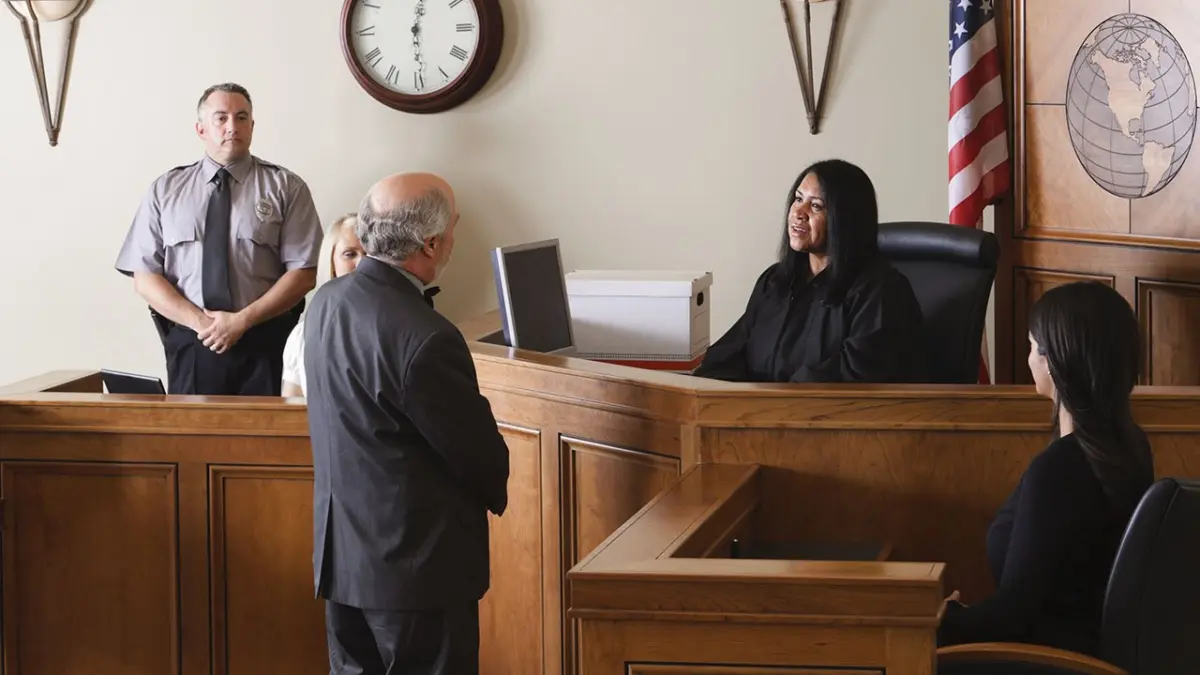
“After reviewing the prenuptial agreement, this court finds that all marital property, including the residence and corporate assets, remains solely under Mr. Hale’s ownership,” Judge Whitmore said. He read it the way a man reads a grocery list. “No alimony shall be awarded. The respondent is ordered to leave the residence by 5 PM today.”
I sat there with both hands on my belly. The baby was due in five weeks and she picked that moment to kick, hard, right under my ribs, like she’d heard it too. Beside me, my legal aid attorney, Dale Pruitt, started sliding papers back into his folder. He had three other hearings that day and had told me so twice.
“I’m sorry, Tessa,” he whispered. “The prenup holds up on its face. There wasn’t much I could do with it.”
I nodded because I didn’t trust my voice. I was twenty-four years old. I had grown up in foster homes and one group facility outside Dayton, and I had never had a relative show up for anything, including my high school graduation and my own wedding. Before Preston, I had a job keeping the books at a landscape supply company and a studio apartment with a window that didn’t close all the way. He talked me out of both. “You don’t need to work,” he told me the month we got engaged. “I’ll take care of you. That’s what a husband is for.”
Across the aisle, Preston leaned back in his chair in a charcoal suit that cost more than my first car. He looked like a man who had just closed a sale. He turned his head toward the second row, where Bianca sat with her legs crossed and her phone in her lap, and she smiled at him like they were at a restaurant. She was twenty-six and worked in his sales office. I had bought her a birthday card once.
The gavel came down. People began gathering coats and briefcases. Dale squeezed my shoulder and said he’d call me about the paperwork, and then he was gone up the aisle with his folder under his arm.
Preston took his time walking over. He stopped in front of my table with his hands in his pockets.
“Well, Tessa,” he said, and he sounded amused. “Looks like I was right all along. Before me, you were nothing. A charity case. And now the court has officially confirmed it.”
He bent down until his mouth was near my ear. I could smell his aftershave, the one I used to buy him at Christmas.
“Let’s see how you and that bastard baby manage without my money. My guess? A week before you’re living on the street and begging me for help.”
He straightened up, smiling wider. I wanted to say something that would wipe that look off his face, and I had nothing. A tear ran down my cheek and I lowered my head so he wouldn’t get to watch the rest.
Then the doors at the back of the courtroom flew open.
They hit the walls so hard the sound cracked through the room like a shot. The bailiff jerked around and his hand went to his belt before he stopped himself. Somebody in the gallery gasped. I looked up.
A tall man in his sixties was walking down the center aisle with a polished black cane, and the cane struck the floor with every step. Four men in dark suits spread out behind him and stood by the exits. Behind them came a line of lawyers carrying document boxes, six or seven of them, maybe more. I recognized the man with the cane the way you recognize a face from a magazine cover in a checkout line. Gregory Sterling. The founder and CEO of Meridian Global. Preston talked about him the way other men talk about quarterbacks.
He didn’t look at the judge. He didn’t look at Preston. He looked at me the whole way down the aisle, and his face was doing something I couldn’t read. When he reached my table he stepped in front of it and turned around, so his back was to me and he stood between Preston and my chair.
“Without your money?” he said. His voice was deep and it carried to every corner. “My daughter and my grandchild will live like royalty. As for you.” He paused and looked Preston over. “By the end of this quarter, your financial existence will be nothing more than a memory.”
Preston took a step backward. The color went out of his face so fast I thought he might fall.
“Mr. Sterling?” he stammered. “There must be some error. Tessa is an orphan. She was raised by the state. She doesn’t have relatives.”
One of the lawyers came forward, an older man with white hair and rimless glasses. He set a thick folder with gold lettering on the table in front of Preston and squared it with two fingers.
I could read the cover from where I sat. STERLING FAMILY TRUST. CERTIFIED GENETIC FINDINGS. IN THE MATTER OF TESSA HALE, IDENTIFIED AS CAROLINE GRACE STERLING, MISSING SINCE JUNE 14, 2003.
Nobody in the room said a word. I read the line three times and it still didn’t make sense to me. Caroline Grace Sterling was somebody else. I was Tessa Marsh, a name a county caseworker picked out because I came in without one.
Judge Whitmore found his voice first. “Mr. Sterling, I know who you are, and I don’t care. This is a court of law. You do not kick my doors open.”
The white-haired lawyer turned to the bench. “Martin Calloway, Your Honor, of Calloway and Finch. I apologize for the entrance. We are filing a notice of appearance on behalf of Mrs. Hale this afternoon, along with a motion asking the court to reconsider today’s order. We have reason to believe Mr. Hale’s financial disclosures to this court were incomplete.”
“Then file it with the clerk like everyone else,” the judge said. “I’ll hear it Thursday at nine. Until then my order stands, including the five o’clock deadline.” He looked at Preston, then at me, and for a second he seemed almost uncomfortable. “We’re adjourned.”
Preston grabbed the folder off the table, dropped it, and picked it up again. Bianca was already standing in the aisle with her purse on her shoulder, looking at Gregory Sterling and then at me, working something out in her head.
I don’t remember walking out. I remember the hallway, a wooden bench under a window, and one of the security men bringing me a paper cup of water. Gregory Sterling sat down at the other end of the bench, leaving a good three feet between us. Up close he looked older than he did in pictures. His hand shook on the top of the cane.
“I’ve practiced this for twenty-three years,” he said. “I had a whole speech. I can’t remember any of it.”
“I think you have the wrong person,” I told him. “I’m sorry. I don’t have a father. I was found at a bus station.”
“In Dayton, Ohio,” he said quietly. “July 6th, 2003. You were wearing a yellow sundress and one shoe. You were about fifteen months old.”
I stared at him. That was in my file. I’d read it at eighteen when I aged out and the county handed me a manila envelope with everything they had on me, which was eleven pages.
He took a photograph out of his jacket and held it out. It was a baby in a high chair with frosting on her face, laughing at whoever held the camera. She had a small dark birthmark under her left ear, shaped a little like a comma. I have had people ask me about that mark my entire life.
“Her name was Caroline,” he said. “We called her Carrie. We had a nanny named Louise who’d been with us eight months. On June 14th she took you to a park in Greenwich and neither of you came home. The FBI found her four years later in Arizona. She’d died there the winter before. Nobody ever found out why she did it, or how you ended up six hundred miles away.”
“So how did you find me?” My voice came out flat. I had been lied to by enough adults that I’d gotten good at holding still while they talked.
Martin Calloway had come up beside the bench. “You took a DNA test in March, Mrs. Hale. One of the mail-in kits.”
I had. It was on sale for $59 and I’d hidden the charge from Preston by paying for it with grocery money. The doctor at my first prenatal visit had asked about my family medical history, and I’d had to write “unknown” on every line of the form. I wanted to be able to tell my daughter something.
“Mr. Sterling’s profile has been in every one of those databases since they started,” Calloway said. “The match came through on August 19th. Parent and child. We sent a letter to your home address on the 2nd of September asking you to call our office.”
I remembered an envelope. Thick cream paper, a law firm’s name in the corner. By September I was getting a lot of mail from people I didn’t want to hear from, and I’d shoved it in a drawer without opening it.
“I thought you were a collection agency,” I said.
Gregory made a sound that was half a laugh and wiped his eyes with the heel of his hand. He reached into his pocket again and came out with a roll of peppermints, the cheap kind from a gas station, and offered me one. I don’t know why that was the thing that made me start crying, but it was. I took the peppermint and sat there with it in my fist.
“I’m not asking you to believe me today,” he said. “There’s a lab that does these tests for the courts. We’ll do it properly, with your consent, whenever you’re ready. All I’m asking today is that you let me help you get your things out of that house before five.”
It was ten past two. I looked at the clock above the elevators and thought about my clothes, the crib still in its box, and the folder of prenatal records on the kitchen counter. I had forty-one dollars in my checking account and a bus pass.
“Okay,” I said. “Just the house.”
We drove out to Brookfield in a black SUV with one of the security men at the wheel. Gregory sat in the front passenger seat, which I think he did on purpose so I’d have the back to myself. Calloway rode beside me with a legal pad on his knee and asked me questions in a low, patient voice. Did I have my own lawyer look at the prenuptial agreement before I signed it? I told him no. Preston’s attorney had brought it to the house two days before the wedding and said it was standard, and Preston had stood behind my chair with his hands on my shoulders while I signed. Was there a notary? There was, a woman from Preston’s office who stamped it at the dining room table and left without finishing her coffee.
“And did Mr. Hale give you any list of what he owned at the time? Accounts, the business, anything in writing?”
“He said it was all in the agreement.”
Calloway wrote that down and underlined it.
Preston’s Audi was already in the driveway when we pulled up. The house was a five-bedroom colonial he’d bought the year before we met, with a mortgage through Lakeshore Federal that he complained about every month. I had painted the nursery myself in August, a pale green, standing on a step stool with my belly in the way.
He opened the front door before I could use my key. Bianca was behind him in the foyer, holding a glass of white wine.
“She gets her personal belongings,” Preston said to Calloway, pretending Gregory wasn’t standing there. “Clothes, toiletries. Nothing else. The furniture’s mine, the electronics are mine, and I want it noted that I’m being cooperative.”
“Noted,” Calloway said.
Two of the security men carried boxes up the stairs behind me. I packed fast. Maternity clothes, my winter coat, the shoebox of photographs from my last foster placement, the one good one. In the nursery I stood for a minute looking at the crib box leaning against the wall. I had bought it with a gift card from my old boss at the landscape company, so I told the men to take it, and Preston didn’t argue when it came down the stairs.
The drawer was in the kitchen, the one by the refrigerator where the takeout menus went. I opened it looking for my prenatal folder and found the mail I’d been hiding from myself all fall. The cream envelope from Calloway and Finch was on the bottom, still sealed. On top of it were the others.
A notice from a collections agency for a credit card I’d never heard of, balance $11,840. A statement from a store card, past due. A letter from a bank called Northgate Savings regarding a personal line of credit in the amount of $38,000, opened the previous February in the name of Tessa M. Hale, now ninety days delinquent.
I had never been inside a Northgate Savings. I’d called the number on that letter in October and sat on hold for forty minutes until Preston came home and I hung up. When I worked up the nerve to ask him about it, he said it was a clerical mix-up and he’d handle it, and then he didn’t speak to me for two days.
“Mr. Calloway,” I said. “Can you come look at something?”
He read each page without changing expression. Then he asked whether I’d signed any of the applications, and I said no, and he asked whether Preston had my Social Security card, and I said it was in his office safe with our passports. He’d put it there the week we got married. For safekeeping.
“What is that? What’s she got?” Preston said from the doorway. His voice had gone up half a step.
“Her mail,” Calloway said, and slid the stack into his briefcase.
There was one more thing in the drawer, folded in thirds and stuck inside a pizza menu. It was a bank statement, and it wasn’t mine. Hale Logistics LLC, operating account, the month of May. I’d kept books for four years and my eyes went down the column of withdrawals before I decided to look. Three wire transfers in one month to something called BR Consulting Group. $40,000, then $55,000, then $62,500.
I looked up at Bianca in the hall. Bianca Rowe. She had stopped drinking her wine.
I folded the statement back up and handed that to Calloway too. Preston watched it go into the briefcase and opened his mouth and closed it again. For the first time since I’d known him, he didn’t have a line ready.
We were out of the driveway by 4:35. I didn’t look back at the house. I thought I would want to, and I found I didn’t care to see it.
Gregory wanted to take me to his home in Greenwich. He said there were eleven bedrooms and a staff, and that a doctor could be at the door in twenty minutes. I said no. I’d spent my childhood being dropped off at strangers’ houses with my things in boxes, and I wasn’t going to do it again at nine months pregnant, no matter how many bedrooms there were. He took that better than I expected. He put me in a suite at the Fairmont downtown instead, told the front desk to bill everything to Meridian, and left one security man in the hallway, a quiet ex-Marine named Dominic who did crossword puzzles in pen.
“I’ll come by tomorrow if you’d like,” Gregory said at the door. “If you wouldn’t like, I’ll wait until you would.”
“Tomorrow’s fine,” I said.
I couldn’t sleep that night. Around two in the morning I ordered a grilled cheese and tomato soup from room service, and it came on a silver tray with a cloth napkin, and I ate it sitting cross-legged on a bed the size of my old apartment. The sandwich was $24. I kept turning that number over. I’d fed myself for a week on $24 more than once. Afterward I took the cream envelope out of my purse, where I’d tucked it at the house, and finally opened it. The letter was two paragraphs long. It said the firm represented a client who believed he might be a close biological relative, and asked me to call at my earliest convenience. It was signed by Martin Calloway and dated September 2nd, and it had been sitting under a pizza menu for almost three months.
The court-approved lab was in a medical building near the hospital. We went on Wednesday morning. A technician checked my driver’s license, took my photograph, and swabbed the inside of my cheek while a notary named Denise Kowalczyk watched and filled out a chain-of-custody form. Gregory went through the same thing in the next chair. Denise had me sign an affidavit stating I was who I said I was, and she stamped it with a heavy brass seal and blew on the ink out of habit.
“Results in three to five business days,” the technician said. “They go straight to the attorneys and the court.”
In the elevator afterward Gregory asked if I was hungry, and I said I could eat, so we went to a diner across the street that had laminated menus and a pie case. He ordered black coffee and a slice of lemon meringue and then barely touched either one.
“Was there a mother?” I asked. It came out blunter than I meant. “I mean, is there. Do I have one.”
He set his fork down. “Her name was Eleanor. She died in 2011. Ovarian cancer.” He turned his coffee cup a quarter turn on the saucer. “She kept your room exactly the way it was. I used to tell her it wasn’t healthy. After she passed I couldn’t bring myself to change it either, so I suppose I didn’t know what I was talking about.”
I didn’t know what to do with that. I’d spent years imagining a mother who gave me up on purpose, because that was easier to be angry at. A woman who dusted an empty crib for eight years was harder.
“She set something up for you,” he went on. “In 2002, the month you were born. A share of the family trust in your name. When you disappeared, the trustees wanted to fold it back in after seven years, and Eleanor fought them in probate court to keep it open. She won. It’s been sitting there ever since with you listed as beneficiary.” He told me roughly what it was worth, and it was a number I had only ever seen in the news. I asked him to stop there. I’d been broke on Monday. I couldn’t hear about that kind of money on Wednesday and still feel like the same person.
“Can I ask you something else?” I said. “At the courthouse. You said by the end of the quarter Preston would be finished. What did that mean?”
Gregory’s face changed, and I could see the man who’d built a company. “Hale Logistics runs freight for one of our subsidiaries. Meridian Distribution. It’s a little over sixty percent of his revenue. The contract is up for renewal on December 31st.”
“And you’re going to pull it.”
“I’m going to do considerably more than that.”
“There are about two hundred people who work for him,” I said. “Drivers, warehouse guys. A dispatcher named Rosa who brought me soup when I had the flu. They didn’t do anything to me.”
He looked at me for a long moment. I don’t think many people had told him no in the last thirty years. He picked his fork back up, ate one bite of the pie, and said he’d think about it. I could tell he didn’t like it. I could also tell he was going to think about it, and I counted that in his favor.
Thursday at nine we were back in front of Judge Whitmore. I had a new attorney at my table and two associates behind him, and I wore the same maternity dress I’d worn Monday because it was the only one that still fit right. Preston had a new lawyer too, a tall woman named Sandra Voss who billed, I later learned, $650 an hour. Bianca wasn’t in the gallery.
Calloway kept it short. He told the judge the prenuptial agreement had been signed two days before the wedding, without independent counsel for me, and without any written disclosure of Preston’s assets. He handed up the May statement from Hale Logistics and said a forensic accountant had already traced transfers to BR Consulting Group totaling about $1.9 million over the fourteen months before Preston filed for divorce. BR Consulting, he said, was registered to a Ms. Bianca Rowe at an apartment address, had no employees, and had issued no invoices that anyone could find.
“None of that money appears on the financial affidavit Mr. Hale swore to in this case,” Calloway said. “We’d ask the court to set aside Monday’s order and reopen discovery.”
Sandra Voss stood up and said the transfers were legitimate business expenses and that the timing of my newfound family connections was, in her word, theatrical. She was good. She made it sound like I’d arranged the whole thing.
Judge Whitmore took off his glasses and rubbed his eyes. “Mr. Hale, did you sign a financial affidavit in my courtroom stating it was complete and accurate?”
Preston stood. “Yes, Your Honor, and I believed it was.”
“We’ll find out.” The judge put his glasses back on. “Monday’s order is stayed. I’m reopening discovery for sixty days. Mr. Hale will produce complete records for every business and personal account, and nobody moves a dollar out of any of them in the meantime. Ms. Voss, explain that to your client slowly.”
There was a second matter, and Calloway raised it almost gently. He asked that the three credit accounts opened in my name be noted in the record, and said his office had filed an identity theft report and placed a fraud alert on my credit file the day before. I’d seen the credit report Wednesday night. My score was 487. I had looked at that number on a laptop screen in a hotel room and felt sick, because I had always paid my bills, even when it meant eating rice for a week.
“That’s a matter for another court,” Judge Whitmore said, “but I’ll note it.” He looked at Preston a moment longer than he needed to.
In the hallway afterward, Preston caught up with me by the water fountain. Dominic moved to step in and I shook my head.
“Did you know?” Preston asked. He looked like he hadn’t slept. “This whole time. Did you know who you were?”
“If I’d known,” I said, “do you think I would have spent four years asking your permission to buy shampoo?”
He flinched. Then his face hardened again and he said I’d never see a cent of the business, father or no father, and that the baby probably wasn’t even his. I told him I’d be happy to have that tested too, and walked to the elevator. My knees were shaking the entire way. Dominic was kind enough to pretend he didn’t notice.
The lab results came Friday. Calloway called me at the hotel and read the line aloud: probability of paternity, 99.99 percent. I thanked him and hung up and sat on the edge of the bed for a while. Then I called the number Gregory had written on the back of a business card, and he answered on the first ring.
“It’s me,” I said. “It came back.”
“I know. Martin called.” He was quiet, and I could hear him breathing. “I knew on Monday. I knew when you walked out of that courtroom. You walk exactly like your mother.”
I still wasn’t ready to call him Dad. I told him so, and he said he’d waited twenty-three years and could wait on that too.
My daughter was born on December 9th, eleven days early, at 4:12 in the morning. I’d finally let Gregory move me into the guest cottage on his property the week before, mostly because the hotel was starting to feel like a waiting room. When the contractions started I knocked on the main house door in my slippers, and a billionaire in a bathrobe drove me to the hospital himself because he didn’t want to wait for the driver. He ran a red light on Putnam Avenue. He apologized to me for it twice.
He stayed in the waiting room the whole nineteen hours. A nurse told me later that he’d asked her every forty-five minutes whether there was news, and had bought coffee for everyone on the floor. When they finally let him in, he stood at the foot of the bed with his cane hooked over his arm and didn’t seem to know where to put his hands.
“Do you want to hold her?” I asked.
“I haven’t held a baby since you,” he said.
I named her Eleanor Grace. We call her Nora. She had a full head of dark hair and, under her left ear, nothing at all, which I checked before I’d even counted her fingers. Gregory held her for an hour and wouldn’t sit down in case it woke her.
Preston sent a text two days later. It said, “Heard it’s a girl. We should talk about what’s fair.” I forwarded it to Calloway without answering. The paternity test he’d been so sure about was done in January by court order, and it came back the way I’d known it would. The family court set child support at $2,150 a month. I don’t need it, and everyone in the room knew I didn’t need it, but Calloway said the obligation belonged to Nora, and I agreed with that. It goes into a savings account in her name at First National. Preston has paid late four times out of nine.
Discovery took the full sixty days and then some. The forensic accountant, a soft-spoken man named Alan Brandt, sat with me in a conference room one afternoon and walked me through his report, and I’m a little embarrassed to say I enjoyed it. It was the first time in four years anyone had talked to me like I understood numbers. The final figure for the transfers to BR Consulting was $1,912,400. Some of it had gone into a condo in Bianca’s name. Some had gone into a brokerage account. About eighty thousand had just been spent, on what Alan described as “lifestyle.”
The three accounts in my name added up to a little under $62,000. The application for the Northgate line of credit had a signature on it that was supposed to be mine. Alan put it on the table next to my signature from the lab affidavit. Whoever signed it had dotted the i in “Marsh” with a little circle. I haven’t done that since eighth grade, and Preston had only ever seen it on an old yearbook I kept in the closet.
Gregory, for his part, did think about what I’d said in the diner. He didn’t cancel the Meridian contract outright. He let it run to December 31st and declined to renew it with Hale Logistics, and in February Meridian Distribution bought the trucks and the warehouse lease out of what was left and kept most of the drivers on. Rosa the dispatcher sent me a card. I know there were some people who didn’t get hired over, a few dozen, and I think about them. I asked for something better than what Gregory had planned, and I got most of it.
Without the contract, Preston’s lender called the business loan. He put the house in Brookfield on the market in March with a $740,000 asking price and took less. I heard that from Calloway, who heard it from Sandra Voss, who by then was very interested in settling.
We signed on April 22nd in a conference room on the thirty-first floor of Calloway and Finch. Preston came in wearing a sport coat instead of a suit. He’d lost weight and he kept clicking his pen. The agreement was nineteen pages. He would pay me $640,000 out of the sale of the house and the brokerage account, on a schedule. He would take sole responsibility for the three accounts opened in my name and sign a sworn statement that I hadn’t authorized any of them, so the credit bureaus would clear my file. The prenup was set aside by agreement. He initialed every page with his jaw tight.
“The district attorney’s office has the file on the credit applications,” Calloway told him across the table. “This settlement doesn’t touch that, and I couldn’t make it go away if I wanted to. You understand.”
“I understand,” Preston said. He looked at me then. I’d braced for the sneer and it didn’t come. He just looked tired, and a little confused, like a man trying to work out when a card game had turned on him. “You could’ve just let it go, Tess. You don’t even need the money.”
“It was never the money,” I said. “You put my name on things I didn’t sign.”
He didn’t answer that. He signed the last page, Denise Kowalczyk stamped it with her brass seal, and he walked out without shaking anyone’s hand.
Judge Whitmore approved the settlement the following week in a hearing that took nine minutes. He didn’t make a speech. He asked me whether I understood the terms and had signed freely, and I said yes, and he said, “Then that’s that, Mrs. Hale,” and moved on to the next case. He never said a word about the Monday in November when he’d given me until five o’clock to get out. I don’t hold it against him as much as I used to. He ruled on the papers he was handed.
As of this writing, the DA hasn’t decided whether to charge Preston. Calloway says these things can take a year or longer, and that sometimes they simply don’t happen. Bianca gave a statement to the accountant in exchange for being left out of the civil case, sold the condo, and moved to Scottsdale, or so I’m told. I never got an apology from her and I’ve stopped expecting one. Preston is renting a two-bedroom apartment near the interstate and working in sales for a freight broker. He sees Nora every other Saturday for three hours at a supervised family center. He shows up about half the time.
My credit score is 702 now. I check it more often than I should.
I still live in the cottage. Gregory keeps offering me the east wing of the main house, and I keep telling him I like having my own front door, and I think by now he asks mostly as a joke. I went back to school in the fall, two classes a semester toward my accounting degree, with a plan to sit for the CPA exam when Nora starts preschool. Gregory said I could have any job at Meridian I wanted. I told him I’d rather earn one somewhere they don’t know my last name, and he said that sounded exactly like something Eleanor would have said, and then he had to go look out the window for a minute.
It hasn’t all been easy between us. He’s used to fixing things by buying them. In June he had a swing set delivered that was bigger than the cottage, for a baby who couldn’t sit up yet, and we had our first real argument standing in the driveway while two delivery men pretended to check their clipboards. He’s also overprotective in a way I understand and still can’t always stand. There’s a car that follows me to class. I’ve asked him to call it off and he’s said he’ll think about it, which I’ve learned can mean yes or can mean nothing.
But he comes down to the cottage every Sunday at five with whatever the cook has sent and a roll of gas station peppermints in his pocket. He holds Nora on his knee and reads her the financial pages in a storybook voice, and she grabs at his glasses. Last Sunday he brought a cardboard box from the main house. Inside was a yellow sundress, size eighteen months, washed and folded in tissue paper, and one small white shoe.
“The police returned them in 2004,” he said. “I thought you might want to decide what happens to them.”
I held the shoe in my palm. It weighed almost nothing. Nora reached for it from his lap, and I let her have the tissue paper instead, and she crumpled it in both fists and laughed.
“Stay for dinner, Dad,” I said. “It’s getting cold.”
He nodded and didn’t make a fuss about it, and went to get the plates.