Apple Pancakes
Chapter One: The Last Night
The night the doctor told me my father had only hours left, it was raining.
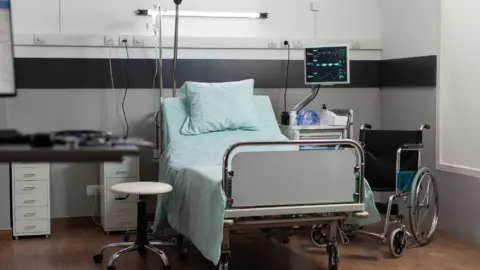
I remember that because the window in his room at St. Luke’s Hospital in Bethlehem, Pennsylvania, looked out over the parking garage, and the rain was running down the glass in long gray streaks, and I kept watching it instead of watching him. I’d been sitting in the same vinyl chair beside his bed for nine days. My husband, Ben, had brought me clean clothes twice. My daughter, Grace, who’s six, had drawn Grandpa Frank a picture of a horse that was taped to the wall above his bed.
The doctor was a young woman named Dr. Patel, with tired eyes and gentle hands. She stood at the foot of the bed and said it quietly, the way they always do.
“It won’t be long now, Mrs. Hale. A few hours. Maybe less. If there’s anyone else who should be here, you should call them.”
There wasn’t anyone else. There was only ever me.
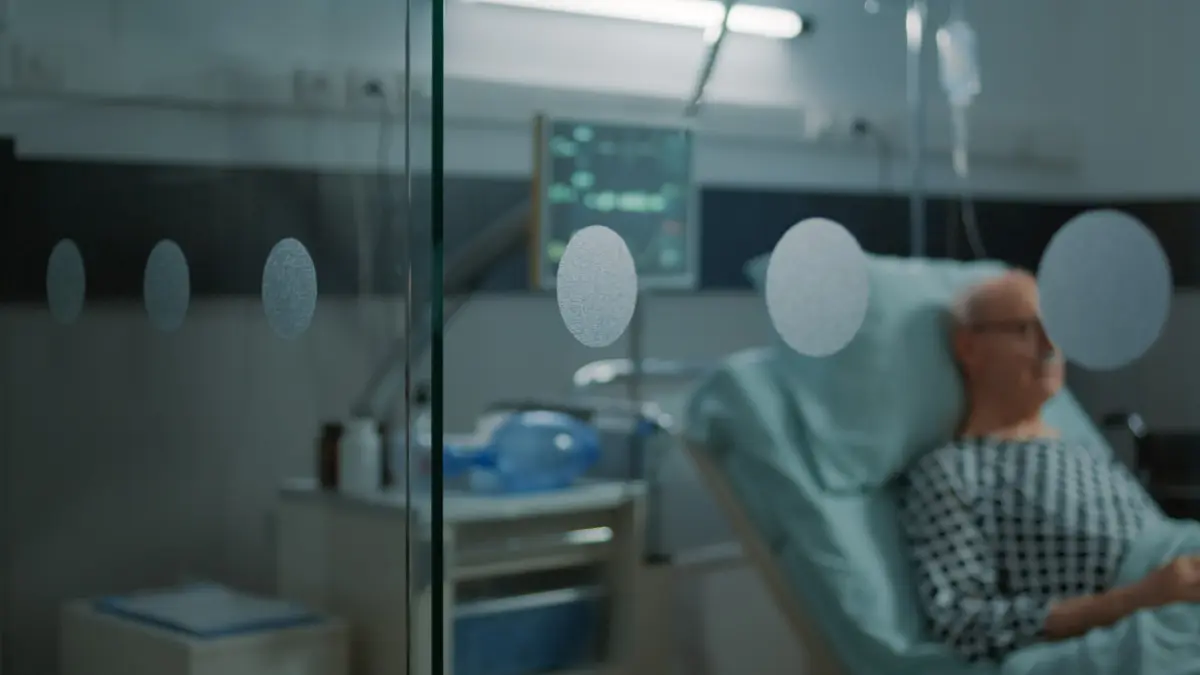
After she left, I pulled the chair closer to the bed and took my father’s hand. It was cold and thin, the knuckles swollen from the arthritis that had bent his fingers in his last years. Frank Hale was seventy-eight. He’d been a machinist at Bethlehem Steel for twenty-two years until the plant closed in 1995, and then he’d run a small engine repair shop out of his garage for twenty more. His hands had fixed every lawnmower on Fourth Street. They’d braided my hair before school. They’d held my daughter at her christening.
I sat there and held them for the last time.
Around eleven o’clock, he opened his eyes.
He hadn’t been fully awake for two days. But suddenly his eyes were open and clear, and he turned his head on the pillow and looked straight at me. And his fingers, which had been limp in my hand all evening, closed around my wrist so hard it hurt.
“Nora,” he whispered.
“I’m here, Dad. I’m right here.”
“Promise you’ll listen before you decide to hate me.”
I almost laughed. “Dad. I could never hate you.”
His cold fingers tightened against my skin. His eyes didn’t leave mine.
“I’ve lied to you your entire life,” he said. “Everything you believe about your childhood, and about who I am, is a lie.”
Chapter Two: Four Years Old
I was four years old when Frank Hale married my mother.
I don’t remember the wedding. I’ve seen the pictures, the few there are. A small ceremony at the county courthouse in Allentown in the spring of 1992. My mother in a cream-colored suit with shoulder pads, laughing, with her dark hair teased high. Frank in a brown sport coat that didn’t fit him, looking at her like she’d hung the moon. And me, a skinny little girl in a pink dress and white tights, holding his hand.
I don’t remember my real father. He left before I was born. My mother never talked about him.
I don’t remember much about my mother either. That’s the part that’s always hurt the most. I have a few pieces. Her perfume, something sweet, like vanilla. The way she sang along to Fleetwood Mac in the car with the windows down. A yellow kitchen, and apple pancakes on Saturday mornings, with cinnamon and brown sugar, cut into the shape of a heart.
And then she was gone.
She died in a car accident in October of 1993, when I was five. That’s what Frank told me. He sat me down on the edge of my bed in the little brick house on Fourth Street and held both my hands and told me Mommy had been in a car crash and she wasn’t coming home. He said she’d gone to heaven. He said she loved me more than anything in the world.
I don’t remember a funeral. Frank told me later that I’d been too little, that he’d left me with a neighbor, Mrs. Kowalski, so I wouldn’t have to see. I don’t remember a grave. When I was ten and asked to visit it, he told me she’d been cremated and her ashes scattered on the Delaware River, because that’s what she wanted.
I believed him. Why wouldn’t I?
She died not long after he married her. But he never left me.
That’s what I’ve always told people when they ask about Frank. He wasn’t my father. He wasn’t even my stepfather for very long, technically. He’d been married to my mother for eighteen months. When she died, he was a thirty-four-year-old machinist with no family of his own, and he could have called the state and walked away, and no one would have blamed him.
He didn’t. He adopted me the next year. I became Nora Hale. He raised me alone in that little brick house on Fourth Street, on a steelworker’s paycheck and then on whatever his garage brought in. He learned to braid hair from a library book. He came to every school play and every parent-teacher conference and every softball game, sitting in the bleachers in his Bethlehem Steel jacket.
He walked me down the aisle at Holy Infancy Church when I married Ben, nine years ago. He cried so hard the priest had to wait.
He stood proudly next to me at my daughter’s christening six years ago, holding Grace in his big scarred hands, and when the priest poured the water, Grace screamed, and Frank laughed out loud in the middle of the sacrament.
Even after I was a grown woman with a husband and a mortgage and a job as a nurse at this same hospital, he would sometimes show up at my door on a Saturday morning with a paper bag of apples and a box of pancake mix. And he’d make me the apple pancakes I loved as a child. With cinnamon and brown sugar. Cut into the shape of a heart.
Frank wasn’t merely my stepfather. He was my dad.
Chapter Three: The Address
So when he said those words in the hospital bed, with the rain running down the window, the room seemed to tilt beneath me.
I’ve lied to you your entire life.
I forced a shaky smile. I told myself it was the morphine. I’ve been a nurse for fourteen years. I’ve seen what morphine does to people at the end. I’ve heard them talk to dead relatives and see angels in the ceiling tiles.
“Dad,” I said gently. “You’re not making sense. Should I call the doctor?”
Frank slowly shook his head on the pillow.
“My mind is perfectly clear,” he said. His voice was thin, a whisper, but every word was sharp. “I need you to learn the truth before I die. Even though someone begged me to take it to my grave.”
“Who? Dad, who begged you?”
Questions clashed inside my mind. What lie? What truth? Who could have asked him to keep a secret from me? There was nobody. There’d only ever been the two of us.
Before I could ask a single one, Frank reached up with his other hand, slowly, shaking, and pressed something into my palm. A piece of paper, folded small, soft from being handled. He closed my fingers around it with his. Then he pushed my hand away from him, toward the door.
“Go there,” he whispered. “Now.”
“Dad, I’m not leaving you.”
“Go,” he said again. Tears were running out of the corners of his eyes, down into the gray stubble on his cheeks. “Please, Nora. Please. I’ve waited thirty-three years. Don’t make me wait anymore.”
Those were the last words he ever said to me.
His eyes closed. His hand went slack. The heart monitor beside the bed kept beeping, slow and steady. He was still alive. But he was gone somewhere I couldn’t follow.
I stumbled into the hallway. I stood under the fluorescent lights by the nurses’ station with my back against the wall, and I unfolded the paper with shaking hands.
It was a page torn from a small spiral notebook. On it, in Frank’s careful block capitals, the same handwriting that signed every birthday card I’d ever gotten, was an address.
1148 Ridge Street. Bethlehem.
I knew that street. Everybody in Bethlehem knew it. It was on the South Side, near the old steel mill, a row of narrow brick houses built for steelworkers in the 1920s. It was only a short drive from Frank’s home on Fourth Street. The house where I had spent nearly my entire childhood was eight blocks away.
I stood there in the hallway with the paper in my hand. Every instinct told me not to go. I’d seen enough families at the end to know that deathbed confessions don’t always bring peace. Sometimes they just bring wreckage.
But I couldn’t deny him his last request.
I asked Kim, the night nurse, a friend of mine from my own unit, to sit with him. I told her I’d be back in an hour. She looked at my face and didn’t ask why.
Twenty minutes later, I stopped my car outside an ordinary-looking house on Ridge Street.
Chapter Four: The Door
It was a narrow two-story brick rowhouse, like every other one on that block. A little concrete porch with an iron railing. A plastic chair. A pot of red geraniums by the steps, which surprised me, because it was October and they should have been dead by now. Somebody had been bringing them in at night. There was a light on in the front window, behind a lace curtain.
It was almost midnight. The street was dark and wet and empty.
As I walked up the steps, I silently practiced an apology for disturbing strangers so late at night. I’m so sorry. My father gave me this address. He’s dying. I don’t know why. I’m so sorry to bother you.
I raised my hand to knock.
But the moment my knuckles touched the door, it swung wide open. As if somebody had been standing right behind it. As if somebody had been waiting.
And when I saw the person standing there, I screamed.
It was a woman. Small and thin, maybe five foot two, in a faded blue bathrobe and slippers. Her hair was gray and cut short. Her face was lined. She was holding the doorknob with one hand, and her other hand was pressed flat against her chest, over her heart.
She was sixty-four years old. I learned that later. But in that moment, standing on that porch in the rain, all I saw was her face.
I’d seen that face my whole life. In the six photographs I had of my mother. In the wedding picture on Frank’s dresser. In the faded snapshot I kept in my wallet, of a young woman with teased dark hair holding a little girl on her hip in front of a yellow house.
It was older now. So much older. But it was the same face.
It was my face. Thirty years from now.
I screamed. I couldn’t stop it. It came out of me from somewhere deep, a sound I’d never made in my life. I stumbled backward on the wet porch and grabbed the iron railing to keep from falling down the steps.
The woman in the doorway didn’t move. She didn’t step toward me. She stood there with her hand over her heart and tears running down her face.
“Nora,” she whispered. “Oh, Nora. My baby.”
I couldn’t speak. I couldn’t breathe. I stood on that porch holding the railing with both hands and stared at my mother.
My mother, who died in a car accident when I was five.
My mother, whose ashes were scattered on the Delaware River.
My mother, who was standing in a doorway eight blocks from the house where I grew up, in a blue bathrobe, crying.
“He told you,” she said. Her voice was shaking. “He finally told you.”
“You’re dead,” I said. It came out as a whisper. “You died. In 1993. You died.”
“I know,” she said. “I know that’s what he told you. I asked him to.” She took a breath. “Is he… Is Frank…”
“He’s dying,” I said. “Tonight. He gave me this address and then he stopped talking.”
My mother made a sound like something tearing. She put her other hand over her mouth.
Then she held the door open a little wider.
“Please come inside,” she said. “Please, Nora. It’s raining. I’ll tell you everything. Then you can go back to him.”
Chapter Five: Elaine
Her name was Elaine. Elaine Marie Doyle. I’d known that my whole life. It was on my original birth certificate, which I’d seen once, at sixteen, when I needed it for my driver’s permit. Frank had kept it in a locked metal box in his closet.
Her kitchen was small and very clean. Yellow walls. A little table with two chairs. A calendar from the Bethlehem Area Public Library on the refrigerator, with a few appointments written in. A coffee maker. A stack of paperback mysteries. On the windowsill above the sink, a row of photographs in cheap frames.
I looked at them while she put the kettle on. Her hands were shaking so badly she spilled water across the stove.
They were pictures of me.
My eighth-grade graduation from Notre Dame Middle School. My high school senior photo. Me in my nursing school graduation cap at Moravian University. Me in my wedding dress at Holy Infancy, on Frank’s arm. Me in the hospital bed holding Grace on the day she was born.
Grace at her christening, in Frank’s arms, screaming.
“Frank sent them,” my mother said quietly, behind me. “Every one. Every year. He’d bring them to me.”
I turned around. “Sit down,” I said. My voice was very cold. “Please. Just tell me.”
She sat down at the little kitchen table. I didn’t. I stood by the sink with my back against the counter and my arms crossed.
“On October the ninth, 1993,” she said, “I drove home from a bar in Allentown at one o’clock in the morning. I’d had six drinks. Maybe seven. I don’t know. I never knew.” She looked down at her hands on the table. “On Route 22, I crossed the center line. I hit a car coming the other way. A blue Honda Civic.”
She stopped. She closed her eyes.
“There was a boy driving it,” she said. “Michael Torres. He was sixteen years old. He’d just gotten his license. He was driving home from his job at a pizza place.”
The kettle started to whistle on the stove. Neither of us moved.
“He died at the scene,” my mother said. “I walked away with a broken wrist.”
I reached over and turned off the burner. My hand was shaking.
“I was arrested that night,” she said. “Homicide by vehicle while driving under the influence. It’s a felony in Pennsylvania. I pled guilty. I didn’t want a trial. I didn’t want Michael’s mother to have to sit in a courtroom and listen to it.” She looked up at me. “The judge sentenced me to fifteen to thirty years in the State Correctional Institution at Muncy.”
I stared at her.
“You were five,” she said. “You were five years old, Nora. And I was going to be in prison until you were at least twenty. Maybe until you were thirty-five.” Her voice broke. “I knew what that meant. Visiting rooms. Metal detectors. Guards. Phone calls every Sunday on a recorded line. Every kid at school knowing your mother was a drunk who killed a boy.” She put her hands over her face. “I couldn’t let you grow up like that. I couldn’t.”
“So you told him to tell me you were dead,” I said.
She took her hands away from her face and nodded.
“In the county jail,” she said. “The week after the crash. Frank came to see me. He sat on the other side of the glass with a phone in his hand. I told him to take you. I told him I’d sign anything. I’d give up my rights. I’d let him adopt you.” She swallowed. “And I begged him to tell you I died. I told him to say it was a car accident, which was true. I told him to never, ever tell you the rest. To take it to his grave.”
“And he agreed.”
“He argued with me for three weeks,” she said. “Every visit. He said you deserved the truth. He said I’d regret it.” She almost smiled. “He was right. I’ve regretted it every day for thirty-three years. But I was so ashamed, Nora. I’d killed a child. I’d thrown away my own child. I didn’t want you to know your mother was a monster.”
Chapter Six: Thirty-Three Years
I sat down at her kitchen table then. I couldn’t stand anymore.
She poured the water from the kettle into two mugs and made tea. Lipton. The yellow tags hanging over the sides. She set one down in front of me and sat across from me with the other. Neither of us drank.
“Frank adopted you in March of 1994,” she said. “I signed the papers at Muncy. A lawyer from Bethlehem drove up. It took twenty minutes.” She looked at the steam rising from her mug. “I gave up my daughter in twenty minutes.”
“How long were you there?” I asked. “In prison?”
“Twenty-two years,” she said. “I was paroled in 2015. On my twelfth try.”
Twenty-two years. I did the math without wanting to. I was twenty-seven in 2015. Already a nurse. Already married to Ben.
“And Frank?” I asked.
My mother looked at me across the table. Her eyes filled.
“He came every month,” she said. “Every single month. For twenty-two years.”
I stared at her.
“Muncy is a hundred and twenty miles from Bethlehem,” she said. “Two and a half hours each way. He drove it on the first Saturday of every month. He’d tell you he was going to a swap meet. Or to see a man about a carburetor. Or fishing.” She wiped her eyes. “He’d come into the visiting room and sit across from me at the little table, and he’d tell me everything. Everything you did that month. Your spelling tests. Your softball games. Your first boyfriend, that awful boy with the earring. Your prom. Your nursing exams.”
“He never missed?”
“He missed twice,” she said. “Once when you had chicken pox and he couldn’t leave you. And once in 2009, when he had his gallbladder out. He called the warden’s office from the hospital and asked them to tell me.” She almost laughed. “He brought photographs. Every visit. The guards had to inspect them. By the end, they’d ask to see them too. One of them, a woman named Sergeant Hopkins, told me once she’d watched you grow up in that visiting room.”
I couldn’t speak.
“He never remarried,” my mother said quietly. “Did you ever wonder why? A good-looking man like that. Kind. With a steady job.” She looked down at her tea. “He told me once that he’d made a promise in front of a judge in Allentown in 1992, for better or for worse. He said prison was the worse. He said he wasn’t going anywhere.”
“You were still married,” I said slowly. “All those years.”
She nodded. “I tried to divorce him in 1996. I had the papers drawn up. I told him to go find somebody who could give him a real life.” She shook her head. “He tore them up in the visiting room. Right in front of the guards. He said, Elaine, I have a real life. It’s raising your daughter and driving to Muncy once a month.”
I put my face in my hands.
“When I got out in 2015,” she said, “he found me this house. He paid the first year’s rent. He drove me to my parole appointments every week for three years. He drove me to my AA meetings at the Lutheran church on Third Street until I could drive myself again. I’ve been sober thirty-three years this October, Nora. Since the night of the crash. I’ve never had another drink.”
“And you never contacted me,” I said. “You were eight blocks away. For ten years.”
“I couldn’t,” she said. “I told Frank I couldn’t. You had a life. A husband. A career. You’d mourned me already. How do you knock on your grown daughter’s door and say, Surprise, I’m not dead, I’m a felon who killed a boy?” She looked out the dark window. “So I watched. Frank would tell me when you’d be somewhere. I stood in the back of Holy Infancy Church at Grace’s christening. In a scarf and sunglasses. You walked right past me with her in your arms.”
I remembered a woman in a scarf in the last pew. I remembered thinking she was crying.
“I’ve been to the grocery store when you were there,” my mother said. “The Giant on Stefko Boulevard. I stood two aisles over and listened to you talk to Grace about cereal. I’ve driven past your house on Linden Street. I’ve sat in the parking lot of St. Luke’s and watched you walk in for your shift.” Her voice broke completely. “I’ve been watching my daughter for ten years from the other side of a parking lot. Frank kept begging me to let him tell you. I kept saying no. Not yet. Not yet.”
She looked at me across the table.
“I’m the one who begged him to take it to his grave, Nora,” she said. “Not him. Me. Don’t you dare hate him for it.”
I looked at the clock on the stove. It was twelve-forty in the morning.
“I have to go back,” I said. “To the hospital.”
My mother nodded. She didn’t ask to come. I didn’t offer.
I left her sitting at her kitchen table, under the row of photographs of my life that a man had driven a hundred and twenty miles once a month for twenty-two years to show her.
Chapter Seven: Morning
Frank died at 4:17 in the morning, with the rain still running down the window. I was holding his hand. He never opened his eyes again.
I’d come back from Ridge Street and sat down in the vinyl chair and taken his hand and told him. I didn’t know if he could hear me. The nurses say hearing is the last sense to go. I’ve told families that a thousand times. I believed it that night.
“I went, Dad,” I said. “I saw her. I saw Mom.”
His fingers moved. Just slightly. Just once.
“I’m not angry,” I said. That wasn’t true, and I think he knew it. “I don’t know what I am. But I’m here. I’m not going anywhere. You didn’t go anywhere, so I’m not either.”
His breathing slowed after that. It got longer and longer between breaths, the way it does at the end. At 4:17, there wasn’t another one.
I sat there with him until it got light outside. Then I called Ben.
He came at six with coffee and a clean sweater and his arms. He held me in the hallway outside Frank’s room for a long time. I didn’t tell him about Ridge Street. I couldn’t. Not yet.
The next three days were a blur. The funeral home on Linden Street. Picking out a casket. Choosing readings with Father Dominic at Holy Infancy. Calling Frank’s friends from the steel plant, the ones still alive. Writing the obituary for the Morning Call. Telling Grace that Grandpa Frank had gone to heaven.
She cried. Then she asked if heaven had pancakes. I told her I was sure it did.
On the second day, Ben found me sitting on the kitchen floor at two in the morning, with my back against the dishwasher. He sat down beside me.
“Nora,” he said. “What’s going on? This isn’t just grief. Something happened.”
So I told him. All of it. The hospital. The paper. The address. The door. My mother.
My husband, who’s a high school history teacher and the calmest man I’ve ever met, sat on the kitchen floor beside me and didn’t say anything for a very long time.
“She’s alive,” he said finally.
“She’s alive.”
“Eight blocks from your dad’s house.”
“Eight blocks.”
He put his arm around me. “What do you want to do?”
“I don’t know,” I said. “I don’t know if I want to see her again. I don’t know if I can forgive her. I don’t know if I can forgive him.” I put my face against his shoulder. “Ben, he lied to me every single day of my life. He looked me in the eye a thousand times. He let me cry about her on every Mother’s Day. And then he got in his truck and drove to Muncy and told her everything.”
“I know,” Ben said quietly.
“Thirty-three years,” I said. “And I didn’t know anything.”
Chapter Eight: The Box
On the third day, Frank’s lawyer called.
His name was Walter Brennan, a man in his seventies with an office above a jewelry store on Main Street. He’d done Frank’s will twenty years ago and updated it twice. He asked me to come in.
He sat me down in a leather chair across from his old oak desk and handed me a copy of Frank’s will. It was short. Two pages. Frank left the house on Fourth Street to me. His truck and his tools to Ben. A savings bond he’d bought the day Grace was born, worth about four thousand dollars now, to her.
And then, at the bottom, a paragraph I read three times.
I direct my Executor to establish a trust in the amount of forty thousand dollars from my savings, to be administered by Walter Brennan, Esquire, for the benefit of Elaine M. Doyle Hale, of 1148 Ridge Street, Bethlehem, to pay her rent and living expenses for as long as the funds last. I ask that my daughter not be burdened with this obligation, but I hope she will understand why I made it.
Elaine M. Doyle Hale.
“He never divorced her,” I said.
“No,” Walter Brennan said gently. “They were married for thirty-four years. He asked me to keep that confidential. I’ve kept a great many of Frank’s confidences.” He reached under his desk. “And he asked me to give you this. After he passed. If you’d been to Ridge Street.”
He set a gray metal lockbox on the desk. The same lockbox from Frank’s closet. The one that held my birth certificate.
“He gave me the key in August,” Walter said. “When he knew.”
I opened it there in his office.
It was full. Packed tight. On top was a stack of small spiral notebooks, the same kind the address had been torn from. Twenty-two of them, rubber-banded together. I opened the first one. Frank’s block capitals.
Muncy. November 6, 1993. Told E. about Nora’s Halloween. She was a ladybug. E. cried. Said to bring a picture next time.
I turned the pages. December 4. Nora lost first tooth. Told E. She laughed. First time since. January 8, 1994. Bad visit. E. says I should leave. Said no. March 5. Adoption done. E. signed. Hardest day of my life. Maybe hers too.
Every month. Every single visit. Twenty-two years of them, in his careful handwriting.
Underneath the notebooks was a thick folder of visitor logs from the State Correctional Institution at Muncy. Two hundred and sixty-two visits. And a stack of letters in my mother’s handwriting, from prison, addressed to Frank. And underneath those, at the very bottom of the box, an envelope addressed to me.
Nora. Read this one last.
I didn’t read it yet. My hands were shaking too much.
Instead, I picked up the last thing in the box. A small stack of Christmas cards, held together with a red ribbon. They weren’t from my mother. They were addressed to Frank, at Fourth Street, from a woman in Allentown. Every year from 1995 to last December. Thirty-one of them.
They were signed Rosa Torres.
Chapter Nine: Rosa
I found her address in the Christmas cards. A little house in East Allentown, on a street of old twin homes with aluminum awnings. I drove there the next morning, the day before the funeral. I don’t know why. I think I needed to understand all of it before I buried him.
She answered the door herself. A small, round woman in her late seventies with silver hair pulled back in a bun and reading glasses on a beaded chain. She looked at me for a long moment.
“You’re Frank’s girl,” she said. “Nora.”
“Yes, ma’am.”
“I read about him in the paper,” she said quietly. “This morning. I’m so sorry.” She stepped back from the door. “Come in, mija. I’ll make coffee.”
Her living room was small and full of photographs. Grandchildren, great-grandchildren, weddings. And in the middle of the mantel, in a silver frame, a boy. Sixteen, maybe. Dark hair. A big grin. A Dieruff High School wrestling jacket.
“Michael,” Rosa said, following my eyes. “My youngest.”
I couldn’t look at her.
“Your father came to see me in 1995,” she said, handing me a cup of coffee and sitting down across from me. “Two years after. On the anniversary. October ninth. He knocked on that door with a bouquet of white carnations. He said, Mrs. Torres, my name is Frank Hale. I’m married to the woman who killed your son.” She shook her head slowly. “I almost slammed the door. I wanted to.”
“Why didn’t you?”
“Because he was crying,” Rosa said. “Standing on my porch with his flowers. A big steelworker. He said he wasn’t there to ask me for anything. He said he just thought somebody from that family ought to come and say they were sorry. In person. He said his wife couldn’t, because she was in Muncy. And she’d written me a letter, but he didn’t want me to have to just read it. He wanted somebody to say it to my face.”
I set down my coffee cup.
“He came every year,” Rosa said. “Every October ninth. Thirty-one years. White carnations, because Michael bought me white carnations for Mother’s Day once with his first paycheck. I told Frank that the first year. He never forgot.” She looked at the boy on the mantel. “Some years we’d talk for an hour. Some years he’d just hand me the flowers and go. He brought me pictures of you sometimes. Of you growing up. He said, This is who Elaine gave up, Mrs. Torres. Her own girl. So you’d know she paid something too.”
“Did you forgive her?” I asked. My voice was barely there.
Rosa was quiet for a long time.
“In 2013,” she said. “Twenty years. I went to her parole hearing. I’d gone to all the others and told the board to keep her in. That year, I went and asked them to let her out.” She looked at me. “Your mother wrote me a letter every year on Michael’s birthday. Twenty years. She never asked me to forgive her. Not once. She just told me about the GED classes she was teaching to the other women. And the AA meetings she ran in there. And she said every woman she helped get sober was for Michael.”
She wiped her eyes.
“And your father,” she said. “Your father sat on my porch every October for thirty-one years and never once asked me for anything. Not for himself. Not for her.” She reached across and put her hand on mine. “Mija, I lost my son to a drunk driver. I hated your mother for twenty years. But your father taught me something on that porch. He taught me you can love somebody who did a terrible thing without pretending they didn’t do it.”
She squeezed my hand.
“He loved her,” Rosa said. “And he loved you. And he loved my Michael, a boy he never met, enough to bring me flowers for thirty-one years. That’s not a liar, Nora. Whatever he told you. That’s a good man carrying something too heavy for one person.”
Chapter Ten: The Funeral
That night, after Grace was asleep, I finally opened the envelope from the bottom of the box. Nora. Read this one last.
It was one page. Frank’s handwriting, shaky, from the last months.
Nora,
If you’re reading this, you went to Ridge Street. Thank you. I know it was hard.
I lied to you because your mother begged me, and because I thought she was right. You were five. You’d lost enough. I thought a dead mother was easier to love than a mother in Muncy. I was wrong. I knew it was wrong by the time you were ten. But by then I didn’t know how to undo it without breaking your heart twice.
I don’t regret one single day of raising you. Not one. You were the best thing that ever happened to me. You and your mother both.
Your mother isn’t a monster, Nora. She’s a woman who did a terrible thing when she was young and drunk and stupid, and then spent thirty-three years trying to be worth something. She’s sober. She’s kind. She taught two hundred women in Muncy to read. She has never once stopped loving you.
You don’t have to forgive her. You don’t have to forgive me. But please don’t let me be the last person who loves both of you.
She makes the apple pancakes better than I do. Ask her. It was always her recipe.
Love,
Dad
I read it four times. Then I sat in my kitchen and cried until Ben came down and found me.
The funeral was at Holy Infancy Church on a cold, bright Saturday morning. About sixty people came. Frank’s friends from the old steel plant, gray-haired men in windbreakers. Customers from his repair shop. Neighbors from Fourth Street. The nurses from my unit at St. Luke’s, in a row. Ben and Grace beside me in the front pew.
Rosa Torres came. She sat in the fifth row in a black dress, with a single white carnation in her lap.
And in the very last pew, alone, in a dark scarf and sunglasses, sat a small gray-haired woman. Right where she’d sat at Grace’s christening.
Father Dominic gave the homily. He talked about Frank fixing the church’s lawnmower for free every spring for twenty years. About Frank’s laugh in the middle of Grace’s baptism. About a man who’d stood by a little girl when nobody would have blamed him for walking away.
Then he asked if anyone in the family wanted to speak.
I hadn’t planned to. I’d told Father Dominic I couldn’t. But I stood up from the front pew, and I walked to the lectern, and I looked out at those sixty faces.
And at the woman in the last pew.
“My father,” I said, “kept a secret from me for thirty-three years.”
The church went very quiet.
“I found out the night he died,” I said. “And for a few days, I was so angry I couldn’t breathe. I thought, how could he? How could he look at me every day and lie?” I gripped the sides of the lectern. “But then I read twenty-two notebooks. And I read thirty-one Christmas cards. And I sat in a little house in Allentown with a woman who taught me that loving someone doesn’t mean pretending they never did anything wrong.”
I looked at Rosa Torres in the fifth row. She nodded at me. Just once.
“My father wasn’t perfect,” I said. “He was a machinist from the South Side who made a promise and kept it. To me. To a woman who couldn’t keep her promises to herself. And to a grieving mother he’d never met, every October, for thirty-one years.” My voice broke. “He drove two hundred and forty miles once a month for twenty-two years to make sure the person who loved me most in the world never stopped knowing who I was.”
I looked at the last pew.
“She’s here,” I said. “Today.”
Every head in that church turned around.
The woman in the scarf and sunglasses sat frozen in the last pew. Then, slowly, she took off her sunglasses. Her face was wet.
“Mom,” I said into the microphone. My voice was shaking so hard I could barely get the word out. It was the first time I’d said it in thirty-three years. “Please come sit with your family.”
She didn’t move for a long moment. Then she stood up. She walked up the center aisle of Holy Infancy Church, slowly, past sixty people, past Rosa Torres in the fifth row. Rosa reached out as she passed and touched her arm. My mother stopped. She looked down at Rosa. Rosa held out the white carnation.
My mother took it. She held it against her chest. And she kept walking, all the way to the front pew, where Ben had already moved over to make room.
She sat down beside Grace.
Grace looked up at this strange crying woman with gray hair. Then she looked at me at the lectern.
“Mommy,” she said, in that loud whisper six-year-olds use in church. “Who is this?”
I stood at the lectern and looked at my daughter and my mother side by side in the front pew, in front of my father’s casket.
“That’s your grandma, baby,” I said. “She was lost for a long time. Grandpa Frank found her.”
Chapter Eleven: Slowly
I’d like to tell you that everything was perfect after that. It wasn’t. It isn’t. Real life doesn’t work like that.
For the first few months, I could only see her for an hour at a time. We’d meet at the Starbucks on Broad Street on Saturday mornings. We’d sit across from each other at a little table by the window, and sometimes we’d talk, and sometimes we’d just sit. Some Saturdays I’d leave after twenty minutes because I couldn’t breathe. She never once asked me to stay longer.
There were things I needed to ask her, and things I needed to scream at her, and she let me do both. She sat at that little table and let me be furious. About Mother’s Days. About the yellow kitchen I barely remembered. About the five-year-old who’d sat on the edge of her bed on Fourth Street while a man she barely knew told her Mommy was gone.
“You chose your shame over me,” I said, in December. “You chose not having me see you. Over me having a mother.”
She didn’t argue. She sat there with her coffee and her eyes full.
“Yes,” she said. “I did. I was wrong. I’ll be wrong about that for the rest of my life.”
I don’t know when it started to change. Maybe it was the Saturday in January when she brought a small cardboard box to Starbucks and set it on the table between us. Inside were letters. Hundreds of them. Every one addressed to me, in her handwriting, from Muncy. To Nora, on her 6th birthday. To Nora, on her first day of high school. To Nora, on her wedding day. She’d written them for twenty-two years and never sent a single one.
“Frank kept telling me to give them to you,” she said. “I kept saying not yet.”
I took them home. I read one every night. It took me most of a year.
Or maybe it was the afternoon in March when Grace asked if she could go to Grandma Elaine’s house. Ben and I looked at each other for a long time. Then I said yes. I drove her to Ridge Street and sat in the car outside for two hours and watched through the front window as my mother taught my daughter to play gin rummy at the little kitchen table with the yellow walls.
When Grace came out, she was holding a geranium in a pot.
“Grandma says you have to bring them inside when it’s cold,” Grace said seriously. “Or they die. She says Grandpa Frank used to bring hers in every night in the fall.”
I took Ben to meet her properly in April. He shook her hand on her little porch and said, “Mrs. Hale,” and she started crying, and he hugged her, because that’s who my husband is.
We went to see Rosa Torres together in May, my mother and I. On Michael’s birthday. My mother hadn’t been to that house in Allentown in thirty-three years. She stood on the porch with white carnations for a long time before she knocked. When Rosa opened the door, the two women looked at each other for a long moment. Then Rosa held out her arms.
I stood on the sidewalk and watched my mother cry on the shoulder of the woman whose son she’d killed. And I understood, finally, what my father had been carrying all those years. And why he couldn’t put it down.
Chapter Twelve: Apple Pancakes
On the first Saturday in October, the anniversary of the day Frank died, my mother came to my house on Linden Street at eight o’clock in the morning.
She brought a paper bag of apples from the Saturday farmers market on Main Street. Honeycrisps. And a bag of flour and a box of baking soda and a little jar of cinnamon. She stood on my front porch holding them like an offering.
“I thought,” she said. “If it’s all right. I thought we could make them together. The pancakes.”
I looked at her for a long moment. At the bag of apples. At the woman I’d spent thirty-three years believing was scattered on the Delaware River.
“Come in, Mom,” I said.
Grace came running down the stairs in her pajamas when she smelled the cinnamon. She pulled a chair up to the counter and stood on it beside her grandmother, and my mother showed her how to peel an apple in one long curl without breaking it, the way her own mother showed her in 1968.
“Grandpa Frank couldn’t do that,” Grace said. “His always broke.”
“His always broke,” my mother agreed, laughing. “He was terrible at it. He was terrible at the whole thing, the first time. He burned four batches.” She shook her head. “I taught him in our kitchen on Fourth Street, the week after we got married. You were four. You sat on the counter and ate the apple peels.”
“Did he get better?”
“He got better,” my mother said quietly. “He had a lot of years to practice.”
She showed Grace how to grate the apples and stir in the cinnamon and brown sugar. She showed her how to tell when the griddle was hot enough, by flicking a drop of water on it and watching it dance. And then, at the end, she took a butter knife and showed my daughter how to cut each pancake into the shape of a heart.
I stood by the kitchen window and watched them. My mother and my daughter at my stove, in the October morning light, with flour on their hands.
And I thought about my father.
About a thirty-four-year-old machinist who could have walked away and didn’t. Who drove a hundred and twenty miles each way once a month for twenty-two years, with photographs in his coat pocket. Who brought white carnations to a grieving mother every October for thirty-one years. Who learned to braid hair from a library book. Who burned four batches of apple pancakes and kept trying until he got them right.
Who lied to me every day of my life because the woman he loved begged him to. And who, in the very last hour of his life, decided that the truth mattered more than his promise. That I mattered more.
He was right. He was wrong. He was both. Most people are.
I used to think love meant never lying to the people you love. I don’t believe that anymore. I think love sometimes means carrying a terrible weight for someone who can’t carry it themselves, for as long as they need you to. And then, when it’s time, love means finally setting it down, even when it breaks your heart. Even when it might cost you everything.
Frank set it down eight blocks from home, on a piece of paper torn from a spiral notebook. Go there. Now.
I went. I’m so glad I went.
“Mom,” Grace called from the stove. “Come look! I made a heart!”
I went and looked. It was lopsided and a little burned on one side and one edge had broken off. It was perfect.
My mother put it on a plate. She set it on the kitchen table, in front of the empty chair at the end. Frank’s chair, when he used to come on Saturday mornings with his paper bag of apples. She didn’t say anything. She just set it there.
Then the three of us sat down at the table, three generations of us, and ate apple pancakes shaped like hearts. And for the first time since he died, it felt like my father was right there with us. At the end of the table. Laughing at the one that broke.